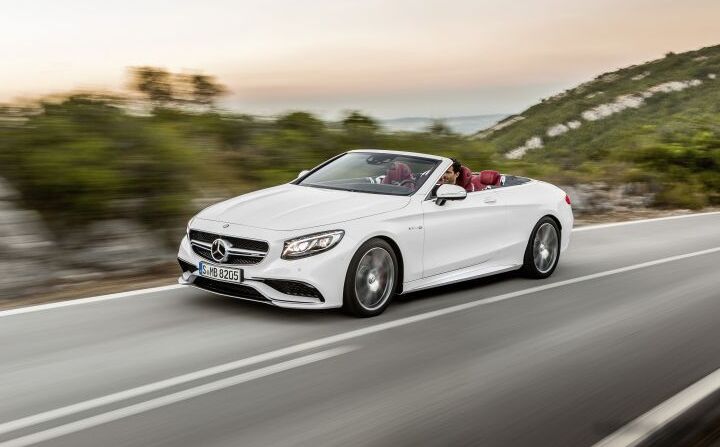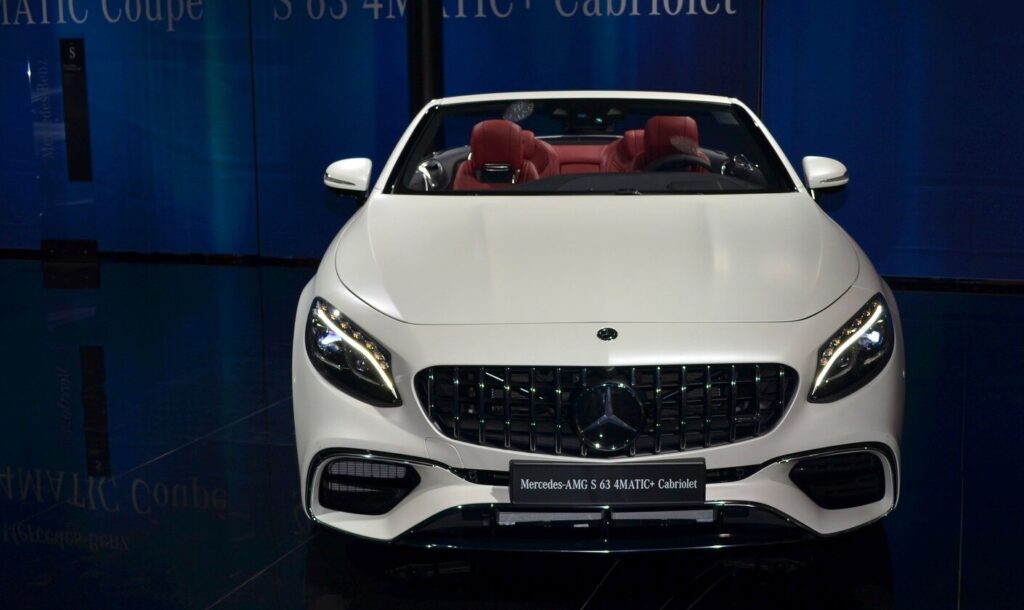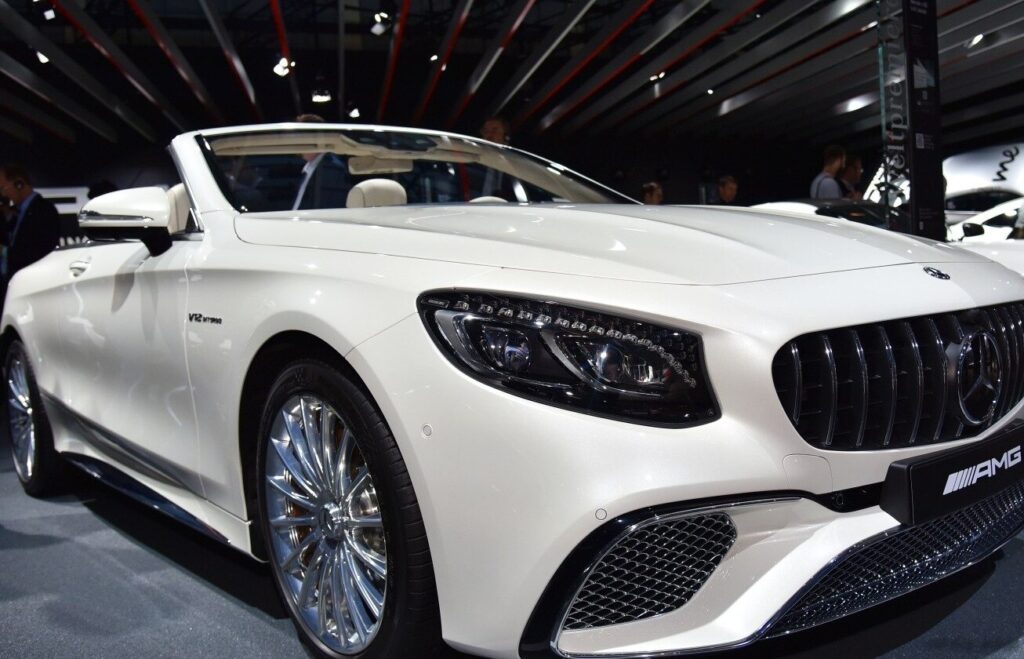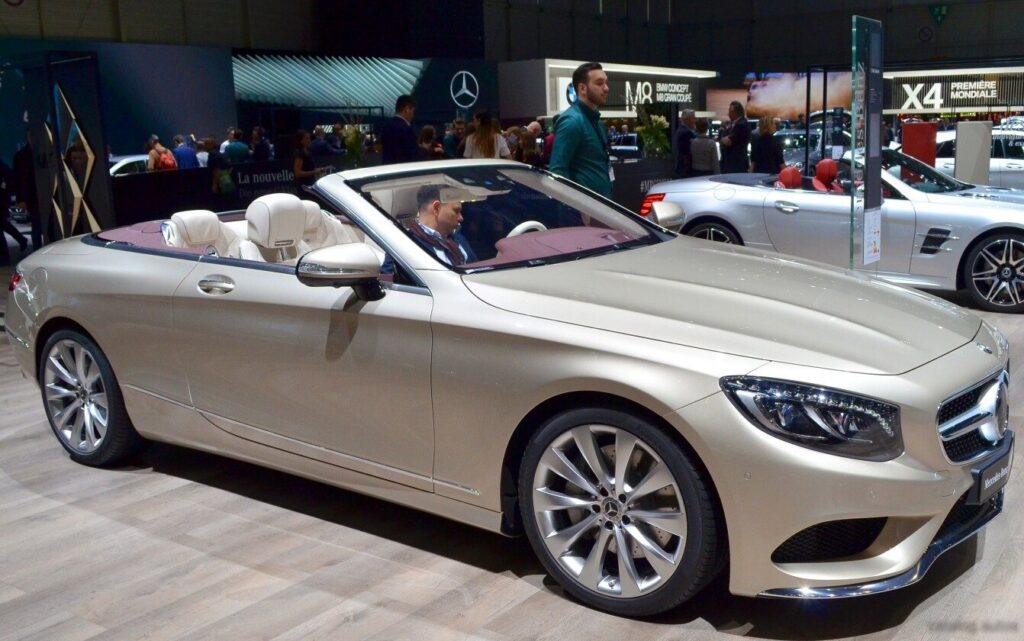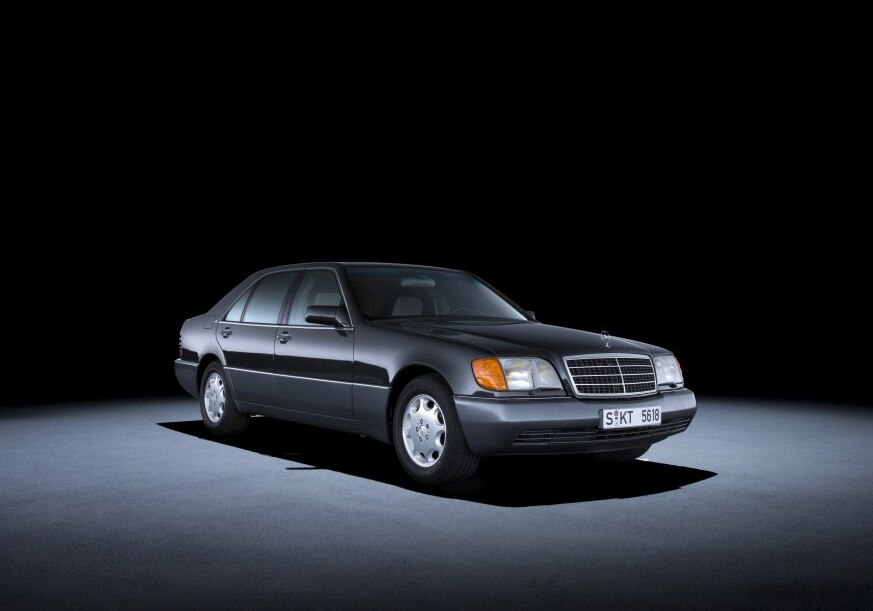
The Mercedes-Benz S-Class Long (V140) S 600 V12, produced from 1993 to 1994, represented the pinnacle of luxury and engineering for the German automaker. As part of the W140 generation – the first S-Class to officially bear that name – the S 600 V12 was the flagship model, offering an extended wheelbase for increased rear passenger space and a powerful, sophisticated twelve-cylinder engine. It was positioned as the ultimate statement of prestige and technological advancement, catering to a clientele demanding the very best in comfort, performance, and exclusivity. The V140 S-Class, and particularly the S 600 V12, aimed to redefine the luxury sedan segment, setting new standards for refinement and innovation.
Technical Specifications
| Brand | Mercedes-Benz |
| Model | S-class |
| Generation | S-class Long (V140) |
| Type (Engine) | S 600 V12 (394 Hp) Automatic |
| Start of production | 1993 |
| End of production | 1994 |
| Powertrain Architecture | Internal Combustion engine |
| Body type | Sedan |
| Seats | 5 |
| Doors | 4 |
| Fuel consumption (economy) – urban | 20.7 l/100 km (11.4 US mpg, 13.6 UK mpg, 4.8 km/l) |
| Fuel consumption (economy) – extra urban | 11.8 l/100 km (19.9 US mpg, 23.9 UK mpg, 8.5 km/l) |
| Fuel consumption (economy) – combined | 15.4 l/100 km (15.3 US mpg, 18.3 UK mpg, 6.5 km/l) |
| Fuel Type | Petrol (Gasoline) |
| Acceleration 0 – 100 km/h | 6.6 sec |
| Acceleration 0 – 62 mph | 6.6 sec |
| Acceleration 0 – 60 mph | 6.3 sec |
| Maximum speed | 250 km/h (155.34 mph) |
| Weight-to-power ratio | 5.6 kg/Hp, 179.9 Hp/tonne |
| Weight-to-torque ratio | 3.8 kg/Nm, 260.3 Nm/tonne |
| Power | 394 Hp @ 5200 rpm |
| Power per litre | 65.8 Hp/l |
| Torque | 570 Nm @ 3800 rpm (420.41 lb.-ft. @ 3800 rpm) |
| Engine layout | Front, Longitudinal |
| Engine Model/Code | M 120 E 60/120.980 |
| Engine displacement | 5987 cm3 (365.35 cu. in.) |
| Number of cylinders | 12 |
| Engine configuration | V-engine |
| Cylinder Bore | 89 mm (3.5 in.) |
| Piston Stroke | 80.2 mm (3.16 in.) |
| Compression ratio | 10:1 |
| Number of valves per cylinder | 4 |
| Fuel injection system | Multi-port manifold injection |
| Engine aspiration | Naturally aspirated engine |
| Valvetrain | DOHC |
| Engine oil capacity | 10 l (10.57 US qt | 8.8 UK qt) |
| Coolant | 18.5 l (19.55 US qt | 16.28 UK qt) |
| Kerb Weight | 2190 kg (4828.12 lbs.) |
| Max. weight | 2720 kg (5996.57 lbs.) |
| Max load | 530 kg (1168.45 lbs.) |
| Trunk (boot) space – minimum | 525 l (18.54 cu. ft.) |
| Fuel tank capacity | 100 l (26.42 US gal | 22 UK gal) |
| Length | 5213 mm (205.24 in.) |
| Width | 1886 mm (74.25 in.) |
| Height | 1486 mm (58.5 in.) |
| Wheelbase | 3140 mm (123.62 in.) |
| Front track | 1606 mm (63.23 in.) |
| Rear (Back) track | 1579 mm (62.17 in.) |
| Minimum turning circle | 12.51 m (41.04 ft.) |
| Drivetrain Architecture | Rear wheel drive |
| Number of gears and type of gearbox | 4 gears, automatic transmission |
| Front suspension | Double wishbone |
| Rear suspension | Independent multi-link spring suspension with stabilizer |
| Front brakes | Ventilated discs |
| Rear brakes | Ventilated discs |
| Assisting systems | ABS (Anti-lock braking system), Hydraulic Steering |
| Tires size | 235/60 R16 |
| Wheel rims size | 16 |
Powertrain & Engine Architecture
The heart of the S 600 V12 was the M120 E 60 engine, a 6.0-liter (5,987 cc) naturally aspirated V12. This engine was a marvel of engineering, featuring all-aluminum construction, dual overhead camshafts (DOHC), and four valves per cylinder. The M120 utilized a multi-port fuel injection system, carefully calibrated to deliver smooth and responsive power. Its 89mm bore and 80.2mm stroke contributed to a robust and refined power delivery. Paired with the engine was a four-speed automatic transmission, designed to handle the substantial torque output of the V12. This transmission, while not as sophisticated as later electronically controlled units, provided smooth shifts and a comfortable driving experience. The engine produced 394 horsepower at 5,200 rpm and a substantial 570 Nm (420 lb-ft) of torque at 3,800 rpm.
Driving Characteristics
The S 600 V12 offered a driving experience characterized by effortless power and exceptional smoothness. The V12 engine provided ample acceleration, reaching 60 mph in approximately 6.3 seconds and a governed top speed of 155 mph. While not a sports car, the S 600 V12 possessed a surprising amount of performance for its size and weight. The automatic transmission, while lacking the responsiveness of a manual, was well-suited to the car’s grand touring character. Compared to the inline-six or V8 versions of the W140 S-Class, the V12 offered a significantly more refined and powerful experience, albeit at the cost of increased fuel consumption. The long wheelbase contributed to a comfortable and stable ride, absorbing bumps and imperfections in the road with ease.
Equipment & Trim Levels
The S 600 V12 came standard with a comprehensive array of luxury features. Leather upholstery was standard, along with wood trim, power-adjustable seats with memory function, and a premium sound system. Climate control, power windows, and central locking were also included. The extended wheelbase provided significantly more rear legroom than the standard S-Class models. Optional extras included a rear entertainment system, a telephone, and upgraded leather options. The interior was designed to create a serene and luxurious environment for both the driver and passengers.
Chassis & Braking
The S 600 V12 featured a robust chassis with double wishbone suspension at the front and an independent multi-link spring suspension with a stabilizer bar at the rear. This suspension setup provided a comfortable ride and good handling characteristics. Ventilated disc brakes were used on all four wheels, providing ample stopping power. Anti-lock braking system (ABS) was standard, enhancing safety and control. The steering was hydraulic power-assisted, offering a light and precise feel.
Market Reception & Comparison
The S 600 V12 was widely praised by automotive critics for its luxurious interior, smooth ride, and powerful engine. However, its high price and substantial fuel consumption limited its appeal to a relatively small segment of the market. Compared to the other S-Class variants, the V12 offered a significant step up in performance and refinement, but also came with a considerable price premium. Fuel economy was notably lower than the six-cylinder and V8 models, averaging around 15.4 l/100 km (15.3 US mpg). Reliability was generally good, although the complexity of the V12 engine and its associated systems meant that maintenance costs could be high.
Legacy
The W140 S-Class, and the S 600 V12 in particular, is remembered as a landmark achievement in automotive engineering. It set new standards for luxury, comfort, and technology, influencing the design and development of subsequent S-Class models. Today, the S 600 V12 is a sought-after classic car, appreciated by collectors and enthusiasts for its rarity, performance, and timeless elegance. While maintenance can be expensive due to the car’s age and complexity, well-maintained examples continue to provide a unique and rewarding driving experience. The M120 engine, despite its age, remains a highly regarded powerplant, known for its durability and smooth operation.