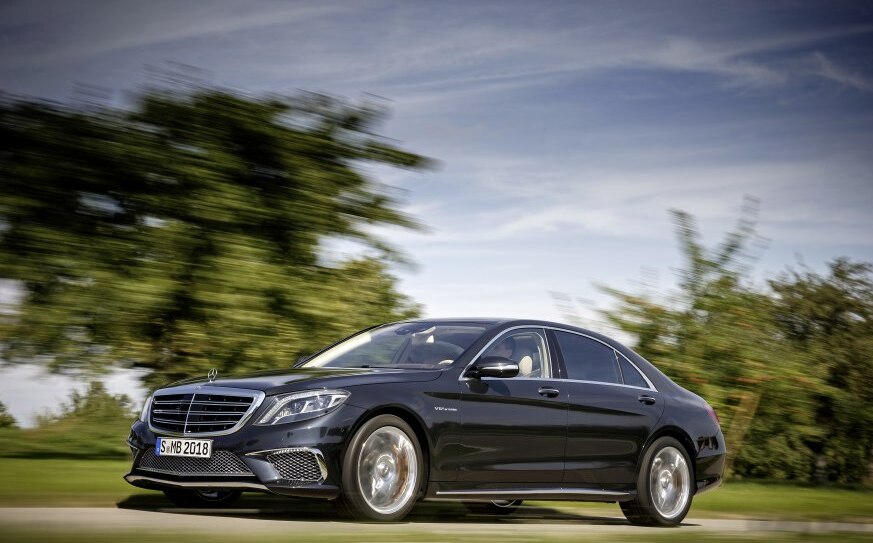
The Mercedes-Benz S-Class Long (V222) S 400 HYBRID G-TRONIC, produced from 2013 to 2017, represents a significant iteration of the flagship S-Class sedan. This variant, distinguished by its extended wheelbase (“Long” designation) and hybrid powertrain, was primarily aimed at markets where rear-seat passenger comfort and fuel efficiency were highly valued. Positioned as a mid-range offering within the V222 S-Class lineup, it bridged the gap between the base S 350 and the more performance-oriented S 500 models. The S 400 Hybrid combined a gasoline engine with an electric motor, offering a blend of luxury, performance, and reduced emissions.
Technical Specifications
| Brand | Mercedes-Benz |
| Model | S-Class |
| Generation | S-Class Long (V222) |
| Type | S 400 (333 Hp) HYBRID G-TRONIC |
| Start of production | 2013 |
| End of production | 2017 |
| Powertrain Architecture | FHEV (Full Hybrid Electric Vehicle) |
| Body type | Sedan |
| Seats | 4 |
| Doors | 4 |
| Fuel consumption (urban) | 6.6-7.4 l/100 km (35.6 – 31.8 US mpg, 42.8 – 38.2 UK mpg, 15.2 – 13.5 km/l) |
| Fuel consumption (extra urban) | 6.1-6.5 l/100 km (38.6 – 36.2 US mpg, 46.3 – 43.5 UK mpg, 16.4 – 15.4 km/l) |
| Fuel consumption (combined) | 6.3-6.8 l/100 km (37.3 – 34.6 US mpg, 44.8 – 41.5 UK mpg, 15.9 – 14.7 km/l) |
| CO2 emissions | 147-159 g/km |
| Fuel Type | Petrol (Gasoline) |
| Acceleration 0 – 100 km/h | 6.8 sec |
| Acceleration 0 – 62 mph | 6.8 sec |
| Acceleration 0 – 60 mph | 6.5 sec |
| Maximum speed | 250 km/h (155.34 mph) |
| Emission standard | Euro 6 |
| Weight-to-power ratio | 6.4 kg/Hp, 157.3 Hp/tonne |
| Weight-to-torque ratio | 5.3 kg/Nm, 190.2 Nm/tonne |
| Gross battery capacity | 0.8 kWh |
| Electric motor power | 27 Hp |
| Electric motor Torque | 250 Nm (184.39 lb.-ft.) |
| Engine Power | 306 Hp @ 6500 rpm |
| Engine Torque | 370 Nm @ 3500-5250 rpm (272.9 lb.-ft. @ 3500-5250 rpm) |
| Engine layout | Front, Longitudinal |
| Engine Model/Code | M 276.960 |
| Engine displacement | 3498 cm3 (213.46 cu. in.) |
| Number of cylinders | 6 |
| Engine configuration | V-engine |
| Compression ratio | 12:1 |
| Fuel injection system | Direct injection |
| Engine oil capacity | 6.5 l (6.87 US qt | 5.72 UK qt) |
| Coolant capacity | 12.3 l (13 US qt | 10.82 UK qt) |
| Kerb Weight | 1945 kg (4287.99 lbs.) |
| Max. weight | 2630 kg (5798.16 lbs.) |
| Max load | 685 kg (1510.17 lbs.) |
| Trunk (boot) space (minimum) | 510 l (18.01 cu. ft.) |
| Fuel tank capacity | 70 l (18.49 US gal | 15.4 UK gal) |
| Length | 5246 mm (206.54 in.) |
| Width | 1899 mm (74.76 in.) |
| Height | 1496 mm (58.9 in.) |
| Wheelbase | 3165 mm (124.61 in.) |
| Front track | 1624 mm (63.94 in.) |
| Rear track | 1637 mm (64.45 in.) |
| Front overhang | 888 mm (34.96 in.) |
| Rear overhang | 1193 mm (46.97 in.) |
| Minimum turning circle | 12.3 m (40.35 ft.) |
| Drive wheel | Rear wheel drive |
| Number of gears | 7 |
| Gearbox type | Automatic transmission G-TRONIC PLUS |
| Front suspension | Independent multi-link suspension |
| Rear suspension | Independent multi-link suspension |
| Front brakes | Ventilated discs |
| Rear brakes | Ventilated discs |
| Assisting systems | ABS (Anti-lock braking system) |
| Steering type | Steering rack and pinion |
| Power steering | Electric Steering |
| Tires size | 245/55 R17 |
| Wheel rims size | 17 |
INTRODUCTION
The S 400 Hybrid, introduced as part of the V222 S-Class generation (2013-2017), represented Mercedes-Benz’s commitment to integrating hybrid technology into its luxury offerings. The V222 platform itself was a leap forward in automotive engineering, boasting advancements in lightweight construction (extensive use of aluminum), driver assistance systems, and interior refinement. The “Long” wheelbase version added an extra 134 mm (5.3 inches) to the standard S-Class, dedicating the additional space to rear passenger legroom, a key selling point in markets like China and other parts of Asia. The S 400 Hybrid aimed to provide a more fuel-efficient alternative to the conventionally powered S-Class models without sacrificing the luxury and comfort expected of the brand.
Powertrain & Engine Architecture
At the heart of the S 400 Hybrid lies the M 276.960 3.5-liter V6 gasoline engine. This engine, a naturally aspirated design, produces 306 horsepower at 6500 rpm and 370 Nm (272.9 lb-ft) of torque between 3500 and 5250 rpm. It features direct fuel injection and a compression ratio of 12:1. Supplementing the gasoline engine is a 27 hp electric motor, powered by a 0.8 kWh lithium-ion battery. The hybrid system operates as a mild hybrid, meaning the electric motor primarily assists the gasoline engine during acceleration and allows for regenerative braking to recapture energy. The G-TRONIC PLUS 7-speed automatic transmission manages power delivery, optimized for both efficiency and smooth shifting. The engine code M276 is known for its reliability, but the hybrid components add a layer of complexity to the overall system.
Driving Characteristics
The S 400 Hybrid delivers a refined and comfortable driving experience. While not as overtly powerful as the S 500, the combined output of the gasoline engine and electric motor provides adequate acceleration, achieving 0-60 mph in approximately 6.5 seconds. The electric motor’s assistance is most noticeable during initial acceleration, providing a boost of torque that enhances responsiveness. The 7-speed automatic transmission is programmed for smooth, almost imperceptible gear changes, contributing to the overall sense of luxury. Compared to the standard S 400 with the non-hybrid engine, the hybrid version offers improved fuel economy, particularly in city driving. However, the hybrid system adds weight, which slightly impacts handling agility compared to lighter S-Class variants.
Equipment & Trim Levels
The S 400 Hybrid typically came well-equipped, reflecting its position as a luxury vehicle. Standard features included leather upholstery, wood trim, a premium sound system, automatic climate control, and a comprehensive suite of safety features. The long wheelbase model prioritized rear passenger comfort, often including features like reclining rear seats, a rear entertainment system, and individual climate controls for rear occupants. Optional extras included advanced driver assistance systems such as adaptive cruise control, lane keeping assist, and a 360-degree camera. Interior color schemes were customizable, allowing buyers to personalize their vehicle.
Chassis & Braking
The S 400 Hybrid utilizes an independent multi-link suspension system at both the front and rear axles, providing a smooth and controlled ride. The suspension is tuned to prioritize comfort, absorbing bumps and imperfections in the road surface effectively. Ventilated disc brakes are fitted on all four wheels, providing ample stopping power. The car is equipped with ABS (Anti-lock Braking System) and electronic stability control. Due to the added weight of the hybrid components, the S 400 Hybrid may have slightly stiffer spring rates compared to the standard S 400 to maintain handling balance.
Market Reception & Comparison
The S 400 Hybrid was generally well-received by automotive critics, who praised its fuel efficiency, comfortable ride, and luxurious interior. However, some reviewers noted that the hybrid system didn’t deliver the dramatic fuel economy improvements seen in some other hybrid vehicles. Compared to the S 350, the S 400 Hybrid offered a more refined driving experience and slightly better performance. Compared to the S 500, it sacrificed some outright power in exchange for improved fuel economy. The S 400 Hybrid appealed to buyers who prioritized fuel efficiency and environmental consciousness without wanting to compromise on luxury and comfort.
Legacy
The S 400 Hybrid represents an important step in Mercedes-Benz’s development of hybrid technology. While the V222 S-Class has been superseded by newer generations, the S 400 Hybrid remains a desirable used car option. The M 276 engine is generally considered reliable, but the hybrid components require careful maintenance. The long-term reliability of the battery pack is a key consideration for potential buyers. Today, these vehicles are sought after by those who appreciate the blend of luxury, technology, and relative fuel efficiency offered by the S-Class platform.