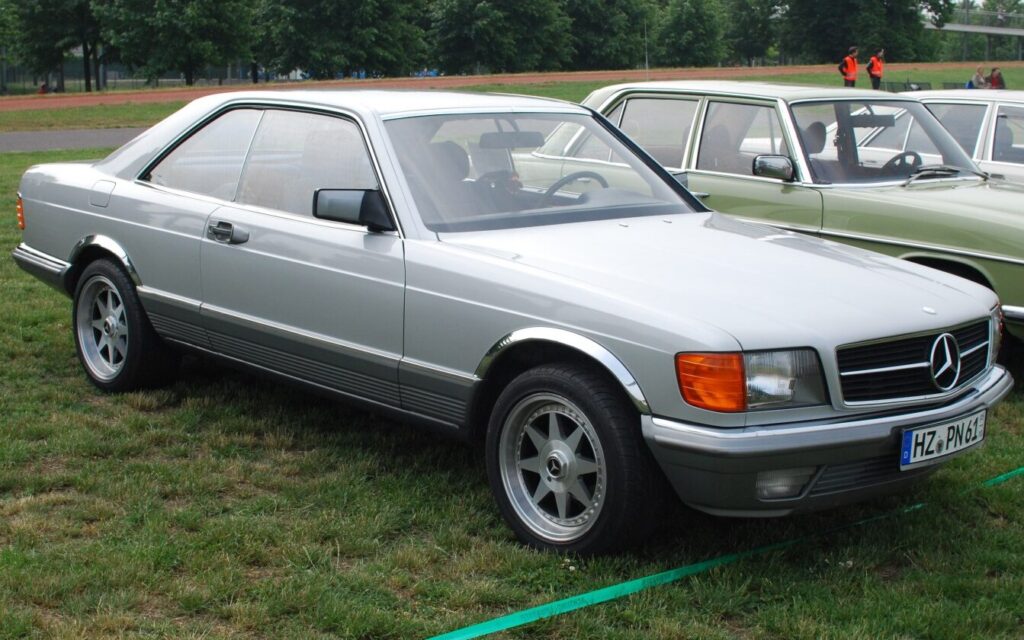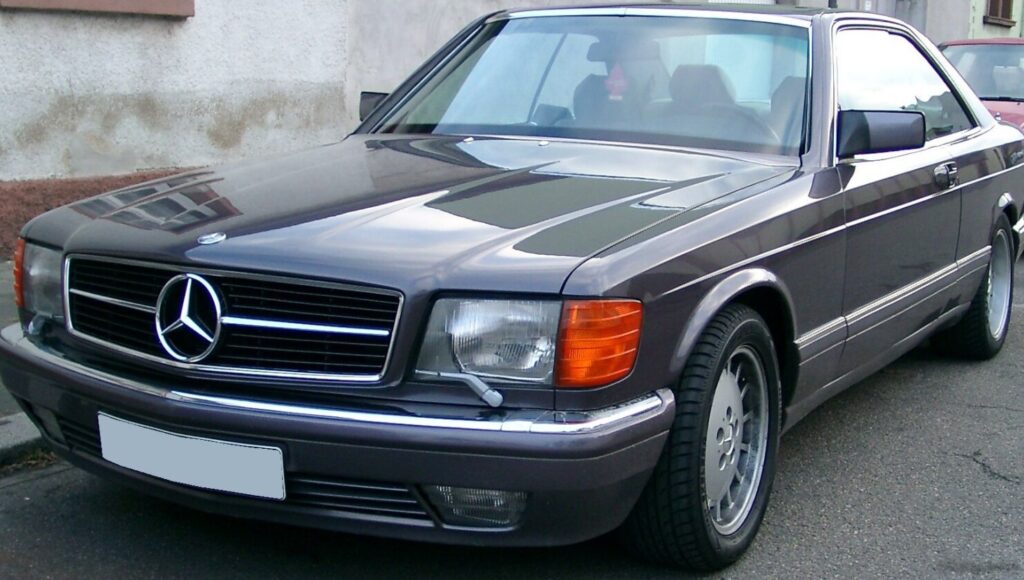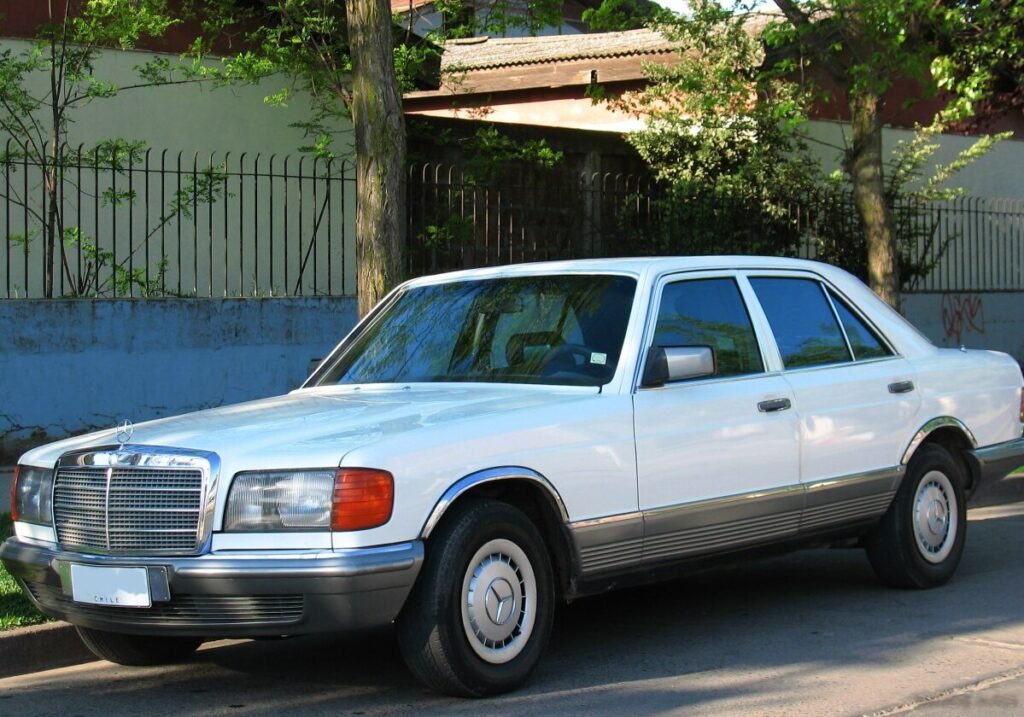
The Mercedes-Benz W126 S-Class, produced from 1979 to 1991, represented a significant leap forward in automotive luxury and safety. The 280 S, introduced in April 1979 and continuing through November 1985, served as the entry point to the W126 range, offering a blend of prestige and relatively accessible performance. Positioned below the 380 S and 560 S models, the 280 S appealed to buyers seeking the S-Class experience without the higher price tag of the larger-displacement engines. This variant was primarily sold in European markets and other regions where smaller displacement engines were favored due to taxation and fuel economy considerations.
Technical Specifications
| Brand | Mercedes-Benz |
| Model | S-Class |
| Generation | S-Class SE (W126) |
| Type (Engine) | 280 S (156 Hp) Automatic |
| Start of production | April, 1979 |
| End of production | November, 1985 |
| Powertrain Architecture | Internal Combustion engine |
| Body type | Sedan |
| Seats | 5 |
| Doors | 4 |
| Fuel consumption (urban) | 16.4 l/100 km (14.3 US mpg, 17.2 UK mpg, 6.1 km/l) |
| Fuel consumption (extra urban) | 9.2 l/100 km (25.6 US mpg, 30.7 UK mpg, 10.9 km/l) |
| Fuel Type | Petrol (Gasoline) |
| Acceleration 0 – 100 km/h | 11.8 sec |
| Acceleration 0 – 62 mph | 11.8 sec |
| Acceleration 0 – 60 mph | 11.2 sec |
| Maximum speed | 195 km/h (121.17 mph) |
| Weight-to-power ratio | 10 kg/Hp, 100 Hp/tonne |
| Weight-to-torque ratio | 7 kg/Nm, 142.9 Nm/tonne |
| Power | 156 Hp @ 5500 rpm |
| Power per litre | 56.8 Hp/l |
| Torque | 223 Nm @ 4000 rpm (164.48 lb.-ft. @ 4000 rpm) |
| Engine layout | Front, Longitudinal |
| Engine Model/Code | M 110 V 28 / 110.924 |
| Engine displacement | 2746 cm3 (167.57 cu. in.) |
| Number of cylinders | 6 |
| Engine configuration | Inline |
| Cylinder Bore | 86 mm (3.39 in.) |
| Piston Stroke | 78.8 mm (3.1 in.) |
| Compression ratio | 9:1 |
| Number of valves per cylinder | 2 |
| Fuel injection system | Carburettor |
| Engine aspiration | Naturally aspirated engine |
| Valvetrain | DOHC |
| Engine oil capacity | 7 l (7.4 US qt | 6.16 UK qt) |
| Coolant | 10.5 l (11.1 US qt | 9.24 UK qt) |
| Kerb Weight | 1560 kg (3439.21 lbs.) |
| Max. weight | 2080 kg (4585.62 lbs.) |
| Max load | 520 kg (1146.4 lbs.) |
| Trunk (boot) space – minimum | 505 l (17.83 cu. ft.) |
| Fuel tank capacity | 90 l (23.78 US gal | 19.8 UK gal) |
| Length | 4995 mm (196.65 in.) |
| Width | 1820 mm (71.65 in.) |
| Height | 1430 mm (56.3 in.) |
| Wheelbase | 2930 mm (115.35 in.) |
| Front track | 1545 mm (60.83 in.) |
| Rear (Back) track | 1517 mm (59.72 in.) |
| Drivetrain Architecture | The Internal combustion engine (ICE) drives the rear wheels of the vehicle. |
| Drive wheel | Rear wheel drive |
| Number of gears and type of gearbox | 4 gears, automatic transmission |
| Front suspension | Double wishbone |
| Rear suspension | Trailing arm |
| Front brakes | Ventilated discs |
| Rear brakes | Disc |
| Steering type | Cone worm with recirculation balls |
| Power steering | Hydraulic Steering |
| Tires size | Front wheel tires: 195/70 R14Rear wheel tires: 195/70 R14 |
| Wheel rims size | Front wheel rims: 6J x 14Rear wheel rims: 6J x 14 |
Powertrain & Engine Architecture
The 280 S was powered by the M110.924, a 2.8-liter (2746 cc) inline-six cylinder engine. This engine, a descendant of the long-running M110 family, featured a cast-iron block and aluminum cylinder head. Unlike later Mercedes-Benz engines, the 280 S utilized a Solex carburetor for fuel delivery, a design choice reflecting the era. The engine employed a dual overhead camshaft (DOHC) valvetrain with two valves per cylinder. The M110 was known for its smoothness and durability, though its carbureted fuel system was less efficient and produced higher emissions compared to fuel injection systems. The engine produced 156 horsepower at 5500 rpm and 223 Nm (164.48 lb-ft) of torque at 4000 rpm.
The engine was mated to a four-speed automatic transmission, a common configuration for luxury cars of the time. This transmission was designed for smooth, comfortable shifts rather than outright performance. The automatic transmission contributed to the 280 S’s relaxed driving experience, making it well-suited for long-distance cruising.
Driving Characteristics
The 280 S Automatic offered a comfortable, refined driving experience. Acceleration was adequate, with a 0-60 mph time of around 11.2 seconds, but it wasn’t particularly sporty. The automatic transmission, while smooth, did result in some power loss compared to the available five-speed manual transmission. The gear ratios were optimized for cruising, providing relaxed highway performance. Compared to the 380 S and 560 S, the 280 S felt less powerful, especially when accelerating or overtaking. However, the lighter weight of the 280 S partially offset the power deficit, making it feel more nimble in city driving.
Equipment & Trim Levels
The 280 S came standard with a generous array of features for its time, including power windows, central locking, and a high-quality sound system. The interior was typically upholstered in cloth, with leather available as an option. Dashboard configuration was consistent across the W126 range, featuring a classic Mercedes-Benz layout with wood trim and analog gauges. Optional extras included a sunroof, air conditioning, and upgraded audio systems. The 280 S was often specified with a more modest trim level compared to its higher-priced siblings, focusing on essential luxury features rather than extravagant options.
Chassis & Braking
The W126 S-Class featured a robust chassis with double wishbone suspension at the front and a trailing arm suspension at the rear. This suspension setup provided a comfortable ride and good handling characteristics. The 280 S was equipped with ventilated disc brakes at the front and disc brakes at the rear, providing adequate stopping power. Power steering was standard, making the car easy to maneuver. The suspension was tuned for comfort, prioritizing a smooth ride over sporty handling.
Market Reception & Comparison
The 280 S was generally well-received by critics as a comfortable and reliable luxury car. However, some reviewers noted that its performance was somewhat underwhelming compared to the larger-engined S-Class models. Fuel economy was a strong point, particularly in Europe, where fuel prices were higher. Compared to the 380 S, the 280 S offered a more affordable entry point into the S-Class range, but at the cost of performance. The 280 S was also more economical to run than the 380 S and 560 S, due to its smaller engine and simpler fuel system.
Legacy
The M110 engine, while eventually superseded by fuel-injected designs, proved to be remarkably durable. Well-maintained 280 S models continue to be found on the road today, a testament to the engineering quality of the W126 S-Class. In the used car market, the 280 S is often considered a good value, offering the prestige of the S-Class at a more affordable price point. However, finding parts for the carbureted fuel system can sometimes be challenging. The 280 S represents a pivotal moment in Mercedes-Benz history, showcasing the brand’s commitment to luxury, safety, and engineering excellence.