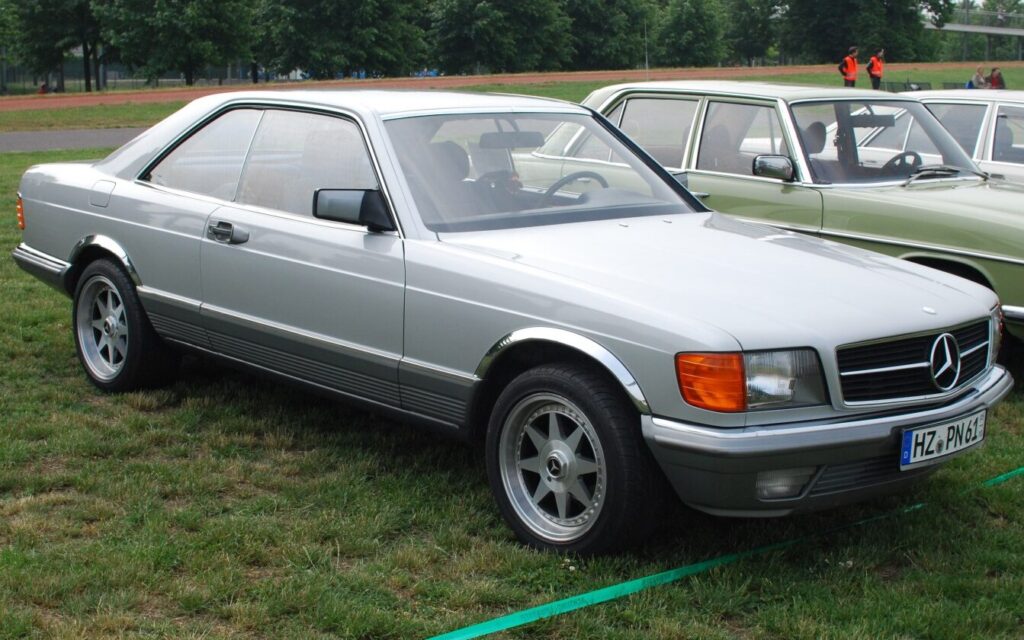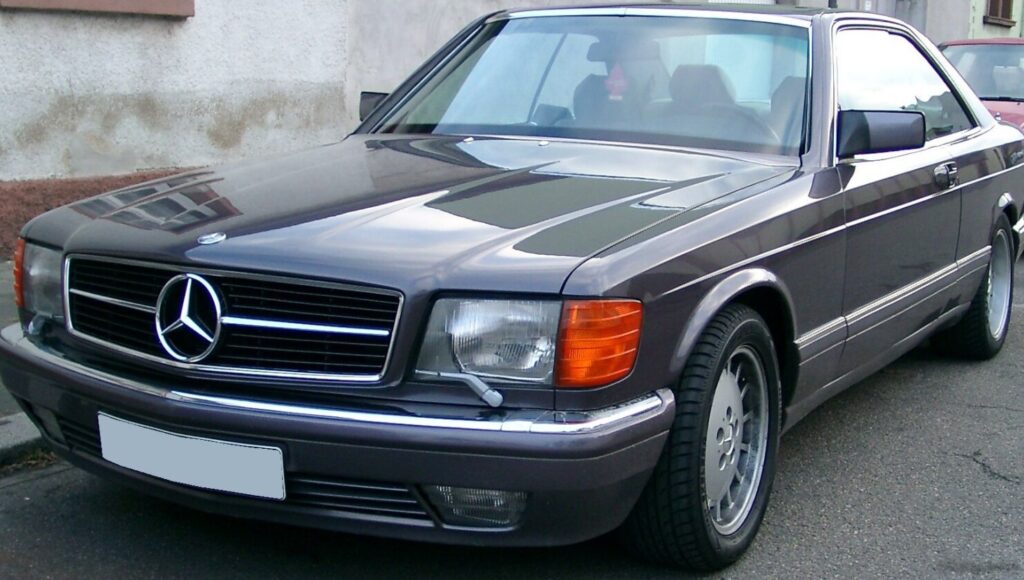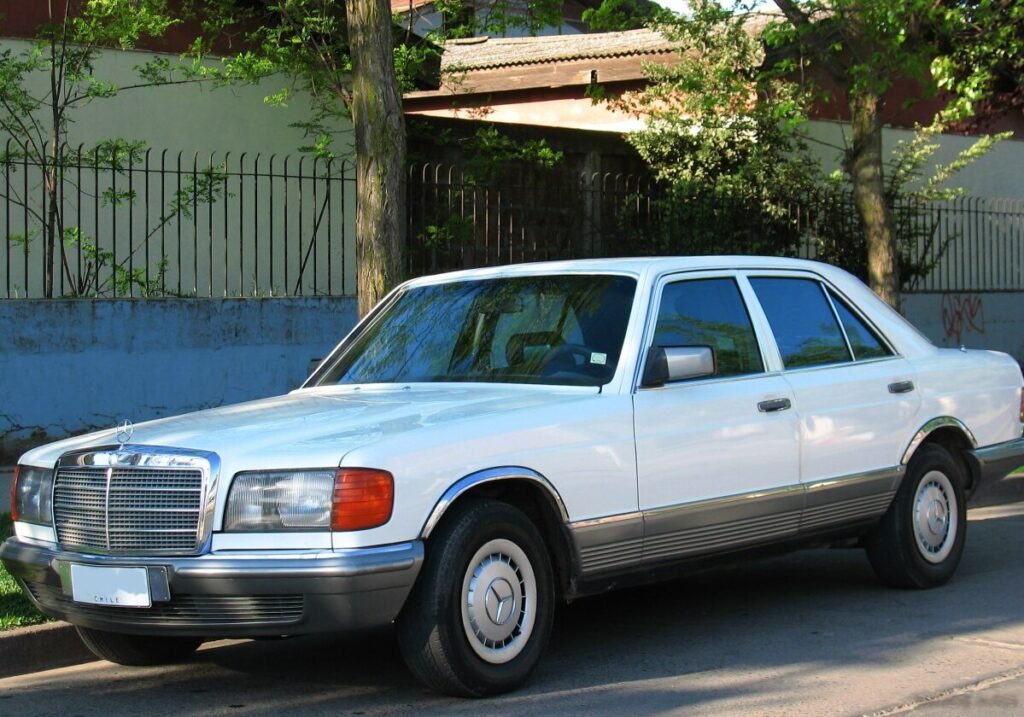
The Mercedes-Benz W126 S-Class, produced from 1979 to 1991, represented a significant leap forward in automotive luxury and safety. The 280 SE, introduced in February 1979 and continuing through September 1985, served as the entry point to the W126 range, offering a blend of prestige and relatively accessible performance. Positioned below the 380 SE and 560 SE, the 280 SE aimed to provide the S-Class experience to a broader clientele. It was a key model in establishing the W126’s reputation for build quality and engineering excellence, particularly in the European market where smaller displacement engines were favored due to taxation and fuel costs.
Technical Specifications
| Brand | Mercedes-Benz |
| Model | S-class |
| Generation | S-class SE (W126) |
| Type (Engine) | 280 SE (185 Hp) Automatic |
| Start of production | February, 1979 |
| End of production | September, 1985 |
| Powertrain Architecture | Internal Combustion engine |
| Body type | Sedan |
| Seats | 5 |
| Doors | 4 |
| Fuel consumption (urban) | 16.8 l/100 km (14 US mpg, 16.8 UK mpg, 6 km/l) |
| Fuel consumption (extra urban) | 9.4 l/100 km (25 US mpg, 30.1 UK mpg, 10.6 km/l) |
| Fuel Type | Petrol (Gasoline) |
| Acceleration 0 – 100 km/h | 10.8 sec |
| Acceleration 0 – 62 mph | 10.8 sec |
| Acceleration 0 – 60 mph | 10.3 sec |
| Maximum speed | 205 km/h (127.38 mph) |
| Weight-to-power ratio | 8.4 kg/Hp, 118.6 Hp/tonne |
| Weight-to-torque ratio | 6.5 kg/Nm, 153.8 Nm/tonne |
| Power | 185 Hp @ 5800 rpm |
| Power per litre | 67.4 Hp/l |
| Torque | 240 Nm @ 4500 rpm (177.01 lb.-ft. @ 4500 rpm) |
| Engine layout | Front, Longitudinal |
| Engine Model/Code | M 110 E 28 / 110.987 |
| Engine displacement | 2746 cm3 (167.57 cu. in.) |
| Number of cylinders | 6 |
| Engine configuration | Inline |
| Cylinder Bore | 86 mm (3.39 in.) |
| Piston Stroke | 78.8 mm (3.1 in.) |
| Compression ratio | 9:1 |
| Number of valves per cylinder | 2 |
| Fuel injection system | Multi-port manifold injection |
| Engine aspiration | Naturally aspirated engine |
| Valvetrain | DOHC |
| Engine oil capacity | 7 l (7.4 US qt | 6.16 UK qt) |
| Coolant | 10.5 l (11.1 US qt | 9.24 UK qt) |
| Kerb Weight | 1560 kg (3439.21 lbs.) |
| Max. weight | 2080 kg (4585.62 lbs.) |
| Max load | 520 kg (1146.4 lbs.) |
| Trunk (boot) space – minimum | 505 l (17.83 cu. ft.) |
| Fuel tank capacity | 90 l (23.78 US gal | 19.8 UK gal) |
| Length | 4995 mm (196.65 in.) |
| Width | 1820 mm (71.65 in.) |
| Height | 1430 mm (56.3 in.) |
| Wheelbase | 2930 mm (115.35 in.) |
| Front track | 1545 mm (60.83 in.) |
| Rear (Back) track | 1517 mm (59.72 in.) |
| Drivetrain Architecture | The Internal combustion engine (ICE) drives the rear wheels of the vehicle. |
| Drive wheel | Rear wheel drive |
| Number of gears and type of gearbox | 4 gears, automatic transmission |
| Front suspension | Double wishbone |
| Rear suspension | Trailing arm |
| Front brakes | Ventilated discs |
| Rear brakes | Disc |
| Steering type | Cone worm with recirculation balls |
| Power steering | Hydraulic Steering |
| Tires size | Front wheel tires: 195/75 R14Rear wheel tires: 195/75 R14 |
| Wheel rims size | Front wheel rims: 6J x 14Rear wheel rims: 6J x 14 |
Powertrain & Engine Architecture
The 280 SE was powered by the M110 E 28 engine, a 2.8-liter inline-six cylinder powerplant. This engine, a descendant of the long-running M110 family, featured a cast-iron block and aluminum cylinder head. It utilized a Bosch K-Jetronic fuel injection system, a mechanical system known for its reliability and precise fuel delivery, though less sophisticated than later electronic systems. The engine employed a double overhead camshaft (DOHC) valvetrain with two valves per cylinder. The 9:1 compression ratio was a compromise between performance and the availability of lower-octane fuel. The four-speed automatic transmission, a robust unit developed in-house by Mercedes-Benz, was standard. This transmission was known for its smooth shifts, but lacked the efficiency of more modern gearboxes.
Driving Characteristics
The 280 SE Automatic offered a comfortable and refined driving experience, typical of the S-Class. With 185 horsepower and 240 Nm (177 lb-ft) of torque, acceleration was adequate but not particularly brisk. The 0-60 mph time of around 10.3 seconds reflects this. The automatic transmission, while smooth, did sap some performance compared to the available five-speed manual. The gear ratios were geared towards cruising comfort rather than outright acceleration. Compared to the 380 SE and 560 SE, the 280 SE felt noticeably less powerful, especially when fully loaded or climbing hills. However, it provided a more balanced driving experience for those prioritizing fuel economy and a relaxed ride.
Equipment & Trim Levels
The 280 SE came standard with a generous array of features for its time, including power windows, central locking, and a high-quality sound system. The interior was typically trimmed with cloth upholstery, though leather was available as an option. The dashboard featured wood trim and analog gauges. Optional extras included a sunroof, air conditioning, and upgraded audio systems. The level of equipment was generally consistent across the 280 SE range, with most variations stemming from individual customer choices.
Chassis & Braking
The W126 S-Class featured a robust chassis with independent suspension all around. The front suspension utilized double wishbones, while the rear employed a trailing arm setup. This configuration provided a comfortable ride and good handling characteristics. The 280 SE was equipped with ventilated disc brakes at the front and solid discs at the rear. Hydraulic power steering was standard, making maneuvering easy. The suspension was tuned for comfort, prioritizing a smooth ride over sporty handling. Stabilizer bars were fitted front and rear to reduce body roll.
Market Reception & Comparison
The 280 SE was generally well-received by critics, who praised its comfort, build quality, and refinement. However, some reviewers noted that its performance was somewhat underwhelming compared to its larger-engined siblings. Fuel economy was a strong point, particularly in Europe. Compared to the 380 SE, the 280 SE offered a more affordable entry point into the S-Class range, but at the cost of performance. The 560 SE, with its V8 engine, provided significantly more power but also consumed considerably more fuel. The 280 SE appealed to buyers who valued luxury and comfort over outright speed.
Legacy
The M110 engine, while superseded by later Mercedes-Benz designs, is known for its durability and longevity. The four-speed automatic transmission, though not as efficient as modern units, is also generally reliable. Today, the 280 SE is a sought-after classic car, appreciated for its elegant styling and understated luxury. Well-maintained examples command respectable prices. While not the fastest or most powerful S-Class variant, the 280 SE offers a unique blend of comfort, refinement, and reliability, making it a desirable choice for enthusiasts and collectors. Parts availability is generally good, though some specific components may be difficult to source.