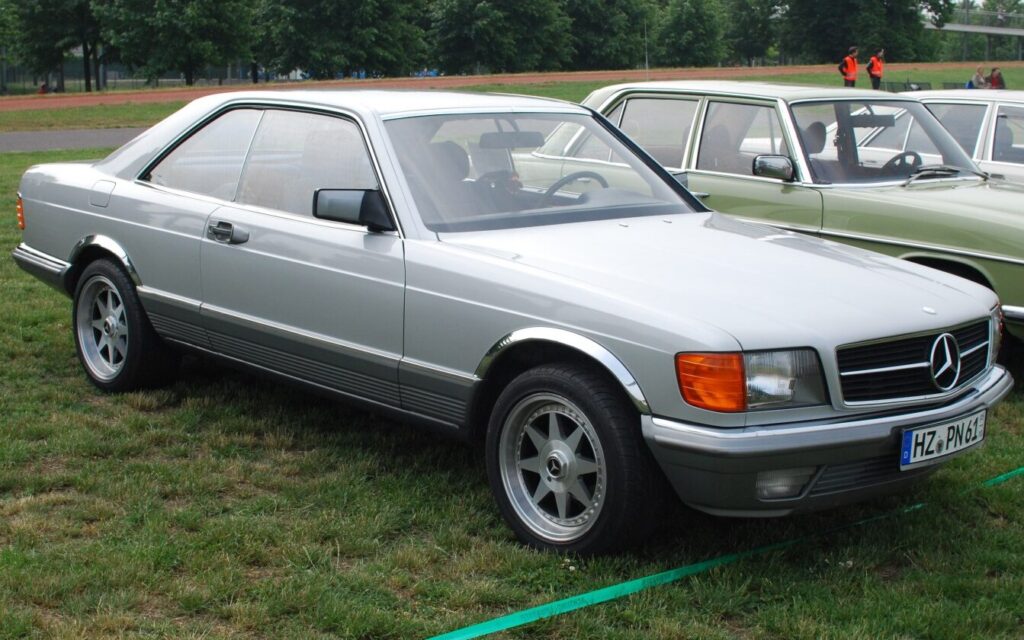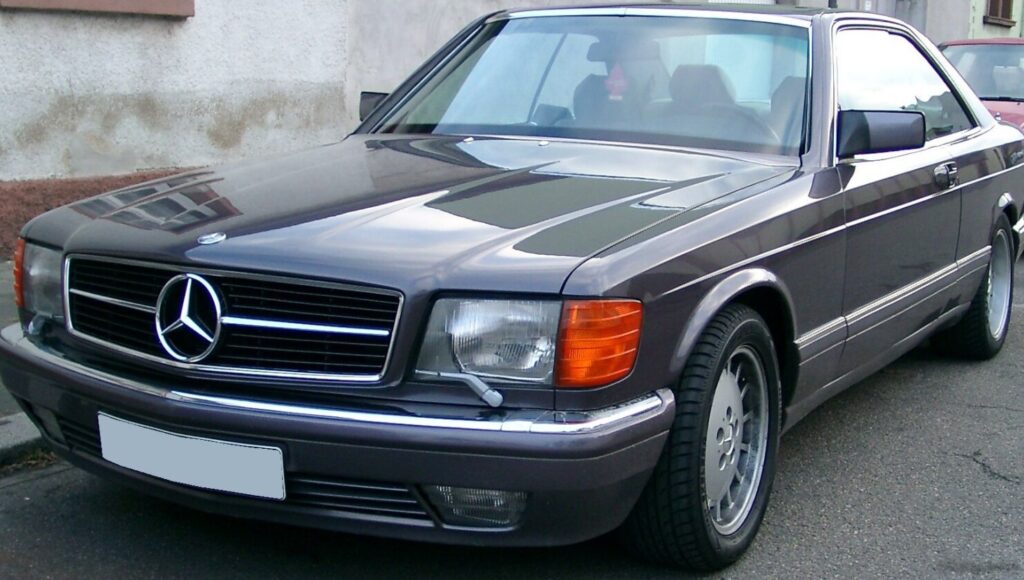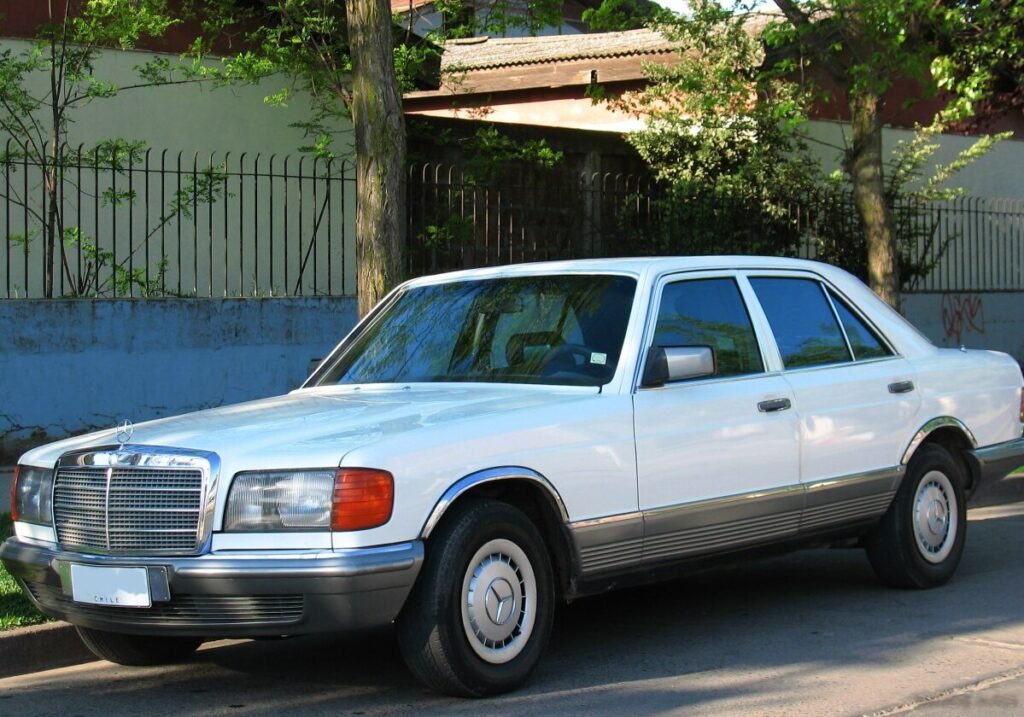
The Mercedes-Benz W126 S-Class, produced from 1979 to 1991, represented a significant leap forward in automotive luxury and safety. Within this generation, the 300 SD Turbodiesel Automatic, manufactured between September 1979 and October 1982, occupied a unique position. It offered the prestige of the S-Class with the fuel efficiency and durability of a turbocharged diesel engine, paired with the convenience of an automatic transmission. This variant catered to buyers prioritizing long-distance comfort and economy over outright performance, particularly in European markets where diesel fuel was more readily available and economically advantageous.
Technical Specifications
| Brand | Mercedes-Benz |
| Model | S-class |
| Generation | S-class SE (W126) |
| Type (Engine) | 300 SD Turbodiesel (121 Hp) Automatic |
| Start of production | September, 1979 |
| End of production | October, 1982 |
| Powertrain Architecture | Internal Combustion engine |
| Body type | Sedan |
| Seats | 5 |
| Doors | 4 |
| Fuel Type | Diesel |
| Acceleration 0 – 100 km/h | 15.2 sec |
| Acceleration 0 – 62 mph | 15.2 sec |
| Acceleration 0 – 60 mph | 14.4 sec |
| Maximum speed | 175 km/h (108.74 mph) |
| Weight-to-power ratio | 14 kg/Hp, 71.4 Hp/tonne |
| Weight-to-torque ratio | 7.4 kg/Nm, 135.7 Nm/tonne |
| Power | 121 Hp @ 4350 rpm |
| Power per litre | 40.4 Hp/l |
| Torque | 230 Nm @ 2400 rpm (169.64 lb.-ft. @ 2400 rpm) |
| Engine layout | Front, Longitudinal |
| Engine Model/Code | OM 617 D 30 A / 617.951 |
| Engine displacement | 2998 cm3 (182.95 cu. in.) |
| Number of cylinders | 5 |
| Engine configuration | Inline |
| Cylinder Bore | 90.9 mm (3.58 in.) |
| Piston Stroke | 92.4 mm (3.64 in.) |
| Compression ratio | 21.5:1 |
| Number of valves per cylinder | 2 |
| Fuel injection system | Multi-port manifold injection |
| Engine aspiration | Turbocharger |
| Valvetrain | SOHC |
| Engine oil capacity | 9.5 l (10.04 US qt | 8.36 UK qt) |
| Coolant | 12.5 l (13.21 US qt | 11 UK qt) |
| Kerb Weight | 1695-1705 kg (3736.84 – 3758.88 lbs.) |
| Max. weight | 2170 kg (4784.03 lbs.) |
| Max load | 465-475 kg (1025.15 – 1047.2 lbs.) |
| Trunk (boot) space – minimum | 505 l (17.83 cu. ft.) |
| Fuel tank capacity | 77 l (20.34 US gal | 16.94 UK gal) |
| Length | 5145 mm (202.56 in.) |
| Width | 1820 mm (71.65 in.) |
| Height | 1430 mm (56.3 in.) |
| Wheelbase | 2930 mm (115.35 in.) |
| Front track | 1545 mm (60.83 in.) |
| Rear (Back) track | 1517 mm (59.72 in.) |
| Drivetrain Architecture | The Internal combustion engine (ICE) drives the rear wheels of the vehicle. |
| Drive wheel | Rear wheel drive |
| Number of gears and type of gearbox | 4 gears, automatic transmission |
| Front suspension | Double wishbone |
| Rear suspension | Trailing arm |
| Front brakes | Ventilated discs |
| Rear brakes | Disc |
| Steering type | Cone worm with recirculation balls |
| Power steering | Hydraulic Steering |
| Tires size | Front wheel tires: 195/70 R14Rear wheel tires: 195/70 R14 |
| Wheel rims size | Front wheel rims: 6J x 14Rear wheel rims: 6J x 14 |
INTRODUCTION
The 300 SD Turbodiesel Automatic was introduced as part of the initial W126 S-Class lineup in 1979. It represented Mercedes-Benz’s commitment to offering a diesel option within its flagship range, appealing to customers who valued fuel economy and longevity. Positioned as a mid-range offering within the broader S-Class portfolio, it sat below the petrol-powered 380SE and 450SE models, but above any potential base-level offerings. The W126 platform itself was a significant advancement, featuring improved aerodynamics, a more spacious interior, and enhanced safety features compared to its predecessor, the W116.
Powertrain & Engine Architecture
The heart of the 300 SD was the OM617.951, a 3.0-liter inline-five cylinder diesel engine. This engine was a cornerstone of Mercedes-Benz diesel technology for many years, known for its robust construction and impressive durability. The ‘D 30 A’ designation indicated the displacement and the addition of a turbocharger. The turbocharger significantly boosted power output compared to the naturally aspirated versions of the OM617. Fuel injection was handled by a Bosch mechanical multi-port system, delivering fuel directly into each cylinder. The engine featured a single overhead camshaft (SOHC) operating two valves per cylinder. The automatic transmission was a four-speed unit, designed to provide smooth and comfortable shifting. This transmission was specifically tuned to work with the diesel engine’s torque characteristics, prioritizing fuel efficiency and drivability over sporty acceleration.
Driving Characteristics
The 300 SD Turbodiesel Automatic wasn’t designed for spirited driving. With 121 horsepower and 230 lb-ft of torque, acceleration was leisurely, taking around 15 seconds to reach 60 mph. However, the engine’s strong low-end torque made it a capable cruiser, particularly on highways. The automatic transmission, while smooth, wasn’t particularly quick to downshift, and the gear ratios were optimized for fuel economy rather than performance. Compared to the 380SE or 450SE, the 300 SD felt noticeably slower, but it offered a significant advantage in fuel consumption. The diesel engine’s characteristic clatter was present, though the W126’s excellent sound insulation minimized it within the cabin.
Equipment & Trim Levels
The 300 SD Turbodiesel Automatic came well-equipped for its time, reflecting the S-Class’s luxury positioning. Standard features included power windows, central locking, air conditioning, and a high-quality radio. The interior typically featured cloth upholstery, although leather was available as an option. Dashboard configuration was consistent across the W126 range, with a wood veneer trim and analog gauges. Optional extras included a sunroof, upgraded sound system, and rear seat headrests. The level of trim was generally consistent, with the focus being on providing a comfortable and refined driving experience.
Chassis & Braking
The W126 S-Class featured a robust chassis with independent suspension all around. The front suspension utilized double wishbones, while the rear employed a trailing arm setup. This configuration provided a comfortable ride and good handling characteristics. Braking was accomplished with ventilated discs at the front and solid discs at the rear. Power-assisted steering was standard, making maneuvering the large sedan relatively easy. The suspension was tuned for comfort, prioritizing a smooth ride over sporty handling. Stabilizer bars were fitted front and rear to reduce body roll during cornering.
Market Reception & Comparison
The 300 SD Turbodiesel Automatic was well-received in Europe, where diesel fuel was more affordable and readily available. It appealed to buyers who frequently undertook long journeys and valued fuel economy. Critics praised the engine’s durability and the car’s overall comfort. However, the relatively slow acceleration was a common criticism. Compared to the petrol-powered S-Class models, the 300 SD offered significantly better fuel economy but lacked the same level of performance. Against other diesel-powered luxury cars of the time, the 300 SD stood out for its refinement and build quality.
Legacy
The OM617 engine, found in the 300 SD, is renowned for its longevity and reliability. Many examples have surpassed 300,000 miles with proper maintenance. Today, the W126 S-Class, including the 300 SD, is gaining popularity among classic car enthusiasts. The diesel variant is particularly sought after by those who appreciate its fuel efficiency and robust engine. While parts availability can be a challenge, the OM617 engine is relatively simple to work on, and many aftermarket suppliers offer replacement components. The 300 SD Turbodiesel Automatic represents a unique chapter in the S-Class’s history, offering a blend of luxury, durability, and fuel economy that remains appealing even decades after its production ended.