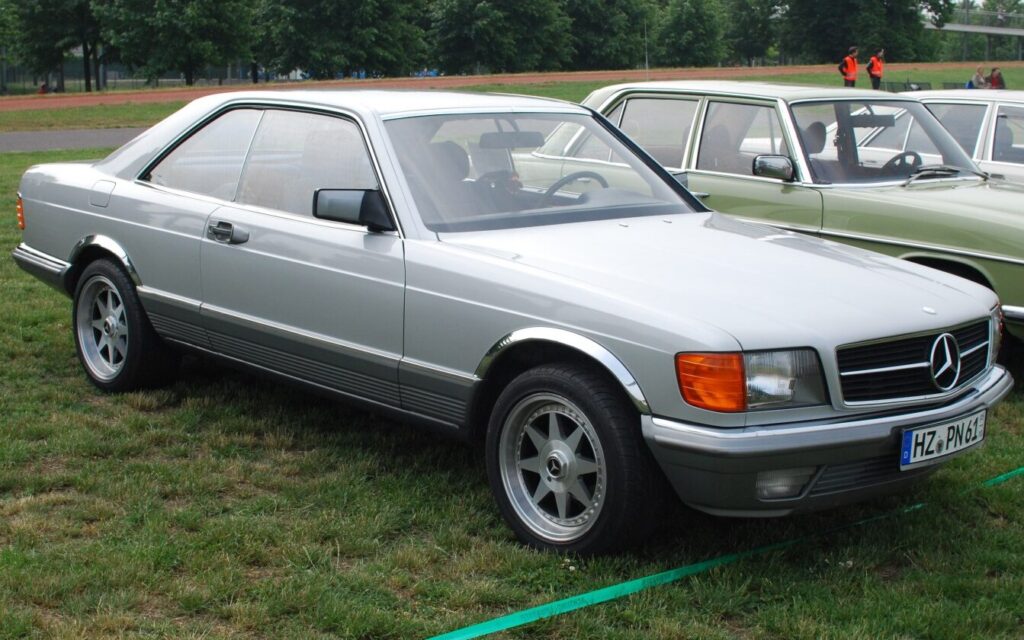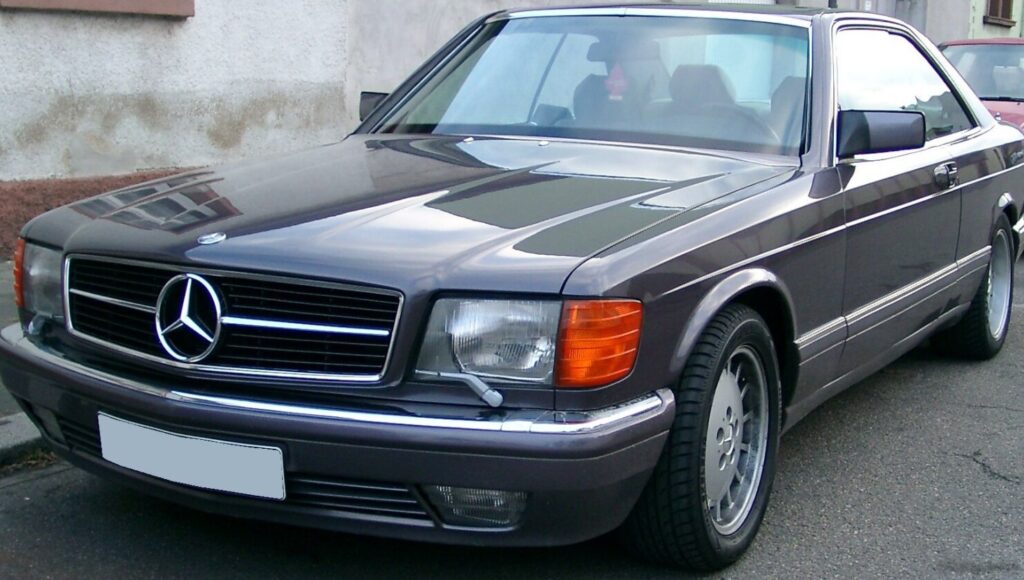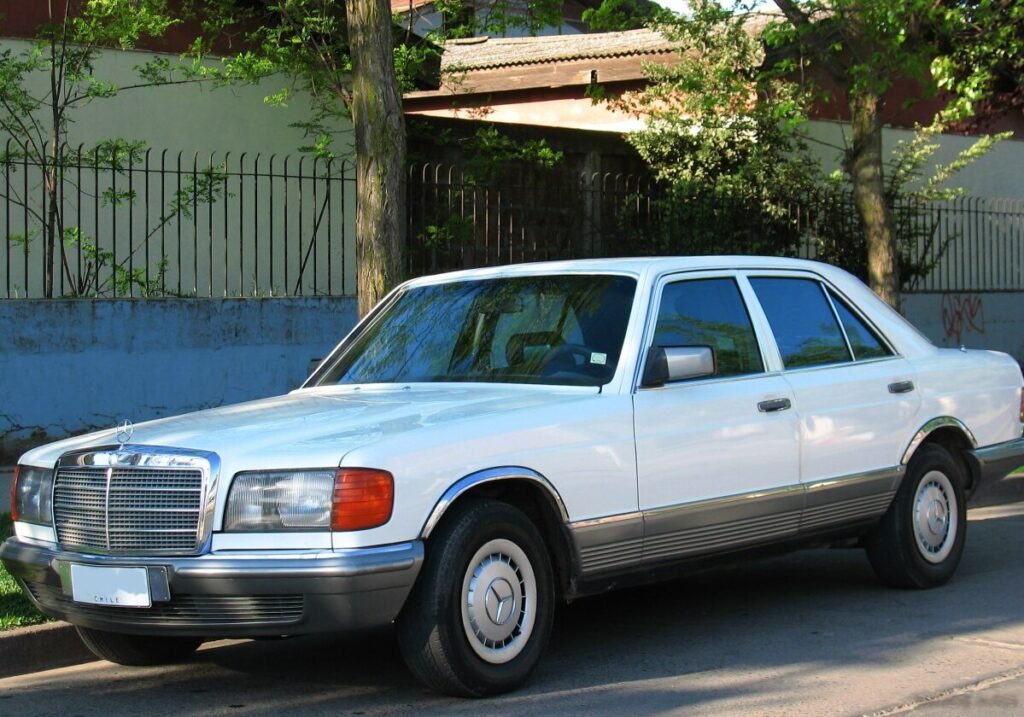
The Mercedes-Benz W126 S-Class, produced from 1979 to 1991, represented a significant leap forward in automotive luxury and safety. The 380 SE, introduced in May 1979 and continuing through October 1981, was a key model within the initial W126 lineup. Positioned as a mid-range offering, it bridged the gap between the entry-level 280 SE and the flagship 560 SE, offering a compelling blend of performance, comfort, and prestige. This variant was primarily aimed at the North American and European markets, where buyers sought a sophisticated and capable luxury sedan.
Technical Specifications
| Brand | Mercedes-Benz |
| Model | S-Class |
| Generation | S-Class SE (W126) |
| Type (Engine) | 380 SE V8 (218 Hp) Automatic |
| Start of production | May, 1979 |
| End of production | October, 1981 |
| Powertrain Architecture | Internal Combustion engine |
| Body type | Sedan |
| Seats | 5 |
| Doors | 4 |
| Fuel consumption (urban) | 18.8 l/100 km (12.5 US mpg, 15 UK mpg, 5.3 km/l) |
| Fuel consumption (extra urban) | 11.1 l/100 km (21.2 US mpg, 25.4 UK mpg, 9 km/l) |
| Fuel Type | Petrol (Gasoline) |
| Acceleration 0 – 100 km/h | 9.3 sec |
| Acceleration 0 – 62 mph | 9.3 sec |
| Acceleration 0 – 60 mph | 8.8 sec |
| Maximum speed | 215 km/h (133.59 mph) |
| Weight-to-power ratio | 7.3 kg/Hp, 136.7 Hp/tonne |
| Weight-to-torque ratio | 5.2 kg/Nm, 191.2 Nm/tonne |
| Power | 218 Hp @ 5500 rpm |
| Power per litre | 57.1 Hp/l |
| Torque | 305 Nm @ 4000 rpm (224.96 lb.-ft. @ 4000 rpm) |
| Engine layout | Front, Longitudinal |
| Engine Model/Code | M 116 E 38 / 116.961 |
| Engine displacement | 3818 cm3 (232.99 cu. in.) |
| Number of cylinders | 8 |
| Engine configuration | V-engine |
| Cylinder Bore | 92 mm (3.62 in.) |
| Piston Stroke | 71.8 mm (2.83 in.) |
| Compression ratio | 9:1 |
| Number of valves per cylinder | 2 |
| Fuel injection system | Multi-port manifold injection |
| Engine aspiration | Naturally aspirated engine |
| Valvetrain | SOHC |
| Engine oil capacity | 9 l (9.51 US qt | 7.92 UK qt) |
| Coolant | 12.5 l (13.21 US qt | 11 UK qt) |
| Kerb Weight | 1595 kg (3516.37 lbs.) |
| Max. weight | 2115 kg (4662.78 lbs.) |
| Max load | 520 kg (1146.4 lbs.) |
| Trunk (boot) space – minimum | 505 l (17.83 cu. ft.) |
| Fuel tank capacity | 90 l (23.78 US gal | 19.8 UK gal) |
| Length | 4995 mm (196.65 in.) |
| Width | 1820 mm (71.65 in.) |
| Height | 1436 mm (56.54 in.) |
| Wheelbase | 2930 mm (115.35 in.) |
| Front track | 1545 mm (60.83 in.) |
| Rear (Back) track | 1517 mm (59.72 in.) |
| Drivetrain Architecture | The Internal combustion engine (ICE) drives the rear wheels of the vehicle. |
| Drive wheel | Rear wheel drive |
| Number of gears and type of gearbox | 4 gears, automatic transmission |
| Front suspension | Double wishbone |
| Rear suspension | Trailing arm |
| Front brakes | Ventilated discs |
| Rear brakes | Disc |
| Steering type | Cone worm with recirculation balls |
| Power steering | Hydraulic Steering |
| Tires size | Front wheel tires: 205/70 R14Rear wheel tires: 205/70 R14 |
| Wheel rims size | Front wheel rims: 6.5J x 14Rear wheel rims: 6.5J x 14 |
Powertrain & Engine Architecture
The heart of the 380 SE was the M116 E38 3.8-liter V8 engine. This engine, a cornerstone of Mercedes-Benz’s engineering prowess, featured a cast-iron block and aluminum cylinder heads. It employed a single overhead camshaft (SOHC) design with two valves per cylinder. Fuel delivery was handled by a Bosch K-Jetronic multi-port fuel injection system, known for its reliability and precise metering. The engine produced 218 horsepower at 5,500 rpm and 305 Nm (224.96 lb-ft) of torque at 4,000 rpm. The engine’s relatively high compression ratio of 9:1 contributed to its performance. Paired with the engine was a four-speed automatic transmission, a robust unit designed for smooth and comfortable shifts. This transmission was a key component in delivering the refined driving experience expected of an S-Class.
Driving Characteristics
The 380 SE Automatic offered a distinctly comfortable and refined driving experience. While not overtly sporty, the V8 engine provided ample power for effortless cruising and confident overtaking. Acceleration from 0 to 60 mph took approximately 8.8 seconds, and the car could reach a top speed of 215 km/h (133.59 mph). The automatic transmission, while smooth, did result in some power loss compared to the available five-speed manual transmission. Gear ratios were optimized for relaxed highway driving, with a focus on minimizing engine noise and maximizing fuel efficiency. Compared to the later 560 SE, the 380 SE offered a more balanced driving experience, avoiding the sometimes-overwhelming power of the larger engine. The suspension, tuned for comfort, absorbed bumps and imperfections in the road effectively.
Equipment & Trim Levels
The 380 SE came standard with a generous array of features befitting its luxury status. These included power windows, central locking, power-assisted steering, and air conditioning. The interior was typically upholstered in high-quality leather, with wood trim adorning the dashboard and door panels. Optional extras included a sunroof, upgraded audio systems, and a self-leveling suspension. The dashboard layout was classic Mercedes-Benz, with clearly marked gauges and intuitive controls. The 380 SE’s trim level was generally considered a step above the base 280 SE, offering more luxurious appointments and a more powerful engine.
Chassis & Braking
The W126 S-Class featured a robust chassis with independent suspension all around. The front suspension utilized a double wishbone design, while the rear employed a trailing arm setup. This configuration provided a comfortable ride and predictable handling. Braking duties were handled by ventilated disc brakes at the front and solid discs at the rear. Power assistance was standard. The car’s relatively heavy weight (1595 kg / 3516.37 lbs) necessitated the effective braking system. Stabilizer bars were fitted front and rear to reduce body roll during cornering.
Market Reception & Comparison
The 380 SE was well-received by critics and buyers alike. It was praised for its comfortable ride, refined interior, and powerful engine. Compared to the 280 SE, the 380 SE offered a noticeable performance improvement. However, the 560 SE, with its larger engine, provided even more power, albeit at a higher price point and with slightly worse fuel economy. Fuel consumption was a concern for some, with the 380 SE averaging around 18.8 l/100 km (12.5 US mpg) in urban driving. Reliability was generally good, although the complex K-Jetronic fuel injection system could require specialized maintenance.
Legacy
The W126 S-Class, including the 380 SE variant, is now considered a classic Mercedes-Benz. The M116 engine, while aging, is known for its durability when properly maintained. The 380 SE remains a sought-after model among enthusiasts, offering a blend of classic styling, luxury, and performance. Finding well-maintained examples can be challenging, as age and mileage have taken their toll on many vehicles. However, a well-preserved 380 SE represents a piece of automotive history and a testament to Mercedes-Benz’s commitment to quality and engineering excellence. The car’s robust construction and relatively simple mechanicals (compared to later models) make it a viable candidate for restoration and continued enjoyment.