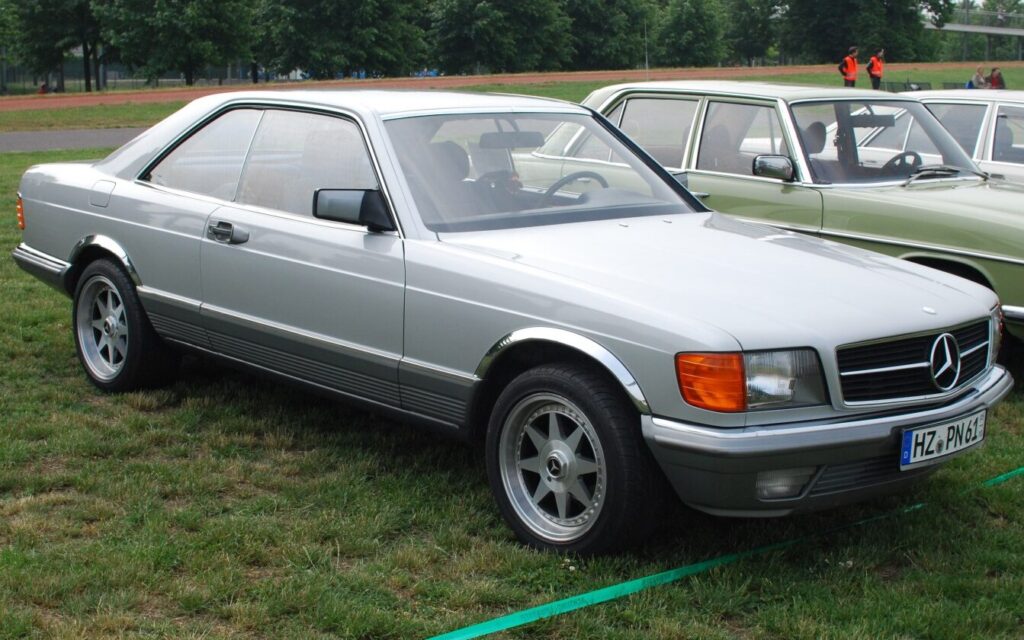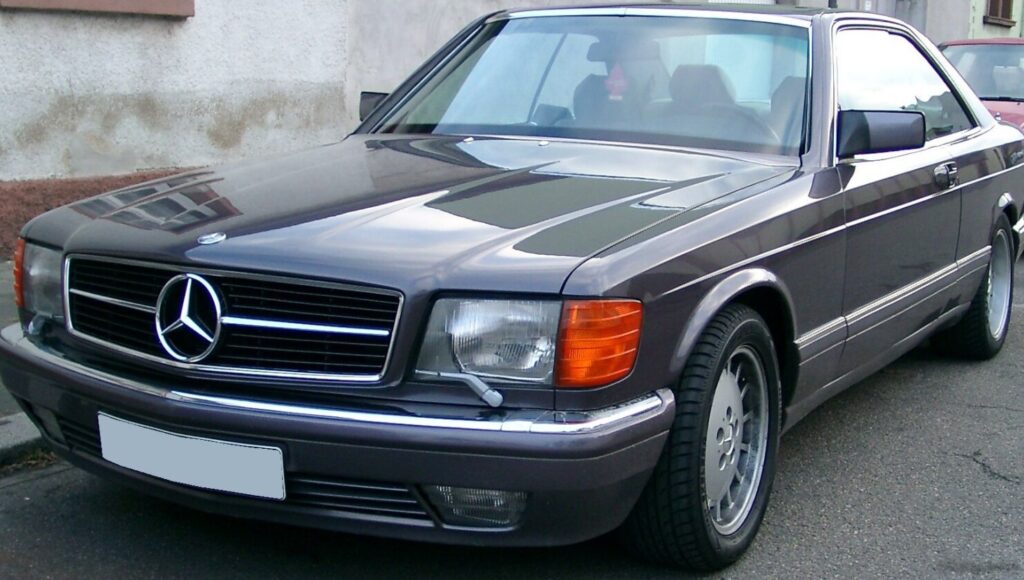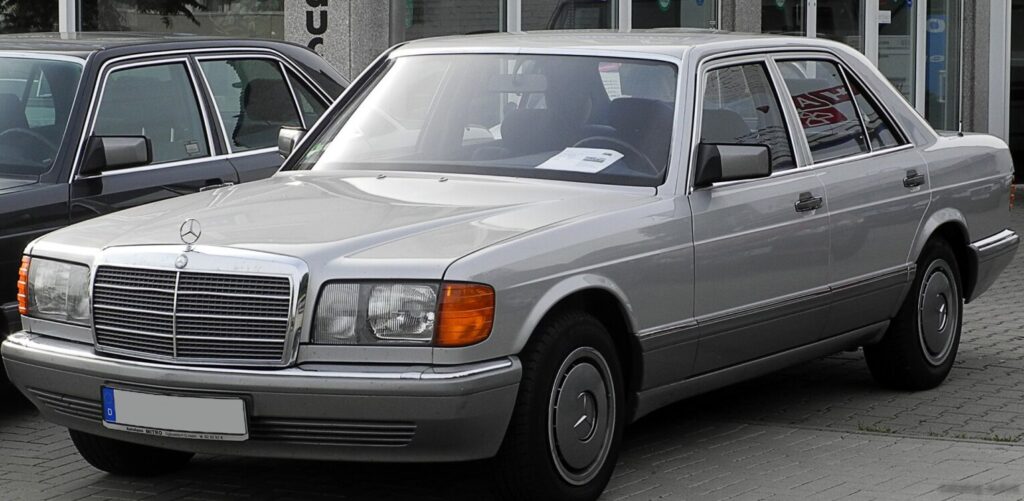
The Mercedes-Benz 260 SE, a member of the W126 S-Class family produced from June 1985 to February 1991, served as an accessible entry point into the flagship sedan lineup after the 1985 facelift. Positioned below the 300 SE and 560 SE, the 260 SE balanced luxury, comfort, and respectable performance, attracting buyers desiring the S-Class experience without the premium price of larger-displacement engines. Primarily marketed in Europe and other regions where smaller-engined luxury vehicles were favored due to taxation and fuel economy, the W126 generation established the S-Class as a benchmark for automotive engineering and build quality.
Technical Specifications
| Brand | Mercedes-Benz |
| Model | S-class |
| Generation | S-class SE (W126, facelift 1985) |
| Type (Engine) | 260 SE CAT (160 Hp) |
| Start of production | June, 1985 |
| End of production | February, 1991 |
| Powertrain Architecture | Internal Combustion engine |
| Body type | Sedan |
| Seats | 5 |
| Doors | 4 |
| Fuel consumption (urban) | 14.3 l/100 km (16.4 US mpg, 19.8 UK mpg, 7 km/l) |
| Fuel consumption (extra urban) | 7.7 l/100 km (30.5 US mpg, 36.7 UK mpg, 13 km/l) |
| Fuel Type | Petrol (Gasoline) |
| Acceleration 0 – 100 km/h | 10.5 sec |
| Acceleration 0 – 62 mph | 10.5 sec |
| Acceleration 0 – 60 mph | 10 sec |
| Maximum speed | 200 km/h (124.27 mph) |
| Weight-to-power ratio | 9.5 kg/Hp, 105.3 Hp/tonne |
| Weight-to-torque ratio | 6.9 kg/Nm, 144.7 Nm/tonne |
| Power | 160 Hp @ 5800 rpm |
| Power per litre | 61.6 Hp/l |
| Torque | 220 Nm @ 4600 rpm (162.26 lb.-ft. @ 4600 rpm) |
| Engine layout | Front, Longitudinal |
| Engine Model/Code | M 103 E 26 / 103.941 |
| Engine displacement | 2599 cm3 (158.6 cu. in.) |
| Number of cylinders | 6 |
| Engine configuration | Inline |
| Cylinder Bore | 82.9 mm (3.26 in.) |
| Piston Stroke | 80.25 mm (3.16 in.) |
| Compression ratio | 9.2:1 |
| Number of valves per cylinder | 2 |
| Fuel injection system | Multi-port manifold injection |
| Engine aspiration | Naturally aspirated engine |
| Valvetrain | SOHC |
| Engine oil capacity | 6 l (6.34 US qt | 5.28 UK qt) |
| Coolant | 8 l (8.45 US qt | 7.04 UK qt) |
| Kerb Weight | 1520 kg (3351.03 lbs.) |
| Max. weight | 2040 kg (4497.43 lbs.) |
| Max load | 520 kg (1146.4 lbs.) |
| Fuel tank capacity | 90 l (23.78 US gal | 19.8 UK gal) |
| Length | 5020 mm (197.64 in.) |
| Width | 1820 mm (71.65 in.) |
| Height | 1437 mm (56.57 in.) |
| Wheelbase | 2930 mm (115.35 in.) |
| Front track | 1555 mm (61.22 in.) |
| Rear track | 1527 mm (60.12 in.) |
| Drivetrain Architecture | The Internal combustion engine (ICE) drives the rear wheels of the vehicle. |
| Drive wheel | Rear wheel drive |
| Number of gears and type of gearbox | 5 gears, manual transmission |
| Front suspension | Double wishbone |
| Rear suspension | Trailing arm |
| Front brakes | Ventilated discs |
| Rear brakes | Disc |
| Steering type | Cone worm with recirculation balls |
| Power steering | Hydraulic Steering |
| Tires size | Front wheel tires: 205/65 R15Rear wheel tires: 205/65 R15 |
| Wheel rims size | Front wheel rims: 7J x 15Rear wheel rims: 7J x 15 |
Powertrain & Engine Architecture
The 260 SE was powered by the M103 E 26 engine, a 2.6-liter inline-six cylinder gasoline engine. This engine, a staple of the Mercedes-Benz lineup, featured a single overhead camshaft (SOHC) valvetrain and Bosch K-Jetronic fuel injection. The K-Jetronic system, while advanced for its era, was known for its mechanical complexity and sensitivity to fuel quality. The engine generated 160 horsepower at 5800 rpm and 220 Nm (162 lb-ft) of torque at 4600 rpm. The engine’s design prioritized smoothness and refinement over peak power output. The 260 SE was typically equipped with a 5-speed manual transmission, though a 4-speed automatic transmission was offered as an option. The automatic, while providing convenience, did diminish acceleration and fuel efficiency.
Driving Characteristics
The 260 SE delivered a comfortable and refined driving experience, characteristic of the S-Class. With 160 hp, acceleration was adequate but not particularly quick. The 0-60 mph time hovered around 10 seconds, making it slower than the 300 SE or 560 SE. The automatic transmission, while smooth, resulted in some power loss and a less engaging driving experience compared to the manual variant. The suspension, tuned for comfort, absorbed most road imperfections, providing a smooth ride. Steering was precise but lacked the direct feel of more contemporary systems. Overall, the 260 SE emphasized a relaxed and luxurious driving experience over sporty performance.
Equipment & Trim Levels
The 260 SE came standard with a comprehensive array of features, befitting its luxury sedan status. Standard equipment included power windows, central locking, air conditioning, and a quality sound system. Interior upholstery was typically cloth, with leather available as an upgrade. The dashboard featured wood trim and traditional analog gauges. Optional extras included a sunroof, heated seats, and a more sophisticated audio system. The trim level remained largely consistent across 260 SE models, with options allowing buyers to personalize their vehicles.
Chassis & Braking
The W126 S-Class boasted a robust chassis with independent suspension on all four wheels. The front suspension utilized double wishbones, while the rear employed a trailing arm setup. This configuration provided a comfortable ride and competent handling. The 260 SE was equipped with ventilated disc brakes at the front and solid disc brakes at the rear. Power-assisted steering was standard, easing maneuverability. The tires were typically 205/65 R15, striking a balance between comfort and grip.
Market Reception & Comparison
The 260 SE was generally well-received by automotive critics, who lauded its comfort, build quality, and refinement. However, some reviewers pointed out its relatively modest performance compared to the larger-engined S-Class models. Compared to the 300 SE, the 260 SE offered a more affordable entry point into the S-Class range, but at the cost of performance. Fuel economy was a strong suit for the 260 SE, making it a more practical choice for drivers mindful of running costs. Reliability was generally good, although the K-Jetronic fuel injection system occasionally required maintenance.
Legacy
The Mercedes-Benz 260 SE, while not the most powerful or highly sought-after variant of the W126 S-Class, remains a desirable classic car. Its solid construction and relatively straightforward mechanicals make it a reasonably easy vehicle to maintain. The M103 engine is known for its durability, and parts availability is generally good. Today, the 260 SE represents an accessible way to experience the luxury and prestige of the W126 S-Class, appealing to enthusiasts and collectors alike. Well-maintained examples are becoming increasingly sought after, and their values have been steadily appreciating in recent years. The 260 SE stands as a testament to Mercedes-Benz’s dedication to quality and engineering excellence during the 1980s.