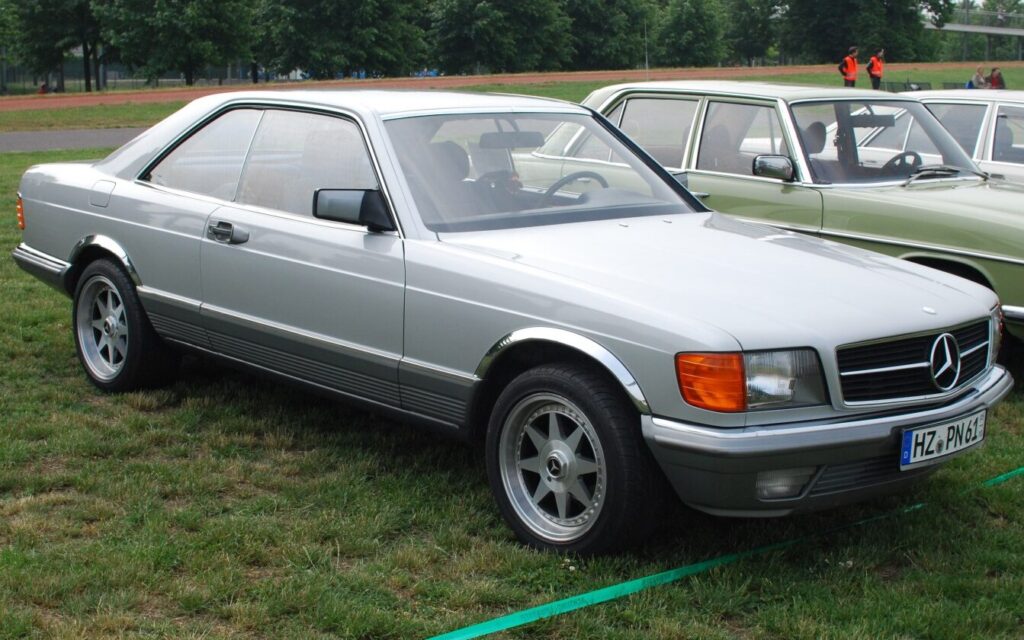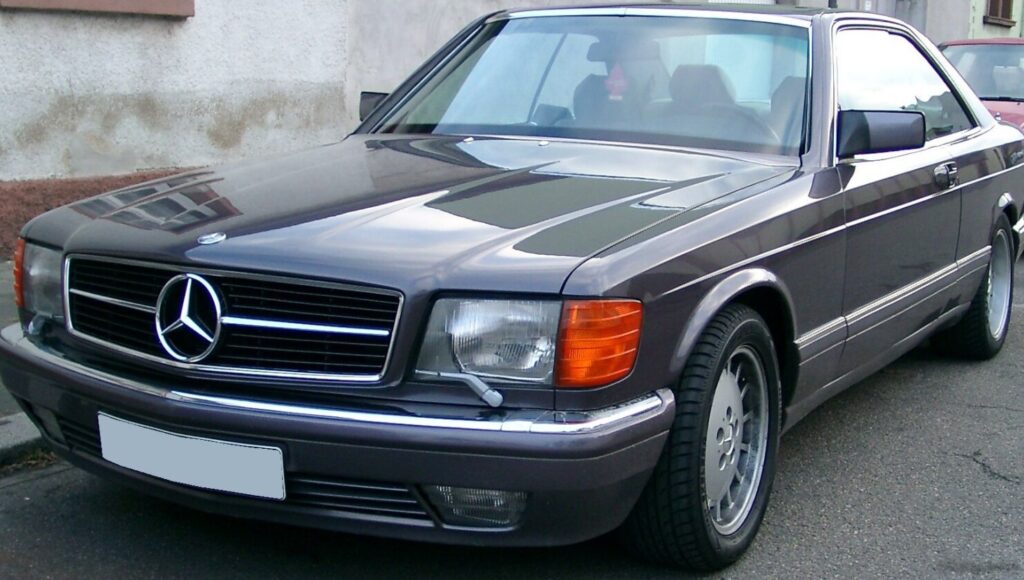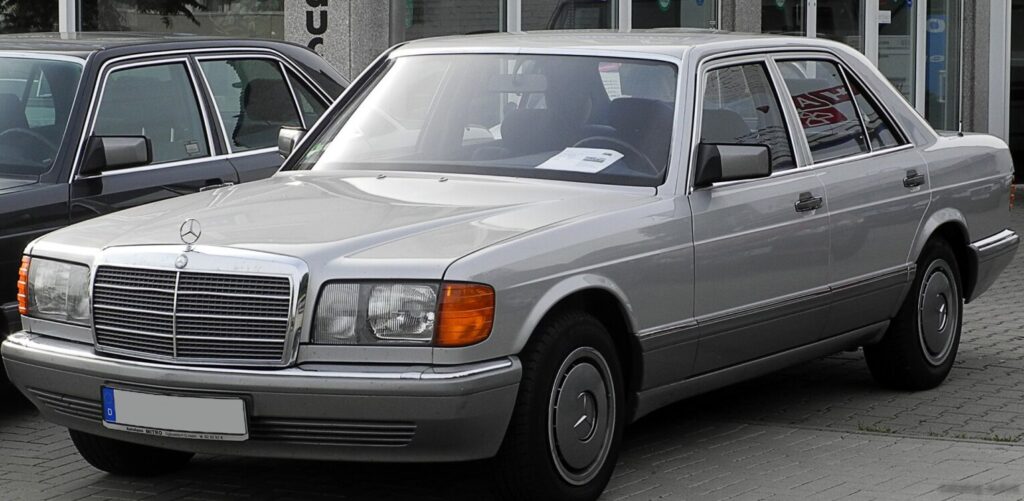
The Mercedes-Benz S-Class 500 SE, part of the W126 facelift series produced from September 1987 to August 1991, represented the pinnacle of luxury and performance for the German automaker during that era. Positioned as the top-of-the-line model within the W126 range, the 500 SE featured a potent 5.0-liter V8 engine paired exclusively with a four-speed automatic transmission. This combination aimed to deliver effortless power and a refined driving experience, catering to buyers who demanded both prestige and capability. The W126 S-Class, overall, was a significant step forward for Mercedes-Benz, introducing numerous technological advancements and setting a new standard for automotive safety and comfort.
Technical Specifications
| Brand | Mercedes-Benz |
| Model | S-class |
| Generation | S-class SE (W126, facelift 1985) |
| Type (Engine) | 500 SE V8 (265 Hp) Automatic |
| Start of production | September, 1987 |
| End of production | August, 1991 |
| Powertrain Architecture | Internal Combustion engine |
| Body type | Sedan |
| Seats | 5 |
| Doors | 4 |
| Fuel consumption (urban) | 15.8 l/100 km (14.9 US mpg, 17.9 UK mpg, 6.3 km/l) |
| Fuel consumption (extra urban) | 8.8 l/100 km (26.7 US mpg, 32.1 UK mpg, 11.4 km/l) |
| Fuel Type | Petrol (Gasoline) |
| Acceleration 0 – 100 km/h | 7.2 sec |
| Acceleration 0 – 62 mph | 7.2 sec |
| Acceleration 0 – 60 mph | 6.8 sec |
| Maximum speed | 235 km/h (146.02 mph) |
| Weight-to-power ratio | 6.3 kg/Hp, 158.7 Hp/tonne |
| Weight-to-torque ratio | 4.1 kg/Nm, 242.5 Nm/tonne |
| Power | 265 Hp @ 5200 rpm |
| Power per litre | 53.3 Hp/l |
| Torque | 405 Nm @ 4000 rpm (298.71 lb.-ft. @ 4000 rpm) |
| Engine layout | Front, Longitudinal |
| Engine Model/Code | M 117 E 50 / 117.965 |
| Engine displacement | 4973 cm3 (303.47 cu. in.) |
| Number of cylinders | 8 |
| Engine configuration | V-engine |
| Cylinder Bore | 96.5 mm (3.8 in.) |
| Piston Stroke | 85 mm (3.35 in.) |
| Compression ratio | 10:1 |
| Number of valves per cylinder | 2 |
| Fuel injection system | Multi-port manifold injection |
| Engine aspiration | Naturally aspirated engine |
| Valvetrain | SOHC |
| Engine oil capacity | 8 l (8.45 US qt | 7.04 UK qt) |
| Coolant | 13.5 l (14.27 US qt | 11.88 UK qt) |
| Kerb Weight | 1670 kg (3681.72 lbs.) |
| Max. weight | 2190 kg (4828.12 lbs.) |
| Max load | 520 kg (1146.4 lbs.) |
| Fuel tank capacity | 90 l (23.78 US gal | 19.8 UK gal) |
| Length | 5020 mm (197.64 in.) |
| Width | 1820 mm (71.65 in.) |
| Height | 1437 mm (56.57 in.) |
| Wheelbase | 2930 mm (115.35 in.) |
| Front track | 1555 mm (61.22 in.) |
| Rear track | 1527 mm (60.12 in.) |
| Drivetrain Architecture | The Internal combustion engine (ICE) drives the rear wheels of the vehicle. |
| Drive wheel | Rear wheel drive |
| Number of gears and type of gearbox | 4 gears, automatic transmission |
| Front suspension | Double wishbone |
| Rear suspension | Threaded twist beam |
| Front brakes | Ventilated discs |
| Rear brakes | Disc |
| Assisting systems | ABS (Anti-lock braking system) |
| Steering type | Cone worm with recirculation balls |
| Power steering | Hydraulic Steering |
| Tires size | Front wheel tires: 205/65 R15 Rear wheel tires: 205/65 R15 |
| Wheel rims size | Front wheel rims: 7J x 15 Rear wheel rims: 7J x 15 |
Powertrain & Engine Architecture
The heart of the 500 SE was the M117 E 50 engine, a 4.97-liter (303.47 cubic inches) naturally aspirated V8. This engine, a descendant of the long-running M117 family, featured a single overhead camshaft (SOHC) design with two valves per cylinder. Bosch K-Jetronic fuel injection delivered fuel to the cylinders, a system known for its reliability but less precise than later electronic injection systems. The engine produced 265 horsepower at 5200 rpm and 405 Nm (298.71 lb-ft) of torque at 4000 rpm. The four-speed automatic transmission, a robust unit for its time, was specifically tuned to complement the V8’s power delivery, prioritizing smooth shifts and comfortable cruising. While not a particularly advanced transmission by modern standards, it was well-suited to the car’s grand touring character.
Driving Characteristics
The 500 SE offered a distinctly different driving experience compared to the smaller-engined W126 models, such as the 280 SE or 300 SE. The V8 provided ample power for effortless acceleration and high-speed cruising. The 0-60 mph sprint took approximately 6.8 seconds, a respectable figure for a large luxury sedan of the late 1980s. The automatic transmission, while smooth, did result in some power loss compared to the available five-speed manual transmission found in some other W126 variants. However, the automatic’s ease of use and relaxed nature aligned perfectly with the car’s intended purpose as a luxurious and comfortable grand tourer. The gear ratios were optimized for cruising, making long highway journeys a breeze.
Equipment & Trim Levels
The 500 SE came standard with a comprehensive list of features befitting its flagship status. Leather upholstery was standard, along with power-adjustable front seats with memory function. Climate control, power windows, central locking, and a high-quality sound system were also included. Optional extras included a sunroof, upgraded sound systems, and rear seat entertainment. The interior trim was typically finished in wood veneer, adding to the car’s luxurious ambiance. The exterior featured color-coded bumpers and side skirts, and alloy wheels were standard.
Chassis & Braking
The W126 S-Class featured a robust chassis with double wishbone suspension at the front and a threaded twist beam rear axle. This setup provided a comfortable ride while maintaining good handling characteristics. The 500 SE benefited from slightly stiffer suspension components compared to the lower-spec models to better manage the increased weight and power. Braking duties were handled by ventilated discs at the front and solid discs at the rear, assisted by an Anti-lock Braking System (ABS). The steering was a recirculating ball system with hydraulic power assistance, providing a relatively heavy but precise feel.
Market Reception & Comparison
The 500 SE was generally well-received by automotive critics, who praised its powerful engine, luxurious interior, and comfortable ride. However, its fuel consumption was often noted as being high, reflecting the demands of the large V8 engine. Compared to the 300 SE, the 500 SE offered significantly more performance but at a higher price point and with increased running costs. The 500 SE was positioned as a direct competitor to other flagship luxury sedans from BMW and Jaguar.
Legacy
The M117 engine, while not known for being particularly fuel-efficient, proved to be remarkably durable and reliable. Many 500 SE models have remained on the road for decades, a testament to the quality of engineering and construction. Today, the W126 S-Class, particularly the 500 SE, is gaining recognition as a classic car, appreciated for its timeless design, luxurious features, and robust mechanicals. While maintenance can be expensive due to the age of the vehicle and the complexity of its systems, the 500 SE remains a desirable and rewarding classic for enthusiasts who appreciate a bygone era of automotive luxury.