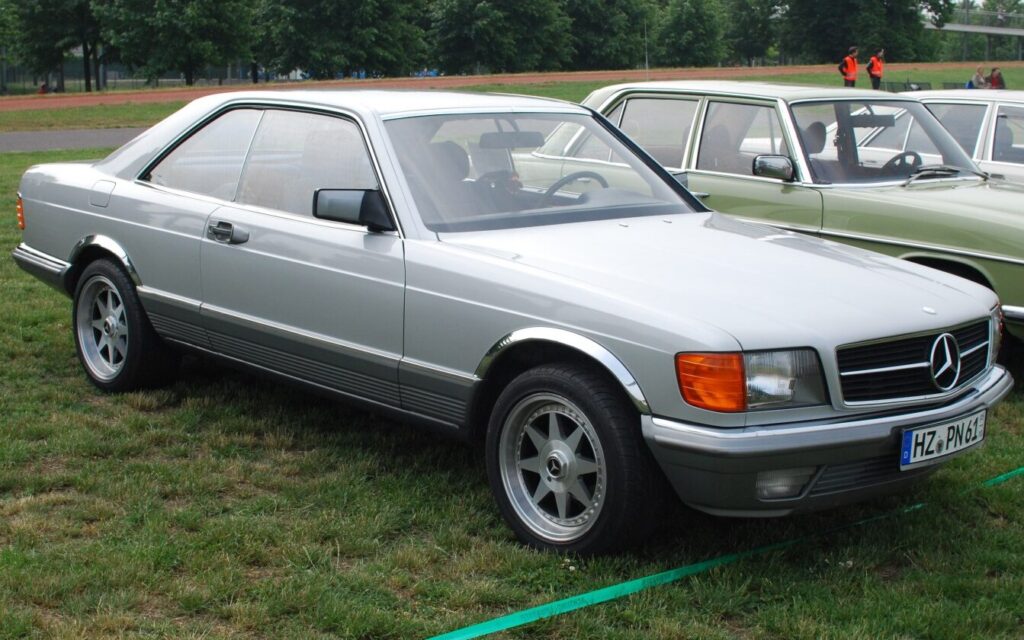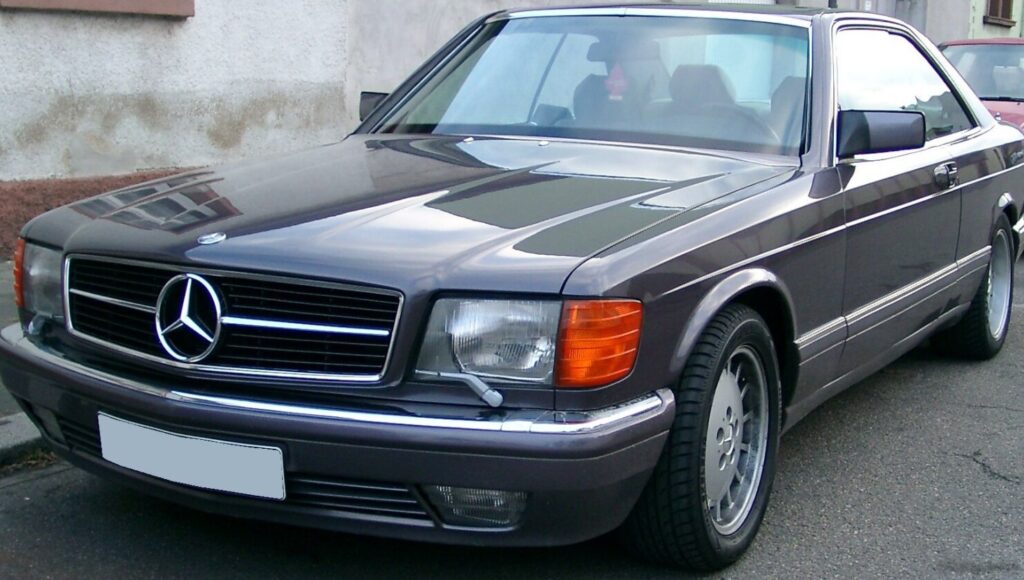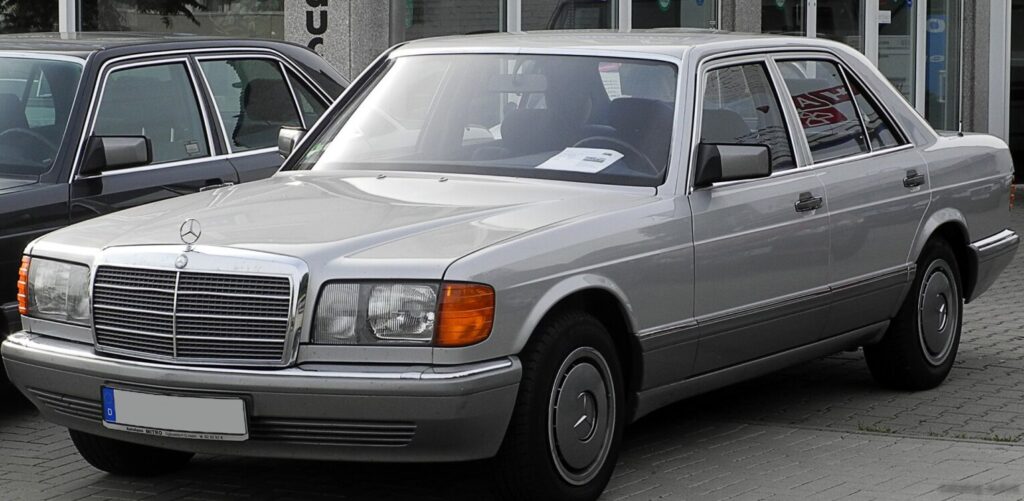
The Mercedes-Benz S-Class 500 SE, part of the W126 facelift series produced from September 1987 to August 1991, represented a pinnacle of German engineering and luxury. Positioned as the top-of-the-line, naturally aspirated model in the S-Class range, it offered a significant step up in performance and refinement compared to the 280 SE and 300 SE variants. The W126 generation, introduced in 1979, established many of the safety and technological features that would become hallmarks of the S-Class, and the 500 SE continued this tradition with a focus on powerful, smooth operation and understated elegance. This model was primarily aimed at the North American and European markets, where buyers demanded both prestige and substantial performance from their flagship sedans.
Technical Specifications
| Brand | Mercedes-Benz |
| Model | S-class |
| Generation | S-class SE (W126, facelift 1985) |
| Type (Engine) | 500 SE V8 CAT (252 Hp) Automatic |
| Start of production | September, 1987 |
| End of production | August, 1991 |
| Powertrain Architecture | Internal Combustion engine |
| Body type | Sedan |
| Seats | 5 |
| Doors | 4 |
| Fuel consumption (urban) | 16.2 l/100 km (14.5 US mpg, 17.4 UK mpg, 6.2 km/l) |
| Fuel consumption (extra urban) | 9.4 l/100 km (25 US mpg, 30.1 UK mpg, 10.6 km/l) |
| Fuel Type | Petrol (Gasoline) |
| Acceleration 0 – 100 km/h | 7.5 sec |
| Acceleration 0 – 62 mph | 7.5 sec |
| Acceleration 0 – 60 mph | 7.1 sec |
| Maximum speed | 230 km/h (142.92 mph) |
| Weight-to-power ratio | 6.6 kg/Hp, 150.9 Hp/tonne |
| Weight-to-torque ratio | 4.3 kg/Nm, 233.5 Nm/tonne |
| Power | 252 Hp @ 5200 rpm |
| Power per litre | 50.7 Hp/l |
| Torque | 390 Nm @ 3750 rpm (287.65 lb.-ft. @ 3750 rpm) |
| Engine layout | Front, Longitudinal |
| Engine Model/Code | M 117 E 50 / 117.965 |
| Engine displacement | 4973 cm3 (303.47 cu. in.) |
| Number of cylinders | 8 |
| Engine configuration | V-engine |
| Cylinder Bore | 96.5 mm (3.8 in.) |
| Piston Stroke | 85 mm (3.35 in.) |
| Compression ratio | 10:1 |
| Number of valves per cylinder | 2 |
| Fuel injection system | Multi-port manifold injection |
| Engine aspiration | Naturally aspirated engine |
| Valvetrain | SOHC |
| Engine oil capacity | 8 l (8.45 US qt | 7.04 UK qt) |
| Coolant | 13.5 l (14.27 US qt | 11.88 UK qt) |
| Kerb Weight | 1670 kg (3681.72 lbs.) |
| Max. weight | 2190 kg (4828.12 lbs.) |
| Max load | 520 kg (1146.4 lbs.) |
| Fuel tank capacity | 90 l (23.78 US gal | 19.8 UK gal) |
| Length | 5020 mm (197.64 in.) |
| Width | 1820 mm (71.65 in.) |
| Height | 1437 mm (56.57 in.) |
| Wheelbase | 2930 mm (115.35 in.) |
| Front track | 1555 mm (61.22 in.) |
| Rear track | 1527 mm (60.12 in.) |
| Drivetrain Architecture | The Internal combustion engine (ICE) drives the rear wheels of the vehicle. |
| Drive wheel | Rear wheel drive |
| Number of gears and type of gearbox | 4 gears, automatic transmission |
| Front suspension | Double wishbone |
| Rear suspension | Threaded twist beam |
| Front brakes | Ventilated discs |
| Rear brakes | Disc |
| Assisting systems | ABS (Anti-lock braking system) |
| Steering type | Cone worm with recirculation balls |
| Power steering | Hydraulic Steering |
| Tires size | Front wheel tires: 205/65 R15Rear wheel tires: 205/65 R15 |
| Wheel rims size | Front wheel rims: 7J x 15Rear wheel rims: 7J x 15 |
Powertrain & Engine Architecture
The heart of the 500 SE was the M117 E 50 engine, a 4.97-liter (303.47 cubic inch) naturally aspirated V8. This engine, a descendant of the earlier M117 series, featured a single overhead camshaft (SOHC) design with two valves per cylinder. Bosch K-Jetronic fuel injection delivered fuel to the cylinders, a system known for its reliability and smooth operation, though less efficient than later electronic injection systems. The engine produced 252 horsepower at 5200 rpm and 390 Nm (287.65 lb-ft) of torque at 3750 rpm. The engine’s robust construction and relatively conservative tuning contributed to its longevity. The 500 SE exclusively used a four-speed automatic transmission, designed to provide smooth and effortless shifting. This transmission was geared for comfortable cruising and acceleration, prioritizing refinement over outright performance.
Driving Characteristics
The 500 SE offered a distinctly different driving experience compared to its six-cylinder siblings. While the 280 SE and 300 SE provided adequate performance, the 500 SE delivered a noticeable surge of power, enabling brisk acceleration and effortless highway cruising. The 0-60 mph time of around 7.1 seconds was respectable for the era. The automatic transmission, while smooth, did result in some power loss compared to a manual transmission, but it perfectly suited the car’s luxury-oriented character. The gear ratios were optimized for relaxed driving, with a focus on providing ample torque in everyday situations. The car felt substantial and planted on the road, offering a secure and comfortable ride.
Equipment & Trim Levels
The 500 SE came standard with a comprehensive list of features befitting its flagship status. Leather upholstery was standard, along with power-adjustable front seats, climate control, and a high-quality sound system. Wood trim adorned the interior, adding to the sense of luxury. Optional extras included a sunroof, upgraded sound systems, and rear seat entertainment systems. The exterior featured color-coded bumpers and side skirts, and alloy wheels were standard. The overall aesthetic was one of understated elegance, avoiding ostentatious displays of wealth.
Chassis & Braking
The W126 S-Class featured a robust chassis with independent suspension all around. The front suspension utilized double wishbones, while the rear employed a threaded twist beam. This setup provided a comfortable ride while maintaining good handling characteristics. The 500 SE was equipped with ventilated disc brakes at the front and solid disc brakes at the rear. An Anti-lock Braking System (ABS) was standard, enhancing safety by preventing wheel lockup during hard braking. The steering was a recirculating ball system with hydraulic power assistance, providing a comfortable and precise driving experience.
Market Reception & Comparison
The 500 SE was generally well-received by automotive critics. It was praised for its powerful engine, luxurious interior, and comfortable ride. However, some critics noted that the automatic transmission dulled the driving experience somewhat, and the fuel economy was relatively poor, averaging around 16.2 l/100 km (14.5 US mpg) in urban driving. Compared to the 300 SE, the 500 SE offered significantly more performance, but at a higher price point. The 500 SE targeted buyers who prioritized power and refinement above all else.
Legacy
The M117 engine, found in the 500 SE, is known for its durability and reliability. With proper maintenance, these engines can last for hundreds of thousands of miles. Today, the W126 S-Class, including the 500 SE, is a sought-after classic car. Values have been steadily increasing as enthusiasts appreciate the car’s build quality, timeless design, and driving experience. While maintenance can be expensive due to the car’s age and complexity, the 500 SE remains a rewarding and iconic example of 1980s German engineering. Finding well-maintained examples is becoming increasingly difficult, but the 500 SE continues to represent a high watermark in luxury sedan design and performance.