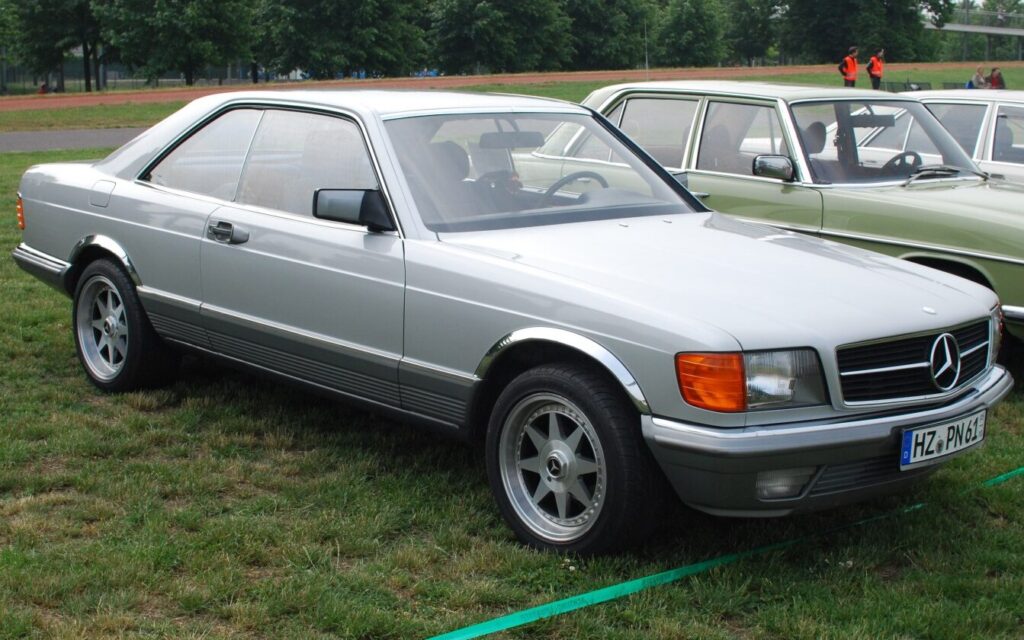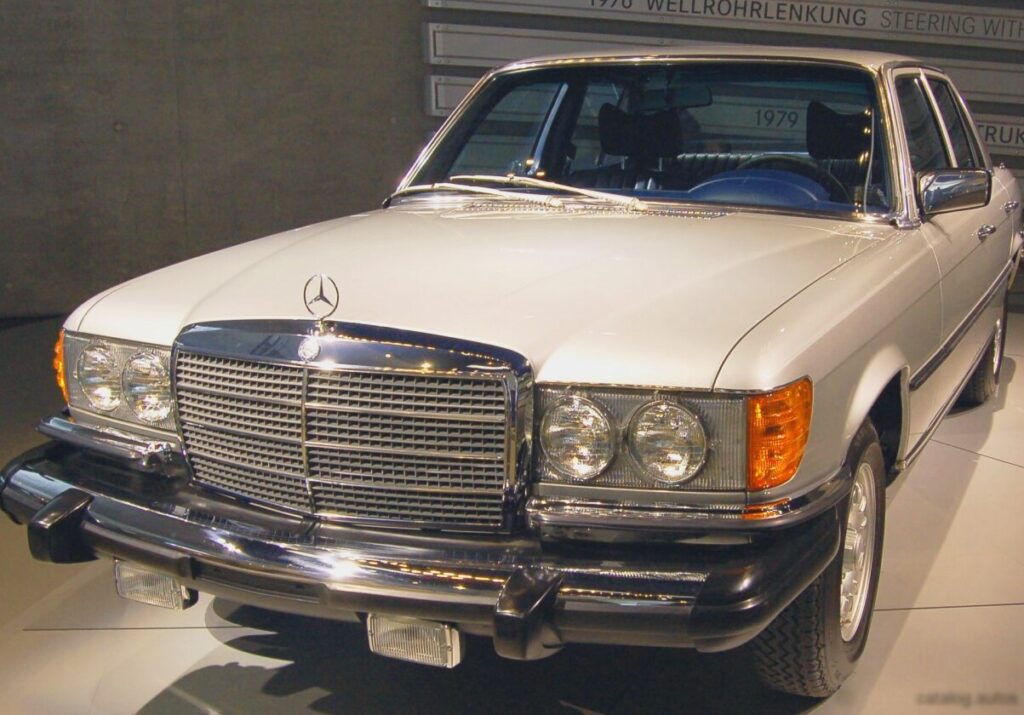
The Mercedes-Benz W116 series, produced from 1972 to 1979, represented a significant leap forward in luxury and safety for the German automaker. Within this generation, the 280 SEL, specifically produced from October 1973 to February 1976, occupied a crucial middle ground in the lineup. Positioned above the entry-level 280 S and below the flagship 350 SEL and 450 SEL, the 280 SEL offered a balance of performance, refinement, and relative affordability within the S-Class range. It was a popular choice for buyers seeking the prestige of an S-Class without the higher price tag of the larger-displacement models. The “SEL” designation signified the long-wheelbase version, offering increased rear passenger legroom, a key feature for the target demographic.
Technical Specifications
| Brand | Mercedes-Benz |
| Model | S-class |
| Generation | S-class SEL (V116) |
| Type (Engine) | 280 SEL (185 Hp) |
| Start of production | October, 1973 |
| End of production | February, 1976 |
| Powertrain Architecture | Internal Combustion engine |
| Body type | Sedan |
| Seats | 5 |
| Doors | 4 |
| Fuel consumption (combined) | 12.5 l/100 km (18.8 US mpg, 22.6 UK mpg, 8 km/l) |
| Fuel Type | Petrol (Gasoline) |
| Acceleration 0 – 100 km/h | 10.5 sec |
| Acceleration 0 – 62 mph | 10.5 sec |
| Acceleration 0 – 60 mph | 10 sec |
| Maximum speed | 200 km/h (124.27 mph) |
| Weight-to-power ratio | 8.9 kg/Hp, 112.5 Hp/tonne |
| Weight-to-torque ratio | 6.9 kg/Nm, 144.7 Nm/tonne |
| Power | 185 Hp @ 6000 rpm |
| Power per litre | 67.4 Hp/l |
| Torque | 238 Nm @ 4500 rpm (175.54 lb.-ft. @ 4500 rpm) |
| Engine layout | Front, Longitudinal |
| Engine Model/Code | M 110 E 28 / 110.983 |
| Engine displacement | 2746 cm3 (167.57 cu. in.) |
| Number of cylinders | 6 |
| Engine configuration | Inline |
| Cylinder Bore | 86 mm (3.39 in.) |
| Piston Stroke | 78.8 mm (3.1 in.) |
| Compression ratio | 9:1 |
| Number of valves per cylinder | 4 |
| Fuel injection system | Multi-port manifold injection |
| Engine aspiration | Naturally aspirated engine |
| Valvetrain | DOHC |
| Engine oil capacity | 7.5 l (7.93 US qt | 6.6 UK qt) |
| Coolant | 11 l (11.62 US qt | 9.68 UK qt) |
| Kerb Weight | 1645 kg (3626.6 lbs.) |
| Max. weight | 2165 kg (4773.01 lbs.) |
| Max load | 520 kg (1146.4 lbs.) |
| Trunk (boot) space – minimum | 530 l (18.72 cu. ft.) |
| Fuel tank capacity | 96 l (25.36 US gal | 21.12 UK gal) |
| Length | 5060 mm (199.21 in.) |
| Width | 1870 mm (73.62 in.) |
| Height | 1430 mm (56.3 in.) |
| Wheelbase | 2960 mm (116.54 in.) |
| Front track | 1521 mm (59.88 in.) |
| Rear (Back) track | 1505 mm (59.25 in.) |
| Drivetrain Architecture | The Internal combustion engine (ICE) drives the rear wheels of the vehicle. |
| Drive wheel | Rear wheel drive |
| Number of gears and type of gearbox | 4 gears, manual transmission |
| Front suspension | Double wishbone |
| Rear suspension | Trailing arm |
| Front brakes | Ventilated discs |
| Rear brakes | Disc |
| Steering type | Cone worm with recirculation balls |
| Power steering | Hydraulic Steering |
| Tires size | Front wheel tires: 195/75 R14Rear wheel tires: 195/75 R14 |
| Wheel rims size | Front wheel rims: 6J x 14Rear wheel rims: 6J x 14 |
Powertrain & Engine Architecture
The 280 SEL was powered by the M110 E 28 engine, a 2.8-liter inline-six cylinder powerplant. This engine, a descendant of Mercedes-Benz’s long-running M110 family, featured a cast-iron block and an aluminum cylinder head. It utilized a Bosch K-Jetronic fuel injection system, a mechanical continuous injection system known for its precision and reliability. The engine employed a double overhead camshaft (DOHC) valvetrain, contributing to its relatively high output for the time. The 9:1 compression ratio was a compromise between performance and the ability to run on the available fuel grades. The four-speed manual transmission was standard, providing a direct connection between the engine and the rear wheels. While an automatic transmission was available as an option, the manual was favored by enthusiasts for its responsiveness.
Driving Characteristics
The 280 SEL with the manual transmission offered a reasonably engaging driving experience for a large luxury sedan. While not overtly sporty, the 185 horsepower and 175 lb-ft of torque provided adequate acceleration, with a 0-60 mph time of around 10 seconds. The manual gearbox allowed drivers to exploit the engine’s powerband effectively. The automatic transmission, while offering convenience, noticeably dulled the car’s performance. The long wheelbase and sophisticated suspension – featuring double wishbones at the front and a trailing arm setup at the rear – delivered a comfortable and composed ride, typical of the S-Class. Steering was via a hydraulic power steering system, providing a good balance of assistance and feel.
Equipment & Trim Levels
The 280 SEL came standard with a high level of equipment, befitting its S-Class status. This included power-assisted steering, power-assisted disc brakes on all four wheels, central locking, and a high-quality interior with cloth upholstery. Leather upholstery, air conditioning, a sunroof, and a premium sound system were available as optional extras. The long-wheelbase configuration provided generous rear legroom, making it a popular choice for chauffeur-driven executives. Interior trim options included wood veneer accents and a variety of color combinations.
Chassis & Braking
The W116 chassis was a robust and well-engineered platform. The 280 SEL featured ventilated disc brakes on all four wheels, providing excellent stopping power. The suspension system was designed to prioritize ride comfort, with a focus on isolating passengers from road imperfections. Stabilizer bars were fitted to both the front and rear axles to reduce body roll during cornering. The rear suspension utilized a trailing arm design, which contributed to the car’s smooth ride quality. The steering system employed a cone worm and recirculation ball mechanism, offering a good balance of precision and feedback.
Market Reception & Comparison
The 280 SEL was generally well-received by automotive critics. It was praised for its comfortable ride, refined interior, and solid build quality. However, some critics noted that its performance was not as exhilarating as that of the larger-engined S-Class models. Compared to the 350 SEL and 450 SEL, the 280 SEL offered better fuel economy, but at the expense of outright power. Against competitors like the BMW E3 and Jaguar XJ, the 280 SEL was seen as a more conservative and technologically advanced option. Its reliability was also a strong selling point.
Legacy
The Mercedes-Benz W116 S-Class, including the 280 SEL, is now considered a classic car. The M110 engine, while not the most powerful of its era, is known for its durability and relatively straightforward maintenance. Well-maintained examples of the 280 SEL are highly sought after by collectors and enthusiasts. The car’s robust construction and timeless design have ensured its continued appeal. Today, the 280 SEL represents a significant chapter in Mercedes-Benz’s history, embodying the brand’s commitment to luxury, safety, and engineering excellence. Finding one in excellent condition can be a challenge, but the reward is a beautifully crafted and historically significant automobile.