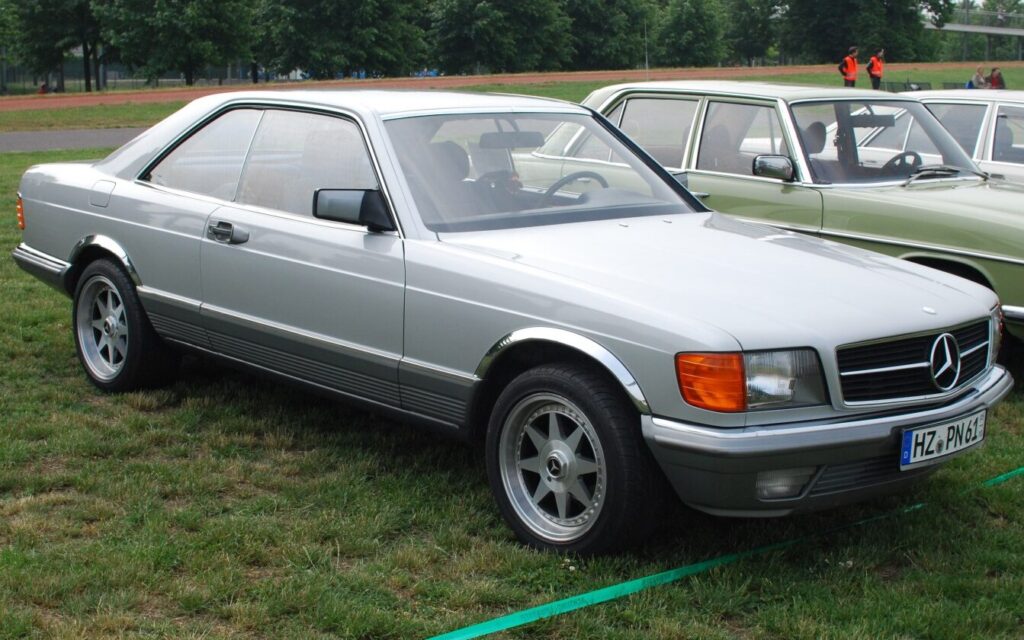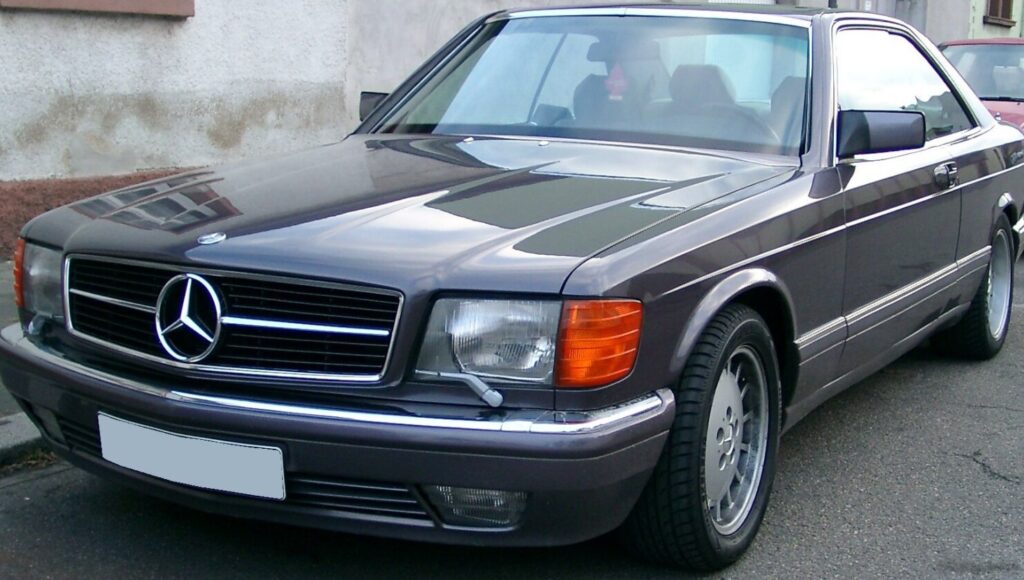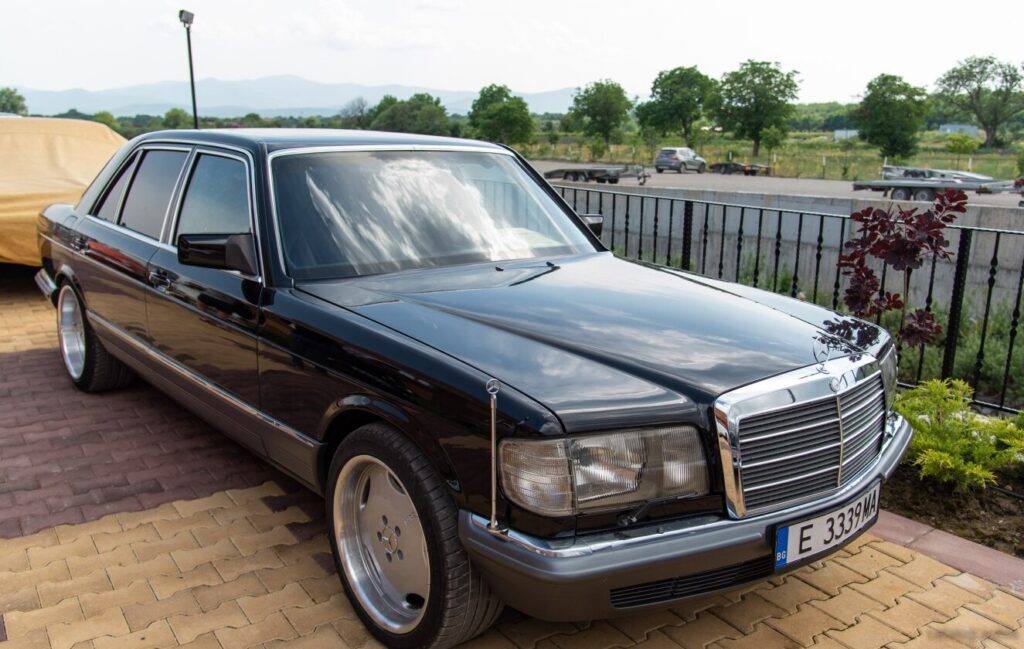
The Mercedes-Benz S-Class SEL (V126) 280 SEL, produced from December 1979 to September 1985, represented a crucial entry point into the flagship S-Class range during its W126 generation. Positioned as the base model, it offered the prestige and advanced engineering of the S-Class at a comparatively accessible price point. The 280 SEL served as a bridge for customers desiring the S-Class experience without the expense of the larger-displacement, more powerful variants. It was a popular choice for those prioritizing comfort, build quality, and a sophisticated driving experience over outright performance. The SEL designation indicated a “lange” (long) wheelbase, offering increased rear passenger space, a hallmark of the S-Class.
| Brand | Mercedes-Benz |
| Model | S-Class |
| Generation | S-Class SEL (V126) |
| Type (Engine) | 280 SEL (185 Hp) |
| Start of production | December, 1979 |
| End of production | September, 1985 |
| Powertrain Architecture | Internal Combustion engine |
| Body type | Sedan |
| Seats | 5 |
| Doors | 4 |
| Fuel consumption (urban) | 17.3 l/100 km (13.6 US mpg) |
| Fuel consumption (extra urban) | 9.1 l/100 km (25.8 US mpg) |
| Fuel Type | Petrol (Gasoline) |
| Acceleration 0 – 100 km/h | 10 sec |
| Acceleration 0 – 62 mph | 10 sec |
| Acceleration 0 – 60 mph | 9.5 sec |
| Maximum speed | 210 km/h (130.49 mph) |
| Weight-to-power ratio | 8.6 kg/Hp |
| Weight-to-torque ratio | 6.6 kg/Nm |
| Power | 185 Hp @ 5800 rpm |
| Torque | 240 Nm @ 4500 rpm (177.01 lb.-ft. @ 4500 rpm) |
| Engine layout | Front, Longitudinal |
| Engine Model/Code | M 110 E 28 / 110.987 |
| Engine displacement | 2746 cm3 (167.57 cu. in.) |
| Number of cylinders | 6 |
| Engine configuration | Inline |
| Cylinder Bore | 86 mm (3.39 in.) |
| Piston Stroke | 78.8 mm (3.1 in.) |
| Compression ratio | 9:1 |
| Number of valves per cylinder | 2 |
| Fuel injection system | Multi-port manifold injection |
| Engine aspiration | Naturally aspirated engine |
| Valvetrain | DOHC |
| Engine oil capacity | 7 l (7.4 US qt | 6.16 UK qt) |
| Coolant capacity | 10.5 l (11.1 US qt | 9.24 UK qt) |
| Kerb Weight | 1590 kg (3505.35 lbs.) |
| Max. weight | 2110 kg (4651.75 lbs.) |
| Max load | 520 kg (1146.4 lbs.) |
| Fuel tank capacity | 90 l (23.78 US gal | 19.8 UK gal) |
| Length | 5135 mm (202.17 in.) |
| Width | 1820 mm (71.65 in.) |
| Height | 1434 mm (56.46 in.) |
| Wheelbase | 3070 mm (120.87 in.) |
| Front track | 1545 mm (60.83 in.) |
| Rear track | 1517 mm (59.72 in.) |
| Drivetrain Architecture | Rear wheel drive |
| Number of gears | 4 |
| Type of gearbox | Manual transmission |
| Front suspension | Double wishbone |
| Rear suspension | Trailing arm |
| Front brakes | Ventilated discs |
| Rear brakes | Disc |
| Steering type | Cone worm with recirculation balls |
| Power steering | Hydraulic |
| Tires size | 195/70 R14 |
| Wheel rims size | 6J x 14 |
Powertrain & Engine Architecture
The 280 SEL was powered by the M110 E 28 engine, a 2.8-liter inline-six cylinder gasoline engine. This engine was a mainstay of the Mercedes-Benz lineup for many years, known for its smoothness and durability. The ‘E 28’ designation indicated the engine’s displacement. It featured a cast iron block and aluminum cylinder head, employing a dual overhead camshaft (DOHC) valvetrain with two valves per cylinder. Fuel delivery was handled by a Bosch K-Jetronic multi-port fuel injection system, a sophisticated system for its time that contributed to improved fuel efficiency and reduced emissions compared to carbureted engines. The engine produced 185 horsepower at 5800 rpm and 240 Nm (177 lb-ft) of torque at 4500 rpm. The 280 SEL was typically equipped with a 4-speed manual transmission, although an optional 4-speed automatic transmission was also available. The automatic, while offering convenience, did slightly impact acceleration compared to the manual.
Driving Characteristics
The 280 SEL with the manual transmission offered a reasonably engaging driving experience, though it wasn’t a sports car. Acceleration from 0 to 60 mph took around 9.5 seconds, and top speed was approximately 130 mph. The inline-six engine delivered smooth, linear power, making it well-suited for relaxed highway cruising. The automatic transmission, while providing ease of use, resulted in a noticeable decrease in responsiveness. Gear ratios were optimized for comfortable cruising rather than rapid acceleration. The car’s substantial weight (approximately 3500 lbs) was always apparent, but the well-tuned suspension provided a comfortable and controlled ride. Compared to the more powerful 380 SEL or the later 560 SEL, the 280 SEL felt less urgent, but it offered a better balance between performance and fuel economy.
Equipment & Trim Levels
The 280 SEL came standard with a respectable level of equipment for its time. This included power-assisted steering, power-assisted disc brakes on all four wheels, central locking, and a high-quality sound system. The interior was typically upholstered in cloth, with leather upholstery available as an option. Wood trim was used extensively throughout the cabin, adding to the luxurious ambiance. Optional extras included a sunroof, air conditioning, cruise control, and upgraded audio systems. The SEL (long wheelbase) configuration provided generous rear legroom, making it a popular choice for chauffeur-driven applications. Trim levels were relatively simple; the 280 SEL served as the base model, with options added individually rather than through distinct packages.
Chassis & Braking
The V126 S-Class featured a robust chassis with independent suspension all around. The front suspension utilized double wishbones, while the rear employed a trailing arm setup. This configuration provided a comfortable ride and good handling characteristics. The 280 SEL was equipped with ventilated disc brakes on all four wheels, offering excellent stopping power. Hydraulic power steering was standard, making the car relatively easy to maneuver, despite its size. Stabilizer bars were fitted to both the front and rear axles to reduce body roll during cornering. Rear brakes were discs, a feature that contributed to the car’s overall braking performance.
Market Reception & Comparison
The 280 SEL was generally well-received by automotive critics. It was praised for its build quality, comfortable ride, and refined interior. However, some critics noted that its performance was somewhat underwhelming compared to its larger-engined siblings. Fuel economy was considered reasonable for a luxury car of its size, averaging around 18 mpg in combined driving. Compared to the 380 SEL, the 280 SEL offered a significant price advantage, making it more accessible to a wider range of buyers. The 380 SEL, with its larger V8 engine, provided considerably more power and acceleration, but at a higher cost and with increased fuel consumption. The 280 SEL represented a sensible compromise for those seeking the S-Class experience without breaking the bank.
Legacy
The M110 engine, found in the 280 SEL, is renowned for its durability and longevity. Properly maintained examples can still be found running reliably today. The V126 S-Class, as a whole, is considered a classic Mercedes-Benz, and the 280 SEL is a particularly desirable variant for those seeking a well-built, comfortable, and relatively affordable entry point into the S-Class world. In the used car market, the 280 SEL typically commands a lower price than the more powerful models, but it remains a sought-after vehicle among enthusiasts. Its simplicity and robust engineering make it a relatively easy car to maintain, and parts availability is generally good. The 280 SEL stands as a testament to Mercedes-Benz’s commitment to quality and engineering excellence during the late 1970s and early 1980s.