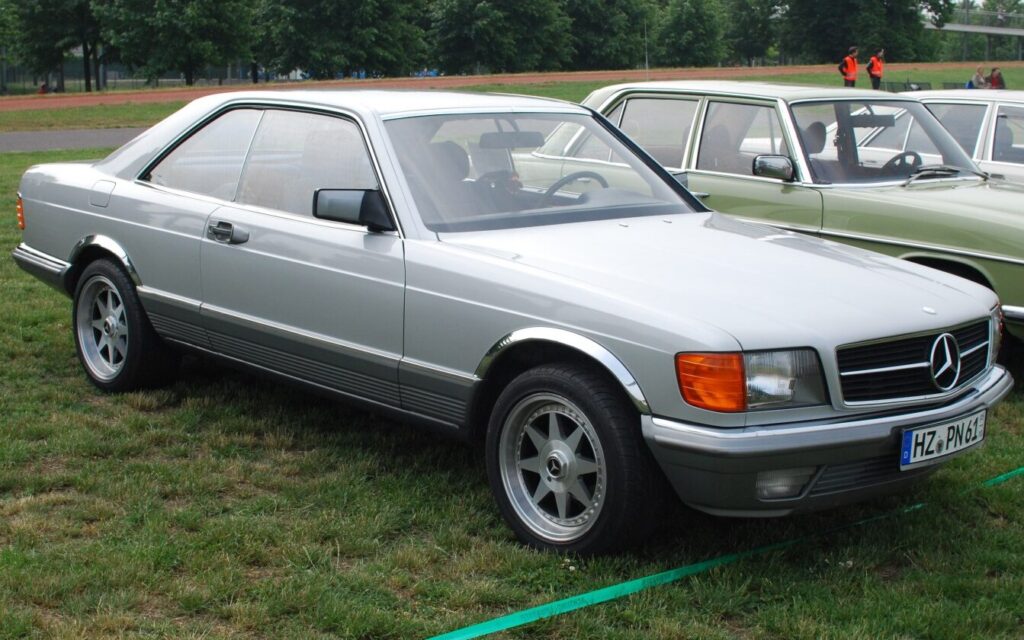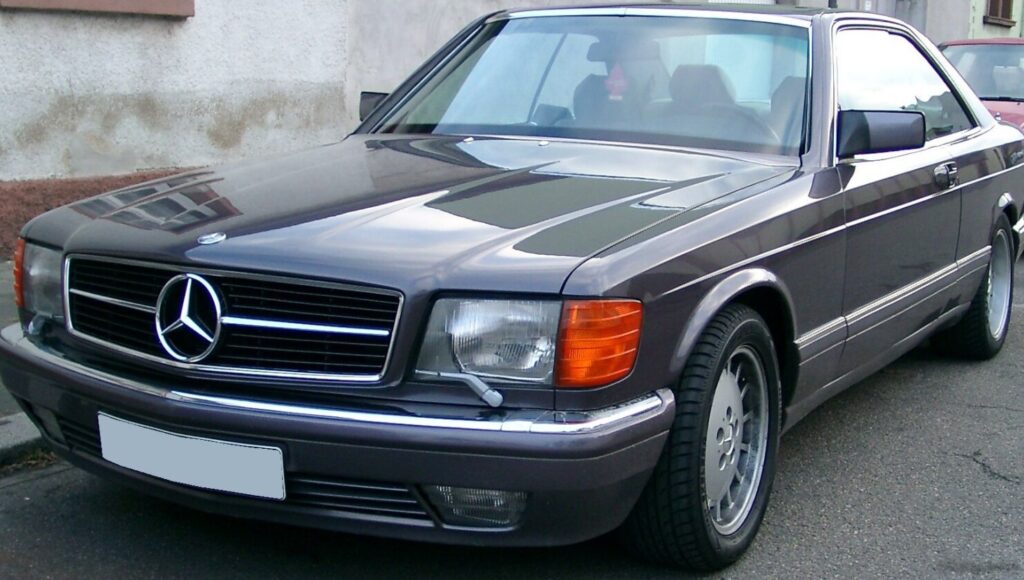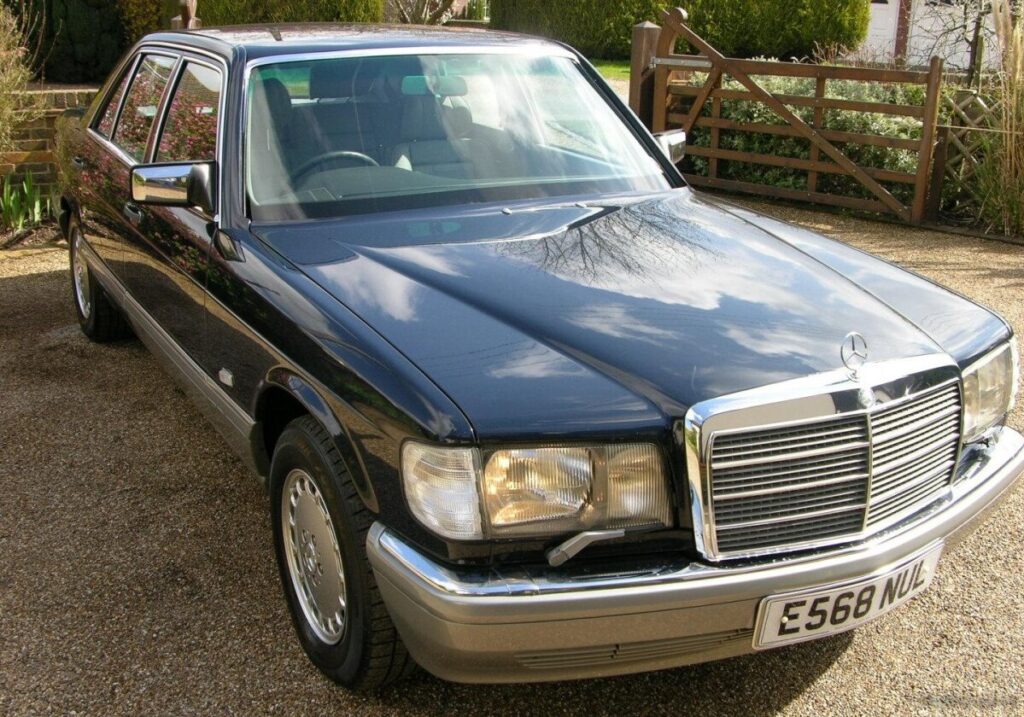
The Mercedes-Benz 300 SDL, part of the W126 S-Class range, represented a unique offering within the flagship sedan lineup. Produced from February 1985 to September 1987, this variant combined the prestige of the S-Class with the fuel efficiency and durability of a turbocharged diesel engine. Positioned as a more economical alternative to the gasoline-powered models, the 300 SDL catered to buyers prioritizing long-distance comfort and lower running costs. It arrived with the facelift of the W126 series, bringing updated styling and refinements to the already highly regarded platform.
Technical Specifications
| Brand | Mercedes-Benz |
| Model | S-class |
| Generation | S-class SEL (V126, facelift 1985) |
| Type (Engine) | 300 SDL (150 Hp) Automatic |
| Start of production | February, 1985 |
| End of production | September, 1987 |
| Powertrain Architecture | Internal Combustion engine |
| Body type | Sedan |
| Seats | 5 |
| Doors | 4 |
| Fuel Type | Diesel |
| Maximum speed | 195 km/h (121.17 mph) |
| Weight-to-power ratio | 11.6 kg/Hp, 86.2 Hp/tonne |
| Weight-to-torque ratio | 6.4 kg/Nm, 156.9 Nm/tonne |
| Power | 150 Hp @ 4600 rpm |
| Power per litre | 50.1 Hp/l |
| Torque | 273 Nm @ 2400 rpm (201.35 lb.-ft. @ 2400 rpm) |
| Engine layout | Front, Longitudinal |
| Engine Model/Code | OM 603 D 30 A / 603.961 |
| Engine displacement | 2996 cm3 (182.83 cu. in.) |
| Number of cylinders | 6 |
| Engine configuration | Inline |
| Cylinder Bore | 87 mm (3.43 in.) |
| Piston Stroke | 84 mm (3.31 in.) |
| Compression ratio | 22:1 |
| Number of valves per cylinder | 2 |
| Fuel injection system | Multi-port manifold injection |
| Engine aspiration | Turbocharger |
| Valvetrain | SOHC |
| Engine oil capacity | 7.5 l (7.93 US qt | 6.6 UK qt) |
| Coolant | 8 l (8.45 US qt | 7.04 UK qt) |
| Kerb Weight | 1740 kg (3836.04 lbs.) |
| Max. weight | 2210 kg (4872.22 lbs.) |
| Max load | 470 kg (1036.17 lbs.) |
| Fuel tank capacity | 90 l (23.78 US gal | 19.8 UK gal) |
| Length | 5285 mm (208.07 in.) |
| Width | 1820 mm (71.65 in.) |
| Height | 1441 mm (56.73 in.) |
| Wheelbase | 3070 mm (120.87 in.) |
| Front track | 1555 mm (61.22 in.) |
| Rear (Back) track | 1527 mm (60.12 in.) |
| Drivetrain Architecture | The Internal combustion engine (ICE) drives the rear wheels of the vehicle. |
| Drive wheel | Rear wheel drive |
| Number of gears and type of gearbox | 4 gears, automatic transmission |
| Front suspension | Double wishbone |
| Rear suspension | Trailing arm |
| Front brakes | Ventilated discs |
| Rear brakes | Disc |
| Assisting systems | ABS (Anti-lock braking system) |
| Steering type | Cone worm with recirculation balls |
| Power steering | Hydraulic Steering |
| Tires size | Front wheel tires: 205/65 R15Rear wheel tires: 205/65 R15 |
| Wheel rims size | Front wheel rims: 7J x 15Rear wheel rims: 7J x 15 |
Powertrain & Engine Architecture
The heart of the 300 SDL was the OM603 D 30 A inline-six cylinder diesel engine, displacing 3.0 liters (2996 cc). This engine was a significant upgrade over the earlier 300 SD models, featuring a turbocharger and multi-port fuel injection. The turbocharger significantly boosted power output, bringing it to 150 horsepower at 4600 rpm and 273 Nm (201 lb-ft) of torque at 2400 rpm. The engine utilized a single overhead camshaft (SOHC) valvetrain with two valves per cylinder. The high compression ratio of 22:1 was typical for diesel engines of the era, contributing to efficiency. The engine was mounted longitudinally in the front of the vehicle. The automatic transmission was a four-speed unit, designed to provide smooth and comfortable shifts, prioritizing ease of driving over outright performance.
Driving Characteristics
The 300 SDL offered a distinctly different driving experience compared to its gasoline-powered S-Class siblings. While lacking the brisk acceleration of the 300SE or 560SEL, the SDL provided ample torque for comfortable cruising and effortless highway passing. The automatic transmission, while smooth, wasn’t particularly quick to downshift, and the overall driving experience was geared towards relaxed, long-distance travel. The gear ratios were optimized for fuel economy and maintaining momentum rather than maximizing acceleration. The turbocharger did provide a noticeable boost in power, but it wasn’t as immediate or dramatic as in some contemporary turbocharged gasoline engines.
Equipment & Trim Levels
The 300 SDL was generally well-equipped, reflecting its status as a luxury vehicle. Standard features included power windows, power locks, a sunroof, and climate control. The interior typically featured leather upholstery, although cloth options were available. The dashboard layout was consistent with other W126 S-Class models, featuring a wood trim and a comprehensive instrument cluster. Optional extras included a premium sound system, heated seats, and a self-leveling suspension. The 300 SDL didn’t offer the same level of customization as some of the higher-end S-Class models, but it provided a comfortable and refined interior environment.
Chassis & Braking
The 300 SDL utilized a robust chassis and suspension system designed to provide a comfortable ride and stable handling. The front suspension featured double wishbones, while the rear suspension employed a trailing arm design. The braking system consisted of ventilated discs at the front and solid discs at the rear. Anti-lock braking system (ABS) was standard, enhancing safety and control. Due to the added weight of the diesel engine, the suspension was often tuned slightly firmer than that of the gasoline-powered models. The steering was a recirculating ball system with hydraulic power assistance, providing a relatively heavy but precise feel.
Market Reception & Comparison
The 300 SDL was generally well-received by automotive critics, who praised its fuel efficiency, comfortable ride, and build quality. However, it was often criticized for its relatively slow acceleration compared to its gasoline counterparts. Compared to the 300SE, the SDL offered significantly better fuel economy but lacked the same level of performance. Against the 560SEL, the SDL was a more economical choice but couldn’t match the V8’s power and refinement. The 300 SDL appealed to buyers who prioritized practicality and long-term reliability over outright performance.
Legacy
The OM603 engine found in the 300 SDL is renowned for its durability and longevity. Properly maintained examples can accumulate very high mileage with minimal issues. The W126 S-Class, in general, is considered a classic Mercedes-Benz, and the 300 SDL has gained a following among diesel enthusiasts. In the used car market, the 300 SDL typically commands a lower price than the gasoline-powered models, but well-preserved examples are becoming increasingly sought after. The combination of a robust engine, comfortable ride, and classic Mercedes-Benz styling makes the 300 SDL a compelling choice for those seeking a durable and refined luxury sedan.