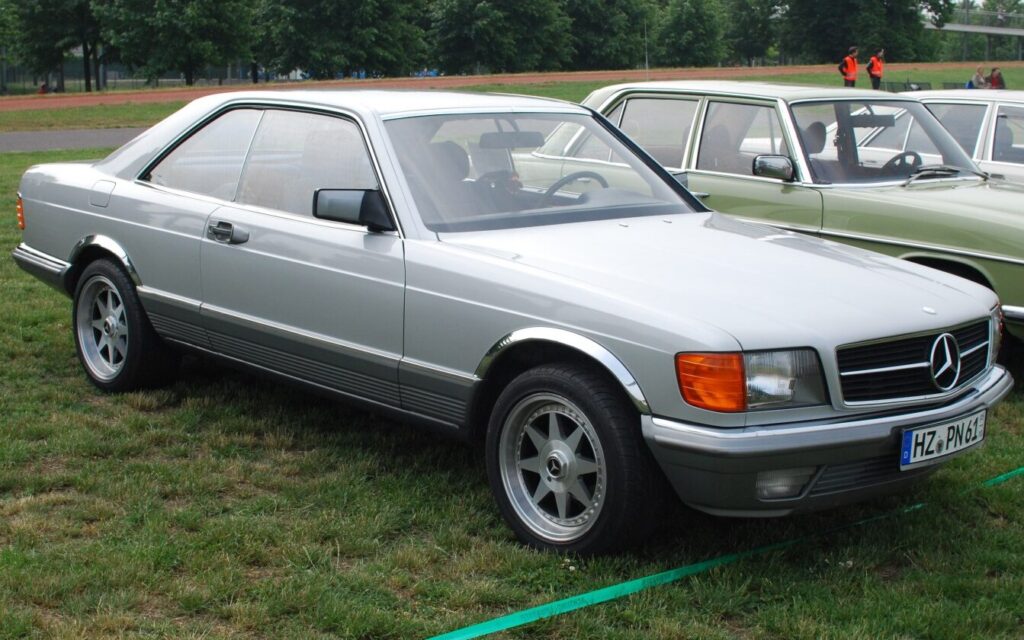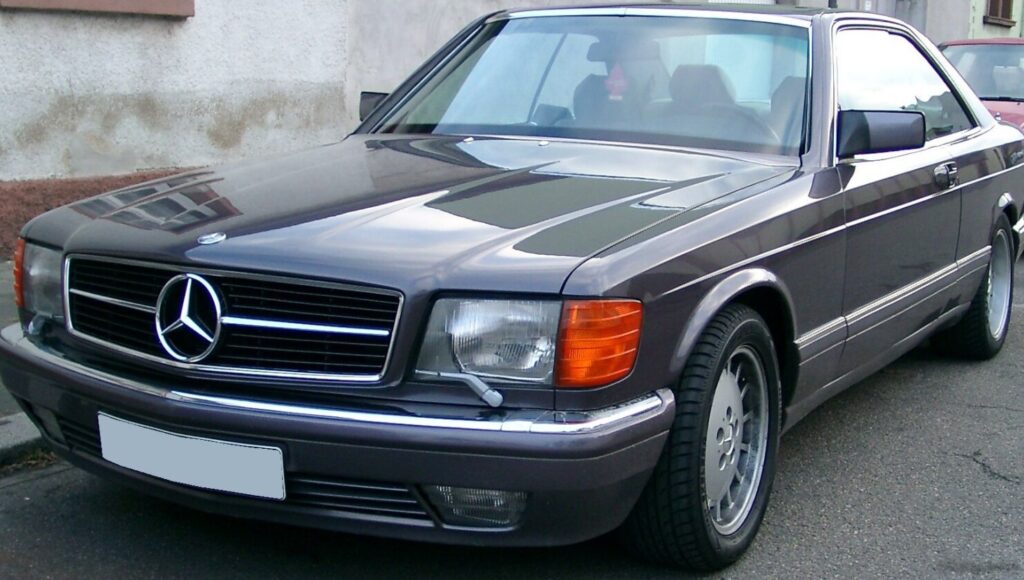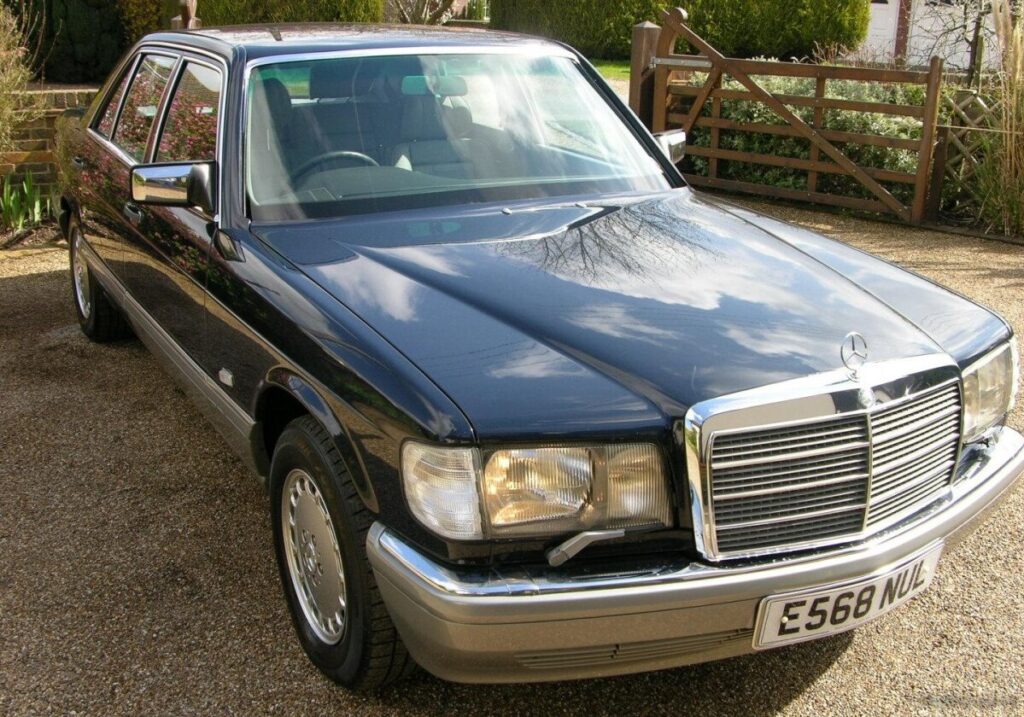
The Mercedes-Benz 300 SEL, part of the W126 S-Class range produced from September 1985 to August 1991, represented a significant evolution of the flagship sedan. This facelifted model, building upon the initial W126 introduction in 1979, offered a blend of luxury, performance, and advanced technology for its time. The 300 SEL, positioned as a mid-range offering within the S-Class lineup, provided a compelling alternative to both the entry-level 260 SE and the more powerful 560 SEL. It was primarily marketed towards executives and affluent buyers seeking a sophisticated and comfortable grand touring experience. The “SEL” designation signified the long-wheelbase variant, offering increased rear passenger legroom, a key feature for the target demographic.
Technical Specifications
| Brand | Mercedes-Benz |
| Model | S-class |
| Generation | S-class SEL (V126, facelift 1985) |
| Type (Engine) | 300 SEL (188 Hp) |
| Start of production | September, 1985 |
| End of production | August, 1991 |
| Powertrain Architecture | Internal Combustion engine |
| Body type | Sedan |
| Seats | 5 |
| Doors | 4 |
| Fuel consumption (urban) | 14.1 l/100 km (16.7 US mpg, 20 UK mpg) |
| Fuel consumption (extra urban) | 7.6 l/100 km (30.9 US mpg, 37.2 UK mpg) |
| Fuel Type | Petrol (Gasoline) |
| Acceleration 0 – 100 km/h | 9.1 sec |
| Acceleration 0 – 62 mph | 9.1 sec |
| Acceleration 0 – 60 mph | 8.6 sec |
| Maximum speed | 210 km/h (130.49 mph) |
| Weight-to-power ratio | 8.2 kg/Hp, 121.3 Hp/tonne |
| Weight-to-torque ratio | 6 kg/Nm, 167.7 Nm/tonne |
| Power | 188 Hp @ 5700 rpm |
| Power per litre | 63.5 Hp/l |
| Torque | 260 Nm @ 4400 rpm (191.77 lb.-ft. @ 4400 rpm) |
| Engine layout | Front, Longitudinal |
| Engine Model/Code | M 103 E 30 / 103.981 |
| Engine displacement | 2962 cm3 (180.75 cu. in.) |
| Number of cylinders | 6 |
| Engine configuration | Inline |
| Cylinder Bore | 88.5 mm (3.48 in.) |
| Piston Stroke | 80.25 mm (3.16 in.) |
| Compression ratio | 9.2:1 |
| Number of valves per cylinder | 2 |
| Fuel injection system | Multi-port manifold injection |
| Engine aspiration | Naturally aspirated engine |
| Valvetrain | SOHC |
| Engine oil capacity | 6 l (6.34 US qt | 5.28 UK qt) |
| Coolant | 8 l (8.45 US qt | 7.04 UK qt) |
| Kerb Weight | 1550 kg (3417.17 lbs.) |
| Max. weight | 2070 kg (4563.57 lbs.) |
| Max load | 520 kg (1146.4 lbs.) |
| Fuel tank capacity | 90 l (23.78 US gal | 19.8 UK gal) |
| Length | 5160 mm (203.15 in.) |
| Width | 1820 mm (71.65 in.) |
| Height | 1441 mm (56.73 in.) |
| Wheelbase | 3070 mm (120.87 in.) |
| Front track | 1555 mm (61.22 in.) |
| Rear track | 1527 mm (60.12 in.) |
| Drivetrain Architecture | The Internal combustion engine (ICE) drives the rear wheels of the vehicle. |
| Drive wheel | Rear wheel drive |
| Number of gears and type of gearbox | 5 gears, manual transmission |
| Front suspension | Double wishbone |
| Rear suspension | Trailing arm |
| Front brakes | Ventilated discs |
| Rear brakes | Disc |
| Steering type | Cone worm with recirculation balls |
| Power steering | Hydraulic Steering |
| Tires size | Front wheel tires: 205/65 R15Rear wheel tires: 205/65 R15 |
| Wheel rims size | Front wheel rims: 7J x 15Rear wheel rims: 7J x 15 |
Powertrain & Engine Architecture
The 300 SEL was powered by the M103 E 30 engine, a 2.962-liter (180.75 cubic inches) inline-six cylinder powerplant. This engine, a hallmark of Mercedes-Benz engineering, featured a single overhead camshaft (SOHC) valvetrain and Bosch K-Jetronic multi-port fuel injection. The M103 was known for its smooth operation, durability, and relatively good fuel efficiency for its displacement. The engine produced 188 horsepower at 5700 rpm and 260 Nm (191.77 lb-ft) of torque at 4400 rpm. The 5-speed manual transmission was standard, providing drivers with full control over the engine’s power. The engine’s longitudinal mounting and rear-wheel-drive configuration were typical for Mercedes-Benz sedans of this era.
Driving Characteristics
The 300 SEL with the 5-speed manual transmission offered a balanced driving experience. While not overtly sporty, it provided adequate acceleration – 0-60 mph in approximately 8.6 seconds – and a comfortable cruising speed. The manual gearbox allowed for precise control, making it more engaging to drive than the automatic versions. The gear ratios were well-chosen for both city driving and highway cruising. Compared to the more powerful 560 SEL, the 300 SEL felt less strained at higher speeds, and its lighter weight contributed to more nimble handling. However, it lacked the outright punch of the V8 engine. Against the diesel-powered 300 SDL, the 300 SEL offered significantly more responsive acceleration, but at the cost of fuel economy.
Equipment & Trim Levels
The 300 SEL came standard with a generous array of features, reflecting its luxury positioning. These included power windows, central locking, a sunroof, and a high-quality sound system. The interior was typically upholstered in leather, with wood trim adorning the dashboard and door panels. Optional extras included automatic climate control, heated seats, and a more advanced audio system. The long wheelbase provided ample rear legroom, making it a particularly comfortable choice for passengers. The exterior featured chrome trim and elegant styling cues characteristic of the W126 generation.
Chassis & Braking
The W126 S-Class featured a robust chassis with double wishbone suspension at the front and a trailing arm suspension at the rear. This setup provided a comfortable ride while maintaining good handling characteristics. The 300 SEL was equipped with ventilated disc brakes at the front and solid disc brakes at the rear, providing adequate stopping power. Hydraulic power steering was standard, making the car easy to maneuver. The suspension was tuned for comfort, prioritizing a smooth ride over aggressive handling.
Market Reception & Comparison
The 300 SEL was generally well-received by automotive critics. It was praised for its comfortable ride, refined interior, and reliable engine. However, some critics noted that it lacked the sporting character of some of its rivals. Compared to the 260 SE, the 300 SEL offered a significant performance upgrade. Against the 560 SEL, it represented a more affordable option, albeit with less power. Fuel economy was considered reasonable for a luxury sedan of its size and class. The 300 SEL found a niche among buyers who valued comfort, refinement, and reliability over outright performance.
Legacy
The W126 S-Class, including the 300 SEL, is widely regarded as a classic Mercedes-Benz. The M103 engine is known for its durability and longevity, and well-maintained examples can still provide reliable service today. The 300 SEL remains a popular choice among collectors and enthusiasts, appreciated for its elegant styling, comfortable ride, and solid build quality. While parts availability can be a concern for older vehicles, the M103 engine is relatively straightforward to maintain, and a dedicated community of enthusiasts exists to support owners. In the used car market, the 300 SEL commands a premium over the less desirable models, reflecting its balanced combination of luxury, performance, and reliability.