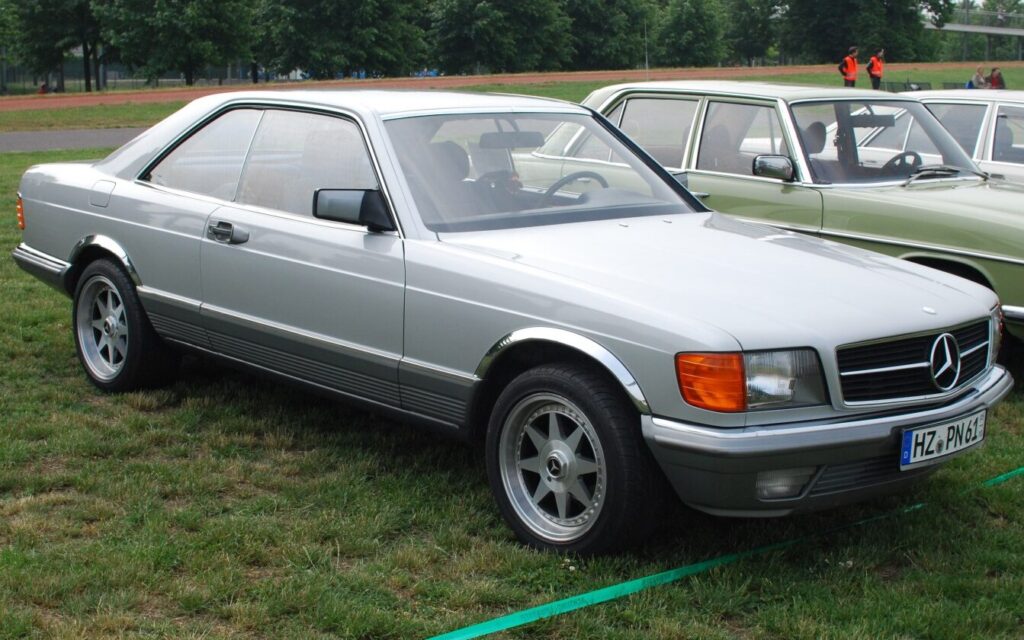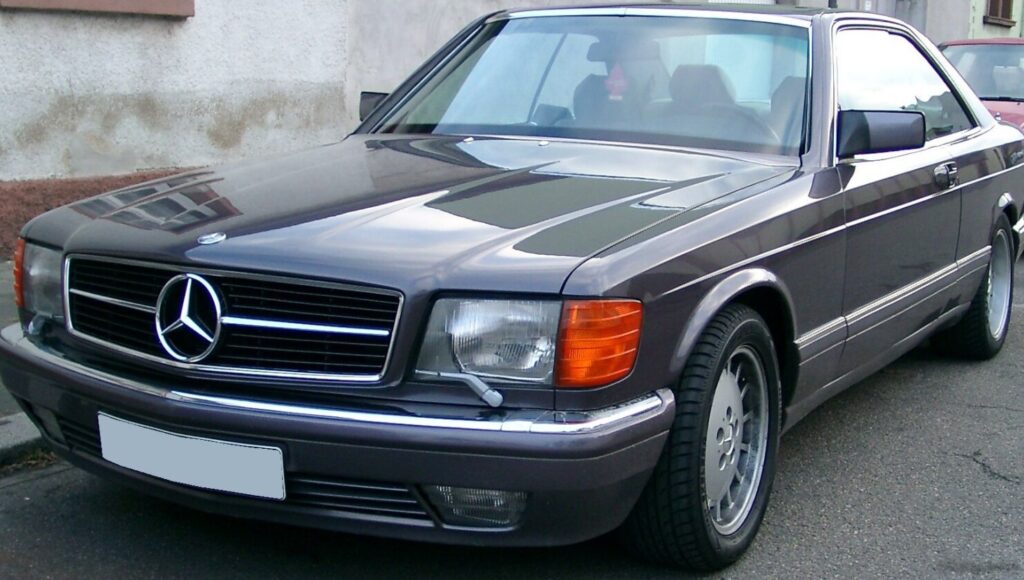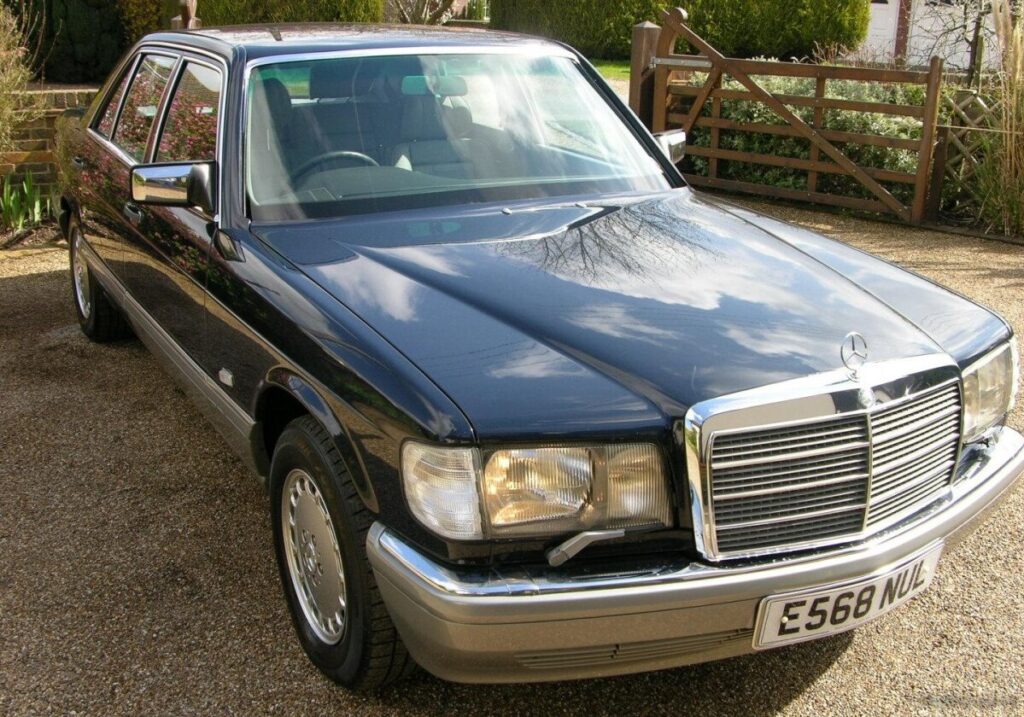
The Mercedes-Benz 420 SEL, part of the W126 S-Class range, represented a significant evolution in luxury sedan design and engineering when it was introduced in September 1987, continuing through October 1991. Positioned as a high-end variant within the facelifted W126 generation (introduced in 1985), the 420 SEL combined a powerful V8 engine with a four-speed automatic transmission, offering a blend of performance and comfort aimed at discerning buyers. The “SEL” designation signified a long-wheelbase version, providing increased rear passenger space, a key feature for the S-Class’s target demographic. This model played a crucial role in solidifying Mercedes-Benz’s reputation for building technologically advanced and exceptionally well-engineered automobiles.
Technical Specifications
| Brand | Mercedes-Benz |
| Model | S-class |
| Generation | S-class SEL (V126, facelift 1985) |
| Type (Engine) | 420 SEL V8 (231 Hp) Automatic |
| Start of production | September, 1987 |
| End of production | October, 1991 |
| Powertrain Architecture | Internal Combustion engine |
| Body type | Sedan |
| Seats | 5 |
| Doors | 4 |
| Fuel consumption (urban) | 15.1 l/100 km (15.6 US mpg, 18.7 UK mpg, 6.6 km/l) |
| Fuel consumption (extra urban) | 8.7 l/100 km (27 US mpg, 32.5 UK mpg, 11.5 km/l) |
| Fuel Type | Petrol (Gasoline) |
| Acceleration 0 – 100 km/h | 8.2 sec |
| Acceleration 0 – 62 mph | 8.2 sec |
| Acceleration 0 – 60 mph | 7.8 sec |
| Maximum speed | 222 km/h (137.94 mph) |
| Weight-to-power ratio | 7.2 kg/Hp, 139.2 Hp/tonne |
| Weight-to-torque ratio | 5 kg/Nm, 201.8 Nm/tonne |
| Power | 231 Hp @ 5400 rpm |
| Power per litre | 55.1 Hp/l |
| Torque | 335 Nm @ 4000 rpm (247.08 lb.-ft. @ 4000 rpm) |
| Engine layout | Front, Longitudinal |
| Engine Model/Code | M 116 E 42 / 116.965 |
| Engine displacement | 4196 cm3 (256.06 cu. in.) |
| Number of cylinders | 8 |
| Engine configuration | V-engine |
| Cylinder Bore | 92 mm (3.62 in.) |
| Piston Stroke | 78.9 mm (3.11 in.) |
| Compression ratio | 10:1 |
| Number of valves per cylinder | 2 |
| Fuel injection system | Multi-port manifold injection |
| Engine aspiration | Naturally aspirated engine |
| Valvetrain | SOHC |
| Engine oil capacity | 8 l (8.45 US qt | 7.04 UK qt) |
| Coolant | 12.5 l (13.21 US qt | 11 UK qt) |
| Kerb Weight | 1660 kg (3659.67 lbs.) |
| Max. weight | 2180 kg (4806.08 lbs.) |
| Max load | 520 kg (1146.4 lbs.) |
| Fuel tank capacity | 90 l (23.78 US gal | 19.8 UK gal) |
| Length | 5160 mm (203.15 in.) |
| Width | 1820 mm (71.65 in.) |
| Height | 1441 mm (56.73 in.) |
| Wheelbase | 3070 mm (120.87 in.) |
| Front track | 1555 mm (61.22 in.) |
| Rear track | 1527 mm (60.12 in.) |
| Drivetrain Architecture | The Internal combustion engine (ICE) drives the rear wheels of the vehicle. |
| Drive wheel | Rear wheel drive |
| Number of gears | 4 |
| Gearbox type | automatic transmission |
| Front suspension | Double wishbone |
| Rear suspension | Trailing arm |
| Front brakes | Ventilated discs |
| Rear brakes | Disc |
| Assisting systems | ABS (Anti-lock braking system) |
| Steering type | Cone worm with recirculation balls |
| Power steering | Hydraulic Steering |
| Tires size | Front wheel tires: 205/65 R15Rear wheel tires: 205/65 R15 |
| Wheel rims size | Front wheel rims: 7J x 15Rear wheel rims: 7J x 15 |
Powertrain & Engine Architecture
The heart of the 420 SEL was the M116 E 42 engine, a 4.2-liter naturally aspirated V8. This engine, a cornerstone of Mercedes-Benz’s engineering prowess, featured a single overhead camshaft (SOHC) design per bank of cylinders and utilized Bosch K-Jetronic multi-port fuel injection. The K-Jetronic system, while sophisticated for its time, was known for its mechanical complexity and required precise maintenance. The engine produced 231 horsepower at 5400 rpm and 335 Nm (247 lb-ft) of torque at 4000 rpm. The engine’s robust construction and over-engineering contributed to its longevity, but also added to its weight. Paired with the engine was a four-speed automatic transmission, designed for smooth and comfortable shifts rather than outright performance. This transmission was a torque converter type, providing a fluid coupling between the engine and the drivetrain.
Driving Characteristics
The 420 SEL Automatic offered a refined and comfortable driving experience. While not a sports sedan, the V8 engine provided ample power for effortless cruising and confident overtaking. Acceleration from 0 to 60 mph took approximately 7.8 seconds, respectable for a large luxury car of the era. The automatic transmission, while smooth, wasn’t particularly quick to downshift, and the gear ratios were optimized for fuel economy and comfort rather than aggressive acceleration. Compared to the 560 SEL, the 420 SEL offered a more balanced driving experience, avoiding the sometimes-nervous handling characteristics of the higher-horsepower model. Manual transmission versions, though available in other S-Class variants, were not offered with the 420 SEL engine.
Equipment & Trim Levels
The 420 SEL came standard with a comprehensive list of luxury features, befitting its position in the Mercedes-Benz lineup. These included power windows, power locks, a sunroof, leather upholstery, and climate control. Wood trim adorned the interior, adding to the sense of opulence. Optional extras included a premium sound system, heated seats, and a self-leveling suspension system. The long wheelbase provided generous rear legroom, making it a popular choice for chauffeured transport. Interior color schemes were typically conservative, with shades of beige, brown, and gray being the most common.
Chassis & Braking
The W126 S-Class featured a robust chassis with double wishbone suspension at the front and a trailing arm suspension at the rear. This setup provided a comfortable ride and good handling characteristics. The 420 SEL was equipped with ventilated disc brakes at the front and solid disc brakes at the rear. An Anti-lock Braking System (ABS) was standard, enhancing safety and control during hard braking. The steering was a recirculating ball system with hydraulic power assistance, providing a relatively light and precise feel.
Market Reception & Comparison
The 420 SEL was generally well-received by automotive critics, who praised its comfortable ride, refined interior, and powerful engine. However, some critics noted the relatively high price and the complexity of the K-Jetronic fuel injection system. Compared to the 300 SEL (with its smaller engine) and the 560 SEL (with its larger engine), the 420 SEL offered a sweet spot in terms of performance and fuel economy. The 300 SEL was more affordable but lacked the 420 SEL’s power, while the 560 SEL was more powerful but also more expensive and less fuel-efficient. Reliability was generally good, although the K-Jetronic system required regular maintenance to prevent issues.
Legacy
The Mercedes-Benz 420 SEL remains a sought-after classic car today, appreciated for its build quality, luxurious features, and timeless design. The M116 engine, while requiring diligent maintenance, is known for its durability and smooth operation. Well-maintained examples command premium prices in the used car market. The 420 SEL represents a high point in Mercedes-Benz engineering and a testament to the brand’s commitment to building exceptional automobiles. Its influence can still be seen in modern luxury sedans, which continue to prioritize comfort, refinement, and technological innovation.