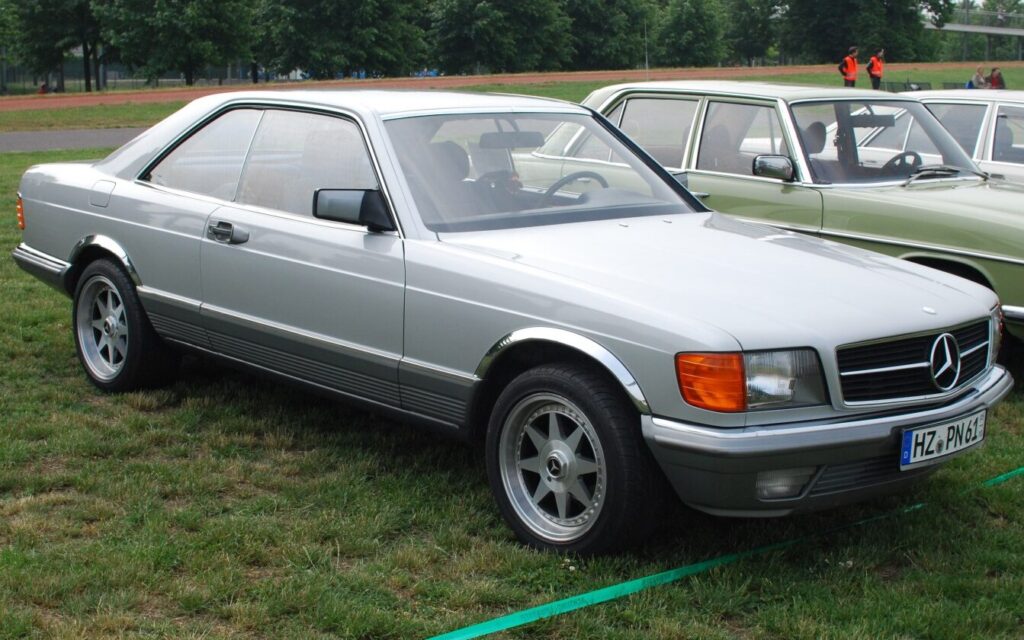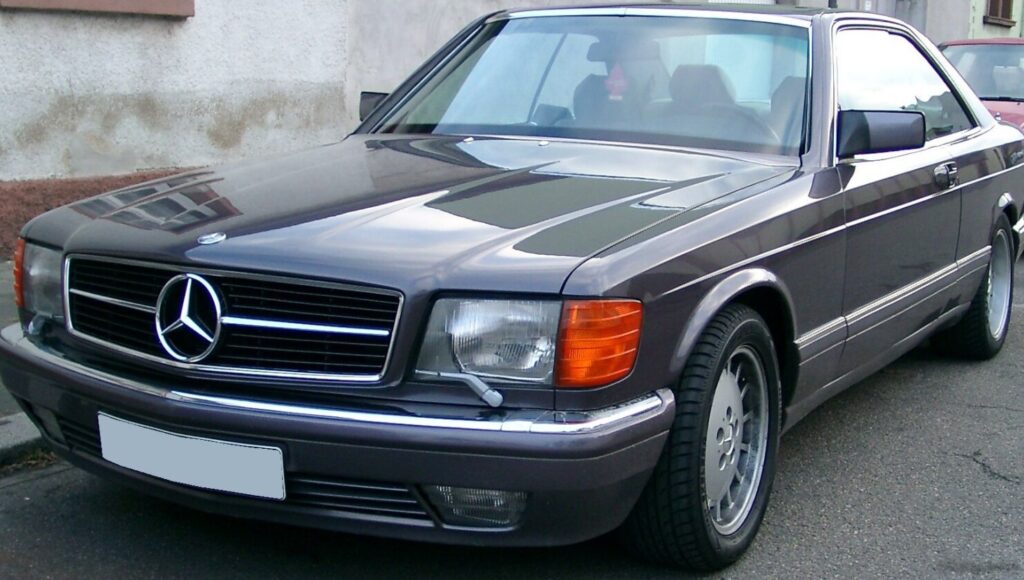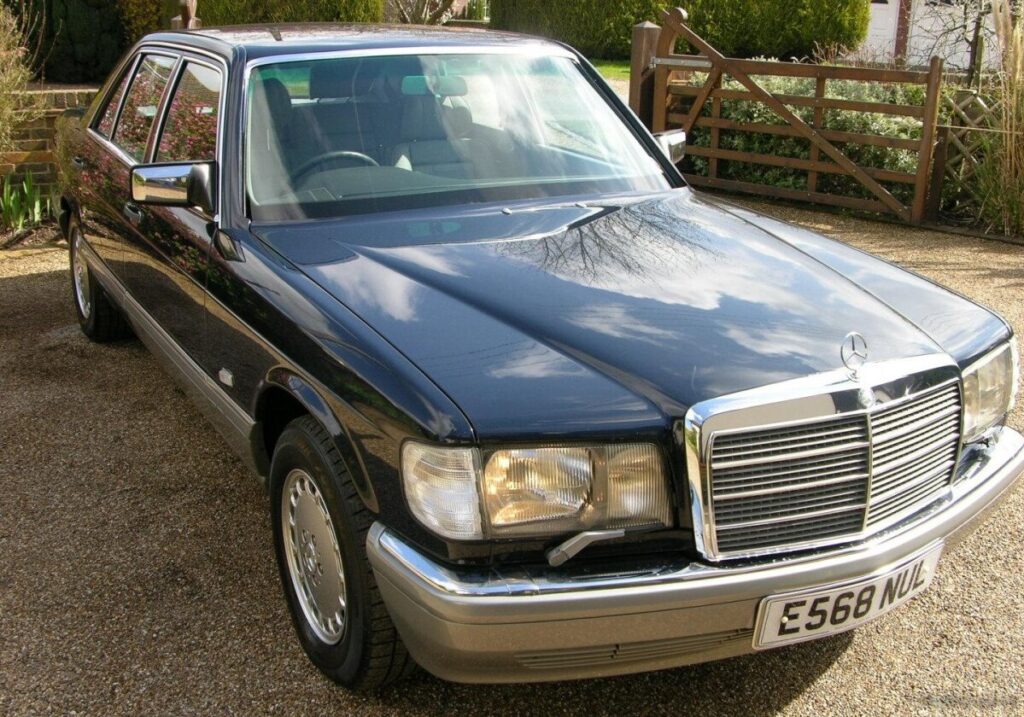
The Mercedes-Benz 420 SEL, part of the W126 S-Class range produced from 1985 to 1987, represented a significant evolution of the flagship sedan. This facelifted version, internally designated as the 126.235, offered a blend of luxury, performance, and advanced technology for its time. Positioned as a mid-range offering within the SEL (Special Edition Long) lineup, it slotted between the 300 SEL and the high-performance 560 SEL. The 420 SEL catered to buyers seeking a refined driving experience with ample power and a spacious interior, solidifying Mercedes-Benz’s reputation for engineering excellence.
Technical Specifications
| Brand | Mercedes-Benz |
| Model | S-class |
| Generation | S-class SEL (V126, facelift 1985) |
| Type (Engine) | 420 SEL V8 CAT (204 Hp) Automatic |
| Start of production | June, 1985 |
| End of production | September, 1987 |
| Powertrain Architecture | Internal Combustion engine |
| Body type | Sedan |
| Seats | 5 |
| Doors | 4 |
| Fuel consumption (urban) | 15.2 l/100 km (15.5 US mpg, 18.6 UK mpg, 6.6 km/l) |
| Fuel consumption (extra urban) | 9.3 l/100 km (25.3 US mpg, 30.4 UK mpg, 10.8 km/l) |
| Fuel Type | Petrol (Gasoline) |
| Acceleration 0 – 100 km/h | 8.7 sec |
| Acceleration 0 – 62 mph | 8.7 sec |
| Acceleration 0 – 60 mph | 8.3 sec |
| Maximum speed | 210 km/h (130.49 mph) |
| Weight-to-power ratio | 8 kg/Hp, 125.2 Hp/tonne |
| Weight-to-torque ratio | 5.3 kg/Nm, 190.2 Nm/tonne |
| Power | 204 Hp @ 5200 rpm |
| Power per litre | 48.6 Hp/l |
| Torque | 310 Nm @ 3600 rpm (228.64 lb.-ft. @ 3600 rpm) |
| Engine layout | Front, Longitudinal |
| Engine Model/Code | M 116 E 42 / 116.965 |
| Engine displacement | 4196 cm3 (256.06 cu. in.) |
| Number of cylinders | 8 |
| Engine configuration | V-engine |
| Cylinder Bore | 92 mm (3.62 in.) |
| Piston Stroke | 78.9 mm (3.11 in.) |
| Compression ratio | 9:1 |
| Number of valves per cylinder | 2 |
| Fuel injection system | Multi-port manifold injection |
| Engine aspiration | Naturally aspirated engine |
| Valvetrain | SOHC |
| Engine oil capacity | 8 l (8.45 US qt, 7.04 UK qt) |
| Coolant | 12.5 l (13.21 US qt, 11 UK qt) |
| Kerb Weight | 1630 kg (3593.53 lbs.) |
| Max. weight | 2150 kg (4739.94 lbs.) |
| Max load | 520 kg (1146.4 lbs.) |
| Fuel tank capacity | 90 l (23.78 US gal, 19.8 UK gal) |
| Length | 5160 mm (203.15 in.) |
| Width | 1820 mm (71.65 in.) |
| Height | 1441 mm (56.73 in.) |
| Wheelbase | 3070 mm (120.87 in.) |
| Front track | 1555 mm (61.22 in.) |
| Rear track | 1527 mm (60.12 in.) |
| Drivetrain Architecture | The Internal combustion engine (ICE) drives the rear wheels of the vehicle. |
| Drive wheel | Rear wheel drive |
| Number of gears and type of gearbox | 4 gears, automatic transmission |
| Front suspension | Double wishbone |
| Rear suspension | Trailing arm |
| Front brakes | Ventilated discs |
| Rear brakes | Disc |
| Assisting systems | ABS (Anti-lock braking system) |
| Steering type | Cone worm with recirculation balls |
| Power steering | Hydraulic Steering |
| Tires size | Front wheel tires: 205/65 R15 Rear wheel tires: 205/65 R15 |
| Wheel rims size | Front wheel rims: 7J x 15 Rear wheel rims: 7J x 15 |
INTRODUCTION
The 420 SEL, introduced as part of the facelifted W126 S-Class in 1985, built upon the success of its predecessor. The facelift brought subtle but significant cosmetic changes, including a flatter front end, integrated bumpers, and revised interior trim. The 420 SEL was designed to offer a compelling alternative to rivals like the BMW 7 Series and the Jaguar XJ6, emphasizing comfort, safety, and a prestigious image. It represented a sweet spot in the lineup, providing a substantial power upgrade over the 300 SEL while remaining more accessible than the range-topping 560 SEL.
Powertrain & Engine Architecture
At the heart of the 420 SEL lay the M116 E 42 engine, a 4.2-liter naturally aspirated V8. This engine, designated with the code 116.965, was a cornerstone of Mercedes-Benz’s engineering prowess. It featured a cast-iron block and aluminum cylinder heads, employing a single overhead camshaft (SOHC) design per bank. Bosch K-Jetronic fuel injection delivered precise fuel metering, contributing to both performance and efficiency. The engine produced 204 horsepower at 5200 rpm and 310 Nm (228.64 lb-ft) of torque at 3600 rpm. Paired exclusively with a four-speed automatic transmission (typically the 722.3 series), the powertrain was designed for smooth, effortless cruising. The automatic transmission, while not offering the sportiness of a manual, provided seamless gear changes and enhanced driving comfort, aligning with the S-Class’s luxury focus.
Driving Characteristics
The 420 SEL Automatic offered a distinctly grand touring experience. While not overtly sporty, the engine provided ample power for confident overtaking and highway cruising. Acceleration from 0 to 60 mph took approximately 8.3 seconds, and it could reach a top speed of 210 km/h (130.49 mph). The automatic transmission’s gear ratios were optimized for relaxed driving, prioritizing smooth transitions over aggressive acceleration. Compared to the 300 SEL, the 420 SEL felt noticeably more responsive, while the 560 SEL offered a more potent, but less refined, driving experience. The longer wheelbase of the SEL models contributed to a comfortable ride, absorbing bumps and imperfections in the road with ease.
Equipment & Trim Levels
The 420 SEL came standard with a comprehensive array of features befitting its flagship status. These included power windows, power locks, a sunroof, leather upholstery, and climate control. Wood trim adorned the interior, adding to the sense of luxury. Optional extras included a premium sound system, heated seats, and a self-leveling suspension system. The interior layout was characterized by its elegant simplicity and high-quality materials. The dashboard featured a comprehensive instrument cluster, providing the driver with essential information. The SEL models, with their extended wheelbase, offered particularly generous rear legroom, enhancing passenger comfort.
Chassis & Braking
The W126 S-Class featured a robust chassis designed for both comfort and safety. The front suspension utilized a double wishbone setup, while the rear employed a trailing arm configuration. This combination provided a stable and controlled ride. The 420 SEL was equipped with ventilated disc brakes at the front and solid discs at the rear. An Anti-lock Braking System (ABS) was standard, enhancing braking performance and stability, particularly in adverse conditions. The steering system was a cone worm with recirculation balls, providing precise and responsive control. The power steering assisted the driver, making maneuvering easier, especially at low speeds.
Market Reception & Comparison
The 420 SEL was generally well-received by automotive critics. It was praised for its comfortable ride, refined engine, and luxurious interior. However, some critics noted that the automatic transmission could feel somewhat dated compared to newer designs. Fuel economy, while acceptable for the time, was not a strong point, averaging around 15.2 l/100 km (15.5 US mpg) in urban driving. Compared to the 300 SEL, the 420 SEL offered a significant performance upgrade, justifying its higher price tag. The 560 SEL, while more powerful, was also more expensive and less fuel-efficient, making the 420 SEL a more sensible choice for many buyers.
Legacy
The M116 engine, found in the 420 SEL, is known for its durability and reliability when properly maintained. While age and mileage can lead to issues such as oil leaks and worn suspension components, the engine itself is generally robust. Today, the W126 S-Class, including the 420 SEL, has become a sought-after classic car. Well-maintained examples command respectable prices, appealing to collectors and enthusiasts who appreciate their timeless design, engineering excellence, and comfortable driving experience. The 420 SEL represents a high point in Mercedes-Benz’s history, embodying the brand’s commitment to luxury, performance, and innovation.