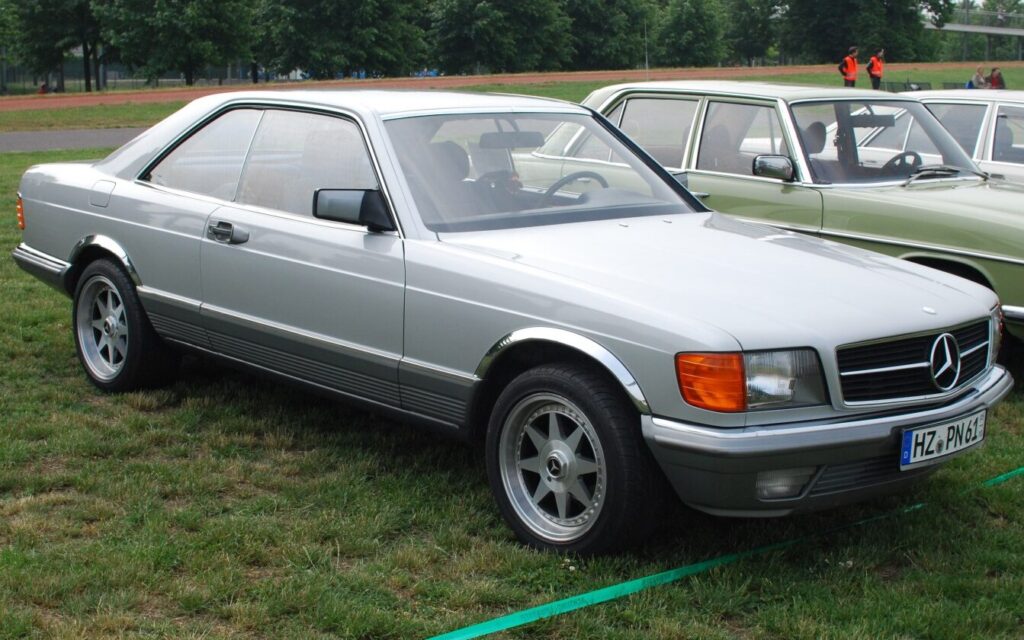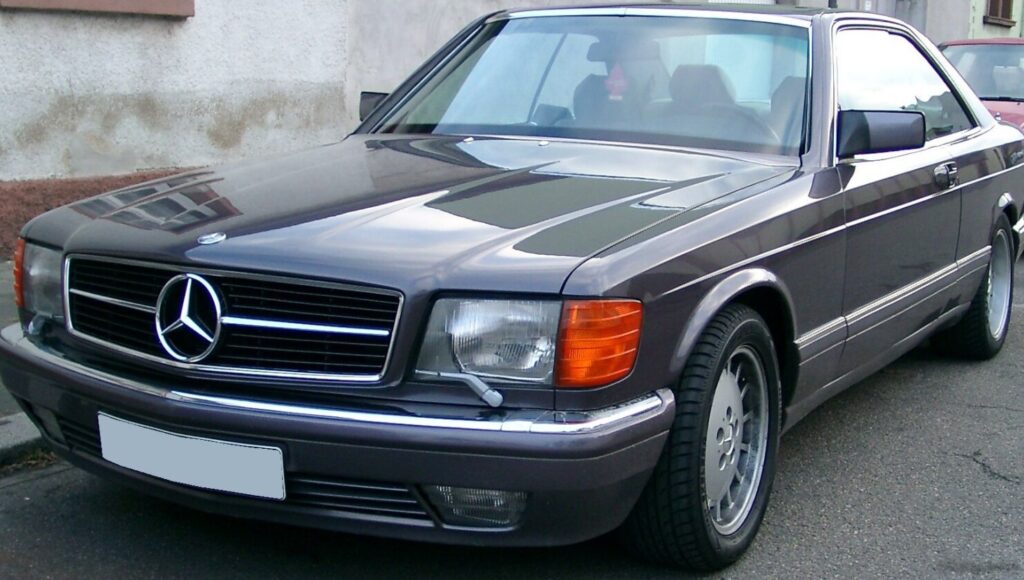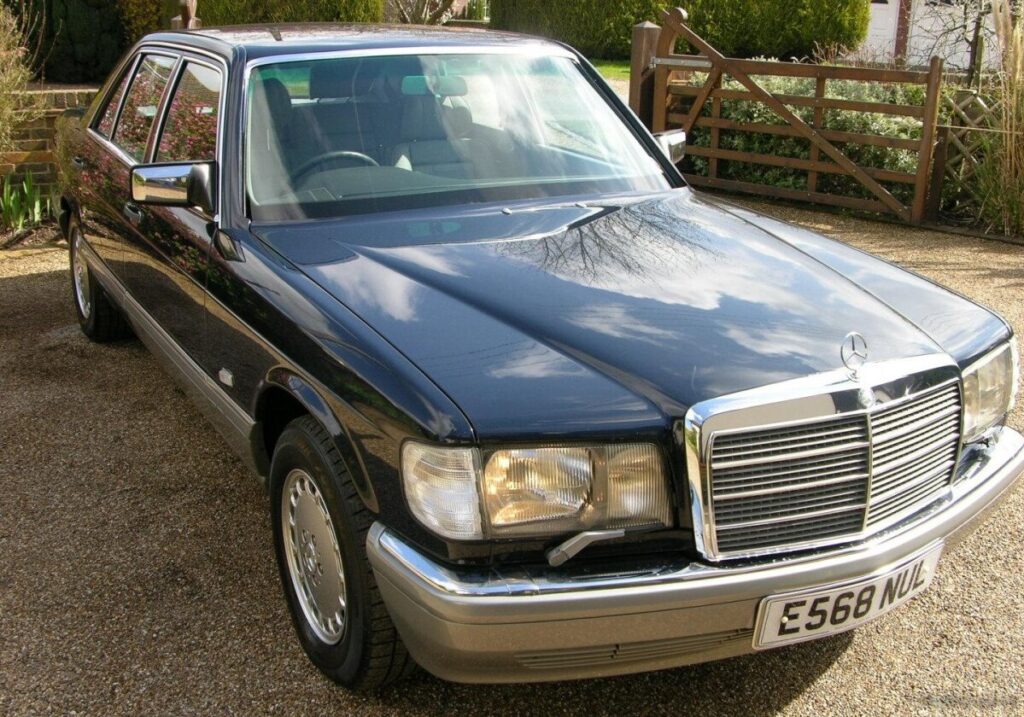
The Mercedes-Benz S-Class SEL (W126 facelift, produced 1985-1987) 500 SEL represents a pinnacle of 1980s luxury and performance. Positioned as the flagship of the S-Class range, the 500 SEL featured a potent 5.0-liter V8 engine paired exclusively with a four-speed automatic transmission. This variant was aimed at buyers seeking the ultimate in comfort, refinement, and effortless power, representing the top-tier offering within the W126 generation before the arrival of the even more powerful 560 SEL. The “SEL” designation signified the long-wheelbase version, offering increased rear passenger legroom, further emphasizing the car’s luxury focus.
Technical Specifications
| Brand | Mercedes-Benz |
| Model | S-Class |
| Generation | S-Class SEL (V126, facelift 1985) |
| Type (Engine) | 500 SEL V8 (245 Hp) Automatic |
| Start of production | September, 1985 |
| End of production | September, 1987 |
| Powertrain Architecture | Internal Combustion engine |
| Body type | Sedan |
| Seats | 5 |
| Doors | 4 |
| Fuel consumption (urban) | 15.4 l/100 km (15.3 US mpg, 18.3 UK mpg, 6.5 km/l) |
| Fuel consumption (extra urban) | 9.1 l/100 km (25.8 US mpg, 31 UK mpg, 11 km/l) |
| Fuel Type | Petrol (Gasoline) |
| Acceleration 0 – 100 km/h | 7.3 sec |
| Acceleration 0 – 62 mph | 7.3 sec |
| Acceleration 0 – 60 mph | 6.9 sec |
| Maximum speed | 230 km/h (142.92 mph) |
| Weight-to-power ratio | 6.8 kg/Hp, 146.7 Hp/tonne |
| Weight-to-torque ratio | 4.2 kg/Nm, 239.5 Nm/tonne |
| Power | 245 Hp @ 4750 rpm |
| Power per litre | 49.3 Hp/l |
| Torque | 400 Nm @ 3750 rpm (295.02 lb.-ft. @ 3750 rpm) |
| Engine layout | Front, Longitudinal |
| Engine Model/Code | M 117 E 50 / 117.965 |
| Engine displacement | 4973 cm3 (303.47 cu. in.) |
| Number of cylinders | 8 |
| Engine configuration | V-engine |
| Cylinder Bore | 96.5 mm (3.8 in.) |
| Piston Stroke | 85 mm (3.35 in.) |
| Compression ratio | 9:1 |
| Number of valves per cylinder | 2 |
| Fuel injection system | Multi-port manifold injection |
| Engine aspiration | Naturally aspirated engine |
| Valvetrain | SOHC |
| Engine oil capacity | 8 l (8.45 US qt | 7.04 UK qt) |
| Coolant | 13.5 l (14.27 US qt | 11.88 UK qt) |
| Kerb Weight | 1670 kg (3681.72 lbs.) |
| Max. weight | 2190 kg (4828.12 lbs.) |
| Max load | 520 kg (1146.4 lbs.) |
| Fuel tank capacity | 90 l (23.78 US gal | 19.8 UK gal) |
| Length | 5160 mm (203.15 in.) |
| Width | 1820 mm (71.65 in.) |
| Height | 1441 mm (56.73 in.) |
| Wheelbase | 3070 mm (120.87 in.) |
| Front track | 1555 mm (61.22 in.) |
| Rear track | 1527 mm (60.12 in.) |
| Drivetrain Architecture | Rear wheel drive |
| Number of gears | 4 |
| Gearbox type | Automatic transmission |
| Front suspension | Double wishbone, Torsion |
| Rear suspension | Threaded twist beam |
| Front brakes | Ventilated discs |
| Rear brakes | Disc |
| Assisting systems | ABS (Anti-lock braking system) |
| Steering type | Cone worm with recirculation balls |
| Power steering | Hydraulic Steering |
| Tires size | Front: 205/65 R15, Rear: 205/65 R15 |
| Wheel rims size | Front: 7J x 15, Rear: 7J x 15 |
Powertrain & Engine Architecture
The heart of the 500 SEL was the M117 E 50 engine, a 4.97-liter (303.47 cubic inch) naturally aspirated V8. This engine featured a single overhead camshaft (SOHC) design with two valves per cylinder. The M117 was a long-running Mercedes-Benz engine family, known for its durability and smooth operation. Fuel delivery was handled by a Bosch K-Jetronic multi-port fuel injection system, a mechanical system known for its precision but also its complexity. The engine produced 245 horsepower at 4750 rpm and 400 Nm (295 lb-ft) of torque at 3750 rpm. The four-speed automatic transmission (typically the 722.3 series) was specifically chosen to complement the V8’s torque curve, providing smooth and refined shifts. This transmission wasn’t known for its sportiness, prioritizing comfort and ease of use over aggressive downshifts.
Driving Characteristics
The 500 SEL offered a distinctly grand touring experience. Acceleration to 60 mph took approximately 6.9 seconds, and it could reach a top speed of 143 mph. While not a sports car, the V8 provided ample power for effortless highway cruising and confident overtaking. The automatic transmission, while smooth, did result in some power loss compared to the available five-speed manual transmission found in other 500 SEL variants. The gear ratios were geared towards relaxed cruising, meaning the engine didn’t always feel as responsive as it could be. However, the abundance of torque meant that the car rarely felt strained, even when fully loaded.
Equipment & Trim Levels
The 500 SEL came standard with a comprehensive list of luxury features, befitting its flagship status. This included leather upholstery, power-adjustable front seats with memory function, climate control, a high-quality sound system, and power windows and locks. The long wheelbase provided generous rear legroom, making it a particularly comfortable choice for passengers. Optional extras included a sunroof, upgraded sound systems, and various wood trim options. The interior design was characterized by its understated elegance and high-quality materials.
Chassis & Braking
The W126 S-Class featured an independent suspension system, with double wishbones at the front and a threaded twist beam rear axle. This setup provided a comfortable ride while maintaining good handling characteristics. The 500 SEL was equipped with ventilated disc brakes at the front and solid discs at the rear. An Anti-lock Braking System (ABS) was standard, enhancing safety and control during hard braking. The steering was a recirculating ball system with hydraulic power assistance, offering a balance between feel and ease of use.
Market Reception & Comparison
The 500 SEL was generally well-received by automotive critics, who praised its luxurious interior, smooth ride, and powerful engine. However, some criticized the automatic transmission for its lack of responsiveness compared to the manual option. Compared to the 300 SEL (with its inline-six engine), the 500 SEL offered significantly more power and refinement. Against the later 560 SEL, the 500 SEL represented a slightly more economical option, although the 560 SEL’s larger engine provided even greater performance. Fuel economy, unsurprisingly, was not a strong point, averaging around 15.4 l/100km (15.3 US mpg) in urban driving.
Legacy
The W126 S-Class, including the 500 SEL, is widely regarded as a classic Mercedes-Benz, known for its build quality and durability. The M117 engine, while complex, is generally reliable if properly maintained. Today, the 500 SEL is a sought-after classic car, appealing to collectors and enthusiasts who appreciate its blend of luxury, performance, and timeless design. Finding well-maintained examples can be challenging, as age and neglect have taken their toll on some vehicles. However, a properly cared-for 500 SEL remains a rewarding and elegant driving experience, representing a high point in Mercedes-Benz engineering and design.