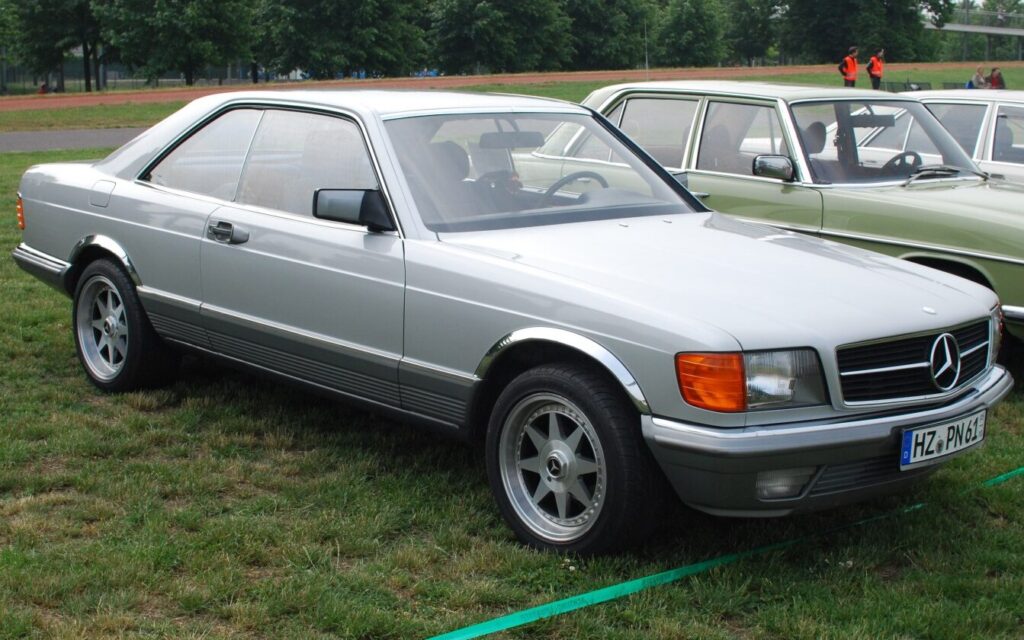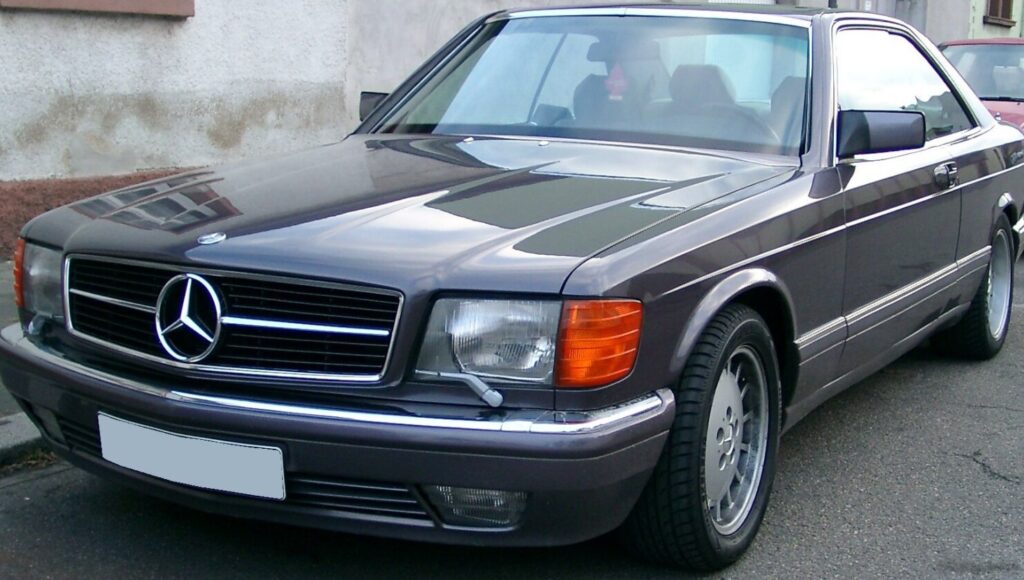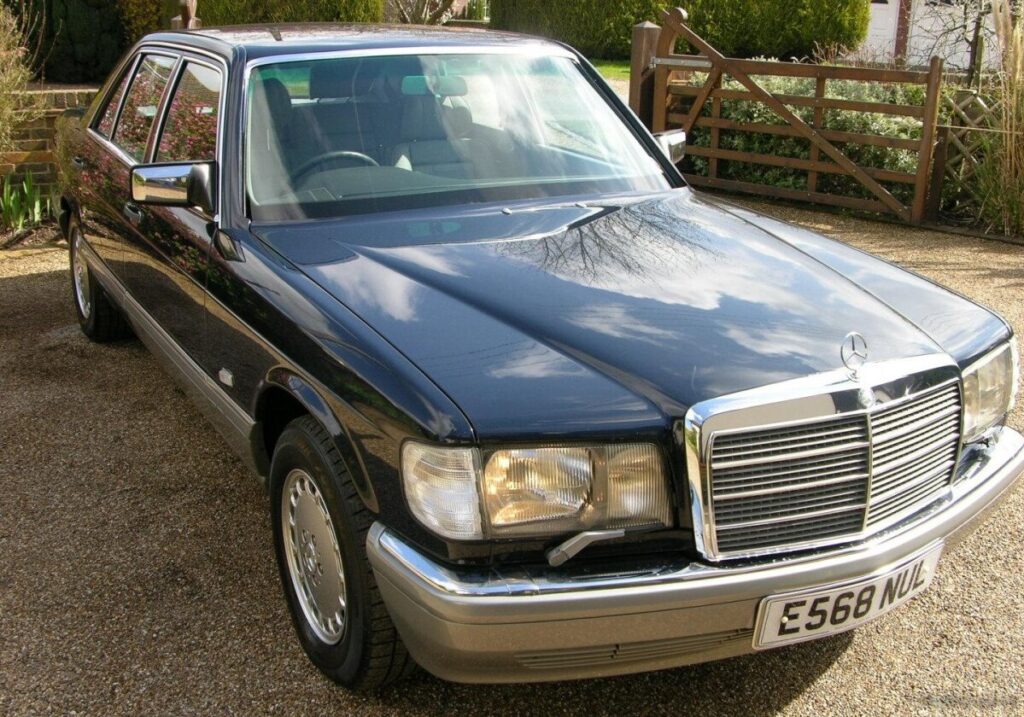
The Mercedes-Benz 500 SEL, produced from September 1985 to September 1987, represented the pinnacle of luxury and performance within the W126 S-Class range. This long-wheelbase sedan, often referred to as the “SEL,” was distinguished by its extended chassis and offered a more spacious rear passenger compartment. The 500 SEL, equipped with the M117 E 50 V8 engine and a four-speed automatic transmission, served as the flagship model, boasting the highest level of standard equipment and a significantly higher price point than its six-cylinder siblings. It was a statement vehicle, favored by executives and those seeking the ultimate in German automotive engineering.
Technical Specifications
| Brand | Mercedes-Benz |
| Model | S-class |
| Generation | S-class SEL (V126, facelift 1985) |
| Type (Engine) | 500 SEL V8 CAT (223 Hp) Automatic |
| Start of production | September, 1985 |
| End of production | September, 1987 |
| Powertrain Architecture | Internal Combustion engine |
| Body type | Sedan |
| Seats | 5 |
| Doors | 4 |
| Fuel consumption (urban) | 15.9 l/100 km (14.8 US mpg, 17.8 UK mpg, 6.3 km/l) |
| Fuel consumption (extra urban) | 9.6 l/100 km (24.5 US mpg, 29.4 UK mpg, 10.4 km/l) |
| Fuel Type | Petrol (Gasoline) |
| Acceleration 0 – 100 km/h | 8 sec |
| Acceleration 0 – 62 mph | 8 sec |
| Acceleration 0 – 60 mph | 7.6 sec |
| Maximum speed | 220 km/h (136.7 mph) |
| Weight-to-power ratio | 7.5 kg/Hp, 133.5 Hp/tonne |
| Weight-to-torque ratio | 4.6 kg/Nm, 218.6 Nm/tonne |
| Power | 223 Hp @ 4700 rpm |
| Power per litre | 44.8 Hp/l |
| Torque | 365 Nm @ 2500 rpm (269.21 lb.-ft. @ 2500 rpm) |
| Engine layout | Front, Longitudinal |
| Engine Model/Code | M 117 E 50 / 117.965 |
| Engine displacement | 4973 cm3 (303.47 cu. in.) |
| Number of cylinders | 8 |
| Engine configuration | V-engine |
| Cylinder Bore | 96.5 mm (3.8 in.) |
| Piston Stroke | 85 mm (3.35 in.) |
| Compression ratio | 9:1 |
| Number of valves per cylinder | 2 |
| Fuel injection system | Multi-port manifold injection |
| Engine aspiration | Naturally aspirated engine |
| Valvetrain | SOHC |
| Engine oil capacity | 8 l (8.45 US qt | 7.04 UK qt) |
| Coolant | 13.5 l (14.27 US qt | 11.88 UK qt) |
| Kerb Weight | 1670 kg (3681.72 lbs.) |
| Max. weight | 2190 kg (4828.12 lbs.) |
| Max load | 520 kg (1146.4 lbs.) |
| Fuel tank capacity | 90 l (23.78 US gal | 19.8 UK gal) |
| Length | 5160 mm (203.15 in.) |
| Width | 1820 mm (71.65 in.) |
| Height | 1441 mm (56.73 in.) |
| Wheelbase | 3070 mm (120.87 in.) |
| Front track | 1555 mm (61.22 in.) |
| Rear track | 1527 mm (60.12 in.) |
| Drivetrain Architecture | The Internal combustion engine (ICE) drives the rear wheels of the vehicle. |
| Drive wheel | Rear wheel drive |
| Number of gears and type of gearbox | 4 gears, automatic transmission |
| Front suspension | Double wishbone, Torsion |
| Rear suspension | Threaded twist beam |
| Front brakes | Ventilated discs |
| Rear brakes | Disc |
| Assisting systems | ABS (Anti-lock braking system) |
| Steering type | Cone worm with recirculation balls |
| Power steering | Hydraulic Steering |
| Tires size | Front wheel tires: 205/65 R15Rear wheel tires: 205/65 R15 |
| Wheel rims size | Front wheel rims: 7J x 15Rear wheel rims: 7J x 15 |
Powertrain & Engine Architecture
The heart of the 500 SEL was the M117 E 50 engine, a 4.97-liter naturally aspirated V8. This engine, a descendant of the earlier M117 series, featured a cast iron block and aluminum cylinder heads. It employed a single overhead camshaft (SOHC) design with two valves per cylinder. Fuel delivery was handled by a Bosch K-Jetronic multi-port fuel injection system, known for its reliability and precise metering. The catalytic converter (“CAT” in the model designation) was a crucial addition, meeting increasingly stringent emissions regulations. The engine produced 223 horsepower at 4700 rpm and 365 Nm (269.21 lb-ft) of torque at 2500 rpm. Paired with the engine was a four-speed automatic transmission, designed for smooth and comfortable shifts. This transmission, while not particularly sporty, was well-suited to the car’s grand touring character.
Driving Characteristics
The 500 SEL offered a refined and powerful driving experience. While its 0-60 mph time of around 7.6 seconds doesn’t sound impressive by modern standards, it was brisk for the mid-1980s, especially considering the car’s substantial weight. The automatic transmission provided seamless gear changes, prioritizing comfort over outright performance. The long wheelbase and sophisticated suspension – featuring double wishbones at the front and a threaded twist beam at the rear – delivered a smooth and composed ride, even on imperfect road surfaces. Compared to the 280 SEL or 300 SEL, the 500 SEL offered a noticeable increase in acceleration and overall responsiveness. The higher-output engine made overtaking maneuvers effortless, and the car felt stable and secure at highway speeds.
Equipment & Trim Levels
The 500 SEL came standard with a comprehensive list of luxury features. Leather upholstery was standard, as were power-adjustable front seats with memory function. Climate control, power windows, central locking, and a high-quality sound system were also included. The interior trim was typically finished in wood veneer, adding to the car’s opulent ambiance. Optional extras included a sunroof, upgraded sound systems, and rear seat entertainment systems. The SEL models, in general, were distinguished by their extended rear legroom and more luxurious appointments compared to the standard wheelbase S-Class models.
Chassis & Braking
The W126 S-Class chassis was renowned for its rigidity and safety. The 500 SEL featured ventilated disc brakes at the front and solid discs at the rear, providing ample stopping power. An Anti-lock Braking System (ABS) was standard, enhancing safety and control during emergency braking. The steering system utilized a cone worm and recirculation balls, offering a balanced feel between precision and ease of use. Hydraulic power steering further reduced driver effort. The suspension was tuned for comfort, but also provided good handling characteristics for a large sedan.
Market Reception & Comparison
The 500 SEL was widely praised by automotive journalists for its luxurious interior, smooth ride, and powerful engine. It was considered a benchmark for luxury sedans of its era. However, its high price tag limited its appeal to a relatively small segment of the market. Compared to the six-cylinder S-Class models, the 500 SEL offered significantly more performance and a higher level of refinement. Fuel economy, however, was considerably lower. Reliability was generally good, although the complex K-Jetronic fuel injection system could require specialized maintenance.
Legacy
The Mercedes-Benz 500 SEL (W126) remains a highly sought-after classic car today. Well-maintained examples command premium prices. The M117 engine is known for its durability, but regular maintenance is essential to prevent issues. The car’s timeless design, luxurious interior, and smooth driving experience continue to appeal to enthusiasts. It represents a high point in Mercedes-Benz engineering and a symbol of 1980s automotive excellence. Finding parts can sometimes be a challenge, but a dedicated network of suppliers and enthusiasts ensures that these cars can be kept on the road for years to come.