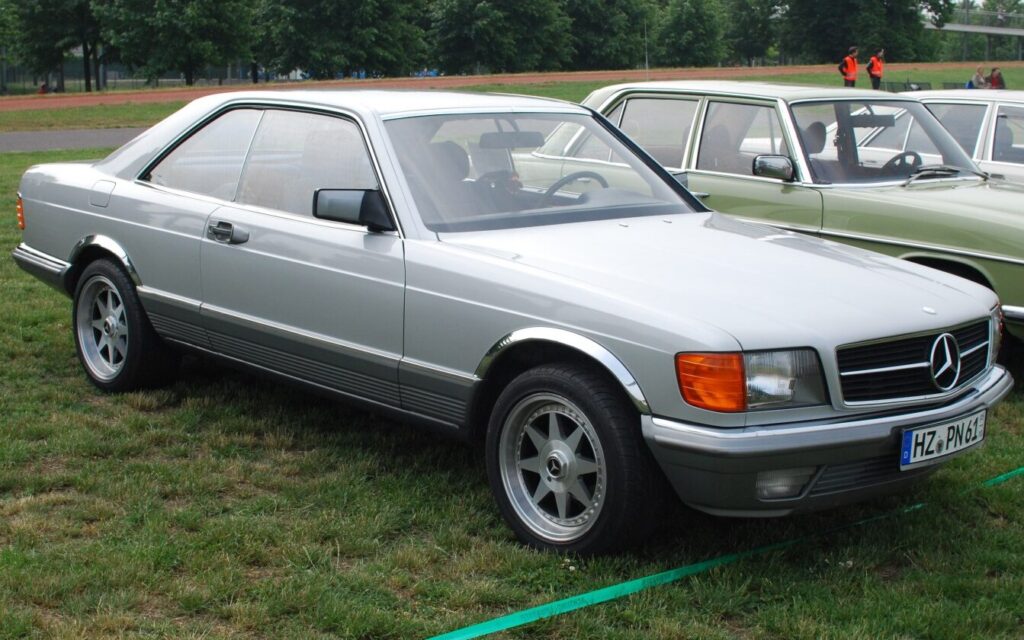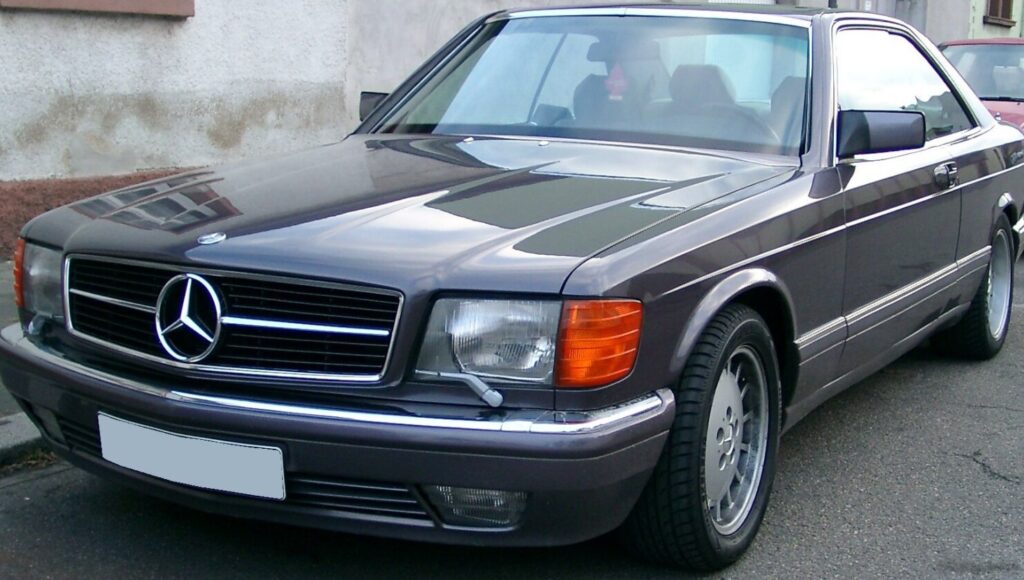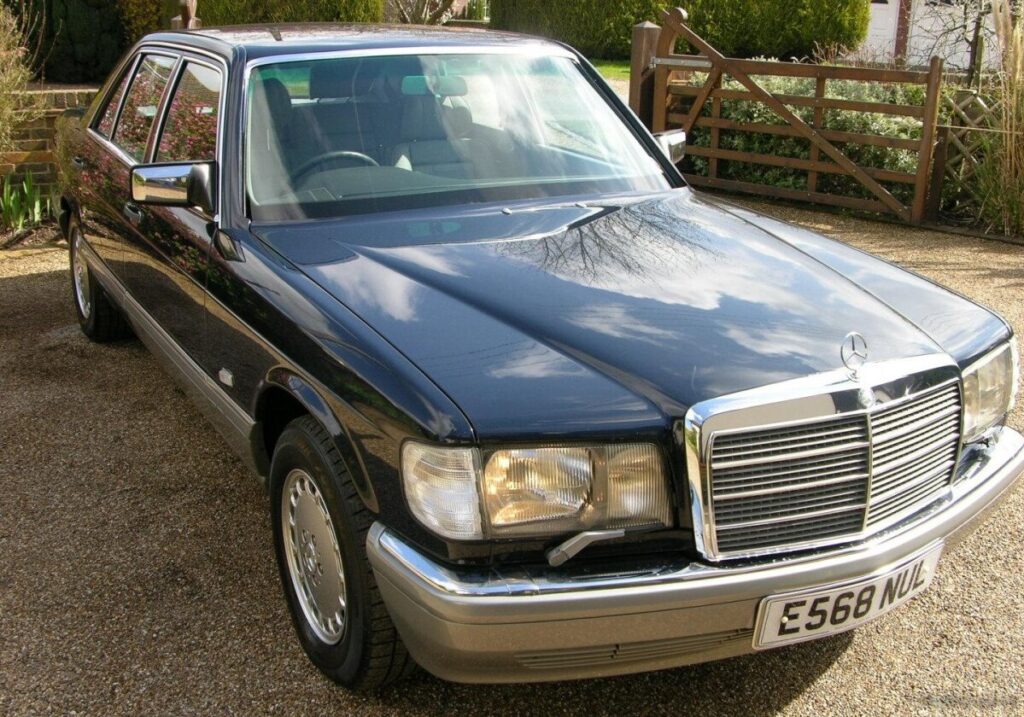
The Mercedes-Benz 500 SEL, part of the W126 S-Class range, represented the pinnacle of German engineering and luxury in the late 1980s and early 1990s. Introduced in September 1987 as part of the facelifted W126 series, the 500 SEL featured a high-performance V8 engine and was positioned as the flagship sedan within the S-Class lineup. Production continued until February 1992, marking the end of an era for this iconic vehicle. The “SEL” designation signified a longer wheelbase, offering increased rear passenger legroom and further enhancing the car’s luxurious character. This variant was a key model in establishing Mercedes-Benz’s reputation for combining performance, comfort, and advanced technology.
Technical Specifications
| Brand | Mercedes-Benz |
| Model | S-class |
| Generation | S-class SEL (V126, facelift 1985) |
| Type (Engine) | 500 SEL V8 CAT (252 Hp) Automatic |
| Start of production | September, 1987 |
| End of production | February, 1992 |
| Powertrain Architecture | Internal Combustion engine |
| Body type | Sedan |
| Seats | 5 |
| Doors | 4 |
| Fuel consumption (urban) | 16.2 l/100 km (14.5 US mpg, 17.4 UK mpg, 6.2 km/l) |
| Fuel consumption (extra urban) | 9.4 l/100 km (25 US mpg, 30.1 UK mpg, 10.6 km/l) |
| Fuel Type | Petrol (Gasoline) |
| Acceleration 0 – 100 km/h | 7.5 sec |
| Acceleration 0 – 62 mph | 7.5 sec |
| Acceleration 0 – 60 mph | 7.1 sec |
| Maximum speed | 230 km/h (142.92 mph) |
| Weight-to-power ratio | 6.7 kg/Hp, 149.1 Hp/tonne |
| Weight-to-torque ratio | 4.3 kg/Nm, 230.8 Nm/tonne |
| Power | 252 Hp @ 5200 rpm |
| Power per litre | 50.7 Hp/l |
| Torque | 390 Nm @ 3750 rpm (287.65 lb.-ft. @ 3750 rpm) |
| Engine layout | Front, Longitudinal |
| Engine Model/Code | M 117 E 50 / 117.965 |
| Engine displacement | 4973 cm3 (303.47 cu. in.) |
| Number of cylinders | 8 |
| Engine configuration | V-engine |
| Cylinder Bore | 96.5 mm (3.8 in.) |
| Piston Stroke | 85 mm (3.35 in.) |
| Compression ratio | 10:1 |
| Number of valves per cylinder | 2 |
| Fuel injection system | Multi-port manifold injection |
| Engine aspiration | Naturally aspirated engine |
| Valvetrain | SOHC |
| Engine oil capacity | 8 l (8.45 US qt | 7.04 UK qt) |
| Coolant | 13.5 l (14.27 US qt | 11.88 UK qt) |
| Kerb Weight | 1690 kg (3725.81 lbs.) |
| Max. weight | 1980 kg (4365.15 lbs.) |
| Max load | 290 kg (639.34 lbs.) |
| Fuel tank capacity | 90 l (23.78 US gal | 19.8 UK gal) |
| Length | 5160 mm (203.15 in.) |
| Width | 1820 mm (71.65 in.) |
| Height | 1441 mm (56.73 in.) |
| Wheelbase | 3070 mm (120.87 in.) |
| Front track | 1555 mm (61.22 in.) |
| Rear track | 1527 mm (60.12 in.) |
| Drivetrain Architecture | The Internal combustion engine (ICE) drives the rear wheels of the vehicle. |
| Drive wheel | Rear wheel drive |
| Number of gears and type of gearbox | 4 gears, automatic transmission |
| Front suspension | Double wishbone, Torsion |
| Rear suspension | Threaded twist beam |
| Front brakes | Ventilated discs |
| Rear brakes | Disc |
| Assisting systems | ABS (Anti-lock braking system) |
| Steering type | Cone worm with recirculation balls |
| Power steering | Hydraulic Steering |
| Tires size | Front wheel tires: 205/65 R15Rear wheel tires: 205/65 R15 |
| Wheel rims size | Front wheel rims: 7J x 15Rear wheel rims: 7J x 15 |
Powertrain & Engine Architecture
The heart of the 500 SEL was the M117 E 50 engine, a 4.97-liter naturally aspirated V8. This engine, designated with the code 117.965, was a further development of the long-running M117 series, known for its robust construction and smooth power delivery. It featured a single overhead camshaft (SOHC) design with two valves per cylinder. Fuel delivery was handled by a Bosch K-Jetronic multi-port fuel injection system, a sophisticated system for its time that contributed to both performance and relatively good fuel economy. The engine produced 252 horsepower at 5200 rpm and 390 Nm (287.65 lb-ft) of torque at 3750 rpm. The engine was longitudinally mounted in the front of the vehicle. The 500 SEL exclusively came with a four-speed automatic transmission, designed to provide smooth and effortless shifting. This transmission was geared towards comfortable cruising rather than outright performance, although it handled the engine’s power adequately.
Driving Characteristics
The 500 SEL offered a driving experience characterized by refined comfort and effortless power. While not a sports car, the 252 hp V8 provided brisk acceleration, achieving 0-60 mph in approximately 7.1 seconds. The automatic transmission, while smooth, wasn’t particularly quick to downshift, meaning that overtaking maneuvers required some planning. The long wheelbase and sophisticated suspension – featuring double wishbones at the front and a threaded twist beam at the rear – provided a comfortable and stable ride, even on less-than-perfect road surfaces. Compared to the 420 SEL or the later 300 SEL variants, the 500 SEL offered a significantly more engaging driving experience due to its increased power and torque. However, it lacked the agility of some of its European rivals.
Equipment & Trim Levels
The 500 SEL was generously equipped, reflecting its status as the flagship model. Standard features included leather upholstery, power-adjustable front seats with memory function, climate control, a high-quality sound system, and power windows and locks. The interior was characterized by its luxurious materials and attention to detail. Optional extras included a sunroof, upgraded sound systems, and rear seat entertainment systems. The wood trim throughout the cabin added to the sense of opulence. The exterior featured color-coded bumpers and side skirts, and alloy wheels were standard.
Chassis & Braking
The W126 S-Class chassis was designed for both comfort and safety. The 500 SEL featured ventilated disc brakes at the front and solid discs at the rear, providing adequate stopping power for the vehicle’s weight and performance. An Anti-lock Braking System (ABS) was standard, enhancing safety in emergency braking situations. The steering was a recirculating ball system with hydraulic power assistance, offering a good balance of feel and ease of use. The suspension was tuned for comfort, prioritizing a smooth ride over sporty handling. Stabilizer bars were fitted front and rear to reduce body roll during cornering.
Market Reception & Comparison
The 500 SEL was well-received by critics and buyers alike. It was praised for its luxurious interior, smooth ride, and powerful engine. However, some critics noted that the automatic transmission could feel sluggish at times. Compared to other S-Class variants, the 500 SEL offered a significant performance advantage, but it also came with a higher price tag and slightly worse fuel economy. The 420 SEL, for example, offered a similar level of luxury at a lower cost, while the 300 SEL was more fuel-efficient but lacked the 500 SEL’s outright power.
Legacy
The Mercedes-Benz 500 SEL (W126) remains a highly sought-after classic car today. The M117 engine is known for its durability and reliability, although regular maintenance is essential to keep it running smoothly. Parts availability is generally good, although some specific components can be difficult to find. The 500 SEL’s combination of luxury, performance, and build quality has ensured its enduring appeal among collectors and enthusiasts. Well-maintained examples command high prices in the used car market, reflecting their status as a symbol of 1980s German automotive excellence. The W126 S-Class, and the 500 SEL in particular, set a new standard for luxury sedans and continues to be admired for its timeless design and engineering.