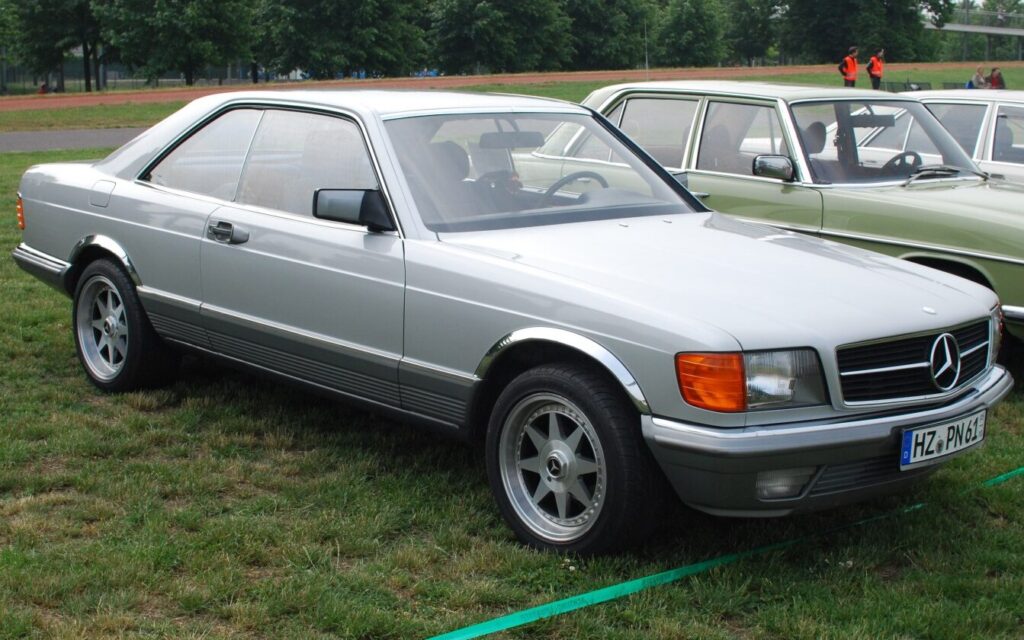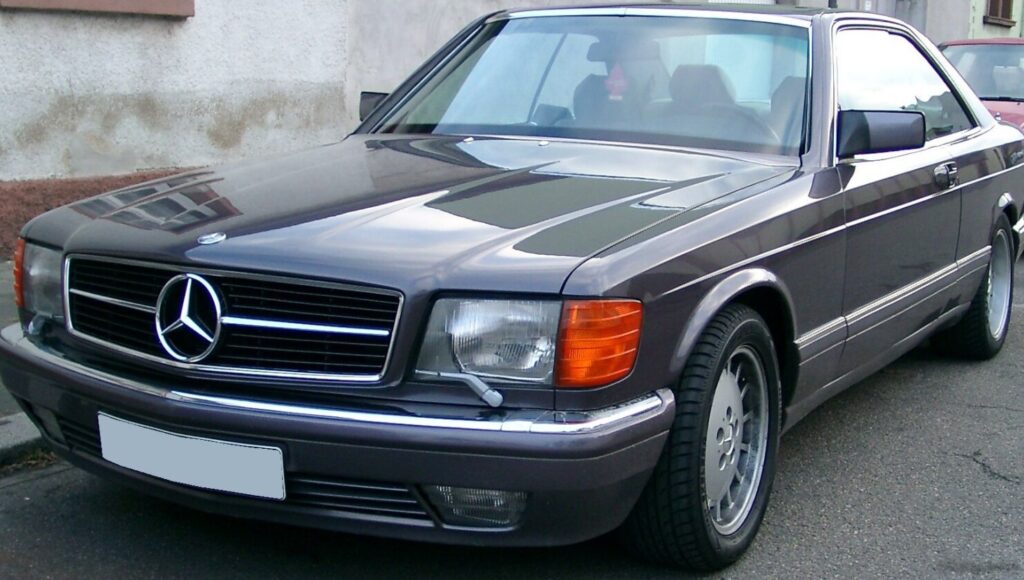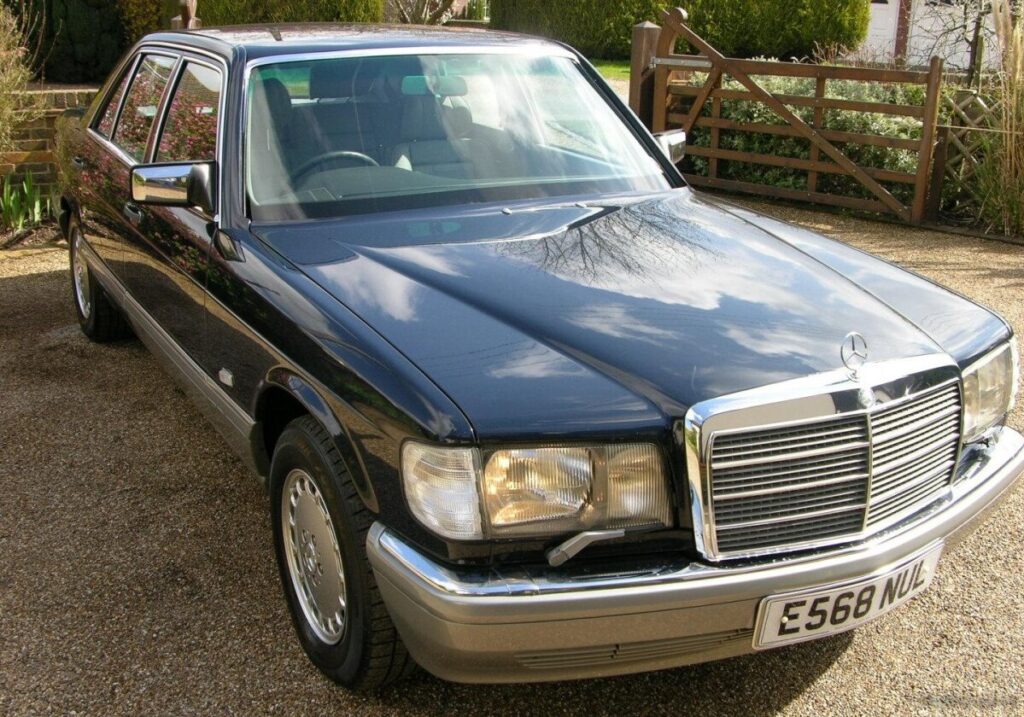
The Mercedes-Benz 560 SEL, produced from September 1987 to April 1992, represents the pinnacle of the W126 S-Class range, particularly after the 1985 facelift. This long-wheelbase sedan, designated as the “SEL” variant, was specifically designed for buyers seeking enhanced rear passenger space and a more luxurious experience. The 560 SEL, equipped with the M117.968 5.6-liter V8 engine and a four-speed automatic transmission, served as the flagship model, offering a blend of performance, refinement, and advanced technology for its time. It was positioned as the ultimate expression of Mercedes-Benz engineering and luxury, catering to a discerning clientele willing to pay a premium for the best the brand had to offer.
Technical Specifications
| Brand | Mercedes-Benz |
| Model | S-class |
| Generation | S-class SEL (V126, facelift 1985) |
| Type (Engine) | 560 SEL V8 CAT (279 Hp) Automatic |
| Start of production | September, 1987 |
| End of production | April, 1992 |
| Powertrain Architecture | Internal Combustion engine |
| Body type | Sedan |
| Seats | 5 |
| Doors | 4 |
| Fuel consumption (urban) | 17.6 l/100 km (13.4 US mpg, 16.1 UK mpg, 5.7 km/l) |
| Fuel consumption (extra urban) | 11.1 l/100 km (21.2 US mpg, 25.4 UK mpg, 9 km/l) |
| Fuel Type | Petrol (Gasoline) |
| Acceleration 0 – 100 km/h | 7.2 sec |
| Acceleration 0 – 62 mph | 7.2 sec |
| Acceleration 0 – 60 mph | 6.8 sec |
| Maximum speed | 240 km/h (149.13 mph) |
| Weight-to-power ratio | 6.6 kg/Hp, 152.5 Hp/tonne |
| Weight-to-torque ratio | 4.3 kg/Nm, 235 Nm/tonne |
| Power | 279 Hp @ 5200 rpm |
| Power per litre | 50.3 Hp/l |
| Torque | 430 Nm @ 3750 rpm (317.15 lb.-ft. @ 3750 rpm) |
| Engine layout | Front, Longitudinal |
| Engine Model/Code | M 117 E 56 / 117.968 |
| Engine displacement | 5547 cm3 (338.5 cu. in.) |
| Number of cylinders | 8 |
| Engine configuration | V-engine |
| Cylinder Bore | 96.5 mm (3.8 in.) |
| Piston Stroke | 94.8 mm (3.73 in.) |
| Compression ratio | 10:1 |
| Number of valves per cylinder | 2 |
| Fuel injection system | Multi-port manifold injection |
| Engine aspiration | Naturally aspirated engine |
| Valvetrain | SOHC |
| Engine oil capacity | 8 l (8.45 US qt | 7.04 UK qt) |
| Coolant | 13.5 l (14.27 US qt | 11.88 UK qt) |
| Kerb Weight | 1830 kg (4034.46 lbs.) |
| Max. weight | 2290 kg (5048.59 lbs.) |
| Max load | 460 kg (1014.13 lbs.) |
| Fuel tank capacity | 90 l (23.78 US gal | 19.8 UK gal) |
| Length | 5160 mm (203.15 in.) |
| Width | 1820 mm (71.65 in.) |
| Height | 1446 mm (56.93 in.) |
| Wheelbase | 3070 mm (120.87 in.) |
| Front track | 1555 mm (61.22 in.) |
| Rear (Back) track | 1527 mm (60.12 in.) |
| Drivetrain Architecture | The Internal combustion engine (ICE) drives the rear wheels of the vehicle. |
| Drive wheel | Rear wheel drive |
| Number of gears and type of gearbox | 4 gears, automatic transmission |
| Front suspension | Double wishbone |
| Rear suspension | Threaded twist beam |
| Front brakes | Ventilated discs |
| Rear brakes | Disc |
| Assisting systems | ABS (Anti-lock braking system) |
| Steering type | Cone worm with recirculation balls |
| Power steering | Hydraulic Steering |
| Tires size | Front wheel tires: 215/65 R15Rear wheel tires: 215/65 R15 |
| Wheel rims size | Front wheel rims: 7J x 15Rear wheel rims: 7J x 15 |
Powertrain & Engine Architecture
The heart of the 560 SEL is the M117.968 5.6-liter (5547 cc) V8 engine. This engine, a descendant of the long-running M117 family, featured a cast-iron block and aluminum cylinder heads. It employed a single overhead camshaft (SOHC) design with two valves per cylinder. Bosch K-Jetronic fuel injection, a mechanical system known for its reliability, delivered fuel to the cylinders. The catalytic converter, denoted by the “CAT” in the model name, was standard equipment, reflecting increasing emissions regulations. The engine produced 279 horsepower at 5200 rpm and 430 Nm (317 lb-ft) of torque at 3750 rpm. The four-speed automatic transmission, a robust unit for its time, was the sole transmission option. It was designed to provide smooth shifts and complement the engine’s torque characteristics. While not particularly advanced by modern standards, the transmission was known for its durability.
Driving Characteristics
The 560 SEL offered a distinctly grand touring experience. The combination of the 5.6-liter V8 and the automatic transmission delivered brisk acceleration – 0 to 60 mph in around 6.8 seconds – for a large luxury sedan of the era. However, the focus wasn’t on outright sportiness. The automatic transmission, while smooth, had relatively widely spaced gear ratios, prioritizing comfortable cruising over aggressive acceleration. Compared to the lighter and more nimble 300SE or the performance-oriented 560SEC coupe, the 560 SEL felt substantial and deliberate. The long wheelbase contributed to a very stable and comfortable ride, absorbing bumps and imperfections in the road with ease. The steering, while hydraulic, lacked the directness of more modern systems.
Equipment & Trim Levels
The 560 SEL came standard with a comprehensive list of luxury features. Leather upholstery was standard, as were power-adjustable front seats with memory function. Climate control, a premium sound system, and power windows and locks were also included. The SEL variant specifically featured extended rear legroom, making it ideal for chauffeured transport. Optional extras included a sunroof, heated seats, and a rear seat entertainment system. The interior trim was typically finished in wood veneer, adding to the sense of opulence. Exterior features included alloy wheels and body-colored bumpers and side moldings.
Chassis & Braking
The W126 S-Class featured an independent suspension system. The front suspension utilized double wishbones, while the rear employed a threaded twist beam. This setup provided a good balance of ride comfort and handling. The 560 SEL was equipped with ventilated disc brakes at the front and solid disc brakes at the rear. An Anti-lock Braking System (ABS) was standard, enhancing safety and control during hard braking. The steering system was a cone worm with recirculation balls, providing hydraulic assistance but lacking the precision of more modern rack-and-pinion systems.
Market Reception & Comparison
The 560 SEL was widely praised for its luxurious interior, comfortable ride, and powerful engine. Critics acknowledged its status as a top-tier luxury sedan, but some noted its relatively high price and fuel consumption. Compared to the 300SE, the 560 SEL offered significantly more power and a more refined driving experience, but at a considerable cost increase. The 420 SEL offered a middle ground, providing a larger engine than the 300SE but without the expense of the 560 SEL. Reliability was generally good, although the complexity of the K-Jetronic fuel injection system could present maintenance challenges. Fuel economy, at around 13-21 mpg, was typical for a large V8-powered sedan of the late 1980s and early 1990s.
Legacy
The Mercedes-Benz 560 SEL remains a highly sought-after classic car. Its robust construction and relatively simple mechanicals (compared to later Mercedes-Benz models) contribute to its enduring appeal. While maintenance can be costly due to the age of the vehicle and the availability of parts, the M117 engine is known for its longevity. Today, well-maintained examples command high prices in the collector car market, representing a piece of automotive history and a testament to Mercedes-Benz’s commitment to luxury and engineering excellence. The 560 SEL is often appreciated for its understated elegance and its ability to provide a comfortable and refined driving experience even by modern standards.