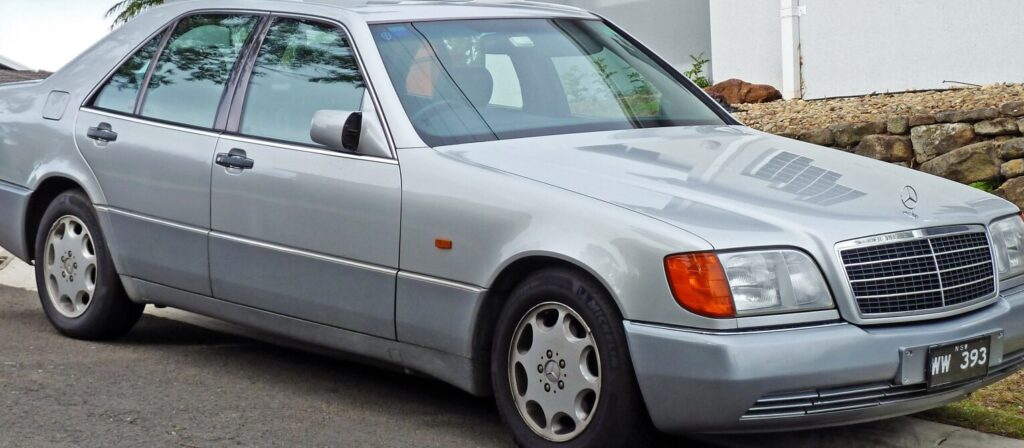
The Mercedes-Benz S 350 Turbo-D, produced between 1992 and 1994, was a variant of the W140 S-Class, representing a diesel-powered option within the flagship model range. Positioned as a more economical alternative to the gasoline-powered S-Class models, the S 350 Turbo-D aimed to deliver the luxury and refinement expected of the S-Class with improved fuel efficiency. It served as a key offering in European markets where diesel engines were highly favored for their fuel economy and torque characteristics, though it saw limited sales in the United States. This model utilized a turbocharged diesel engine paired with an automatic transmission, offering a unique driving experience within the W140 lineup.
Technical Specifications
| Brand | Mercedes-Benz |
| Model | S-class |
| Generation | S-class (W140) |
| Type (Engine) | S 350 Turbo-D (150 Hp) Automatic |
| Start of production | 1992 |
| End of production | 1994 |
| Powertrain Architecture | Internal Combustion engine |
| Body type | Sedan |
| Seats | 5 |
| Doors | 4 |
| Fuel consumption (urban) | 11.7 l/100 km (20.1 US mpg, 24.1 UK mpg, 8.5 km/l) |
| Fuel consumption (extra urban) | 7.7 l/100 km (30.5 US mpg, 36.7 UK mpg, 13 km/l) |
| Fuel consumption (combined) | 9.7 l/100 km (24.2 US mpg, 29.1 UK mpg, 10.3 km/l) |
| Fuel Type | Diesel |
| Maximum speed | 185 km/h (114.95 mph) |
| Weight-to-power ratio | 12.9 kg/Hp, 77.3 Hp/tonne |
| Weight-to-torque ratio | 6.3 kg/Nm, 159.8 Nm/tonne |
| Power | 150 Hp @ 4000 rpm |
| Power per litre | 43.5 Hp/l |
| Torque | 310 Nm @ 2000 rpm (228.64 lb.-ft. @ 2000 rpm) |
| Engine layout | Front, Longitudinal |
| Engine Model/Code | OM 603 D 35 A |
| Engine displacement | 3449 cm3 (210.47 cu. in.) |
| Number of cylinders | 6 |
| Engine configuration | Inline |
| Cylinder Bore | 89 mm (3.5 in.) |
| Piston Stroke | 92.4 mm (3.64 in.) |
| Compression ratio | 22:1 |
| Number of valves per cylinder | 2 |
| Fuel injection system | Precombustion chamber injection |
| Engine aspiration | Turbocharger |
| Engine oil capacity | 8 l (8.45 US qt | 7.04 UK qt) |
| Coolant capacity | 10 l (10.57 US qt | 8.8 UK qt) |
| Kerb Weight | 1940 kg (4276.97 lbs.) |
| Max. weight | 2590 kg (5709.97 lbs.) |
| Max load | 650 kg (1433 lbs.) |
| Max. roof load | 100 kg (220.46 lbs.) |
| Length | 5113 mm (201.3 in.) |
| Width | 1886 mm (74.25 in.) |
| Height | 1486 mm (58.5 in.) |
| Wheelbase | 3040 mm (119.69 in.) |
| Front track | 1606 mm (63.23 in.) |
| Rear track | 1579 mm (62.17 in.) |
| Minimum turning circle | 12.18 m (39.96 ft.) |
| Drivetrain Architecture | Rear wheel drive |
| Number of gears | 4 |
| Gearbox type | Automatic transmission |
| Front suspension | Double wishbone |
| Rear suspension | Independent multi-link spring suspension with stabilizer |
| Front brakes | Disc |
| Rear brakes | Disc |
| Assisting systems | ABS (Anti-lock braking system) |
| Tires size | 235/60 R16 |
| Wheel rims size | 16 |
INTRODUCTION
The Mercedes-Benz S 350 Turbo-D, part of the W140 generation produced from 1992 to 1994, represented a significant offering in the luxury sedan segment, particularly in European markets. The W140 S-Class, known for its robust build quality and advanced technology for its time, aimed to continue Mercedes-Benz’s tradition of providing a supremely comfortable and technologically advanced vehicle. The S 350 Turbo-D specifically catered to buyers seeking the prestige of the S-Class with the fuel efficiency and torque characteristics of a diesel engine. It occupied a middle ground in the W140 lineup, positioned below the more powerful gasoline variants like the S 500 but above any base-level diesel offerings.
Powertrain & Engine Architecture
The heart of the S 350 Turbo-D was the OM 603 D 35 A, a 3.5-liter inline-six cylinder diesel engine. This engine utilized precombustion chamber injection, a system common in Mercedes-Benz diesels of the era, which improved combustion efficiency and reduced engine noise compared to direct injection systems. A turbocharger was added to increase power output to 150 horsepower at 4000 rpm and 310 Nm (228.64 lb-ft) of torque at 2000 rpm. The engine featured a robust cast iron block and aluminum cylinder head, contributing to its longevity. The engine was longitudinally mounted in the front of the vehicle. The S 350 Turbo-D was exclusively offered with a four-speed automatic transmission, designed to provide smooth and comfortable gear changes. This transmission was a traditional hydraulic automatic, lacking the electronic controls found in later models.
Driving Characteristics
The S 350 Turbo-D offered a distinctly different driving experience compared to its gasoline-powered siblings. While lacking the outright acceleration of the V8 models, the diesel engine provided ample torque, making it well-suited for relaxed cruising and effortless overtaking. The four-speed automatic transmission, while smooth, had relatively widely spaced gear ratios, which could sometimes feel sluggish during quick acceleration. The turbocharger helped to mitigate turbo lag, but the engine still required some revving to access its peak power. Compared to the manual transmission options available on other W140 diesels, the automatic version prioritized comfort and ease of use over driver engagement. The weight of the vehicle, approximately 1940 kg (4277 lbs), did impact overall performance, resulting in a 0-60 mph time of around 11-12 seconds and a top speed of 185 km/h (115 mph).
Equipment & Trim Levels
The S 350 Turbo-D came standard with a generous array of features befitting its status as a luxury vehicle. Standard equipment typically included leather upholstery, power-adjustable front seats, climate control, power windows, central locking, and an AM/FM radio with cassette player. The interior trim was generally conservative, reflecting the understated elegance favored by Mercedes-Benz. Optional extras included a sunroof, upgraded sound system, rear seat entertainment, and various wood trim options. The S 350 Turbo-D generally occupied a mid-range position in terms of trim levels, offering a good balance of features and affordability. It wasn’t as lavishly equipped as the top-of-the-line S 500, but it offered more amenities than any base-level models.
Chassis & Braking
The W140 S-Class featured a robust chassis designed for comfort and safety. The S 350 Turbo-D utilized a double wishbone suspension at the front and an independent multi-link spring suspension with a stabilizer bar at the rear. This suspension setup provided a smooth and controlled ride, even on uneven surfaces. Braking duties were handled by disc brakes on all four wheels, supplemented by an Anti-lock Braking System (ABS) to prevent wheel lockup during hard braking. The S 350 Turbo-D’s weight necessitated a capable braking system, and the ABS-equipped discs provided adequate stopping power. Tire size was typically 235/60 R16, mounted on 16-inch alloy wheels.
Market Reception & Comparison
The S 350 Turbo-D was generally well-received by automotive critics, particularly in Europe, where diesel engines were more popular. Reviewers praised its fuel efficiency, comfortable ride, and quiet operation for a diesel engine. However, some criticized its relatively modest performance compared to the gasoline-powered models. Compared to the S 350 gasoline variant, the Turbo-D offered significantly better fuel economy but less horsepower and acceleration. Against other diesel-powered luxury sedans of the time, such as the BMW 735i diesel, the S 350 Turbo-D offered a compelling combination of refinement, comfort, and fuel efficiency. Reliability was generally good, although the complexity of the diesel injection system could require specialized maintenance.
Legacy
The Mercedes-Benz S 350 Turbo-D, while not as iconic as some of its gasoline-powered counterparts, remains a respected and sought-after classic. The OM 603 engine is known for its durability and longevity, and well-maintained examples can still provide reliable service today. In the used car market, the S 350 Turbo-D typically commands a lower price than the V8 models, making it an attractive option for buyers seeking the S-Class experience on a budget. Its fuel efficiency and robust construction have ensured its continued appeal to enthusiasts and collectors alike. The W140 S-Class, as a whole, is remembered as a high point in Mercedes-Benz engineering and a benchmark for luxury sedans of its era, and the S 350 Turbo-D played a significant role in that legacy.