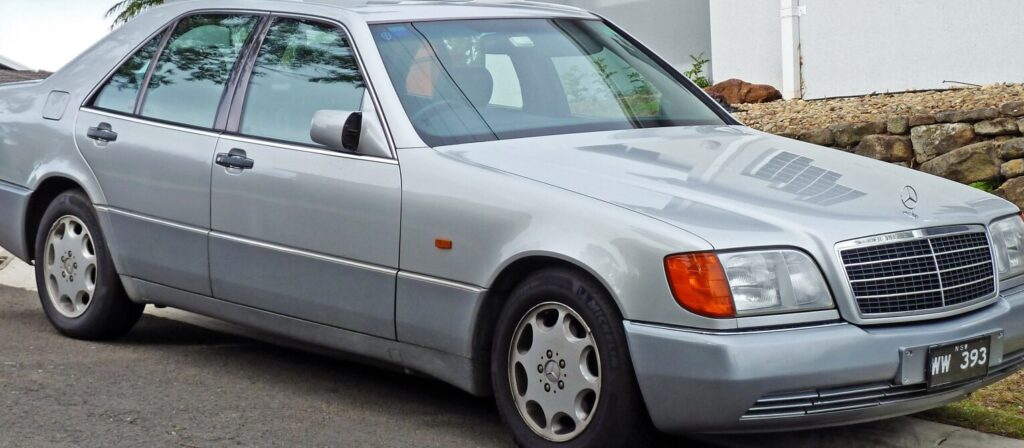
The Mercedes-Benz S 600 V12, part of the W140 generation S-Class produced from 1993 to 1994, represented the pinnacle of luxury and engineering prowess for the German automaker. Positioned as the flagship model, it showcased Mercedes-Benz’s commitment to innovation and refinement. The W140 S-Class, launched in 1991, was a significant departure from its predecessor, the W126, offering increased size, advanced technology, and a focus on passenger safety. The S 600 V12, with its massive twelve-cylinder engine, was the ultimate expression of this new generation, aimed at discerning buyers who demanded the very best. It was primarily marketed in Europe and North America, competing with other ultra-luxury sedans like the BMW 750iL and the Jaguar XJ12.
Technical Specifications
| Brand | Mercedes-Benz |
| Model | S-class |
| Generation | S-class (W140) |
| Type (Engine) | S 600 V12 (394 Hp) Automatic |
| Start of production | 1993 |
| End of production | 1994 |
| Powertrain Architecture | Internal Combustion engine |
| Body type | Sedan |
| Seats | 5 |
| Doors | 4 |
| Fuel consumption (economy) – urban | 20.7 l/100 km (11.4 US mpg, 13.6 UK mpg, 4.8 km/l) |
| Fuel consumption (economy) – extra urban | 11.8 l/100 km (19.9 US mpg, 23.9 UK mpg, 8.5 km/l) |
| Fuel consumption (economy) – combined | 15.4 l/100 km (15.3 US mpg, 18.3 UK mpg, 6.5 km/l) |
| Fuel Type | Petrol (Gasoline) |
| Acceleration 0 – 100 km/h | 6.6 sec |
| Acceleration 0 – 62 mph | 6.6 sec |
| Acceleration 0 – 60 mph | 6.3 sec |
| Maximum speed | 250 km/h (155.34 mph) |
| Weight-to-power ratio | 5.5 kg/Hp, 180.7 Hp/tonne |
| Weight-to-torque ratio | 3.8 kg/Nm, 261.5 Nm/tonne |
| Power | 394 Hp @ 5200 rpm |
| Power per litre | 65.8 Hp/l |
| Torque | 570 Nm @ 3800 rpm (420.41 lb.-ft. @ 3800 rpm) |
| Engine layout | Front, Longitudinal |
| Engine Model/Code | M 120 E 60/120.980 |
| Engine displacement | 5987 cm3 (365.35 cu. in.) |
| Number of cylinders | 12 |
| Engine configuration | V-engine |
| Cylinder Bore | 89 mm (3.5 in.) |
| Piston Stroke | 80.2 mm (3.16 in.) |
| Compression ratio | 10:1 |
| Number of valves per cylinder | 4 |
| Fuel injection system | Multi-port manifold injection |
| Engine aspiration | Naturally aspirated engine |
| Valvetrain | DOHC |
| Engine oil capacity | 10 l (10.57 US qt | 8.8 UK qt) |
| Coolant | 18.5 l (19.55 US qt | 16.28 UK qt) |
| Kerb Weight | 2180 kg (4806.08 lbs.) |
| Max. weight | 2710 kg (5974.53 lbs.) |
| Max load | 530 kg (1168.45 lbs.) |
| Trunk (boot) space – minimum | 525 l (18.54 cu. ft.) |
| Fuel tank capacity | 100 l (26.42 US gal | 22 UK gal) |
| Length | 5113 mm (201.3 in.) |
| Width | 1886 mm (74.25 in.) |
| Height | 1486 mm (58.5 in.) |
| Wheelbase | 3040 mm (119.69 in.) |
| Front track | 1606 mm (63.23 in.) |
| Rear (Back) track | 1579 mm (62.17 in.) |
| Minimum turning circle | 11.7 m (38.39 ft.) |
| Drivetrain Architecture | Rear wheel drive |
| Drive wheel | Rear wheel drive |
| Number of gears and type of gearbox | 4 gears, automatic transmission |
| Front suspension | Double wishbone |
| Rear suspension | Independent multi-link spring suspension with stabilizer |
| Front brakes | Ventilated discs |
| Rear brakes | Ventilated discs |
| Assisting systems | ABS (Anti-lock braking system), Hydraulic Steering |
| Tires size | 235/60 R16 |
| Wheel rims size | 16 |
Powertrain & Engine Architecture
The heart of the S 600 V12 was the M120 E 60 engine, a 6.0-liter (5,987 cc) naturally aspirated V12. This engine was a marvel of engineering, featuring all-aluminum construction, dual overhead camshafts (DOHC), and four valves per cylinder. The M120 utilized a Bosch Motronic engine management system and multi-port fuel injection to deliver smooth and responsive power. Its robust design and over-engineering were hallmarks of Mercedes-Benz at the time. The engine produced 394 horsepower at 5,200 rpm and a substantial 420 lb-ft of torque at 3,800 rpm. Paired with the engine was a four-speed automatic transmission, specifically designed to handle the V12’s immense power. This transmission, while not as sophisticated as some later designs, was known for its durability and smooth operation.
Driving Characteristics
The S 600 V12 offered a driving experience characterized by effortless power and supreme comfort. The large displacement V12 provided ample torque throughout the rev range, allowing for brisk acceleration without requiring frequent downshifts. While the 0-60 mph time of around 6.3 seconds doesn’t seem particularly impressive by modern standards, it was quite quick for a large luxury sedan in the early 1990s. The four-speed automatic transmission, while smooth, did have relatively widely spaced gear ratios, which could sometimes feel less responsive than more modern transmissions. Compared to the S 500, which featured a V8 engine, the S 600 V12 offered significantly more power and a more refined driving experience. However, the V8 was generally considered more fuel-efficient and slightly more agile due to its lower weight.
Equipment & Trim Levels
The S 600 V12 came standard with a comprehensive list of luxury features. Leather upholstery, wood trim, power-adjustable seats with memory function, automatic climate control, and a premium sound system were all standard. The exterior featured unique V12 badging and often came with upgraded wheels. Optional extras included a rear seat entertainment system, a telephone, and various customization options for the interior trim and paint color. The interior was designed to provide a serene and comfortable environment for both the driver and passengers, emphasizing sound insulation and high-quality materials.
Chassis & Braking
The W140 S-Class featured a robust chassis with double wishbone front suspension and an independent multi-link rear suspension with a stabilizer bar. This suspension setup provided a comfortable ride while maintaining good handling characteristics. The S 600 V12 was equipped with ventilated disc brakes on all four wheels and an Anti-lock Braking System (ABS) as standard, providing excellent stopping power. The steering was hydraulic power-assisted, offering a smooth and precise feel. Given the car’s weight, the suspension and braking systems were designed to handle the increased demands of the V12 engine.
Market Reception & Comparison
The S 600 V12 was generally well-received by automotive critics, who praised its luxurious interior, powerful engine, and smooth ride. However, its high price and significant fuel consumption were often noted. Compared to the S 500, the V12 offered a more prestigious and powerful experience, but at a considerable cost. Fuel economy was a major drawback, with combined figures around 15.3 US mpg. Reliability was generally good, but maintenance costs were high due to the complexity of the V12 engine and the specialized parts required.
Legacy
The W140 S 600 V12 remains a highly sought-after classic car today, particularly among Mercedes-Benz enthusiasts. The M120 V12 engine is renowned for its durability and smooth operation, although maintenance can be expensive. Well-maintained examples command high prices in the used car market. The S 600 V12 represents a high point in Mercedes-Benz engineering and a testament to the brand’s commitment to luxury and performance. It’s remembered as a truly special automobile that offered an unparalleled driving experience for its time, and continues to be appreciated for its engineering and opulent character.