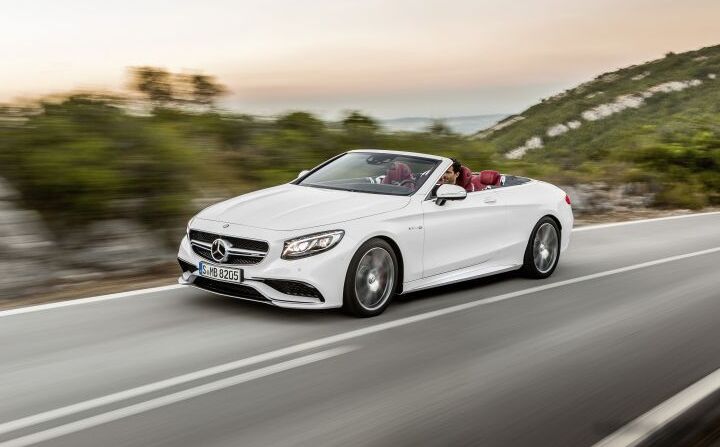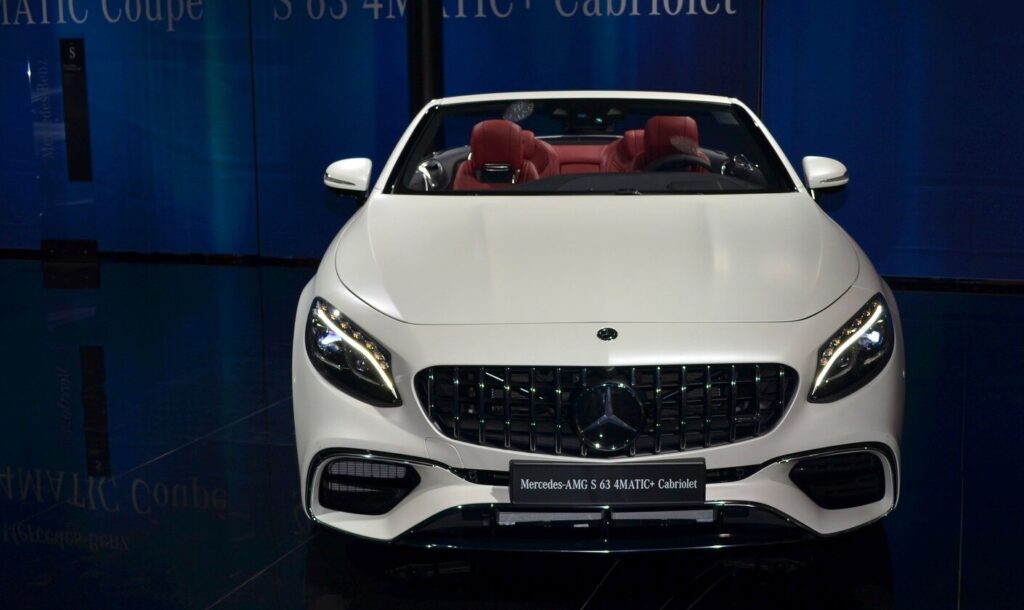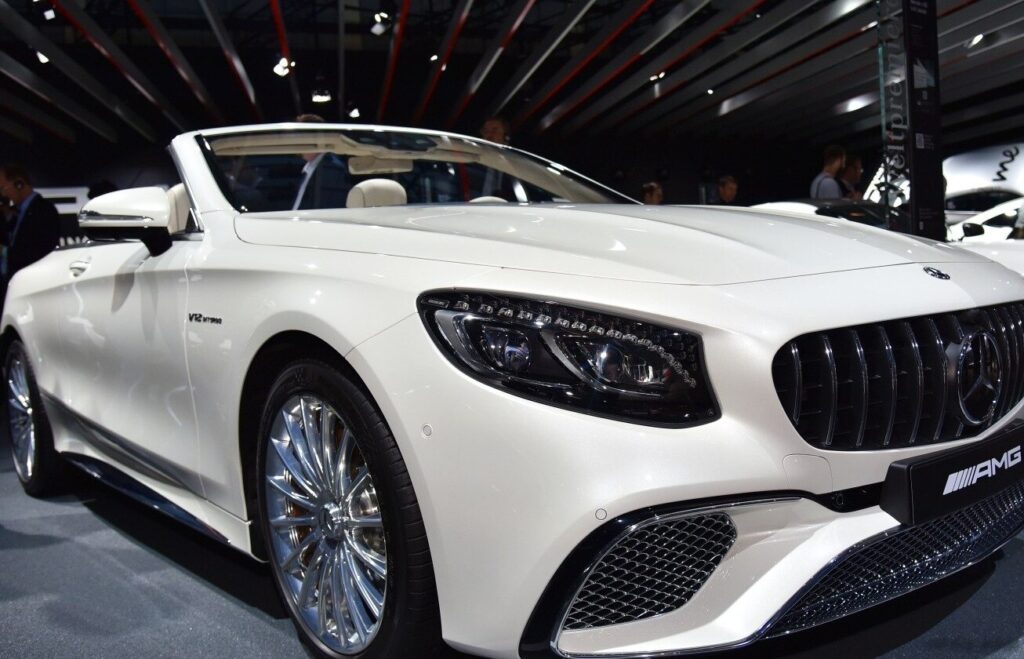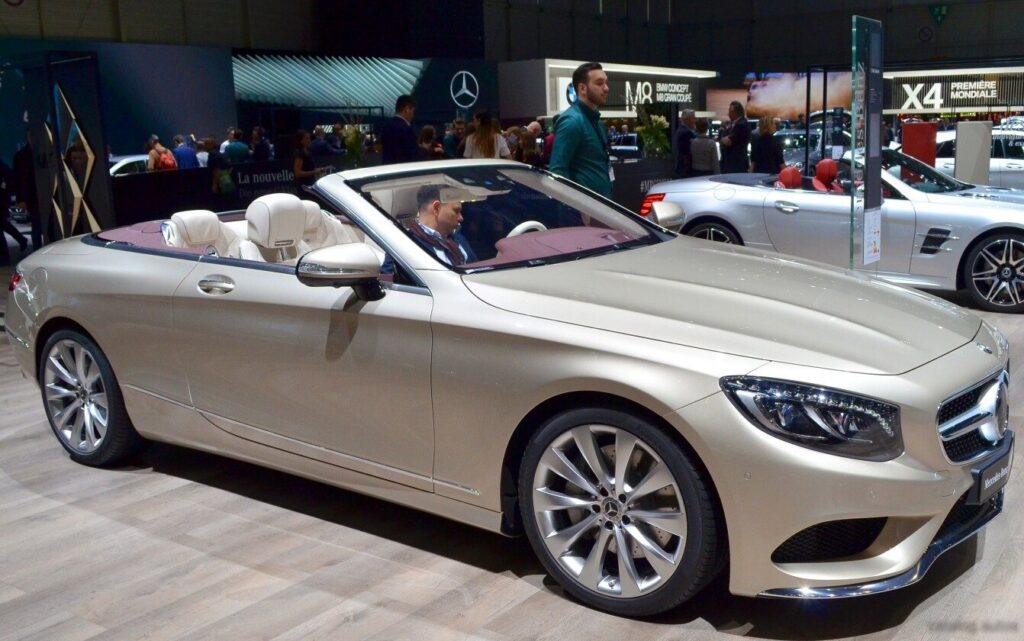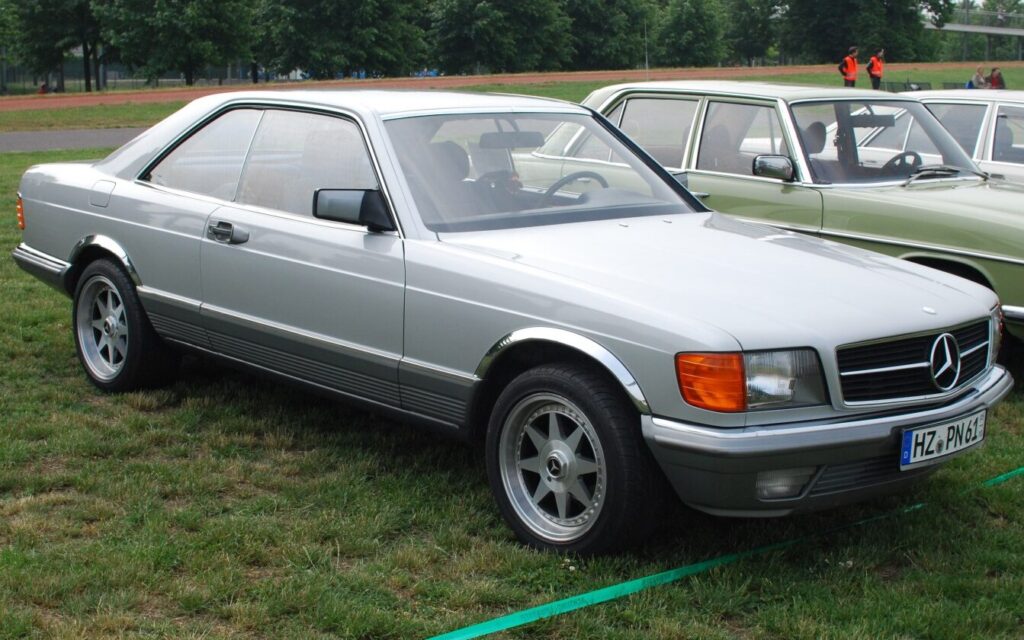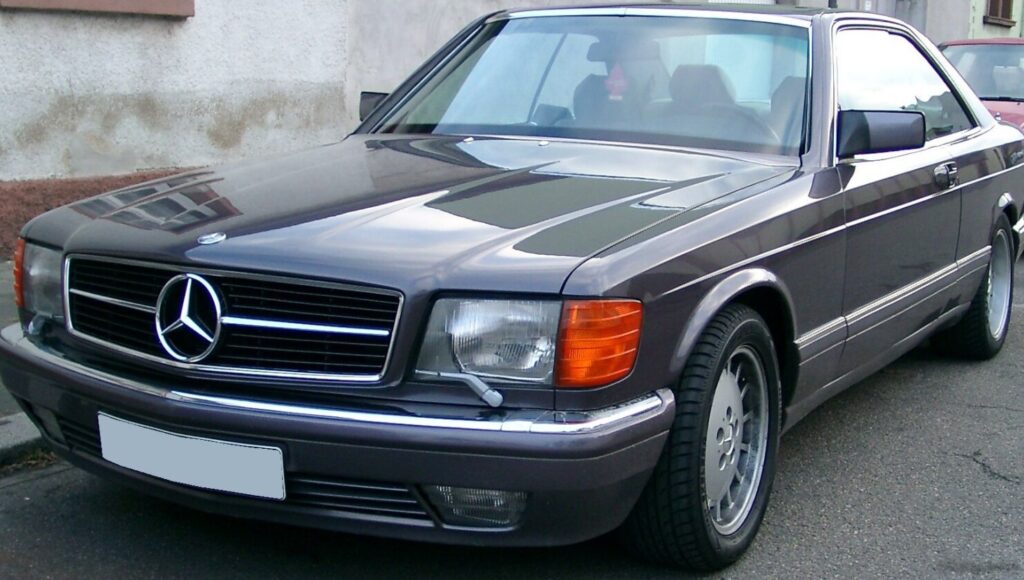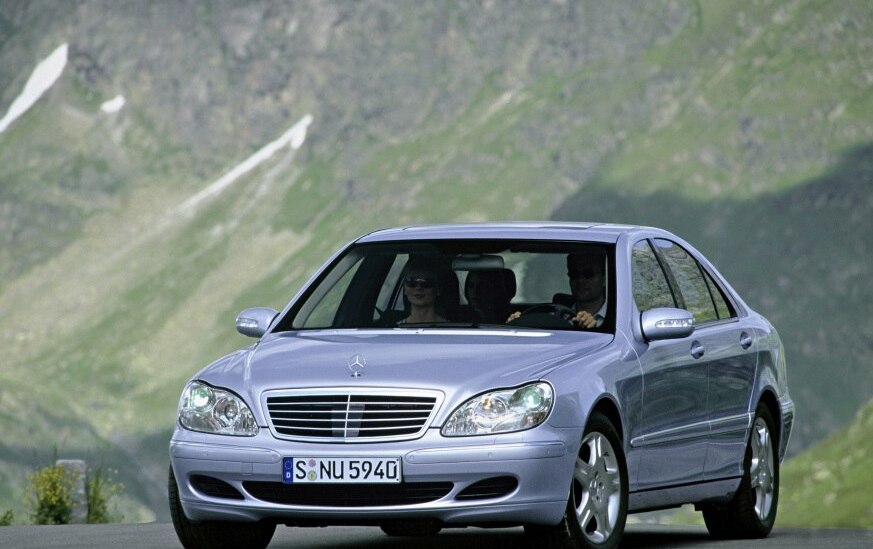
The Mercedes-Benz S-Class (W220) facelift model, specifically the AMG S 55 V8 (500 Hp) equipped with the 5G-TRONIC automatic transmission, represents the pinnacle of performance for the W220 generation produced between 2002 and 2005. Positioned as the flagship performance variant, it sat above the naturally aspirated S430 and S500 models, offering a substantial increase in power and a more focused driving experience. The W220 S-Class, launched in 1998, was a significant step forward for Mercedes-Benz, introducing numerous technological innovations in safety, comfort, and performance. The 2002 facelift addressed some initial criticisms and refined the overall design and features.
The heart of the AMG S 55 is the M113 E 55 ML engine, a 5.4-liter (5439 cc) naturally aspirated V8. This engine utilizes a supercharger and intercooler to deliver 500 horsepower at 6100 rpm and 700 Nm (516.29 lb-ft) of torque between 2750 and 4000 rpm. The engine features multi-port fuel injection and a compression ratio of 9:1. The cylinder bore measures 97 mm (3.82 in) and the piston stroke is 92 mm (3.62 in). The 5G-TRONIC automatic transmission, a five-speed unit, was specifically tuned to handle the engine’s substantial output. This transmission offered smooth shifts and a responsive feel, although it lacked the quicker shift times of some contemporary transmissions. The engine oil capacity is 7.5 liters (7.93 US qt / 6.6 UK qt) and requires a specific Mercedes-Benz approved oil.
Driving the AMG S 55 was a distinctly different experience than its naturally aspirated siblings. The supercharger provided immediate and substantial power delivery, resulting in a 0-60 mph time of approximately 4.6 seconds and a governed top speed of 155 mph (250 km/h). While the S430 and S500 offered a refined and comfortable ride, the S 55 prioritized performance. The suspension was firmer, and the steering felt more direct. The 5G-TRONIC transmission, while smooth, wasn’t as aggressively geared as some competitors, focusing more on effortless cruising than outright acceleration. The weight-to-power ratio of 3.8 kg/Hp contributed to the car’s impressive acceleration.
The AMG S 55 came standard with a comprehensive list of features befitting its flagship status. Interior appointments included premium leather upholstery, wood trim, and heated/cooled front seats with multi-contour adjustment. Standard equipment also included a premium sound system, automatic climate control, and a host of safety features like ABS, traction control, and multiple airbags. Optional extras included a rear seat entertainment system, upgraded leather options, and various driver assistance technologies. The exterior featured AMG-specific body styling, including unique front and rear bumpers, side skirts, and wheels.
The chassis of the AMG S 55 utilized a wishbone front suspension and a multi-link rear suspension with a transverse stabilizer bar. Braking duties were handled by ventilated discs on all four wheels. The car’s curb weight of 1910 kg (4210.83 lbs) was relatively high, but the powerful engine and upgraded suspension helped to mitigate the effects of the weight. Tire sizes were typically 245/45 R18 at the front and 265/40 R18 at the rear, mounted on 18-inch alloy wheels.
Critics generally praised the AMG S 55 for its potent performance and luxurious interior. However, fuel economy was a significant drawback, with combined fuel consumption averaging 13.2 l/100 km (17.8 US mpg / 21.4 UK mpg). Compared to the S430 and S500, the S 55 offered a dramatically improved driving experience but at the cost of increased fuel consumption and a slightly firmer ride. Reliability was generally good, although the complex supercharger system and electronic features required careful maintenance. CO2 emissions were rated at 317 g/km.
| Brand | Mercedes-Benz |
| Model | S-Class |
| Generation | S-Class (W220, facelift 2002) |
| Type | AMG S 55 V8 (500 Hp) 5G-TRONIC |
| Start of production | 2002 |
| End of production | 2005 |
| Powertrain Architecture | Internal Combustion engine |
| Body type | Sedan |
| Seats | 5 |
| Doors | 4 |
| Fuel consumption (urban) | 19.7 l/100 km (11.9 US mpg / 14.3 UK mpg) |
| Fuel consumption (extra urban) | 9.5 l/100 km (24.8 US mpg / 29.7 UK mpg) |
| Fuel consumption (combined) | 13.2 l/100 km (17.8 US mpg / 21.4 UK mpg) |
| CO2 emissions | 317 g/km |
| Fuel Type | Petrol (Gasoline) |
| Acceleration 0-100 km/h | 4.8 sec |
| Acceleration 0-62 mph | 4.8 sec |
| Acceleration 0-60 mph | 4.6 sec |
| Maximum speed | 250 km/h (155.34 mph) |
| Weight-to-power ratio | 3.8 kg/Hp |
| Weight-to-torque ratio | 2.7 kg/Nm |
| Power | 500 Hp @ 6100 rpm |
| Torque | 700 Nm @ 2750-4000 rpm (516.29 lb.-ft.) |
| Engine layout | Front, Longitudinal |
| Engine Model/Code | M 113 E 55 ML/113.991 |
| Engine displacement | 5439 cm3 (331.91 cu. in.) |
| Number of cylinders | 8 |
| Engine configuration | V-engine |
| Cylinder Bore | 97 mm (3.82 in.) |
| Piston Stroke | 92 mm (3.62 in.) |
| Compression ratio | 9:1 |
| Number of valves per cylinder | 3 |
| Fuel injection system | Multi-port manifold injection |
| Engine aspiration | Supercharger, Intercooler |
| Engine oil capacity | 7.5 l (7.93 US qt / 6.6 UK qt) |
| Coolant capacity | 13.5 l (14.27 US qt / 11.88 UK qt) |
| Kerb Weight | 1910 kg (4210.83 lbs.) |
| Max. weight | 2480 kg (5467.46 lbs.) |
| Max load | 570 kg (1256.63 lbs.) |
| Trunk (boot) space | 500 l (17.66 cu. ft.) |
| Fuel tank capacity | 88 l (23.25 US gal / 19.36 UK gal) |
| Length | 5043 mm (198.54 in.) |
| Width | 1855 mm (73.03 in.) |
| Height | 1444 mm (56.85 in.) |
| Wheelbase | 2965 mm (116.73 in.) |
| Front track | 1574 mm (61.97 in.) |
| Rear track | 1574 mm (61.97 in.) |
| Drag coefficient (Cd) | 0.28 |
| Minimum turning circle | 11.7 m (38.39 ft.) |
| Drivetrain | Rear wheel drive |
| Number of gears | 5 |
| Gearbox type | Automatic transmission G-TRONIC |
| Front suspension | Wishbone |
| Rear suspension | Transverse stabilizer |
| Front brakes | Ventilated discs |
| Rear brakes | Disc |
| Tire size | 245/45 R18; 265/40 R18 |
Today, the AMG S 55 (W220) remains a desirable classic, particularly among enthusiasts seeking a blend of luxury and performance. While maintenance costs can be higher than those of its naturally aspirated counterparts, the car’s robust construction and powerful engine ensure that it remains a capable and rewarding grand tourer. The M113 engine is known for its durability when properly maintained, and parts availability is generally good. Values have been steadily increasing as the car gains recognition as a significant example of early 21st-century performance sedans.