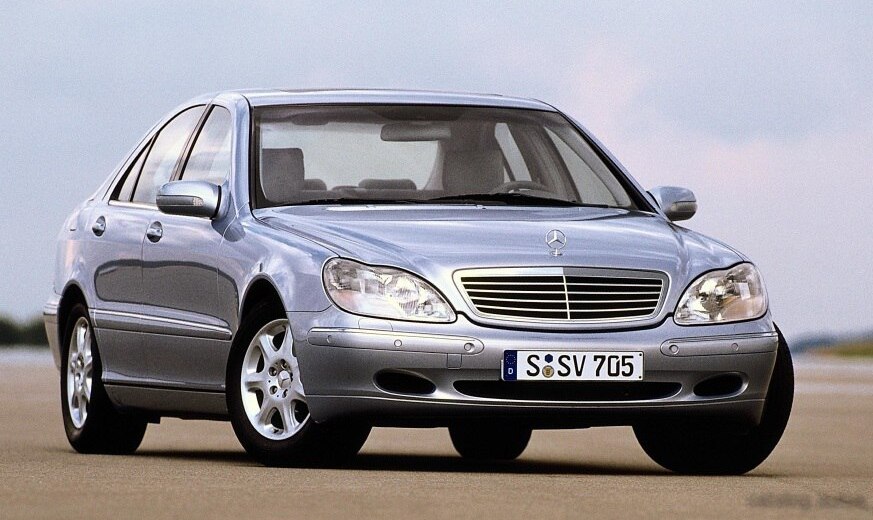
The Mercedes-Benz S 320, produced between 1998 and 2002 as part of the W220 S-Class generation, represented a significant step forward in luxury and technology for the German automaker. Positioned as the entry-level model within the W220 range – which also included the S 430, S 500, and later, performance-oriented AMG variants – the S 320 offered a compelling blend of refinement, comfort, and performance at a comparatively accessible price point. It served as the gateway to the flagship S-Class experience, appealing to buyers who prioritized a smooth driving experience and sophisticated features over outright speed.
The W220 S 320: A Detailed Overview
The W220 S-Class, launched in 1998, was a radical departure from its predecessor (the W140). It featured a more streamlined exterior design, a completely redesigned interior incorporating advanced technology, and a new generation of engines. The S 320, powered by the M112 E 32 engine, was designed to provide a balanced driving experience, focusing on comfort and fuel efficiency without sacrificing the prestige associated with the S-Class nameplate. It was a popular choice for those seeking a luxurious sedan for both daily commuting and long-distance travel.
Powertrain & Engine Architecture
At the heart of the S 320 lay the M112 E 32 V6 engine, a 3.2-liter (3199 cc) naturally aspirated powerplant. This engine was a significant advancement over previous Mercedes-Benz V6 designs. It featured all-aluminum construction, a three-valve-per-cylinder design (three intake valves and two exhaust valves), and a multi-port fuel injection system. The engine produced 224 horsepower (hp) at 5600 rpm and 315 Newton-meters (232.33 lb-ft) of torque at 3000 rpm. The bore and stroke measured 89.9 mm (3.54 in) and 84 mm (3.31 in) respectively, with a compression ratio of 10:1. Engine oil capacity was 8 liters (8.45 US qt / 7.04 UK qt), and it required a specific oil specification as outlined by Mercedes-Benz.
The S 320 was exclusively offered with a five-speed automatic transmission, branded as the 5G-TRONIC. This transmission was known for its smooth shifting characteristics and adaptive learning capabilities, adjusting shift points based on the driver’s style. The transmission was longitudinally mounted, driving the rear wheels. The 5G-TRONIC contributed significantly to the S 320’s comfortable and refined driving experience.
Driving Characteristics
The S 320’s driving experience was characterized by smoothness and quietness. While not a sports car, the 3.2-liter V6 provided adequate power for comfortable cruising and overtaking maneuvers. Acceleration from 0 to 60 mph was achieved in approximately 7.8 seconds, and 0-100 km/h in 8.2 seconds. Top speed was electronically limited to 240 km/h (149.13 mph). The 5G-TRONIC transmission played a crucial role in delivering power smoothly, with well-chosen gear ratios that prioritized comfort over aggressive acceleration. Compared to the more powerful S 430 and S 500 models, the S 320 offered a more relaxed driving experience, focusing on refinement rather than outright performance. The weight-to-power ratio of 7.6 kg/hp and weight-to-torque ratio of 5.4 kg/Nm reflected the car’s balanced, yet not overtly sporty, character.
Equipment & Trim Levels
The S 320 came standard with a comprehensive array of luxury features, befitting its status as a flagship sedan. Standard equipment typically included leather upholstery, power-adjustable front seats with memory function, automatic climate control, a premium sound system, and a sunroof. Safety features were also abundant, including anti-lock brakes (ABS), traction control, and multiple airbags. Optional extras included rear seat entertainment systems, upgraded leather options, parking assistance systems, and various wood trim choices for the interior. The interior dashboard configuration was characterized by a blend of traditional Mercedes-Benz elegance and modern technology, with a focus on user-friendliness. Trim levels were relatively limited, with most customization occurring through the selection of optional packages and individual options.
Chassis & Braking
The W220 S-Class featured a fully independent suspension system, designed to provide a smooth and comfortable ride. The front suspension utilized MacPherson struts, while the rear suspension employed a multi-link setup. The S 320 typically featured ventilated disc brakes at the front and solid disc brakes at the rear. The braking system was enhanced by ABS (Anti-lock Braking System) to ensure optimal stopping performance in various conditions. The steering system was a hydraulic power steering rack and pinion, providing precise and responsive steering feel. The S 320 rode on 225/60 R16V tires mounted on 7.5J x 16 inch wheel rims. Stabilizer bars were fitted both front and rear to reduce body roll during cornering.
Market Reception & Comparison
The S 320 was generally well-received by automotive critics. It was praised for its comfortable ride, refined interior, and advanced technology. However, some critics noted that its performance was not as exhilarating as that of the higher-powered S 430 and S 500 models. Fuel economy was a mixed bag, with combined fuel consumption averaging around 11.5 l/100 km (20.5 US mpg / 24.6 UK mpg). Compared to the S 430, the S 320 offered better fuel economy, but at the expense of performance. Reliability was generally good, although early W220 models were known for some electrical issues, which were largely addressed in later production years. The S 320 represented a value proposition within the S-Class lineup, offering a luxurious experience at a more accessible price point.
Technical Specifications
| Brand | Mercedes-Benz |
| Model | S-Class |
| Generation | S-Class (W220) |
| Type (Engine) | S 320 V6 (224 Hp) 5G-TRONIC |
| Start of production | 1998 |
| End of production | 2002 |
| Powertrain Architecture | Internal Combustion engine |
| Body type | Sedan |
| Seats | 5 |
| Doors | 4 |
| Fuel consumption (urban) | 17.1 l/100 km (13.8 US mpg / 16.5 UK mpg) |
| Fuel consumption (extra urban) | 8 l/100 km (29.4 US mpg / 35.3 UK mpg) |
| Fuel consumption (combined) | 11.5 l/100 km (20.5 US mpg / 24.6 UK mpg) |
| CO2 emissions | 275 g/km |
| Fuel Type | Petrol (Gasoline) |
| Acceleration 0 – 100 km/h | 8.2 sec |
| Acceleration 0 – 62 mph | 8.2 sec |
| Acceleration 0 – 60 mph | 7.8 sec |
| Maximum speed | 240 km/h (149.13 mph) |
| Weight-to-power ratio | 7.6 kg/Hp |
| Weight-to-torque ratio | 5.4 kg/Nm |
| Power | 224 Hp @ 5600 rpm |
| Torque | 315 Nm @ 3000 rpm (232.33 lb.-ft. @ 3000 rpm) |
| Engine layout | Front, Longitudinal |
| Engine Model/Code | M 112 E 32/112.944 |
| Engine displacement | 3199 cm3 (195.21 cu. in.) |
| Number of cylinders | 6 |
| Engine configuration | V-engine |
| Cylinder Bore | 89.9 mm (3.54 in.) |
| Piston Stroke | 84 mm (3.31 in.) |
| Compression ratio | 10:1 |
| Number of valves per cylinder | 3 |
| Fuel injection system | Multi-port manifold injection |
| Engine aspiration | Naturally aspirated engine |
| Engine oil capacity | 8 l (8.45 US qt | 7.04 UK qt) |
| Coolant | 10.5 l (11.1 US qt | 9.24 UK qt) |
| Kerb Weight | 1695 kg (3736.84 lbs.) |
| Max. weight | 2300 kg (5070.63 lbs.) |
| Max load | 605 kg (1333.8 lbs.) |
| Trunk (boot) space – minimum | 500 l (17.66 cu. ft.) |
| Fuel tank capacity | 88 l (23.25 US gal | 19.36 UK gal) |
| Length | 5038 mm (198.35 in.) |
| Width | 1855 mm (73.03 in.) |
| Width including mirrors | 2092 mm (82.36 in.) |
| Height | 1444 mm (56.85 in.) |
| Wheelbase | 2965 mm (116.73 in.) |
| Front track | 1574 mm (61.97 in.) |
| Rear (Back) track | 1574 mm (61.97 in.) |
| Front overhang | 867 mm (34.13 in.) |
| Rear overhang | 1206 mm (47.48 in.) |
| Drag coefficient (Cd) | 0.27 |
| Minimum turning circle (turning diameter) | 11.7 m (38.39 ft.) |
| Drivetrain Architecture | Rear wheel drive |
| Number of gears and type of gearbox | 5 gears, automatic transmission G-TRONIC |
| Front brakes | Ventilated discs |
| Rear brakes | Disc |
| Assisting systems | ABS (Anti-lock braking system) |
| Steering type | Steering rack and pinion |
| Power steering | Hydraulic Steering |
| Tires size | 225/60 R16V |
| Wheel rims size | 7.5J x 16 |
Legacy
The M112 E 32 engine, as found in the S 320, proved to be a reliable and durable powerplant. While not without its potential issues (such as occasional oil leaks and timing chain wear), it generally offered years of dependable service. Today, the W220 S 320 represents an affordable entry point into the world of Mercedes-Benz luxury. Well-maintained examples are still sought after by enthusiasts who appreciate their comfortable ride, refined interior, and relatively simple mechanicals compared to later, more complex S-Class models. The 5G-TRONIC transmission, while aging, remains a capable unit when properly serviced. The S 320’s enduring appeal lies in its ability to deliver a classic S-Class experience without the high price tag associated with newer or higher-performance variants.