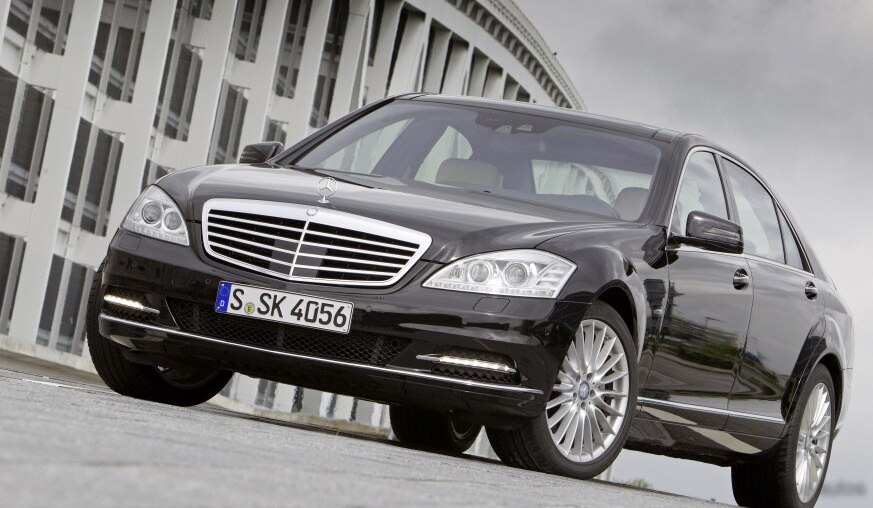
The Mercedes-Benz S-Class W221, particularly the facelifted model produced from 2009 to 2010, represented the pinnacle of German luxury and engineering. Within this generation, the AMG S 63 variant, powered by a naturally aspirated 6.2-liter V8 engine and paired with the 7G-TRONIC automatic transmission, occupied the highest performance tier. This model superseded the earlier S 63 models and served as a bridge to the subsequent, more fuel-efficient turbocharged engines that would define later S-Class generations. The W221 facelift brought revised styling, updated technology, and refinements to the already impressive S-Class platform.
AMG S 63 (W221 Facelift) Overview
The AMG S 63 of the 2009-2010 W221 facelift was positioned as the flagship performance model within the S-Class range. It sat above the S 550 and S 450 models, offering significantly more power and a more focused driving experience. While the standard S-Class catered to a clientele prioritizing comfort and prestige, the S 63 appealed to those seeking a blend of luxury and exhilarating performance. It competed directly with high-performance luxury sedans from brands like BMW (7 Series) and Audi (A8).
Powertrain & Engine Architecture
The heart of the AMG S 63 is the M156.984 engine, a 6.2-liter (6208 cc) naturally aspirated V8. This engine is renowned for its robust construction and immediate throttle response. It features a cast iron block and aluminum cylinder heads, incorporating four valves per cylinder (DOHC valvetrain). The engine utilizes multi-port fuel injection, delivering fuel directly into the intake ports. The M156 engine is notable for its lack of forced induction, relying on displacement and optimized airflow for its impressive power output. It produces 525 horsepower at 6800 rpm and 630 Nm (464.66 lb-ft) of torque at 5200 rpm. The compression ratio is 11.3:1.
The engine is longitudinally mounted at the front of the vehicle. Power is transmitted to the rear wheels via the 7G-TRONIC automatic transmission. This seven-speed automatic transmission, developed by Mercedes-Benz, offered smooth and relatively quick shifts. It featured a torque converter and could be operated in automatic or manual modes via steering wheel-mounted paddle shifters. The 7G-TRONIC was known for its adaptability, adjusting shift points based on driving style and road conditions.
Driving Characteristics
The AMG S 63 delivered a distinctly different driving experience compared to other S-Class variants. The naturally aspirated V8 provided a linear power delivery, with strong acceleration throughout the rev range. The 0-60 mph sprint was achieved in approximately 4.4 seconds, and the car was electronically limited to a top speed of 155.34 mph (250 km/h). While the 7G-TRONIC transmission offered smooth shifts, it wasn’t as lightning-fast as some dual-clutch transmissions found in competing vehicles. However, it provided a comfortable and refined driving experience, perfectly complementing the S-Class’s luxury focus. The gear ratios were tuned to balance acceleration and highway cruising efficiency. The car felt substantial and planted, offering a confident and secure driving experience.
Equipment & Trim Levels
The AMG S 63 came standard with a comprehensive array of luxury features. Interior appointments included premium leather upholstery, wood trim, and AMG-specific badging. Standard equipment typically included a panoramic sunroof, heated and ventilated front seats with massage function, a premium sound system, and a navigation system. The dashboard configuration was typical of the W221 facelift, featuring a central command screen and analog gauges. Optional extras included a rear seat entertainment system, upgraded leather options, and various driver assistance features. The exterior styling was enhanced with AMG body styling, including unique front and rear bumpers, side skirts, and a rear spoiler. Larger alloy wheels (8.5J x 19 front, 9.5J x 19 rear) and high-performance tires (255/40 R19 front, 275/40 R19 rear) were also standard.
Chassis & Braking
The AMG S 63 featured a sophisticated suspension system designed to provide both comfort and handling. The front suspension utilized hydraulic elements and a double wishbone configuration with a transverse stabilizer. The rear suspension employed an independent multi-link setup, also with a transverse stabilizer. This setup minimized body roll and provided a controlled ride. The braking system consisted of ventilated discs on all four wheels, providing ample stopping power. ABS (Anti-lock braking system) was standard. The steering system was a hydraulic rack and pinion setup, offering precise and responsive steering feel. The curb weight of the vehicle was 1995 kg (4398.22 lbs), and the gross vehicle weight rating was 2610 kg (5754.07 lbs).
Market Reception & Comparison
The AMG S 63 was generally well-received by automotive critics. It was praised for its powerful engine, luxurious interior, and comfortable ride. However, some critics noted that the car’s size and weight could make it feel less agile than some of its competitors. Fuel economy was also a concern, with combined fuel consumption rated at 14.4 l/100 km (16.3 US mpg, 19.6 UK mpg). Compared to the standard S-Class models, the S 63 offered a significant performance upgrade but came at a substantial price premium. Compared to the S 550, the S 63 provided a more engaging driving experience, while the S 450 offered a more economical option. The S 63’s naturally aspirated engine was seen as a benefit by some enthusiasts, offering a more visceral and engaging driving experience compared to the later turbocharged engines.
Technical Specifications
| Brand | Mercedes-Benz |
| Model | S-Class |
| Generation | S-Class (W221, facelift 2009) |
| Type | AMG S 63 V8 (525 Hp) AMG SPEEDSHIFT 7G-TRONIC |
| Start of production | June, 2009 |
| End of production | July, 2010 |
| Powertrain Architecture | Internal Combustion engine |
| Body type | Sedan |
| Seats | 5 |
| Doors | 4 |
| Fuel consumption (urban) | 22.2 l/100 km (10.6 US mpg, 12.7 UK mpg) |
| Fuel consumption (extra urban) | 9.9 l/100 km (23.8 US mpg, 28.5 UK mpg) |
| Fuel consumption (combined) | 14.4 l/100 km (16.3 US mpg, 19.6 UK mpg) |
| CO2 emissions | 344 g/km |
| Fuel Type | Petrol (Gasoline) |
| Acceleration 0-100 km/h | 4.6 sec |
| Acceleration 0-62 mph | 4.6 sec |
| Acceleration 0-60 mph | 4.4 sec |
| Maximum speed | 250 km/h (155.34 mph) |
| Emission standard | Euro 4 |
| Weight-to-power ratio | 3.8 kg/Hp |
| Weight-to-torque ratio | 3.2 kg/Nm |
| Power | 525 Hp @ 6800 rpm |
| Torque | 630 Nm @ 5200 rpm (464.66 lb.-ft. @ 5200 rpm) |
| Engine layout | Front, Longitudinal |
| Engine Model/Code | M 156.984 |
| Engine displacement | 6208 cm3 (378.84 cu. in.) |
| Number of cylinders | 8 |
| Engine configuration | V-engine |
| Cylinder Bore | 102.2 mm (4.02 in.) |
| Piston Stroke | 94.6 mm (3.72 in.) |
| Compression ratio | 11.3:1 |
| Engine oil capacity | 9.4 l (9.93 US qt | 8.27 UK qt) |
| Coolant capacity | 9.35 l (9.88 US qt | 8.23 UK qt) |
| Kerb Weight | 1995 kg (4398.22 lbs.) |
| Max. weight | 2610 kg (5754.07 lbs.) |
| Max load | 615 kg (1355.84 lbs.) |
| Trunk (boot) space | 560 l (19.78 cu. ft.) |
| Fuel tank capacity | 90 l (23.78 US gal | 19.8 UK gal) |
| Length | 5096 mm (200.63 in.) |
| Width | 1871 mm (73.66 in.) |
| Height | 1479 mm (58.23 in.) |
| Wheelbase | 3035 mm (119.49 in.) |
Legacy
The AMG S 63 (W221 facelift) remains a desirable vehicle in the used car market, particularly among enthusiasts who appreciate its naturally aspirated V8 engine. While maintenance costs can be higher than those of more modern vehicles, the M156 engine is generally considered to be robust and reliable when properly maintained. The car’s combination of luxury, performance, and relative rarity has ensured its continued appeal. It represents a high point in the evolution of the S-Class, offering a unique driving experience that is increasingly difficult to find in contemporary luxury sedans.