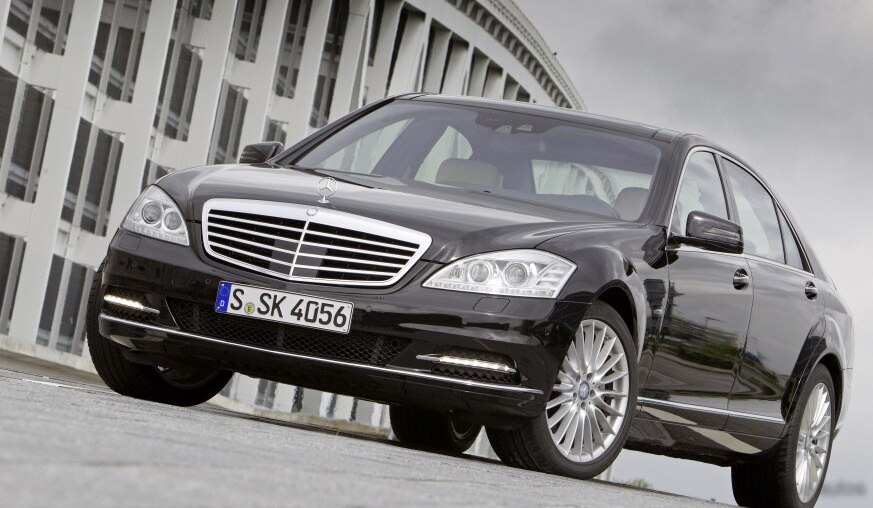
The Mercedes-Benz S-Class AMG S 63, produced from 2010 to 2013 as part of the W221 facelift generation, represented the high-performance pinnacle of the S-Class range. This variant combined a potent 5.5-liter twin-turbocharged V8 engine with the advanced AMG SPEEDSHIFT MCT seven-speed automatic transmission, delivering exhilarating performance and luxurious appointments. Positioned as the flagship model, the S 63 catered to buyers seeking the ultimate in Mercedes-Benz refinement coupled with substantial power and dynamic capability. It sat above the naturally aspirated S 550 and the diesel-powered S 350 BlueTEC in the lineup, offering a significantly more aggressive driving experience.
Powertrain & Engine Architecture
The heart of the AMG S 63 is the M157.980 5.5-liter V8 engine. This engine is characterized by its twin-turbocharger setup, featuring one turbocharger per cylinder bank. This configuration, along with direct fuel injection and a compression ratio of 10:1, allows for a remarkable output of 544 horsepower at 5250-5750 rpm and 800 Nm (590 lb-ft) of torque available from 2000-4500 rpm. The engine utilizes a DOHC (Dual Overhead Camshaft) valvetrain with four valves per cylinder, optimizing airflow for increased performance. The engine’s displacement is 5461 cm³ (333.25 cubic inches), with a bore of 98 mm (3.86 inches) and a stroke of 90.5 mm (3.56 inches). The engine oil capacity is 8.5 liters (8.98 US quarts / 7.48 UK quarts), and requires a specific oil meeting Mercedes-Benz’s stringent specifications.
The AMG SPEEDSHIFT MCT transmission is a crucial component of the S 63’s performance. Unlike a traditional torque converter automatic, the MCT (Multi Clutch Technology) utilizes a wet start-up clutch instead of a torque converter. This design provides faster shift times, improved responsiveness, and enhanced efficiency. The seven-speed configuration offers a wide range of gear ratios, optimized for both acceleration and cruising. The transmission features selectable drive modes – Comfort, Sport, and Manual – allowing the driver to tailor the shift characteristics to their preferences. Paddle shifters mounted behind the steering wheel provide manual control over gear selection.
Fuel Injection and Engine Management
The M157 engine employs a sophisticated direct injection system, delivering fuel directly into the combustion chamber at extremely high pressure. This precise fuel delivery enhances combustion efficiency, reduces emissions, and contributes to the engine’s impressive power output. The engine is managed by a state-of-the-art engine control unit (ECU) that monitors numerous parameters, including engine speed, throttle position, and exhaust gas composition, to optimize performance and efficiency. The S 63 also featured a Start & Stop system, designed to improve fuel economy by automatically shutting off the engine when the vehicle is stationary.
Driving Characteristics
The AMG S 63 delivers a driving experience markedly different from other S-Class variants. The substantial power and torque, combined with the quick-shifting MCT transmission, result in exhilarating acceleration. Independent tests consistently showed a 0-60 mph time of around 4.3 seconds and a 0-100 km/h time of 4.5 seconds. The electronically limited top speed of 250 km/h (155 mph) prevents the car from reaching its full potential. The transmission’s programming prioritizes performance, holding gears longer in Sport mode and providing rapid downshifts when needed. While comfortable enough for daily driving, the S 63’s suspension is firmer than that of the standard S-Class models, providing greater control during spirited driving. Compared to the naturally aspirated S 550, the S 63 offers significantly more power and torque, resulting in a more responsive and engaging driving experience. The S 63 also feels considerably more agile than the long-wheelbase S-Class models.
Equipment & Trim Levels
The AMG S 63 came standard with a comprehensive array of luxury and performance features. Interior appointments included premium leather upholstery, AMG sport seats with enhanced bolstering, and carbon fiber trim. Standard equipment also included a panoramic sunroof, a premium sound system, and a multi-contour seat package with massage function. The dashboard featured AMG-specific gauges and instrumentation. Optional extras included a rear seat entertainment system, a night vision system, and a variety of exterior styling enhancements, such as AMG body styling and larger alloy wheels. The S 63 was typically offered with a limited palette of exterior colors, emphasizing its sporty character.
Chassis & Braking
The S 63’s chassis was specifically tuned to handle the increased power and performance. It featured a fully independent suspension system with hydraulic elements, double wishbones at the front, and a multi-link setup at the rear. Transverse stabilizers were fitted to both axles to reduce body roll during cornering. The braking system consisted of ventilated discs on all four wheels, providing ample stopping power. The AMG S 63 was equipped with ABS (Anti-lock Braking System) and electronic stability control to enhance safety. The steering system utilized a hydraulic power steering rack and pinion, offering precise and responsive steering feel. The vehicle rode on 8.5J x 19 inch wheels at the front and 9.5J x 19 inch wheels at the rear, fitted with 255/40 R19 and 275/40 R19 tires respectively.
Market Reception & Comparison
The AMG S 63 was generally well-received by automotive critics, who praised its exceptional performance, luxurious interior, and advanced technology. However, some reviewers noted the firm ride quality and relatively high fuel consumption. Compared to the Porsche Panamera Turbo, the S 63 offered a more refined and luxurious driving experience, but the Panamera was often considered more engaging to drive. In terms of fuel economy, the S 63 was rated at 10.5 l/100 km combined (22.4 US mpg / 26.9 UK mpg), with urban consumption reaching 14.4 l/100 km (16.3 US mpg / 19.6 UK mpg) and extra-urban consumption at 8.2 l/100 km (28.7 US mpg / 34.4 UK mpg). CO2 emissions were rated at 244 g/km. Reliability reports suggested that the M157 engine was generally robust, but maintenance costs could be high due to the complexity of the engine and transmission.
Technical Specifications
| Brand | Mercedes-Benz |
| Model | S-Class |
| Generation | S-Class (W221, facelift 2009) |
| Type | AMG S 63 V8 (544 Hp) AMG SPEEDSHIFT MCT |
| Start of production | 2010 |
| End of production | 2013 |
| Powertrain Architecture | Internal Combustion engine |
| Body type | Sedan |
| Seats | 5 |
| Doors | 4 |
| Fuel consumption (urban) | 14.4 l/100 km (16.3 US mpg / 19.6 UK mpg) |
| Fuel consumption (extra urban) | 8.2 l/100 km (28.7 US mpg / 34.4 UK mpg) |
| Fuel consumption (combined) | 10.5 l/100 km (22.4 US mpg / 26.9 UK mpg) |
| CO2 emissions | 244 g/km |
| Fuel Type | Petrol (Gasoline) |
| Acceleration 0-100 km/h | 4.5 sec |
| Acceleration 0-62 mph | 4.5 sec |
| Acceleration 0-60 mph | 4.3 sec |
| Maximum speed | 250 km/h (155.34 mph) |
| Emission standard | Euro 5 |
| Weight-to-power ratio | 3.8 kg/Hp |
| Weight-to-torque ratio | 2.6 kg/Nm |
| Power | 544 Hp @ 5250-5750 rpm |
| Torque | 800 Nm @ 2000-4500 rpm (590.05 lb.-ft.) |
| Engine layout | Front, Longitudinal |
| Engine Model/Code | M 157.980 |
| Engine displacement | 5461 cm3 (333.25 cu. in.) |
| Number of cylinders | 8 |
| Engine configuration | V-engine |
| Cylinder Bore | 98 mm (3.86 in.) |
| Piston Stroke | 90.5 mm (3.56 in.) |
| Compression ratio | 10:1 |
| Number of valves per cylinder | 4 |
| Fuel injection system | Direct injection |
| Engine aspiration | BiTurbo, Intercooler |
| Valvetrain | DOHC |
| Engine oil capacity | 8.5 l (8.98 US qt | 7.48 UK qt) |
| Kerb Weight | 2045 kg (4508.45 lbs.) |
| Max. weight | 2670 kg (5886.34 lbs.) |
| Max load | 625 kg (1377.89 lbs.) |
| Trunk (boot) space | 560 l (19.78 cu. ft.) |
| Fuel tank capacity | 90 l (23.78 US gal | 19.8 UK gal) |
| Length | 5096 mm (200.63 in.) |
| Width | 1871 mm (73.66 in.) |
| Height | 1479 mm (58.23 in.) |
| Wheelbase | 3035 mm (119.49 in.) |
| Number of gears | 7 |
| Type of gearbox | automatic transmission AMG SPEEDSHIFT MCT |
Legacy
The AMG S 63 (W221 facelift) remains a desirable vehicle in the used car market, appealing to enthusiasts seeking a high-performance luxury sedan. While maintenance costs can be substantial, the robust M157 engine has proven relatively reliable when properly maintained. The combination of power, luxury, and advanced technology continues to make the S 63 a compelling option for those seeking a thrilling driving experience without sacrificing comfort or refinement. The W221 generation S 63 established a benchmark for performance sedans, paving the way for subsequent generations of AMG S-Class models.