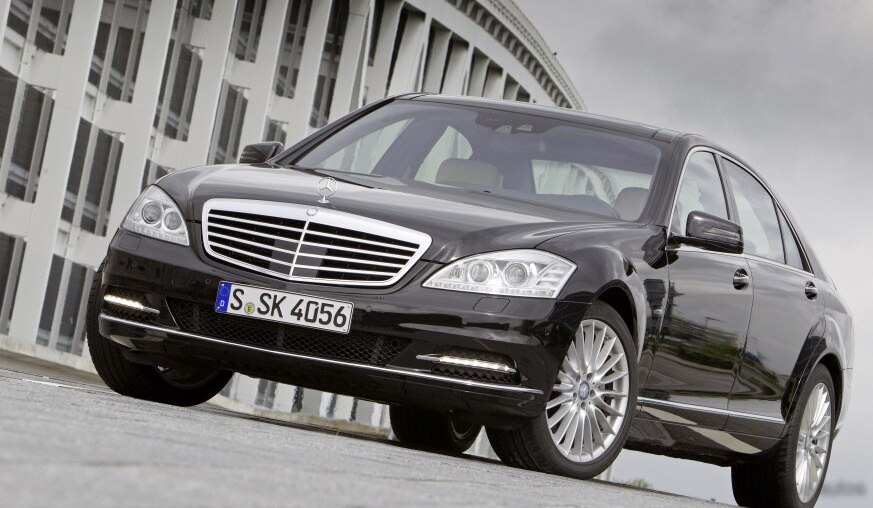
The Mercedes-Benz S 400 Hybrid, introduced as part of the W221 facelift in June 2009 and continuing through May 2013, represented a significant step towards fuel efficiency within the flagship S-Class range. Positioned as a mid-range offering within the W221 lineup – sitting between the naturally aspirated S350 and the more powerful S550 – the S 400 Hybrid combined a 3.5-liter V6 gasoline engine with a mild hybrid electric motor. This configuration aimed to deliver a luxurious driving experience with reduced fuel consumption and emissions, appealing to buyers seeking both prestige and environmental consciousness. The S 400 Hybrid was built on the 1HX0 chassis, shared with other W221 S-Class models, and represented Mercedes-Benz’s initial foray into hybrid technology within its luxury sedan segment.
Powertrain & Engine Architecture
The heart of the S 400 Hybrid is the M272.974 3.5-liter naturally aspirated V6 engine. This engine produces 279 horsepower at 6000 rpm and 350 Nm (258.15 lb-ft) of torque between 3000 and 5500 rpm. The engine utilizes multi-port fuel injection and a double overhead camshaft (DOHC) valvetrain with four valves per cylinder. The engine’s bore and stroke are 92.9 mm (3.66 in) and 86 mm (3.39 in) respectively, resulting in a displacement of 3498 cm³ (213.46 cu. in) and a compression ratio of 11.7:1. An 8-liter (8.45 US qt / 7.04 UK qt) engine oil capacity, requiring a specific Mercedes-Benz approved oil, is standard.
Complementing the V6 is a 20 hp electric motor, powered by a 120V lithium-ion battery pack located under the front hood. This setup qualifies the S 400 Hybrid as a Mild Hybrid Electric Vehicle (MHEV), or Battery Assisted Hybrid Vehicle (BAHV). Unlike full hybrids, the electric motor doesn’t provide standalone propulsion for extended periods. Instead, it assists the gasoline engine during acceleration, reducing the load on the engine and improving fuel economy. The electric motor is a synchronous type, integrated between the combustion engine and the 7G-TRONIC automatic transmission. The system’s combined output is rated at 299 hp.
7G-TRONIC Transmission
The S 400 Hybrid exclusively utilized Mercedes-Benz’s 7G-TRONIC seven-speed automatic transmission. This transmission, known for its smooth and responsive shifts, was specifically calibrated to work in conjunction with the hybrid system. The transmission’s gear ratios were optimized to maximize fuel efficiency and provide adequate performance. The 7G-TRONIC features a torque converter lock-up clutch that engages at higher speeds to reduce slippage and further improve fuel economy. The transmission also incorporates a ‘kickdown’ function for quick acceleration when needed.
Driving Characteristics
The S 400 Hybrid delivers a refined and comfortable driving experience, characteristic of the S-Class. Acceleration from 0 to 100 km/h (0-62 mph) takes 7.2 seconds, while 0-60 mph is achieved in approximately 6.8 seconds. The hybrid system provides a noticeable boost during initial acceleration, making the car feel more responsive than its horsepower rating might suggest. However, the S 400 Hybrid doesn’t offer the outright performance of the S550 or other higher-powered S-Class variants. The 7G-TRONIC transmission contributes to smooth gear changes, and the hybrid system’s integration is largely seamless. The car’s weight of 1880 kg (4144.69 lbs) is noticeable, but the suspension effectively manages body roll and provides a comfortable ride. The electronically limited top speed is 250 km/h (155.34 mph).
Equipment & Trim Levels
The S 400 Hybrid came standard with a comprehensive array of luxury features, befitting its S-Class designation. Standard equipment typically included leather upholstery, wood trim, a premium sound system, automatic climate control, power-adjustable seats with memory function, and a sunroof. Safety features were also extensive, including ABS, electronic stability control, multiple airbags, and parking sensors. Optional extras included features such as a rear-seat entertainment system, massaging seats, a more advanced sound system, and various driver-assistance technologies. Interior color schemes were customizable, allowing buyers to personalize the cabin to their preferences. The dashboard layout was consistent with other W221 S-Class models, featuring a prominent central display screen and intuitive controls.
Chassis & Braking
The S 400 Hybrid utilizes an independent multi-link suspension system at both the front and rear. The front suspension incorporates a transverse stabilizer bar and air suspension, providing a smooth and controlled ride. The rear suspension also features air suspension and a transverse stabilizer bar. This air suspension system allows for adjustable ride height and damping, further enhancing comfort. Braking duties are handled by ventilated discs at the front and solid discs at the rear. The anti-lock braking system (ABS) is standard, ensuring optimal braking performance in various conditions. The steering system is a rack and pinion type with electric power steering, providing precise and responsive steering feel.
Market Reception & Comparison
The S 400 Hybrid was generally well-received by automotive critics, who praised its fuel efficiency and comfortable ride. Fuel economy figures, according to the NEDC standard, ranged from 7.9-8.1 l/100 km (29.8-29 US mpg / 35.8-34.9 UK mpg / 12.7-12.3 km/l) combined. CO2 emissions were rated at 186-189 g/km. Compared to the naturally aspirated S350, the S 400 Hybrid offered similar performance with improved fuel economy. However, it lacked the outright power of the S550. The S 400 Hybrid’s reliability was generally good, although the complexity of the hybrid system introduced potential maintenance concerns. The hybrid battery pack, while durable, could eventually require replacement, adding to the long-term cost of ownership. Compared to the diesel-powered S350 CDI, the S 400 Hybrid offered a more environmentally friendly alternative, albeit with slightly higher running costs.
Technical Specifications
| Brand | Mercedes-Benz |
| Model | S-Class |
| Generation | S-Class (W221, facelift 2009) |
| Type | S 400 V6 (299 Hp) HYBRID 7G-TRONIC |
| Start of production | June, 2009 |
| End of production | May, 2013 |
| Powertrain Architecture | MHEV (Mild Hybrid Electric Vehicle) |
| Body type | Sedan |
| Seats | 5 |
| Doors | 4 |
| Fuel consumption (urban) | 10.7-10.9 l/100 km (22-21.6 US mpg) |
| Fuel consumption (extra urban) | 6.3-6.5 l/100 km (37.3-36.2 US mpg) |
| Fuel consumption (combined) | 7.9-8.1 l/100 km (29.8-29 US mpg) |
| CO2 emissions | 186-189 g/km |
| Fuel Type | Petrol (Gasoline) |
| Acceleration 0-100 km/h | 7.2 sec |
| Acceleration 0-60 mph | 6.8 sec |
| Maximum speed | 250 km/h (155.34 mph) |
| Engine Model/Code | M 272.974 |
| Engine displacement | 3498 cm3 (213.46 cu. in.) |
| Number of cylinders | 6 |
| Engine configuration | V-engine |
| Power | 279 Hp @ 6000 rpm |
| Torque | 350 Nm @ 3000-5500 rpm (258.15 lb.-ft.) |
| Kerb Weight | 1880 kg (4144.69 lbs.) |
| Fuel tank capacity | 90 l (23.78 US gal) |
| Length | 5096 mm (200.63 in.) |
| Width | 1871 mm (73.66 in.) |
| Height | 1479 mm (58.23 in.) |
Legacy
The S 400 Hybrid, while not a massive sales success, played a crucial role in establishing Mercedes-Benz’s commitment to hybrid technology. It demonstrated the feasibility of combining luxury and fuel efficiency in a large sedan. On the used car market, the S 400 Hybrid remains a relatively affordable entry point into the W221 S-Class range. However, potential buyers should be aware of the potential maintenance costs associated with the hybrid system, particularly the battery pack. The M272 engine itself is generally considered reliable, but regular maintenance is essential. Overall, the S 400 Hybrid represents a technologically advanced and comfortable luxury sedan that offered a compelling alternative to traditional gasoline-powered S-Class models.