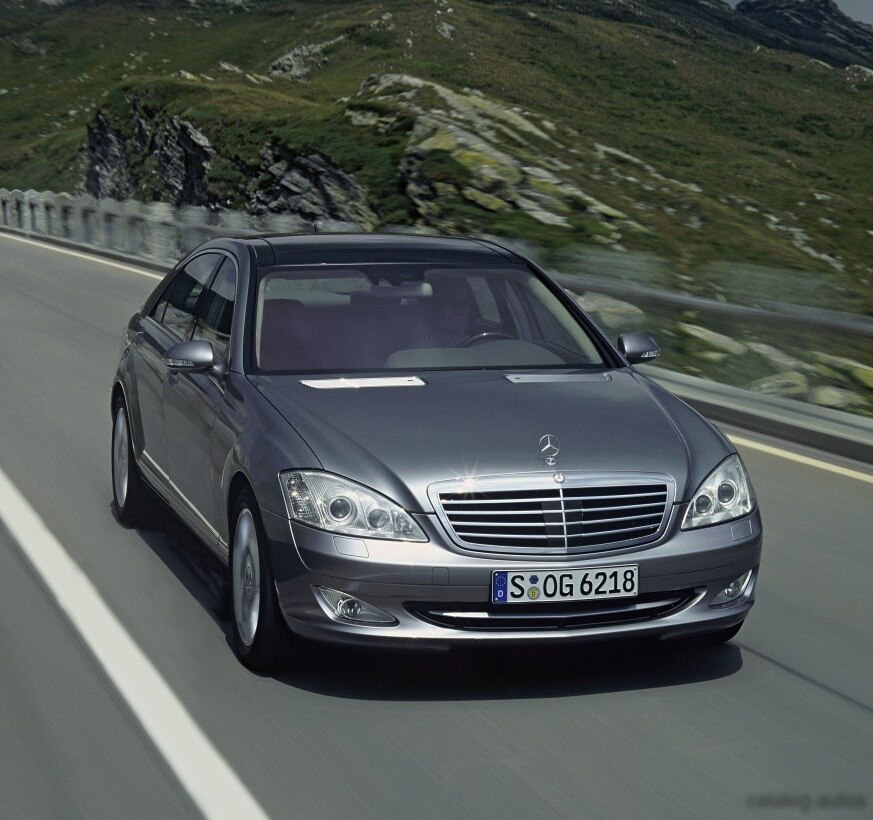
The Mercedes-Benz S-Class (W221) S 320 CDI, produced from 2006 to 2009, represented a compelling blend of luxury, performance, and fuel efficiency within the flagship S-Class range. Positioned as a mid-range offering, it slotted between the gasoline-powered S 350 and the higher-performance S 500 models. This variant combined a potent 3.0-liter turbocharged diesel engine with Mercedes-Benz’s sophisticated 7G-TRONIC seven-speed automatic transmission, appealing to buyers seeking a refined grand touring experience with reduced running costs. The W221 generation S-Class, launched in 2005, introduced significant advancements in safety technology and interior comfort, establishing a new benchmark for the luxury sedan segment.
Powertrain & Engine Architecture
The heart of the S 320 CDI is the OM 642.930 3.0-liter V6 diesel engine. This engine is a longitudinally mounted, common-rail direct injection diesel, renowned for its robust construction and smooth operation. It features a single turbocharger with an intercooler, boosting power output to 235 horsepower at 3600 rpm and a substantial 398.28 lb-ft of torque between 1600 and 2400 rpm. The engine utilizes a double overhead camshaft (DOHC) valvetrain with four valves per cylinder, optimizing gas flow for improved efficiency and power. The compression ratio is a high 18:1, typical for diesel engines, contributing to its thermal efficiency.
The 7G-TRONIC automatic transmission, a seven-speed unit, was a key technological highlight. It offered smooth, virtually imperceptible gear changes and a wide range of gear ratios, enhancing both acceleration and fuel economy. The transmission featured a torque converter lock-up clutch, further improving efficiency by reducing slippage. Driver-selectable modes allowed for a more sporty or comfort-oriented driving experience. The transmission was designed to handle the substantial torque output of the diesel engine with ease and reliability.
Fuel Injection and Turbocharging
The OM 642.930 engine employs a piezo common-rail direct injection system. Piezo injectors offer faster and more precise fuel delivery compared to traditional solenoid injectors, resulting in improved combustion efficiency, reduced emissions, and a quieter engine operation. The turbocharger, coupled with an intercooler, forces more air into the cylinders, increasing power output without significantly increasing engine displacement. The intercooler cools the compressed air, further enhancing its density and improving combustion.
Driving Characteristics
The S 320 CDI offered a distinctly different driving experience compared to its gasoline-powered siblings. While lacking the outright acceleration of the S 500, the S 320 CDI delivered strong, readily available torque from low engine speeds. This made it exceptionally capable for effortless highway cruising and overtaking maneuvers. The 7G-TRONIC transmission played a crucial role in maximizing the engine’s potential, providing seamless gear changes and keeping the engine within its optimal power band. Acceleration from 0 to 60 mph was achieved in approximately 7.1 seconds, and the car was electronically limited to a top speed of 155.34 mph.
Compared to the S 350, the S 320 CDI offered superior fuel economy and a more relaxed driving experience, thanks to the diesel engine’s inherent efficiency and torque characteristics. The S 320 CDI’s weight-to-power ratio of 8 kg/hp and weight-to-torque ratio of 3.5 kg/Nm contributed to its balanced performance. While a manual transmission was not offered on this model, the 7G-TRONIC provided a level of control and responsiveness that minimized the need for manual gear selection.
Equipment & Trim Levels
The S 320 CDI came standard with a comprehensive array of luxury features, befitting its status as a flagship sedan. Standard equipment typically included leather upholstery, power-adjustable heated front seats with memory function, dual-zone automatic climate control, a premium audio system, and a multi-function steering wheel. Safety features were also abundant, including anti-lock brakes (ABS), electronic stability control, and a suite of airbags.
Optional extras were plentiful, allowing buyers to personalize their S-Class. Popular options included a panoramic sunroof, rear seat entertainment system, massaging seats, a navigation system, and advanced parking assist features. Interior trim options included various wood veneers and aluminum accents. The S 320 CDI generally featured a more understated interior aesthetic compared to the higher-end S 500, focusing on refined elegance rather than overt opulence.
Chassis & Braking
The S 320 CDI utilized an air suspension system on both the front and rear axles. This system provided a remarkably smooth and comfortable ride, automatically adjusting the suspension damping to suit road conditions. The air suspension also allowed for adjustable ride height, enhancing both comfort and practicality. The braking system consisted of ventilated discs on all four wheels, providing ample stopping power. ABS (Anti-lock Braking System) was standard, ensuring optimal braking performance in emergency situations.
The S-Class chassis was engineered for exceptional rigidity, minimizing body roll and enhancing handling precision. The steering system employed a rack and pinion setup, providing precise and responsive steering feel. Tire size was typically 235/55 R17, mounted on 8J x 17 inch alloy wheels.
Market Reception & Comparison
The S 320 CDI was generally well-received by automotive critics, who praised its blend of luxury, performance, and fuel efficiency. It was considered a particularly attractive option for buyers who frequently undertook long journeys, as the diesel engine offered significant fuel savings compared to the gasoline alternatives. However, some critics noted that the diesel engine was slightly noisier than the gasoline engines, although this was mitigated by the S-Class’s excellent sound insulation.
Compared to the S 350, the S 320 CDI offered comparable levels of luxury and features, but with superior fuel economy and a more relaxed driving experience. The S 500, with its larger engine and more powerful performance, appealed to buyers prioritizing outright speed and acceleration. The S 320 CDI struck a balance between these two extremes, offering a compelling package for a wide range of buyers.
Technical Specifications
| Brand | Mercedes-Benz |
| Model | S-Class |
| Generation | S-Class (W221) |
| Type | S 320 CDI (235 Hp) 7G-TRONIC |
| Start of production | 2006 |
| End of production | 2009 |
| Engine Model/Code | OM 642.930 |
| Engine displacement | 2987 cm3 (182.28 cu. in.) |
| Number of cylinders | 6 |
| Engine configuration | V-engine |
| Power | 235 Hp @ 3600 rpm |
| Torque | 540 Nm @ 1600-2400 rpm (398.28 lb.-ft.) |
| Fuel consumption (urban) | 11.6-11.8 l/100 km (20.3 – 19.9 US mpg) |
| Fuel consumption (extra urban) | 6.4-6.6 l/100 km (36.8 – 35.6 US mpg) |
| Fuel consumption (combined) | 8.3-8.5 l/100 km (28.3 – 27.7 US mpg) |
| CO2 emissions | 220-225 g/km |
| Acceleration 0-100 km/h | 7.5 sec |
| Maximum speed | 250 km/h (155.34 mph) |
| Kerb Weight | 1880 kg (4144.69 lbs.) |
| Fuel tank capacity | 90 l (23.78 US gal) |
| Length | 5079 mm (199.96 in.) |
| Width | 1871 mm (73.66 in.) |
| Height | 1473 mm (57.99 in.) |
Legacy
The OM 642 engine family, including the version used in the S 320 CDI, has proven to be remarkably durable and reliable. With proper maintenance, these engines can easily exceed 200,000 miles. The 7G-TRONIC transmission is also known for its longevity, although regular fluid changes are essential. On the used car market, the W221 S 320 CDI represents a compelling value proposition, offering a luxurious and well-equipped sedan at a significantly lower price point than newer models. However, potential buyers should be aware of the potential for diesel particulate filter (DPF) issues and the cost of maintaining the complex air suspension system. Despite these potential concerns, the S 320 CDI remains a highly sought-after model among enthusiasts and those seeking a refined and economical grand touring experience.