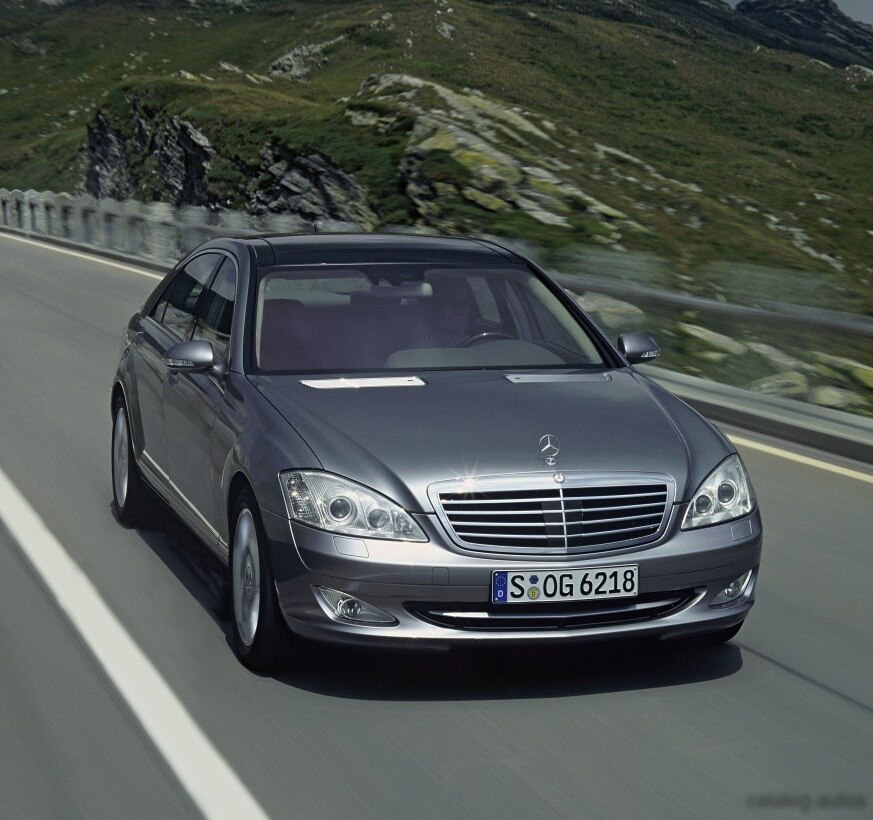
The Mercedes-Benz S 500 4MATIC, produced between 2005 and 2009 as part of the W221 S-Class generation, represented a significant blend of luxury, performance, and advanced technology. Positioned as a mid-to-upper range offering within the W221 lineup, it sat above the S 350 and S 400 models, but below the higher-performance S 600 and S 63 AMG variants. The S 500 4MATIC aimed to provide a refined driving experience with robust power delivery and all-weather capability, appealing to buyers seeking a flagship sedan without the outright sporting focus of the AMG models or the extended wheelbase of the Guard armored versions.
Powertrain & Engine Architecture
At the heart of the S 500 4MATIC lies the M273.968 5.5-liter naturally aspirated V8 engine. This engine, a cornerstone of Mercedes-Benz’s engineering during the mid-2000s, is characterized by its smooth operation and substantial power output. The M273 featured a three-valve per cylinder design (two intake, one exhaust) and utilized multi-port fuel injection. This system delivered fuel directly into the intake ports, optimizing combustion efficiency. The engine’s valvetrain employed double overhead camshafts (DOHC) for precise valve control.
The engine’s 5461 cm³ displacement, combined with a 10.7:1 compression ratio, resulted in 388 horsepower at 6000 rpm and 530 Nm (390.91 lb-ft) of torque available between 2800 and 4800 rpm. This broad torque curve contributed to the S 500’s effortless acceleration and strong in-gear performance. The engine was longitudinally mounted in the engine bay, driving all four wheels through the 7G-TRONIC seven-speed automatic transmission.
The 7G-TRONIC transmission, a significant advancement over previous Mercedes-Benz automatics, offered smooth and precise gear changes. It featured a torque converter lock-up clutch that engaged in most gears, improving fuel efficiency and reducing slippage. The transmission also included a manual shift mode, allowing drivers to select gears for more spirited driving. The 7G-TRONIC was known for its responsiveness and ability to adapt to driving conditions.
Engine Codes and Variations
While the core M273.968 engine remained consistent, minor variations existed depending on the specific market. These variations primarily concerned emissions control systems and software calibrations. However, the fundamental engine architecture and performance characteristics remained largely unchanged across all S 500 4MATIC models produced between 2005 and 2009.
Driving Characteristics
The S 500 4MATIC delivered a driving experience focused on refinement and effortless power. The 5.5-liter V8 provided ample acceleration, achieving 0-60 mph in approximately 5.1 seconds and a governed top speed of 155 mph. The 7G-TRONIC transmission contributed to this performance by providing quick and seamless gear changes. The all-wheel-drive system (4MATIC) enhanced traction, particularly in adverse weather conditions, providing a surefooted feel and improved stability.
Compared to the S 350, the S 500 offered a noticeable increase in performance, with quicker acceleration and more responsive throttle response. While not as overtly sporty as the S 63 AMG, the S 500 provided more than enough power for confident overtaking and highway cruising. The air suspension system, standard on the S 500, further enhanced ride comfort, absorbing bumps and imperfections in the road with ease. The steering was precise and well-weighted, providing a connected feel to the road.
Equipment & Trim Levels
The S 500 4MATIC came standard with a comprehensive array of luxury features. Interior appointments included high-quality leather upholstery, wood trim, and power-adjustable seats with memory function. Standard equipment also included a premium sound system, automatic climate control, a sunroof, and a navigation system.
Optional extras were plentiful, allowing buyers to customize their S 500 to their specific preferences. Popular options included massaging seats, rear-seat entertainment systems, a panoramic sunroof, and advanced driver-assistance features such as Distronic adaptive cruise control and lane-keeping assist. The interior dashboard configuration was characterized by a blend of traditional Mercedes-Benz elegance and modern technology, with a central display screen controlling various vehicle functions.
Chassis & Braking
The W221 S-Class chassis was designed to provide a comfortable and controlled ride. The S 500 4MATIC utilized an air suspension system on both the front and rear axles, allowing for adjustable ride height and damping. This system automatically adjusted to road conditions and driving style, optimizing ride comfort and handling. The suspension geometry was tuned to minimize body roll and provide stable cornering.
Braking duties were handled by ventilated discs on all four wheels, providing ample stopping power. The S 500 4MATIC was equipped with ABS (Anti-lock Braking System) and Electronic Stability Program (ESP) as standard safety features. These systems worked together to prevent wheel lock-up during hard braking and maintain vehicle stability in challenging driving situations. The steering system employed a rack and pinion setup for precise and responsive steering feel.
Market Reception & Comparison
The S 500 4MATIC was generally well-received by automotive critics, who praised its luxurious interior, smooth ride, and powerful engine. Fuel economy, however, was a common criticism, with combined fuel consumption ranging from 12.1 to 12.3 l/100 km (19.4 – 19.1 US mpg). Compared to the S 350, the S 500 offered significantly more performance but at the cost of increased fuel consumption. Reliability was generally good, although some owners reported issues with the air suspension system and electronic components. The 4MATIC all-wheel-drive system was seen as a significant advantage in regions with inclement weather.
Technical Specifications
| Brand | Mercedes-Benz |
| Model | S-Class |
| Generation | S-Class (W221) |
| Type | S 500 (388 Hp) 4MATIC 7G-TRONIC |
| Start of production | 2005 |
| End of production | 2009 |
| Powertrain Architecture | Internal Combustion engine |
| Body type | Sedan |
| Seats | 5 |
| Doors | 4 |
| Fuel consumption (urban) | 18-18.2 l/100 km (13.1 – 12.9 US mpg) |
| Fuel consumption (extra urban) | 8.8-9.0 l/100 km (26.7 – 26.1 US mpg) |
| Fuel consumption (combined) | 12.1-12.3 l/100 km (19.4 – 19.1 US mpg) |
| CO2 emissions | 289-294 g/km |
| Fuel Type | Petrol (Gasoline) |
| Acceleration 0 – 100 km/h | 5.4 sec |
| Acceleration 0 – 62 mph | 5.4 sec |
| Acceleration 0 – 60 mph | 5.1 sec |
| Maximum speed | 250 km/h (155.34 mph) |
| Weight-to-power ratio | 5 kg/Hp |
| Weight-to-torque ratio | 3.7 kg/Nm |
| Power | 388 Hp @ 6000 rpm |
| Torque | 530 Nm @ 2800-4800 rpm (390.91 lb.-ft. @ 2800-4800 rpm) |
| Engine layout | Front, Longitudinal |
| Engine Model/Code | M 273.968 |
| Engine displacement | 5461 cm3 (333.25 cu. in.) |
| Number of cylinders | 8 |
| Engine configuration | V-engine |
| Cylinder Bore | 98 mm (3.86 in.) |
| Piston Stroke | 90.5 mm (3.56 in.) |
| Compression ratio | 10.7:1 |
| Number of valves per cylinder | 4 |
| Fuel injection system | Multi-port manifold injection |
| Engine aspiration | Naturally aspirated engine |
| Valvetrain | DOHC |
| Engine oil capacity | 8.5 l (8.98 US qt | 7.48 UK qt) |
| Coolant | 8.5 l (8.98 US qt | 7.48 UK qt) |
| Kerb Weight | 1935 kg (4265.94 lbs.) |
| Max. weight | 2620 kg (5776.11 lbs.) |
| Max load | 685 kg (1510.17 lbs.) |
| Trunk (boot) space | 560 l (19.78 cu. ft.) |
| Fuel tank capacity | 90 l (23.78 US gal | 19.8 UK gal) |
| Length | 5079 mm (199.96 in.) |
| Width | 1872 mm (73.7 in.) |
| Width including mirrors | 2115 mm (83.27 in.) |
| Height | 1473 mm (57.99 in.) |
| Wheelbase | 3035 mm (119.49 in.) |
| Front track | 1604 mm (63.15 in.) |
| Rear track | 1606 mm (63.23 in.) |
| Front overhang | 871 mm (34.29 in.) |
| Rear overhang | 1173 mm (46.18 in.) |
| Minimum turning circle | 11.8 m (38.71 ft.) |
| Drive wheel | All wheel drive (4×4) |
| Number of gears | 7 |
| Gearbox type | Automatic transmission G-TRONIC |
| Front suspension | Air suspension |
| Rear suspension | Air suspension |
| Front brakes | Ventilated discs |
| Rear brakes | Ventilated discs |
| Tires size | 235/55 R17 |
| Wheel rims size | 8J x 17 |
Legacy
The M273 engine, as found in the S 500 4MATIC, has proven to be a relatively durable and reliable powerplant when properly maintained. Common issues include oil leaks from valve cover gaskets and potential problems with the thermostat housing. The 7G-TRONIC transmission is also generally reliable, but requires regular fluid changes to prevent issues. Today, the W221 S 500 4MATIC represents a compelling value in the used luxury car market. Its combination of comfort, performance, and features makes it an attractive option for buyers seeking a sophisticated and capable sedan. However, potential buyers should be aware of the potential maintenance costs associated with a vehicle of this age and complexity.