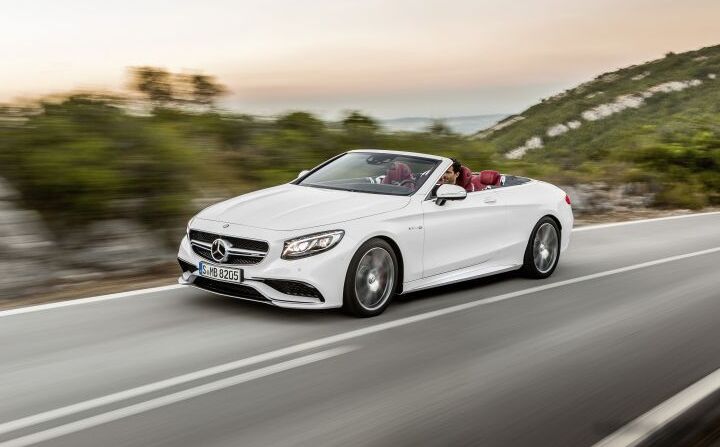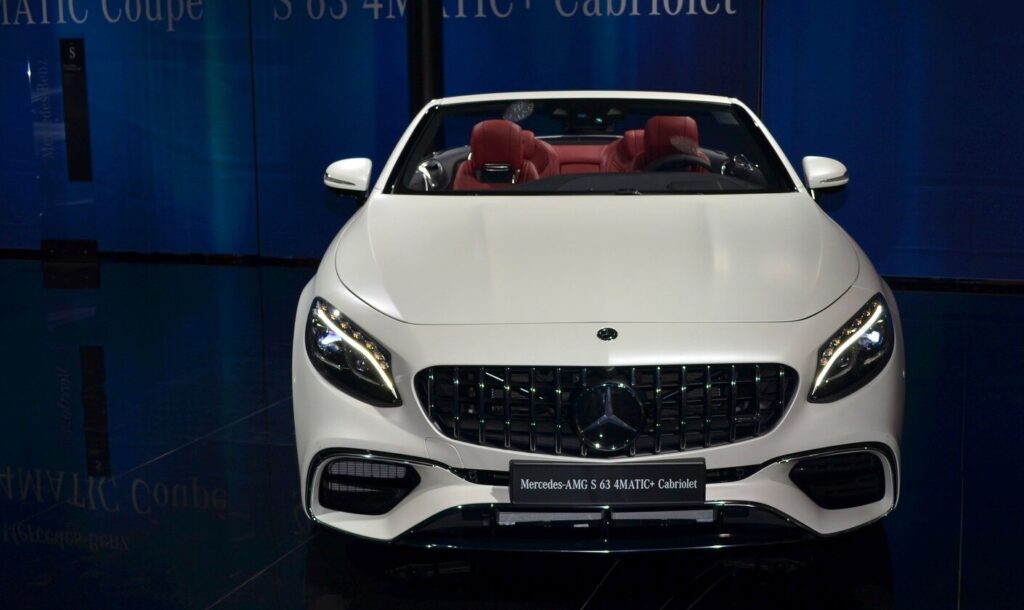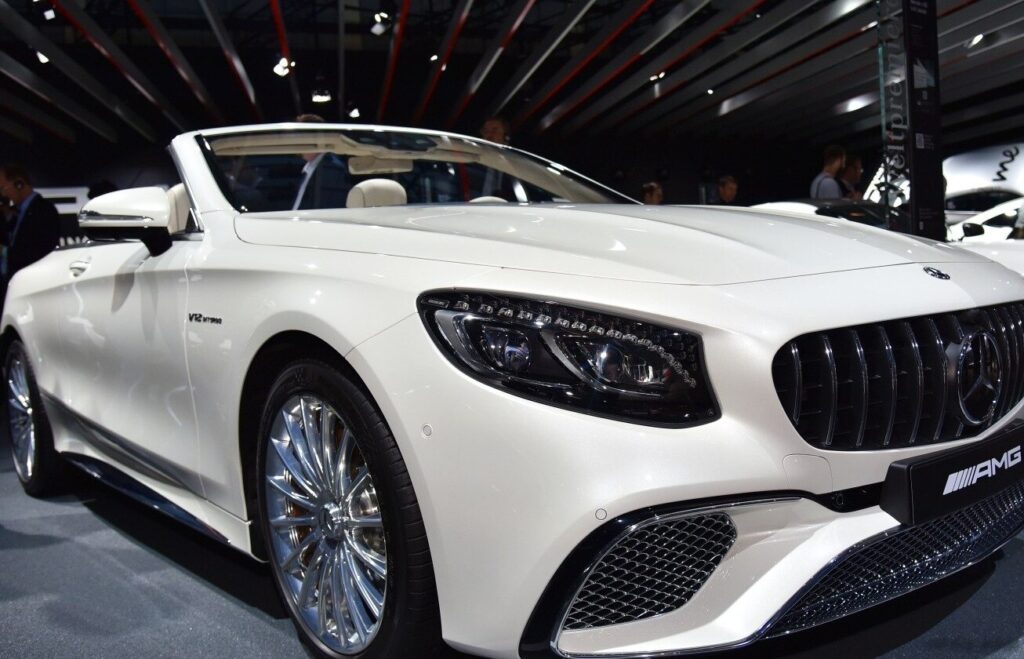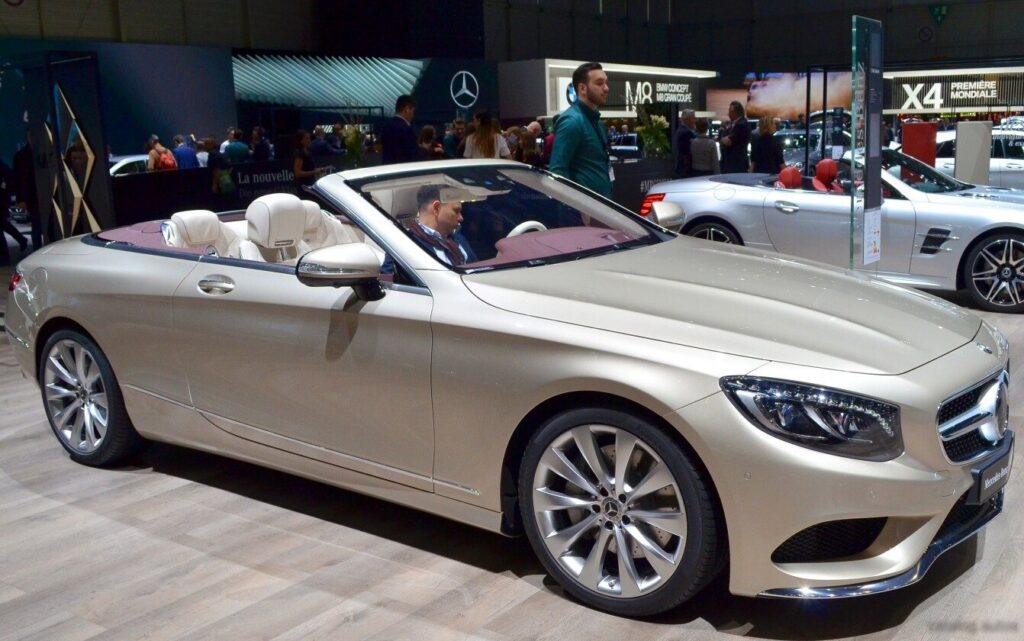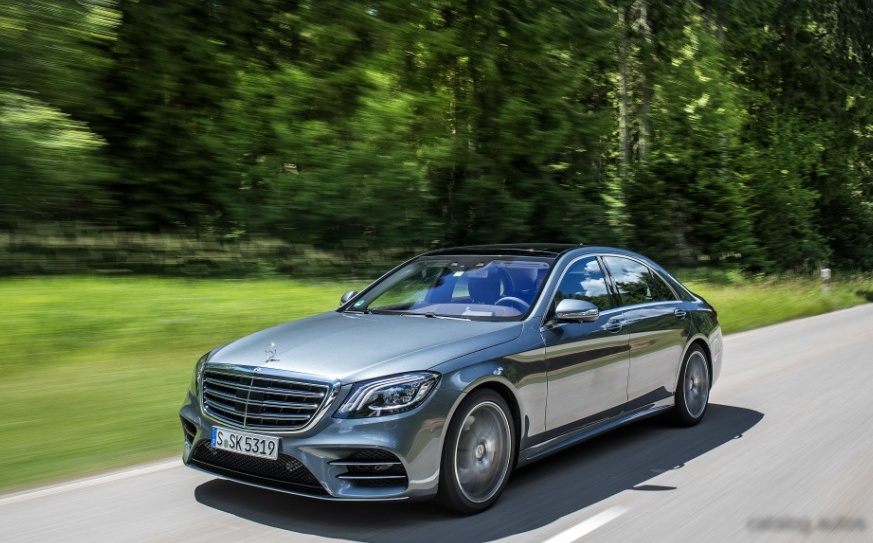
The Mercedes-Benz S 500 (435 hp) EQ Boost G-TRONIC, part of the W222 facelift generation of the S-Class produced from 2017 to 2020, represents a significant step in the integration of mild hybrid technology into a flagship luxury sedan. This variant occupied a prominent mid-to-upper position within the W222 lineup, offering a blend of performance, efficiency, and advanced features. It served as a bridge between the more basic S 450 models and the high-performance AMG S 63, appealing to buyers seeking a sophisticated and powerful driving experience without the outright sportiness of the AMG variant.
Powertrain & Engine Architecture
At the heart of the S 500 EQ Boost lies the M256 3.0-liter inline-six cylinder engine. This engine, designated M 256.930, is a marvel of modern engineering, featuring direct injection, a twin-scroll turbocharger with intercooling, and a sophisticated valvetrain employing four valves per cylinder (DOHC). The engine produces 435 horsepower at 5900-6100 rpm and 520 Nm (383.53 lb-ft) of torque across a broad range of 1800-5500 rpm. A key innovation is the integration of a 48-volt mild hybrid system, branded as EQ Boost. This system incorporates a 22 hp electric motor and a 250 Nm (184.39 lb-ft) electric motor, positioned between the engine and the 9-speed G-TRONIC automatic transmission. The 0.9 kWh lithium-ion battery powers this system, enabling functions like regenerative braking, extended coasting, and a smoother start/stop experience. The engine’s compression ratio is 10.5:1, and it requires 8.5 liters (8.98 US quarts) of engine oil meeting specific Mercedes-Benz specifications.
G-TRONIC Automatic Transmission
The 9G-TRONIC automatic transmission is a crucial component of the S 500’s powertrain. This nine-speed automatic is known for its smooth shifts and wide gear ratio spread, contributing to both fuel efficiency and responsive acceleration. The transmission is electronically controlled and adapts its shift points based on driving style and road conditions. The EQ Boost system works in conjunction with the transmission, providing seamless power delivery and enhancing overall driving refinement.
Driving Characteristics
The S 500 EQ Boost delivers a remarkably refined and powerful driving experience. The combination of the inline-six engine and the EQ Boost system results in strong acceleration, with a 0-60 mph time of approximately 4.6 seconds and a 0-100 km/h time of 4.8 seconds. The EQ Boost system provides an immediate boost of torque, eliminating turbo lag and enhancing responsiveness. The 9G-TRONIC transmission contributes to a smooth and effortless driving experience, with well-spaced gear ratios that keep the engine in its optimal power band. Compared to the S 450, the S 500 offers noticeably more power and a more engaging driving experience. While not as aggressively tuned as the AMG S 63, the S 500 provides ample performance for both highway cruising and spirited driving. The rear-wheel drive configuration contributes to a balanced and predictable handling characteristic.
Equipment & Trim Levels
The S 500 EQ Boost came standard with a comprehensive array of luxury features. Interior appointments typically included high-quality leather upholstery, wood trim, and brushed aluminum accents. Standard equipment included Mercedes-Benz’s COMAND infotainment system with a large central display screen, a premium sound system, heated and ventilated front seats with massage functions, and a panoramic sunroof. Available optional extras included advanced driver-assistance systems such as adaptive cruise control, lane-keeping assist, and a 360-degree camera system. Rear-seat entertainment systems and upgraded leather options were also available. The overall interior ambiance was one of understated elegance and technological sophistication.
Chassis & Braking
The S 500 EQ Boost features an independent multi-link suspension system at both the front and rear axles. This suspension design provides a comfortable ride while maintaining precise handling. The suspension is electronically controlled and adapts to road conditions, optimizing ride quality and stability. The braking system consists of ventilated discs on all four wheels, providing ample stopping power. Anti-lock braking system (ABS) is standard, along with electronic stability control. The S 500’s curb weight of 1930 kg (4254.92 lbs) is managed effectively by the suspension and braking systems, resulting in a confident and controlled driving experience. The steering system is a rack and pinion type with electric power steering, offering precise and responsive steering feel.
Market Reception & Comparison
The S 500 EQ Boost was generally well-received by automotive critics. Reviewers praised its smooth and powerful engine, refined ride quality, and advanced technology. The integration of the EQ Boost system was seen as a significant step forward in terms of fuel efficiency and performance. Fuel consumption figures ranged from 6.6-6.9 l/100 km (35.6-34.1 US mpg) combined, with CO2 emissions of 150-157 g/km. Compared to the S 450, the S 500 offered a noticeable performance advantage with a slight penalty in fuel economy. Compared to the AMG S 63, the S 500 prioritized comfort and refinement over outright performance, appealing to a different segment of luxury car buyers. Reliability reports have generally been positive, with the M256 engine proving to be a robust and dependable unit.
Technical Specifications
| Brand | Mercedes-Benz |
| Model | S-Class |
| Generation | S-Class (W222, facelift 2017) |
| Type | S 500 (435 Hp) EQ Boost G-TRONIC |
| Start of production | 2017 |
| End of production | 2020 |
| Powertrain Architecture | MHEV (Mild Hybrid Electric Vehicle) |
| Body type | Sedan |
| Seats | 4-5 |
| Doors | 4 |
| Fuel consumption at Low speed (WLTP) | 7.8 l/100 km (30.2 US mpg) |
| Fuel consumption at very high speed (WLTP) | 8.5 l/100 km (27.7 US mpg) |
| CO2 emissions (WLTP) | 177-192 g/km |
| Fuel consumption (economy) – urban | 8.9-9.2 l/100 km (26.4 – 25.6 US mpg) |
| Fuel consumption (economy) – extra urban | 5.3-5.7 l/100 km (44.4 – 41.3 US mpg) |
| Fuel consumption (economy) – combined | 6.6-6.9 l/100 km (35.6 – 34.1 US mpg) |
| CO2 emissions | 150-157 g/km |
| Fuel Type | Petrol (Gasoline) |
| Acceleration 0 – 100 km/h | 4.8 sec |
| Acceleration 0 – 62 mph | 4.8 sec |
| Acceleration 0 – 60 mph | 4.6 sec |
| Maximum speed | 250 km/h (155.34 mph) |
| Emission standard | Euro 6 |
| Weight-to-power ratio | 4.4 kg/Hp |
| Weight-to-torque ratio | 3.7 kg/Nm |
| Gross battery capacity | 0.9 kWh |
| Battery voltage | 48 V |
| Battery technology | Lithium-ion (Li-Ion) |
| Electric motor power | 22 Hp |
| Electric motor Torque | 250 Nm (184.39 lb.-ft.) |
| Power | 435 Hp @ 5900-6100 rpm |
| Torque | 520 Nm @ 1800-5500 rpm (383.53 lb.-ft. @ 1800-5500 rpm) |
| Engine displacement | 2999 cm3 (183.01 cu. in.) |
| Number of cylinders | 6 |
| Compression ratio | 10.5:1 |
| Engine oil capacity | 8.5 l (8.98 US qt | 7.48 UK qt) |
| Kerb Weight | 1930 kg (4254.92 lbs.) |
| Max. weight | 2675 kg (5897.37 lbs.) |
| Trunk (boot) space – minimum | 530 l (18.72 cu. ft.) |
| Fuel tank capacity | 70 l (18.49 US gal | 15.4 UK gal) |
| Number of gears | 9 |
Legacy
The S 500 EQ Boost represents an important milestone in Mercedes-Benz’s development of mild hybrid technology. The M256 engine, with its integrated EQ Boost system, has proven to be a reliable and efficient powertrain. On the used car market, the W222 S-Class, including the S 500 EQ Boost, remains a desirable option for buyers seeking a luxurious and technologically advanced sedan. The combination of performance, comfort, and fuel efficiency continues to appeal to a wide range of buyers. While newer S-Class generations have introduced more advanced hybrid and electric powertrains, the S 500 EQ Boost remains a compelling choice for those seeking a sophisticated and well-engineered luxury vehicle.