
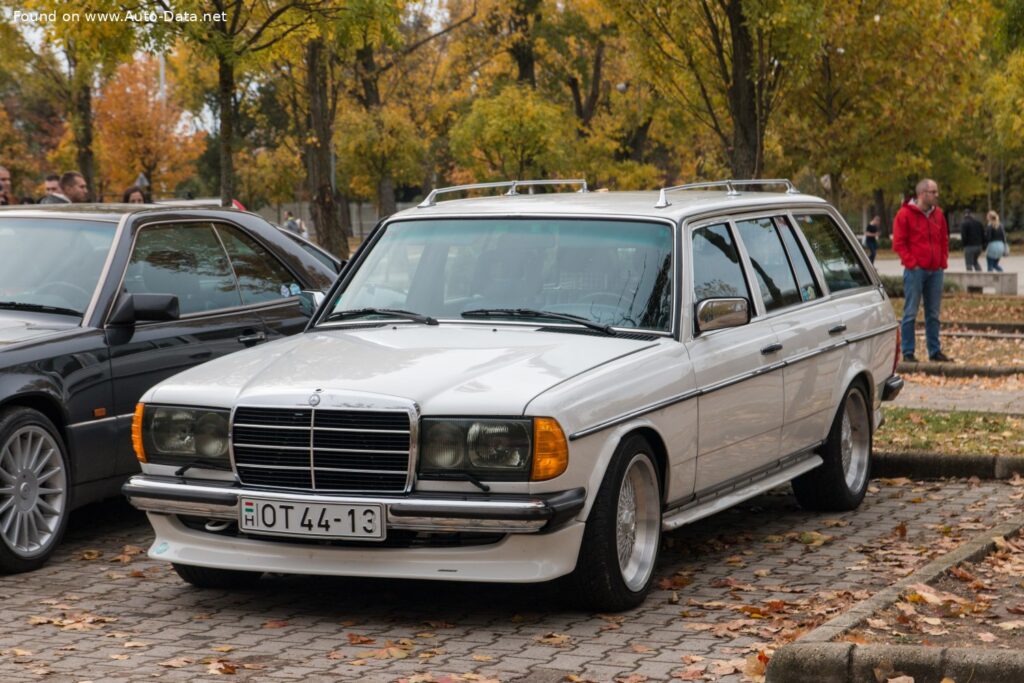
The Mercedes-Benz S123 230 T, produced between February 1978 and April 1980, represents a significant iteration within the W123 series, specifically the T-Modell (estate/station wagon) body style. This variant occupied a middle ground in the 123 lineup, offering a balance between practicality, comfort, and performance. It was positioned above the base 200T models and below the more powerful 280TE, catering to buyers seeking a versatile vehicle without the premium price tag of the larger-engined options. The S123 chassis, known for its robust construction and engineering, provided a solid foundation for this popular family vehicle.
The 230 T: A Detailed Overview
The “T” designation in the model name signifies the “Touring” or estate body style, a key feature of the S123 series. This variant was highly regarded for its spacious interior, large cargo area, and overall build quality. The 230 T combined the practicality of a wagon with the luxury and refinement expected from Mercedes-Benz, making it a popular choice for families and those requiring a versatile vehicle for both daily commuting and longer journeys.
Powertrain & Engine Architecture
At the heart of the 230 T lies the M 115 V 23 / 115.954 engine, a 2.3-liter inline-four cylinder gasoline engine. This engine produced 109 horsepower at 4800 rpm and 186 Nm (137.19 lb-ft) of torque at 3000 rpm. The engine featured a single overhead camshaft (SOHC) valvetrain with two valves per cylinder. Fuel delivery was managed by a carburetor, a common feature for the time, though less efficient than later fuel injection systems. The engine’s longitudinal front-engine layout contributed to the car’s balanced handling characteristics.
Paired with the M 115 engine was a four-speed automatic transmission. This transmission, while providing convenience, was not known for its sportiness or rapid shifting. The gear ratios were optimized for comfortable cruising and fuel efficiency rather than outright acceleration. The automatic transmission contributed to the 230 T’s appeal to buyers prioritizing ease of use over driver engagement.
Driving Characteristics
The 230 T Automatic offered a comfortable, albeit not particularly sporty, driving experience. Acceleration from 0 to 100 km/h (0-62 mph) took approximately 14.8 seconds, and 0 to 60 mph was achieved in around 14.1 seconds. The top speed was rated at 165 km/h (102.53 mph). The automatic transmission’s gear changes were relatively smooth, but the engine’s modest power output meant that overtaking maneuvers required careful planning. Compared to the manual transmission versions of the 230, the automatic suffered a slight performance penalty. The 280TE, with its larger engine, offered significantly more power and a more responsive driving experience, but at a higher cost.
The car’s weight-to-power ratio of 13.5 kg/hp and weight-to-torque ratio of 7.9 kg/Nm reflected its moderate performance capabilities. The automatic transmission, while convenient, did contribute to a slightly less engaging driving experience compared to the available manual gearbox.
Equipment & Trim Levels
The 230 T Automatic typically came equipped with a respectable level of standard features for its era. These included comfortable cloth upholstery, a wood-trimmed dashboard, and basic instrumentation. Power steering was standard, enhancing maneuverability. Optional extras included a sunroof, upgraded audio systems, and leather upholstery. The interior was designed with practicality in mind, offering ample space for passengers and cargo. The rear seats could be folded down to further expand the cargo area, making the 230 T a truly versatile vehicle.
Chassis & Braking
The S123 chassis featured a robust suspension system designed to provide a comfortable ride and stable handling. The front suspension utilized a double wishbone setup, while the rear employed a trailing arm configuration. This suspension setup effectively absorbed bumps and irregularities in the road surface. Braking duties were handled by disc brakes on all four wheels, providing adequate stopping power for the vehicle’s weight and performance. The steering system was a cone worm with recirculation balls, offering a relatively direct steering feel. Tire size was typically 195/70 R14 for both front and rear wheels, mounted on 6J x 14 inch rims.
Market Reception & Comparison
The 230 T Automatic was generally well-received by automotive critics and buyers alike. It was praised for its practicality, comfort, and build quality. However, some critics noted the engine’s modest power output and the automatic transmission’s lack of responsiveness. Fuel economy was a concern for some, with urban consumption rated at 15.3 l/100 km (15.4 US mpg) and extra-urban consumption at 10.2 l/100 km (23.1 US mpg). Compared to the 200T, the 230 T offered a noticeable performance improvement. The 280TE, while more expensive, provided a more refined and powerful driving experience. The 230 T struck a balance between these two extremes, offering a compelling package for buyers seeking a versatile and reliable vehicle.
Technical Specifications
| Brand | Mercedes-Benz |
| Model | W123 |
| Generation | S123 |
| Type (Engine) | 230 T (109 Hp) Automatic |
| Start of production | February, 1978 |
| End of production | April, 1980 |
| Powertrain Architecture | Internal Combustion engine |
| Body type | Station wagon (estate) |
| Seats | 5 |
| Doors | 5 |
| Fuel consumption (urban) | 15.3 l/100 km (15.4 US mpg) |
| Fuel consumption (extra urban) | 10.2 l/100 km (23.1 US mpg) |
| Fuel Type | Petrol (Gasoline) |
| Acceleration 0 – 100 km/h | 14.8 sec |
| Acceleration 0 – 62 mph | 14.8 sec |
| Acceleration 0 – 60 mph | 14.1 sec |
| Maximum speed | 165 km/h (102.53 mph) |
| Weight-to-power ratio | 13.5 kg/Hp |
| Weight-to-torque ratio | 7.9 kg/Nm |
| Power | 109 Hp @ 4800 rpm |
| Torque | 186 Nm @ 3000 rpm (137.19 lb.-ft. @ 3000 rpm) |
| Engine layout | Front, Longitudinal |
| Engine Model/Code | M 115 V 23 / 115.954 |
| Engine displacement | 2307 cm3 (140.78 cu. in.) |
| Number of cylinders | 4 |
| Engine configuration | Inline |
| Cylinder Bore | 93.75 mm (3.69 in.) |
| Piston Stroke | 83.6 mm (3.29 in.) |
| Compression ratio | 9:1 |
| Number of valves per cylinder | 2 |
| Fuel injection system | Carburettor |
| Engine aspiration | Naturally aspirated engine |
| Valvetrain | SOHC |
| Engine oil capacity | 6 l (6.34 US qt | 5.28 UK qt) |
| Coolant | 10 l (10.57 US qt | 8.8 UK qt) |
| Kerb Weight | 1470 kg (3240.8 lbs.) |
| Max. weight | 2030 kg (4475.38 lbs.) |
| Max load | 560 kg (1234.59 lbs.) |
| Fuel tank capacity | 70 l (18.49 US gal | 15.4 UK gal) |
| Length | 4725 mm (186.02 in.) |
| Width | 1786 mm (70.31 in.) |
| Height | 1470 mm (57.87 in.) |
| Wheelbase | 2795 mm (110.04 in.) |
| Front track | 1488 mm (58.58 in.) |
| Rear track | 1453 mm (57.2 in.) |
| Drivetrain Architecture | Rear wheel drive |
| Number of gears and type of gearbox | 4 gears, automatic transmission |
| Front suspension | Double wishbone |
| Rear suspension | Trailing arm |
| Front brakes | Disc |
| Rear brakes | Disc |
| Steering type | Cone worm with recirculation balls |
| Power steering | Hydraulic Steering |
| Tires size | 195/70 R14 |
| Wheel rims size | 6J x 14 |
Legacy
The Mercedes-Benz S123 230 T Automatic, while not the most powerful or technologically advanced variant of the W123 series, remains a highly sought-after classic car. Its robust construction and relatively simple mechanicals contribute to its long-term reliability. Well-maintained examples continue to command respectable prices in the used car market. The M 115 engine, while carburetor-equipped, is known for its durability. The automatic transmission, though not particularly sophisticated, can provide years of reliable service with proper maintenance. Today, the 230 T is appreciated for its blend of practicality, comfort, and classic Mercedes-Benz styling, making it a popular choice among enthusiasts and collectors.
