
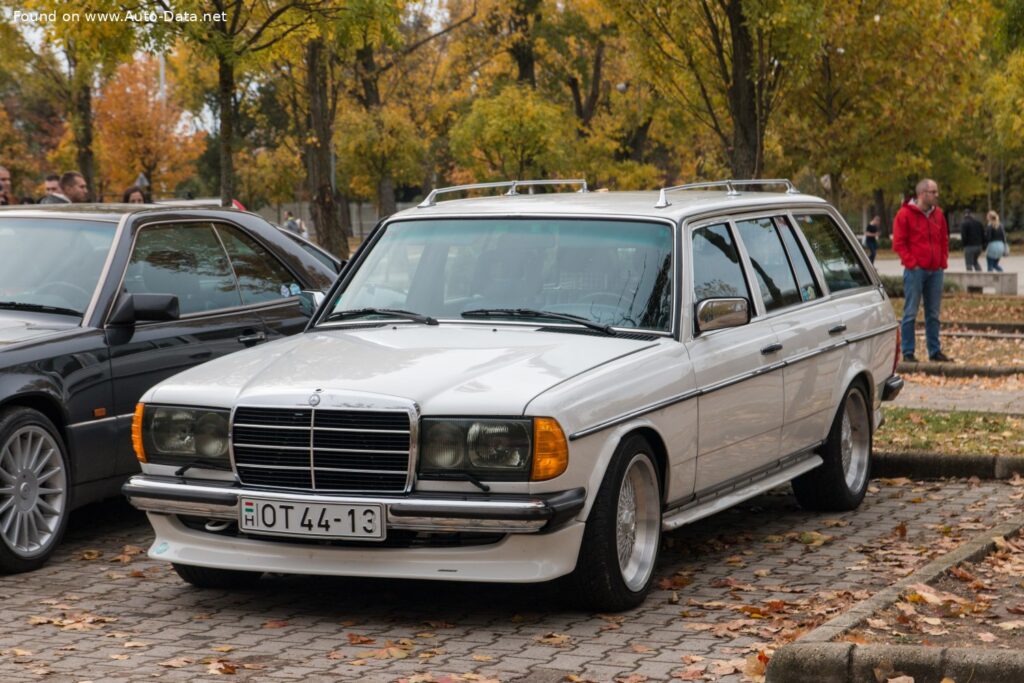
The Mercedes-Benz S123 280 TE, produced between April 1978 and January 1986, represents a significant iteration within the W123 series, specifically the T-Modell (estate/station wagon) variant. Positioned as a premium offering within the W123 lineup, the 280 TE combined practicality with the luxury and engineering expected of Mercedes-Benz. It was designed to appeal to buyers needing a versatile vehicle without sacrificing comfort or prestige. The S123 chassis code designates the estate body style, differentiating it from the sedan (W123) and coupe (C123) versions. This model benefited from the ongoing refinements made to the W123 platform throughout its production run, establishing a reputation for durability and build quality.
Powertrain & Engine Architecture
The heart of the 280 TE is the M 110 E 28 engine, a 2.8-liter inline-six cylinder gasoline engine. This engine, designated with the code 110.984, is a naturally aspirated powerplant producing 185 horsepower at 5800 rpm and 240 Nm (177.01 lb-ft) of torque at 4500 rpm. The engine features a cast iron block and aluminum cylinder head, a configuration common for Mercedes-Benz six-cylinder engines of the era. It utilizes a Bosch K-Jetronic multi-port fuel injection system, known for its reliability and precise fuel delivery. The valvetrain employs a single overhead camshaft (SOHC) design operating two valves per cylinder. The engine’s longitudinal front-engine layout contributes to balanced weight distribution. The 280 TE was exclusively offered with a four-speed automatic transmission, a three-speed automatic was available in earlier years, providing smooth and comfortable gear changes, prioritizing ease of driving over outright performance. The automatic transmission was designed to handle the engine’s torque output effectively, though it did impact acceleration compared to the available manual transmission options in other W123 models.
Engine Specifications
Key engine specifications include a bore of 86 mm (3.39 in), a stroke of 78.8 mm (3.1 in), and a compression ratio of 9:1. The engine requires 7 liters (7.4 US qt, 6.16 UK qt) of oil and 10 liters (10.57 US qt, 8.8 UK qt) of coolant. The engine oil specification should adhere to Mercedes-Benz standards for the period.
Driving Characteristics
The 280 TE, with its automatic transmission, offered a refined and comfortable driving experience. Acceleration from 0 to 100 km/h (0-62 mph) takes approximately 10.2 seconds, while 0-60 mph is achieved in around 9.7 seconds. The top speed is rated at 200 km/h (124.27 mph). While not a sports car, the 280 TE provided adequate performance for highway cruising and everyday driving. The automatic transmission’s gear ratios were optimized for fuel efficiency and smooth operation, rather than aggressive acceleration. Compared to the manual transmission versions of the 280, the automatic resulted in a slight performance decrease. Compared to the smaller-engined W123 models (like the 200 or 230 TE), the 280 TE offered significantly more power and torque, making it more capable of handling a full load of passengers and cargo. It also provided a more relaxed driving experience, particularly on long journeys.
Equipment & Trim Levels
The 280 TE was generally well-equipped, reflecting its position as a premium model. Standard features typically included power steering, front disc brakes, and comfortable seating for five passengers. Interior upholstery was typically cloth, with leather options available as an extra cost. The dashboard layout was functional and ergonomically designed, with clear instrumentation. Optional extras included air conditioning, a sunroof, power windows, and upgraded audio systems. The level of trim could vary depending on the market and individual customer preferences. The estate body style itself added to the practicality, with a spacious cargo area accessible through a rear tailgate. The rear suspension often included self-leveling features to maintain ride height even when heavily loaded.
Chassis & Braking
The S123 280 TE utilizes a double wishbone suspension at the front and a trailing arm suspension at the rear. This suspension setup provided a comfortable ride and good handling characteristics. Brakes are disc brakes on all four wheels, offering reliable stopping power. The steering system is a cone worm with recirculation balls, providing precise steering feel. The vehicle rides on 6J x 14 inch wheel rims, fitted with 195/70 R14 tires. The curb weight of the 280 TE is 1560 kg (3439.21 lbs), with a maximum weight of 2180 kg (4806.08 lbs) and a maximum load capacity of 620 kg (1366.87 lbs).
Market Reception & Comparison
The 280 TE was generally well-received by automotive critics, who praised its build quality, comfort, and practicality. However, some critics noted that the automatic transmission slightly detracted from the driving experience compared to the manual versions. Fuel consumption was considered reasonable for a vehicle of its size and engine displacement, averaging around 15 l/100 km (15.7 US mpg, 18.8 UK mpg) in urban conditions and 9.3 l/100 km (25.3 US mpg, 30.4 UK mpg) on the highway. Compared to other W123 variants, the 280 TE offered a compelling combination of performance and luxury. The smaller-engined models were more fuel-efficient but lacked the power of the 280 TE. The diesel-powered models (like the 300 TD) offered excellent fuel economy but were slower and noisier. The coupe and sedan versions offered a more sporting driving experience, but lacked the practicality of the estate body style.
Technical Specifications
| Brand | Mercedes-Benz |
| Model | W123 |
| Generation | S123 |
| Type (Engine) | 280 TE (185 Hp) |
| Start of production | April, 1978 |
| End of production | January, 1986 |
| Powertrain Architecture | Internal Combustion engine |
| Body type | Station wagon (estate) |
| Seats | 5 |
| Doors | 5 |
| Fuel consumption (urban) | 15 l/100 km (15.7 US mpg, 18.8 UK mpg) |
| Fuel consumption (extra urban) | 9.3 l/100 km (25.3 US mpg, 30.4 UK mpg) |
| Fuel Type | Petrol (Gasoline) |
| Acceleration 0 – 100 km/h | 10.2 sec |
| Acceleration 0 – 62 mph | 10.2 sec |
| Acceleration 0 – 60 mph | 9.7 sec |
| Maximum speed | 200 km/h (124.27 mph) |
| Weight-to-power ratio | 8.4 kg/Hp |
| Weight-to-torque ratio | 6.5 kg/Nm |
| Power | 185 Hp @ 5800 rpm |
| Torque | 240 Nm @ 4500 rpm (177.01 lb.-ft. @ 4500 rpm) |
| Engine layout | Front, Longitudinal |
| Engine Model/Code | M 110 E 28 / 110.984 |
| Engine displacement | 2746 cm3 (167.57 cu. in.) |
| Number of cylinders | 6 |
| Engine configuration | Inline |
| Cylinder Bore | 86 mm (3.39 in.) |
| Piston Stroke | 78.8 mm (3.1 in.) |
| Compression ratio | 9:1 |
| Number of valves per cylinder | 2 |
| Fuel injection system | Multi-port manifold injection |
| Engine aspiration | Naturally aspirated |
| Engine oil capacity | 7 l (7.4 US qt | 6.16 UK qt) |
| Coolant | 10 l (10.57 US qt | 8.8 UK qt) |
| Kerb Weight | 1560 kg (3439.21 lbs.) |
| Max. weight | 2180 kg (4806.08 lbs.) |
| Max load | 620 kg (1366.87 lbs.) |
| Fuel tank capacity | 80 l (21.13 US gal | 17.6 UK gal) |
| Length | 4725 mm (186.02 in.) |
| Width | 1786 mm (70.31 in.) |
| Height | 1470 mm (57.87 in.) |
| Wheelbase | 2795 mm (110.04 in.) |
| Front track | 1488 mm (58.58 in.) |
| Rear track | 1453 mm (57.2 in.) |
| Drivetrain Architecture | Rear wheel drive |
| Number of gears | 4 |
| Gearbox type | Automatic transmission |
Legacy
The M 110 engine, found in the 280 TE, is renowned for its durability and longevity. Well-maintained examples can still be found running reliably today. The S123 280 TE has become a sought-after classic among Mercedes-Benz enthusiasts, appreciated for its combination of practicality, luxury, and engineering excellence. In the used car market, prices for well-preserved examples have been steadily increasing. While maintenance can be more expensive than for more modern vehicles, the robust construction of the W123 platform and the M 110 engine contribute to its enduring appeal. The 280 TE represents a high point in Mercedes-Benz engineering, offering a driving experience that is both refined and rewarding.
