
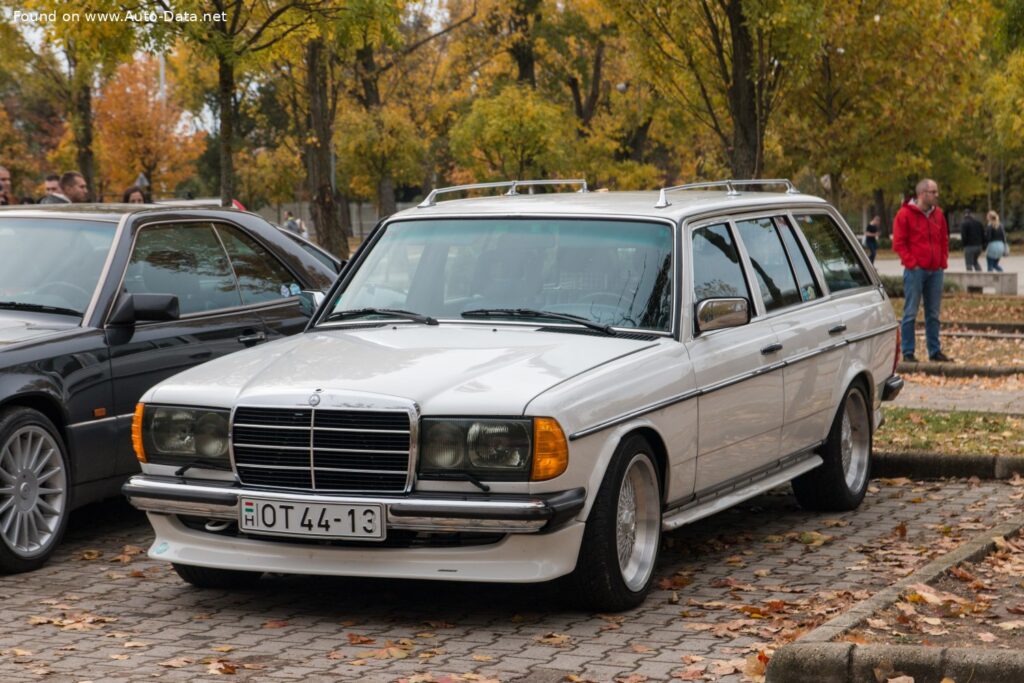
The Mercedes-Benz S123 300 TD Automatic, produced between September 1977 and September 1979, represents a specific variant within the broader W123 series, known for its robust build quality and enduring appeal. This model, a five-door station wagon (estate) powered by a 3.0-liter five-cylinder diesel engine producing 80 horsepower, occupied a unique position in the W123 lineup. It was positioned as a practical, fuel-efficient option geared towards families and those requiring substantial cargo space, falling below the more powerful 300D and significantly below the gasoline-powered 280E and 280TE models in terms of performance. The S123 chassis code designates the station wagon body style within the W123 generation.
The 300 TD Automatic: A Detailed Overview
The 300 TD Automatic was a key component of the second series of the W123, which debuted in late 1976 as a replacement for the W114/W115. The W123 represented a significant step forward in safety, comfort, and refinement for Mercedes-Benz. The “TD” designation signifies a diesel-powered model with turbocharging absent, while the “Automatic” clearly indicates the transmission type. This combination aimed to provide a comfortable and economical driving experience, prioritizing practicality over outright speed.
Powertrain & Engine Architecture
At the heart of the 300 TD Automatic lies the OM 617 D 30 engine, a 3.0-liter (3005 cc) inline five-cylinder diesel. This engine, identified by the code 617.912, is renowned for its durability and longevity. It features a naturally aspirated configuration, producing 80 hp at 4000 rpm and 172 Nm (126.86 lb-ft) of torque at 2400 rpm. The engine utilizes a multi-port manifold injection system, a relatively advanced fuel delivery method for its time, contributing to improved combustion efficiency and reduced emissions compared to earlier diesel designs. The valvetrain employs a single overhead camshaft (SOHC) design, operating two valves per cylinder.
The engine’s robust construction included a cast iron block and head, contributing to its exceptional lifespan. The 300 TD Automatic was paired with a four-speed automatic transmission, designed to provide smooth and effortless gear changes. While not known for its sporty responsiveness, the transmission was well-suited to the engine’s torque characteristics and the car’s intended purpose. The transmission’s gear ratios were optimized for fuel economy and comfortable cruising, rather than rapid acceleration.
Driving Characteristics
The driving experience in a 300 TD Automatic is characterized by its relaxed and comfortable nature. Acceleration is modest, with a 0-62 mph (0-100 km/h) time of approximately 21.9 seconds. Top speed is rated at 143 km/h (88.86 mph). The engine delivers its peak torque at a relatively low 2400 rpm, providing adequate pulling power for everyday driving and hauling loads. However, compared to the manual transmission versions of the 300 TD or the more powerful 300D, the automatic version feels noticeably slower. The automatic transmission, while convenient, does sap some of the engine’s power. The longitudinal engine placement and rear-wheel drive configuration contribute to a balanced feel, although the car’s weight (1570 kg / 3461.26 lbs) is noticeable, particularly during cornering.
Equipment & Trim Levels
The 300 TD Automatic typically came equipped with a reasonable level of standard features for the late 1970s. These included power steering, front disc brakes, and comfortable seating for five passengers. Interior upholstery was typically cloth, although leather was available as an optional extra. The dashboard layout was functional and straightforward, with clearly marked gauges and controls. Optional extras included air conditioning, a sunroof, and upgraded audio systems. The level of trim was generally consistent across the 300 TD Automatic models, with variations primarily stemming from individual customer choices regarding optional equipment.
Chassis & Braking
The S123 300 TD Automatic utilized a robust chassis designed to handle the weight of the vehicle and its occupants, as well as any cargo. The front suspension employed a double wishbone design, providing a comfortable ride and good handling characteristics. The rear suspension featured a trailing arm setup, which contributed to the car’s stability. Braking was provided by disc brakes on all four wheels, offering adequate stopping power for the vehicle’s weight and performance. The steering system was a cone worm with recirculation balls, providing a relatively direct steering feel, enhanced by the hydraulic power steering assistance.
Market Reception & Comparison
The 300 TD Automatic was generally well-received by critics and buyers alike. It was praised for its fuel efficiency, comfortable ride, and spacious interior. Fuel consumption figures were approximately 10.4 l/100 km (22.6 US mpg) in urban conditions and 9.4 l/100 km (25 US mpg) on the open road. Compared to the manual transmission 300 TD, the automatic version offered slightly lower fuel economy. Compared to the 300D, the 300 TD Automatic was significantly less powerful, but it offered a more relaxed and convenient driving experience. The gasoline-powered 280TE offered superior performance but at the cost of significantly higher fuel consumption. The 300 TD Automatic appealed to buyers who prioritized practicality, fuel economy, and comfort over outright performance.
Technical Specifications
| Engine Model/Code | OM 617 D 30 / 617.912 |
| Engine Displacement | 3005 cm3 (183.38 cu. in.) |
| Number of Cylinders | 5 (Inline) |
| Power | 80 Hp @ 4000 rpm |
| Torque | 172 Nm @ 2400 rpm (126.86 lb.-ft. @ 2400 rpm) |
| Fuel Type | Diesel |
| Fuel Consumption (Urban) | 10.4 l/100 km (22.6 US mpg) |
| Fuel Consumption (Extra Urban) | 9.4 l/100 km (25 US mpg) |
| Acceleration 0-100 km/h | 21.9 sec |
| Acceleration 0-62 mph | 21.9 sec |
| Maximum Speed | 143 km/h (88.86 mph) |
| Kerb Weight | 1570 kg (3461.26 lbs) |
| Max. Weight | 2190 kg (4828.12 lbs) |
| Fuel Tank Capacity | 70 l (18.49 US gal) |
| Transmission | 4-speed Automatic |
| Drive Type | Rear Wheel Drive |
| Length | 4725 mm (186.02 in) |
| Width | 1786 mm (70.31 in) |
| Height | 1470 mm (57.87 in) |
Legacy
The 300 TD Automatic, and the OM 617 engine in general, has earned a reputation for exceptional reliability and longevity. Many examples remain on the road today, a testament to the quality of engineering and construction. While maintenance costs can be higher due to the age of the vehicles and the specialized knowledge required for diesel engines, the 300 TD Automatic remains a popular choice among enthusiasts and collectors. In the used car market, well-maintained examples command a premium, reflecting their enduring appeal and the growing appreciation for classic Mercedes-Benz vehicles. The OM 617 engine is still considered by many to be one of the most robust and reliable diesel engines ever produced, and the 300 TD Automatic represents a particularly desirable and practical variant of the iconic W123 series.
