
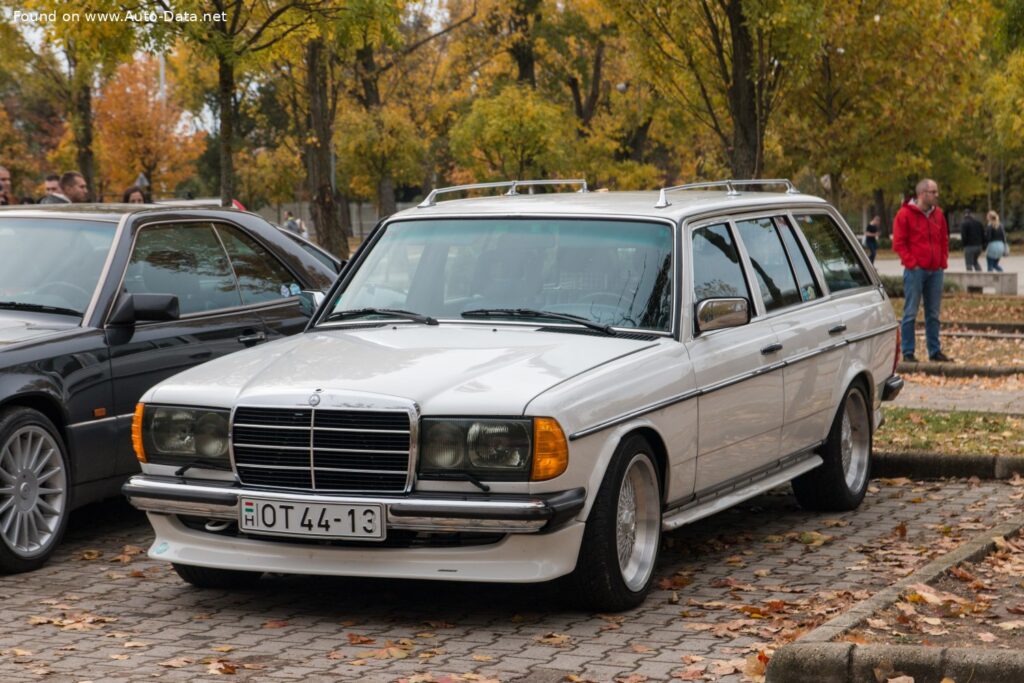
The Mercedes-Benz S123 300 TD Automatic, produced between September 1979 and January 1986, represents a significant iteration within the W123 series, specifically the S123 estate (station wagon) body style. This variant was positioned as a practical, durable, and relatively economical option within the broader W123 lineup, appealing to families and those requiring substantial cargo space. Powered by the OM617 diesel engine and paired with a four-speed automatic transmission, the 300 TD Automatic offered a blend of comfort and capability, though it prioritized fuel efficiency and longevity over outright performance. It was a popular choice in Europe and gained a following in North America as a reliable and long-lasting vehicle.
The 300 TD Automatic: Positioning and Overview
The W123 series, launched in 1976, was Mercedes-Benz’s mid-size offering, replacing the W114/W115. The S123 designation specifically refers to the estate (station wagon) version. The 300 TD Automatic occupied a middle ground within the S123 range. Below it sat the 240 D and 240 TD, offering lower power and generally simpler specifications. Above it were the 300 E (gasoline) and, in some markets, the more powerful 300 TD Turbo Diesel. The automatic transmission was a key differentiator, as most S123 300 TD models were equipped with a manual gearbox. The automatic version catered to buyers prioritizing ease of driving, particularly in urban environments or when towing.
Powertrain & Engine Architecture
The heart of the S123 300 TD Automatic is the OM617 D 30 engine, a 2,998 cc (182.95 cu. in.) inline-five cylinder diesel engine. This engine, also known as the 617.912, is renowned for its robustness and longevity. It features a naturally aspirated configuration, producing 88 horsepower (hp) at 4,400 rpm and 172 Nm (126.86 lb.-ft.) of torque at 2,400 rpm. The engine utilizes a multi-port manifold fuel injection system, a significant advancement over earlier diesel engines, improving efficiency and reducing emissions. The valvetrain employs a single overhead camshaft (SOHC) design, operating two valves per cylinder.
The engine’s block is constructed from cast iron, contributing to its durability. Bore and stroke dimensions are 90.9 mm (3.58 in.) and 92.41 mm (3.64 in.), respectively, resulting in a compression ratio of 21.5:1. The engine requires approximately 8 liters (8.45 US qt / 7.04 UK qt) of oil and 11 liters (11.62 US qt / 9.68 UK qt) of coolant. The four-speed automatic transmission, typically the 722.1 series unit, was a common choice for Mercedes-Benz vehicles of this era. It’s a hydraulically controlled transmission known for its smooth operation, though it can be susceptible to wear and tear over time, particularly if maintenance is neglected.
Engine Code Specifics: OM617.912
The OM617.912 engine code designates the specific variant used in the 300 TD Automatic. This engine differs from other OM617 variants primarily in its fuel injection pump calibration and minor adjustments to optimize performance for the automatic transmission. The engine’s longitudinal front-engine layout contributes to the vehicle’s balanced handling characteristics.
Driving Characteristics
The S123 300 TD Automatic’s driving experience is characterized by its relaxed and comfortable nature. Acceleration is not its strong suit; 0-100 km/h (0-62 mph) takes approximately 20.4 seconds, and 0-60 mph is around 19.4 seconds. The top speed is limited to 150 km/h (93.21 mph). However, the engine’s ample torque provides sufficient power for everyday driving and comfortable cruising. The automatic transmission shifts smoothly, though it lacks the responsiveness of a manual gearbox. The gear ratios are optimized for fuel efficiency and relaxed highway driving. Compared to the manual transmission version, the automatic offers less driver engagement but greater convenience. The 300 TD Turbo Diesel, with its significantly higher power output, offered a much more spirited driving experience, but at the cost of fuel economy and potentially reduced long-term reliability.
Equipment & Trim Levels
The S123 300 TD Automatic typically came equipped with a reasonable level of standard features for its time. These included power steering, front disc brakes, and comfortable seating for five passengers. Interior upholstery was typically a durable cloth material, though leather was available as an optional extra. The dashboard layout was functional and straightforward, with clearly marked gauges and controls. Optional extras included air conditioning, a sunroof, power windows, and upgraded audio systems. The estate body style itself provided a significant amount of cargo space, making it ideal for families or those needing to transport large items. Trim levels were relatively limited, with most variations stemming from the addition of optional equipment.
Chassis & Braking
The S123 300 TD Automatic features a double wishbone front suspension and a trailing arm rear suspension. This setup provides a comfortable ride and predictable handling. The front brakes are discs, while the rear brakes are also discs, offering adequate stopping power for the vehicle’s weight. The curb weight of the vehicle is 1,570 kg (3,461.26 lbs), with a maximum permissible weight of 2,190 kg (4,828.12 lbs). The front and rear track widths are 1,488 mm (58.58 in.) and 1,453 mm (57.2 in.), respectively. Tire size is typically 195/70 R14 for both front and rear wheels, mounted on 6J x 14 inch rims.
Market Reception & Comparison
The S123 300 TD Automatic was generally well-received by critics and buyers alike. It was praised for its reliability, fuel efficiency (approximately 9.8 l/100 km urban, 8.1 l/100 km extra-urban), and spacious interior. However, its relatively slow acceleration was a common criticism. Compared to the gasoline-powered 300 E, the 300 TD Automatic offered significantly better fuel economy but less performance. Compared to the 300 TD with a manual transmission, the automatic version sacrificed some driver engagement for added convenience. The 300 TD Turbo Diesel offered a compelling alternative for those seeking more power, but it was also more expensive and potentially less reliable.
Technical Specifications
| Brand | Mercedes-Benz |
| Model | W123 S123 |
| Type | 300 TD Automatic |
| Start of Production | September 1979 |
| End of Production | January 1986 |
| Engine Model/Code | OM 617 D 30 / 617.912 |
| Engine Displacement | 2,998 cm3 (182.95 cu. in.) |
| Number of Cylinders | 5 (Inline) |
| Power | 88 hp @ 4400 rpm |
| Torque | 172 Nm @ 2400 rpm (126.86 lb.-ft. @ 2400 rpm) |
| Fuel Type | Diesel |
| Fuel Consumption (Urban) | 9.8 l/100 km (24 US mpg) |
| Fuel Consumption (Extra Urban) | 8.1 l/100 km (29 US mpg) |
| Acceleration 0-100 km/h | 20.4 sec |
| Maximum Speed | 150 km/h (93.21 mph) |
| Kerb Weight | 1,570 kg (3,461.26 lbs) |
| Fuel Tank Capacity | 70 l (18.49 US gal) |
| Transmission | 4-speed Automatic |
Legacy
The S123 300 TD Automatic, and the OM617 engine in general, have earned a reputation for exceptional durability and longevity. Many examples are still on the road today, often with very high mileage. The engine is known for its ability to withstand significant abuse and continue functioning reliably. In the used car market, these vehicles are sought after by enthusiasts and those seeking a classic Mercedes-Benz that is relatively easy to maintain. While parts availability can be a concern, many components are still readily available, and the engine’s simple design makes it relatively straightforward to repair. The automatic transmission, however, requires regular maintenance to prevent issues. The S123 300 TD Automatic remains a testament to Mercedes-Benz’s engineering prowess and a popular choice for those seeking a classic, reliable, and practical estate car.
