
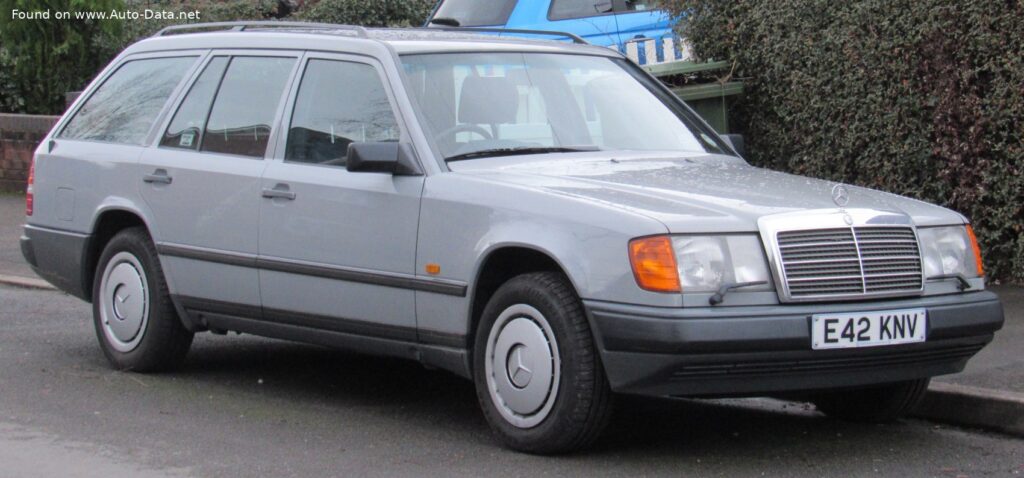
The Mercedes-Benz W124 200 T CAT Automatic, produced between September 1986 and August 1989, represents an entry-level variant within the highly successful W124 series, specifically the T-Modell (estate/station wagon) body style. This model occupied a crucial position in Mercedes-Benz’s lineup, offering practicality and the renowned Mercedes-Benz build quality to a broader customer base. The “200 T CAT” designation refers to the engine displacement (2.0 liters), the body style (Touring – T-Modell), and the catalytic converter (“CAT”) equipped to meet evolving emissions standards. It was built on the 124 platform, known for its robust engineering and longevity.
The 200 T CAT Automatic: Positioning and Overview
The 200 T CAT Automatic served as the gateway to the W124 T-Modell range. Above it sat more powerful and luxurious variants like the 230 TE, 260 TE, and the flagship 300 TE, often equipped with larger engines and more comprehensive feature sets. Compared to the 200 T manual transmission version, the automatic offered a more relaxed driving experience, appealing to buyers prioritizing comfort over outright performance. The 200 T CAT was aimed at families and individuals needing a versatile vehicle for everyday use, long journeys, and carrying cargo, all while benefiting from the prestige associated with the Mercedes-Benz brand.
Powertrain & Engine Architecture
The heart of the 200 T CAT Automatic is the M102 V 20 engine, a 1997 cc (121.86 cu. in.) inline-four cylinder gasoline engine. This engine, bearing the code 102.922, is a naturally aspirated, single overhead camshaft (SOHC) design. Unlike later Mercedes-Benz engines, it utilizes a carburetor for fuel delivery, specifically a Solex carburetor, rather than fuel injection. This carburetor setup, while simpler, contributed to the engine’s relatively modest power output. The engine produces 105 hp at 5500 rpm and 160 Nm (118.01 lb-ft) of torque at 3000 rpm. The compression ratio is 9.1:1. Bore and stroke dimensions are 89 mm (3.5 in) and 80.25 mm (3.16 in) respectively.
The engine is longitudinally mounted in the front of the vehicle. The automatic transmission is a four-speed unit, a common choice for this era. While the specific transmission model varied, it was designed to provide smooth and reliable operation, prioritizing comfort over sporty responsiveness. The transmission’s gear ratios were optimized for fuel efficiency and relaxed cruising, rather than rapid acceleration. The automatic transmission contributed to a slightly higher weight and reduced fuel economy compared to the manual transmission versions of the 200 T.
Driving Characteristics
The driving experience in the 200 T CAT Automatic is characterized by smoothness and refinement. Acceleration is not its strong suit; 0-62 mph (0-100 km/h) takes approximately 14.5 seconds, and 0-60 mph is around 13.8 seconds. The automatic transmission contributes to a more leisurely pace, with noticeable shifts and a focus on maintaining comfortable engine speeds. The engine delivers adequate power for everyday driving, but overtaking maneuvers require careful planning. The torque curve is relatively flat, providing usable power across a reasonable rev range, but it lacks the punch of the larger-engined W124 models.
The automatic transmission’s gear ratios are geared towards economy. First gear provides reasonable acceleration from a standstill, while higher gears are designed for efficient cruising at highway speeds. The transmission doesn’t offer a “sport” mode or manual shift capability, further emphasizing its comfort-oriented nature. Compared to the manual transmission 200 T, the automatic version feels noticeably slower and less engaging, but it offers a more relaxed and convenient driving experience, particularly in urban traffic.
Equipment & Trim Levels
The 200 T CAT Automatic, as the entry-level T-Modell, came with a respectable level of standard equipment. This typically included cloth upholstery, power steering, central locking, and a basic radio. The dashboard layout was functional and straightforward, reflecting the W124’s emphasis on practicality. Optional extras were plentiful, allowing buyers to customize their vehicles. These included upgrades like air conditioning, electric windows, a sunroof, upgraded audio systems, and leather upholstery. The level of trim could vary depending on the market, with some regions offering more standard features than others.
Interior appointments were generally conservative, with a focus on durability and comfort. The rear seats could be folded down to increase cargo capacity, a key feature of the T-Modell. The overall interior ambiance was one of understated elegance, typical of Mercedes-Benz vehicles of this era. While not as lavishly equipped as the higher-end W124 models, the 200 T CAT Automatic provided a comfortable and well-appointed interior for its price point.
Chassis & Braking
The W124 chassis is renowned for its robust construction and excellent ride quality. The 200 T CAT Automatic features a wishbone front suspension and an independent multi-link rear suspension, providing a comfortable and controlled ride. The suspension was tuned to prioritize comfort over sporty handling, resulting in a smooth and stable ride even on uneven surfaces. The braking system consists of disc brakes on all four wheels, providing adequate stopping power for the vehicle’s weight and performance. Hydraulic power steering was standard, making maneuvering easy and effortless.
The 200 T CAT Automatic’s curb weight of 1400 kg (3086.47 lbs) is relatively moderate for a vehicle of its size and class. The weight distribution is reasonably balanced, contributing to stable handling. Tire size was typically 195/65 R15 for both front and rear wheels, mounted on 6.5J x 15 inch rims. The suspension components were generally robust and durable, contributing to the W124’s reputation for longevity.
Market Reception & Comparison
The 200 T CAT Automatic was generally well-received by critics as a practical and reliable family vehicle. While its performance was not considered exciting, its comfort, build quality, and spacious interior were praised. Fuel economy was reasonable for its time, with urban consumption around 12 l/100 km (19.6 US mpg) and extra-urban consumption around 8.1 l/100 km (29 US mpg). Compared to the 230 TE and 260 TE, the 200 T CAT Automatic offered a more affordable entry point into the W124 T-Modell range, but at the expense of performance and refinement.
Reliability was a key strength of the 200 T CAT Automatic. The M102 engine is known for its durability, and the automatic transmission, while not particularly sophisticated, proved to be relatively reliable with proper maintenance. However, the carburetor required periodic adjustment and could be prone to issues over time. Overall, the 200 T CAT Automatic represented a sensible and practical choice for buyers seeking a comfortable and reliable estate car.
Technical Specifications
| Brand | Mercedes-Benz |
| Model | W124 |
| Generation | S124 |
| Type | 200 T CAT (105 Hp) Automatic |
| Start of production | September, 1986 |
| End of production | August, 1989 |
| Engine Model/Code | M 102 V 20 / 102.922 |
| Engine displacement | 1997 cm3 (121.86 cu. in.) |
| Number of cylinders | 4 |
| Power | 105 Hp @ 5500 rpm |
| Torque | 160 Nm @ 3000 rpm (118.01 lb.-ft. @ 3000 rpm) |
| Fuel Type | Petrol (Gasoline) |
| Acceleration 0 – 100 km/h | 14.5 sec |
| Maximum speed | 168 km/h (104.39 mph) |
| Kerb Weight | 1400 kg (3086.47 lbs) |
| Max. weight | 2020 kg (4453.34 lbs) |
| Fuel tank capacity | 72 l (19.02 US gal | 15.84 UK gal) |
| Length | 4765 mm (187.6 in) |
| Width | 1740 mm (68.5 in) |
| Height | 1490 mm (58.66 in) |
| Wheelbase | 2800 mm (110.24 in) |
| Transmission | 4 gears, automatic transmission |
Legacy
The W124 200 T CAT Automatic, while not the most powerful or prestigious variant of the W124 range, has earned a reputation for reliability and durability. The M102 engine, despite its carburetor-based fuel delivery, is known for its longevity and relatively simple maintenance requirements. Today, these vehicles are sought after by enthusiasts and collectors who appreciate their classic styling and robust engineering. The automatic transmission, while not offering the latest technology, has proven to be reasonably reliable with proper servicing. Finding well-maintained examples can be challenging, but the 200 T CAT Automatic remains a testament to Mercedes-Benz’s commitment to quality and engineering excellence.
