
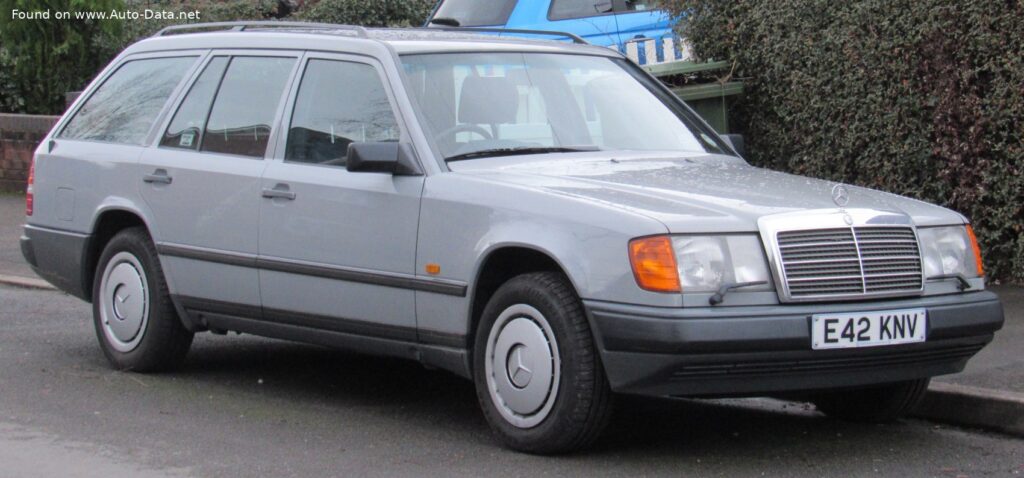
The Mercedes-Benz S124 200 TD, produced between October 1985 and February 1989, represents a significant chapter in the history of the esteemed German automaker. As part of the iconic W124 generation, known globally for its unparalleled build quality, engineering excellence, and longevity, the S124 variant specifically denoted the station wagon (estate) body style. While not officially sold in the United States in this particular diesel configuration, the W124 series as a whole carved out an indelible legacy, defining the luxury and reliability standards for executive cars throughout the late 20th century. The 200 TD, with its naturally aspirated diesel engine, was positioned as an economical and robust workhorse primarily for the European market, appealing to a broad spectrum of buyers from private families seeking practicality to taxi operators requiring ultimate durability and low running costs. It embodied Mercedes-Benz’s commitment to creating vehicles that were not only comfortable and prestigious but also exceptionally durable and efficient for their intended purpose.
Powertrain & Engine Architecture
Under the hood of the Mercedes-Benz S124 200 TD lay the venerable OM 601 D 20 diesel engine, a 2.0-liter (1997 cm³, or 121.86 cubic inches) inline-four powertrain. This unit, designated internally as OM 601.912, was a hallmark of Mercedes-Benz’s dedication to robust and long-lasting diesel technology. Unlike its more powerful gasoline or turbocharged diesel siblings, the 200 TD was a naturally aspirated engine, meaning it relied solely on atmospheric pressure to draw air into its cylinders, without the aid of a turbocharger or supercharger.
This configuration yielded a modest but highly dependable 72 horsepower at 4600 rpm. Torque output stood at 123 Nm (90.72 lb.-ft.) delivered at a relatively low 2800 rpm, characteristic of a diesel engine designed for pulling power and efficiency rather than outright speed. The power-to-liter ratio was 36.1 Hp/l, reflecting its emphasis on durability and fuel economy over high-performance metrics.
Power was transmitted to the rear wheels via a smooth-shifting 4-speed automatic transmission, a common and comfortable choice for Mercedes-Benz vehicles of this era. This transmission, typically the 4G-TRONIC unit, was known for its reliability and relatively smooth operation. While the automatic gearbox provided a relaxed driving experience, it contributed to the car’s leisurely acceleration. The S124 200 TD could reach 60 mph from a standstill in approximately 21.9 seconds, with 0-100 km/h (0-62 mph) taking 23 seconds. Its top speed was rated at 145 km/h, or about 90.1 mph. These figures clearly illustrate that the 200 TD was not engineered for spirited driving but rather for comfortable, economical cruising.
Despite its conservative performance, the 200 TD excelled in fuel efficiency, particularly for a vehicle of its size and era. It achieved an urban fuel consumption of 8.5 l/100 km (approximately 27.7 US mpg) and an impressive extra-urban (highway) figure of 6.3 l/100 km (around 37.3 US mpg). This fuel economy, combined with a generous 72-liter (19.02 US gallon) fuel tank, provided excellent range, making it a favorite for long-distance travel and commercial applications across Europe. The engine’s precombustion chamber injection system and SOHC valvetrain were standard for Mercedes-Benz diesels of the period, contributing to their renowned reliability and relatively smooth operation for a diesel of its time.
Driving Characteristics
The S124 200 TD Automatic offered a distinctly relaxed driving experience. Compared to the manual transmission versions, the automatic reduced driver workload, making it ideal for city driving and long journeys. However, the 4-speed automatic did impact performance. The gear ratios were optimized for fuel economy and smooth cruising rather than rapid acceleration. The engine felt most comfortable in the mid-range, providing adequate power for overtaking maneuvers when the transmission downshifted. Compared to the higher-output 230E or 300E gasoline models, the 200 TD felt significantly slower, but it offered a different kind of driving experience – one focused on efficiency and effortless cruising. Against other diesel variants, like the later 250D, the 200 TD lacked the extra torque for heavier loads or more demanding driving conditions.
Equipment & Trim Levels
The S124 200 TD, being an entry-level model, typically came with a more modest level of standard equipment compared to its higher-spec siblings. Standard features generally included cloth upholstery, a basic radio, manual windows, and central locking. Air conditioning was often an optional extra, as were power windows and a sunroof. The dashboard configuration was functional and straightforward, prioritizing ease of use and durability. Interior trim was typically finished in a dark color scheme, reflecting the car’s practical nature. Optional extras could significantly enhance the comfort and convenience of the 200 TD, including upgraded sound systems, leather upholstery, and cruise control. However, these options added to the vehicle’s cost, making it less appealing to budget-conscious buyers.
Chassis & Braking
The S124 200 TD benefited from the W124 platform’s sophisticated chassis design. The front suspension utilized a wishbone setup, providing good handling and ride comfort. The rear suspension featured an independent multi-link system, a groundbreaking innovation for its time that significantly improved ride quality and handling stability. Braking was handled by disc brakes at all four wheels, providing reliable stopping power. The hydraulic power steering, utilizing a cone worm with recirculation balls, offered precise and effortless control. The rear drums were sometimes fitted on lower-spec models, but the 200 TD generally received all-round disc brakes. Stabilizer bars were fitted to both the front and rear axles, further enhancing handling stability. The standard tire size was 195/65 R15, mounted on 6.5J x 15-inch wheel rims, providing a comfortable ride and adequate grip.
Market Reception & Comparison
Critics generally praised the S124 200 TD for its reliability, fuel efficiency, and comfortable ride. However, its modest performance was often noted as a drawback, particularly compared to the more powerful gasoline models. The 200 TD was seen as a sensible and practical choice for buyers who prioritized durability and economy over outright speed. In terms of fuel economy, the 200 TD consistently outperformed its gasoline counterparts, making it a popular choice for high-mileage drivers. Reliability was also a key strength, with the OM 601 diesel engine proving to be exceptionally durable. Compared to the 230E or 300E, the 200 TD offered a lower purchase price and lower running costs, but at the expense of performance and refinement. Against other diesel models, like the 250D, the 200 TD offered better fuel economy but less power.
Technical Specifications
| Category | Specification |
| General Information | |
| Brand | Mercedes-Benz |
| Model | W124 |
| Generation | S124 |
| Type (Engine) | 200 TD (72 Hp) Automatic |
| Start of production | October, 1985 year |
| End of production | February, 1989 year |
| Powertrain Architecture | Internal Combustion engine |
| Body type | Station wagon (estate) |
| Seats | 5 |
| Doors | 5 |
| Performance Specs | |
| Fuel consumption (economy) – urban | 8.5 l/100 km (27.7 US mpg) |
| Fuel consumption (economy) – extra urban | 6.3 l/100 km (37.3 US mpg) |
| Fuel Type | Diesel |
| Acceleration 0 – 100 km/h (0 – 62 mph) | 23 sec |
| Acceleration 0 – 60 mph (Calculated) | 21.9 sec |
| Maximum speed | 145 km/h (90.1 mph) |
| Weight-to-power ratio | 19.6 kg/Hp, 51.1 Hp/tonne |
| Weight-to-torque ratio | 11.5 kg/Nm, 87.2 Nm/tonne |
| Engine Specs | |
| Power | 72 Hp @ 4600 rpm |
| Power per liter | 36.1 Hp/l |
| Torque | 123 Nm @ 2800 rpm (90.72 lb.-ft. @ 2800 rpm) |
| Engine layout | Front, Longitudinal |
| Engine Model/Code | OM 601 D 20 / 601.912 |
| Engine displacement | 1997 cm³ (121.86 cu. in.) |
| Number of cylinders | 4 |
| Engine configuration | Inline |
| Cylinder Bore | 87 mm (3.43 in.) |
| Piston Stroke | 84 mm (3.31 in.) |
| Compression ratio | 22:1 |
| Number of valves per cylinder | 2 |
| Fuel injection system | Precombustion chamber injection |
| Engine aspiration | Naturally aspirated engine |
| Valvetrain | SOHC |
| Engine oil capacity | 6.5 l (6.87 US qt) |
| Coolant | 8.5 l (8.98 US qt) |
| Space, Volume and Weights | |
| Kerb Weight | 1410 kg (3108.52 lbs.) |
| Max. weight | 2030 kg (4475.38 lbs.) |
| Max load | 620 kg (1366.87 lbs.) |
| Fuel tank capacity | 72 l (19.02 US gal) |
| Dimensions | |
| Length | 4765 mm (187.6 in.) |
| Width | 1740 mm (68.5 in.) |
| Height | 1490 mm (58.66 in.) |
| Wheelbase | 2800 mm (110.24 in.) |
| Front track | 1497 mm (58.94 in.) |
| Rear (Back) track | 1488 mm (58.58 in.) |
| Drivetrain, Brakes and Suspension Specs | |
| Drivetrain Architecture | The Internal combustion engine (ICE) drives the rear wheels of the vehicle. |
| Drive wheel | Rear wheel drive |
| Number of gears and type of gearbox | 4 gears, automatic transmission |
| Front suspension | Wishbone |
| Rear suspension | Independent multi-link suspension |
| Front brakes | Disc |
| Rear brakes | Disc |
| Steering type | Cone worm with recirculation balls |
| Power steering | Hydraulic Steering |
| Tires size | Front: 195/65 R15, Rear: 195/65 R15 |
| Wheel rims size | Front: 6.5J x 15, Rear: 6.5J x 15 |
Legacy
The Mercedes-Benz W124 series, and by extension the S124 200 TD, holds a revered place in automotive history, often cited as one of the last “over-engineered” Mercedes-Benz models. This reputation for exceptional build quality, durability, and mechanical integrity meant that these cars were designed to last for decades and hundreds of thousands of miles, a characteristic that contributed significantly to their robust resale value and enduring appeal. The S124 200 TD, while an entry-level diesel, shared in this legacy, becoming a testament to reliable, long-term ownership, especially in European markets where diesel passenger cars were far more prevalent and appreciated for their fuel economy and torque characteristics.
Today, the Mercedes-Benz S124 200 TD is cherished by enthusiasts and collectors alike, particularly those who appreciate classic Mercedes-Benz engineering and the practicality of a vintage station wagon. Its historical significance lies not in groundbreaking performance or cutting-edge technology (though it had its share of innovations), but in its embodiment of a golden era of Mercedes-Benz manufacturing where durability, safety, and comfort were paramount. It remains a symbol of German engineering excellence and a benchmark for what a reliable, long-lasting automobile should be, proving that sometimes, the most enduring legacy is built on a foundation of unwavering quality and understated capability.
