
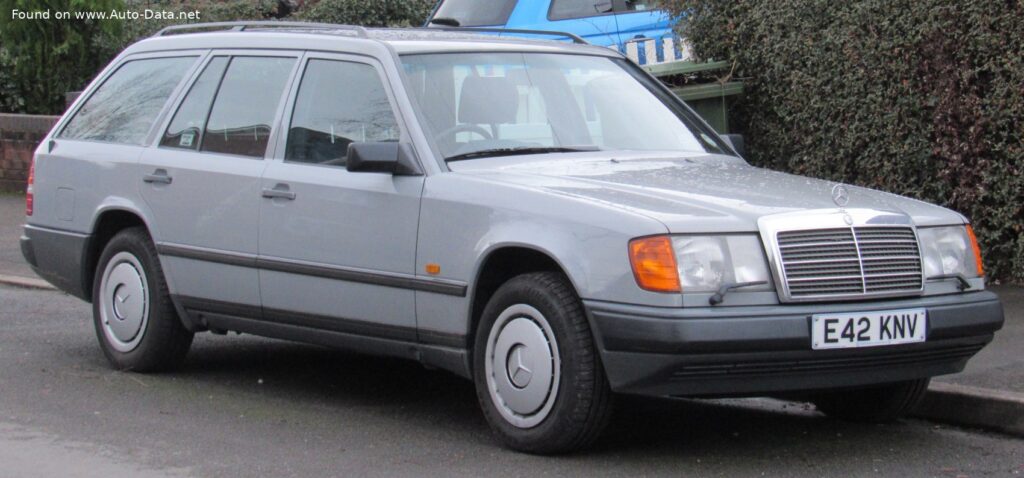
The Mercedes-Benz S124 200 TE represents a significant chapter in the history of the German automaker’s acclaimed W124 generation, a series widely regarded as one of the most robust and meticulously engineered vehicles ever produced. Launched in July 1988 and produced until August 1989, the S124 200 TE was the station wagon variant of the W124 chassis, specifically the entry-level gasoline model for the European market. While not officially sold in the United States, this model embodies the core values of Mercedes-Benz from an era synonymous with unparalleled build quality, durability, and a refined driving experience. It served as a practical yet prestigious family hauler, catering to consumers who demanded the utility of a wagon without compromising on luxury, comfort, or the brand’s legendary reliability. The S124 generation, in general, set new benchmarks for safety, aerodynamics, and overall longevity in the executive car segment, solidifying Mercedes-Benz’s reputation as a leader in automotive innovation and craftsmanship. This variant occupied the entry-level position within the W124 TE (Touring Estate) range, offering a more accessible price point compared to the 230 TE, 260 TE, and 300 TE models.
Powertrain & Engine Architecture: The M102 E 20
Under the hood, the Mercedes-Benz S124 200 TE was powered by the M 102 E 20 engine, specifically designated as the 102.963. This naturally aspirated, 2.0-liter (1996 cubic centimeters or 121.8 cubic inches) inline-four gasoline engine was a stalwart of Mercedes-Benz’s powertrain lineup during the late 1980s. Featuring a Single Overhead Camshaft (SOHC) and two valves per cylinder, this engine was designed for smooth operation and longevity rather than raw power. It delivered a respectable 118 horsepower at 5200 rpm, paired with 126.86 lb-ft (172 Newton-meters) of torque available at 3500 rpm. This output, while modest by today’s standards, was perfectly adequate for the car’s intended purpose: comfortable and reliable cruising on European autobahns and city streets.
Fueling was handled by a Bosch K-Jetronic multi-port fuel injection system, ensuring efficient combustion and consistent power delivery. The S124 200 TE was typically equipped with a 4-speed automatic transmission, although a 5-speed manual transmission was also available as an option. The automatic transmission, a robust unit designed for smooth shifts and durability, sent power to the rear wheels—a classic Mercedes-Benz drivetrain architecture that emphasized balanced handling and a traditional driving feel. The automatic transmission’s gear ratios were optimized for fuel efficiency and comfortable cruising, rather than outright acceleration. First gear was relatively short for easy starts, while higher gears were spaced to keep engine speeds low during highway driving.
The engine’s robust construction and careful engineering contributed significantly to the W124’s reputation for being “over-engineered.” Components like the engine oil capacity of 5.28 US quarts and a coolant capacity of 8.98 US quarts reflected the generous design margins intended to ensure long service intervals and high reliability. The relatively low compression ratio of 9.1:1 further contributed to its durability and ability to run on various fuel qualities available across Europe. The M 102 engine series, in general, demonstrated remarkable resilience, often accumulating hundreds of thousands of miles with proper maintenance, a testament to its fundamental design integrity.
Driving Characteristics
The 118 hp / Automatic setup of the S124 200 TE delivered a driving experience focused on comfort and refinement rather than sporty performance. Acceleration from 0 to 60 mph took approximately 12.3 seconds, and the top speed was around 112 mph (180 km/h). Compared to the more powerful 230 TE or 260 TE models, the 200 TE felt noticeably slower, particularly during overtaking maneuvers. However, the automatic transmission provided smooth and effortless gear changes, making it ideal for city driving and long-distance cruising. The torque curve was relatively flat, providing adequate pulling power at lower engine speeds, which was beneficial for everyday driving situations.
The automatic transmission’s shift points were calibrated to prioritize fuel economy and minimize engine noise. While it wasn’t a particularly sporty transmission, it was reliable and well-suited to the engine’s characteristics. Drivers accustomed to manual transmissions might find the automatic somewhat less engaging, but the convenience and ease of use were highly valued by many buyers. The overall driving experience was characterized by a smooth ride, quiet cabin, and a sense of solid build quality, typical of Mercedes-Benz vehicles of that era.
Equipment & Trim Levels
The S124 200 TE, as an entry-level model, came standard with a respectable level of equipment. Standard features included power steering, central locking, electric windows, and a basic stereo system. The interior upholstery was typically cloth, although leather upholstery was available as an optional extra. The dashboard layout was functional and ergonomically designed, with clear instrumentation and easy-to-reach controls. The standard wheels were steel wheels with hubcaps, although alloy wheels were available as an option.
Optional extras included air conditioning, a sunroof, upgraded stereo systems, leather upholstery, and heated seats. The level of customization was relatively limited compared to modern vehicles, but buyers could still personalize their S124 200 TE to some extent. The trim level was generally consistent across all 200 TE models, with the primary differences being the addition of optional extras.
Chassis & Braking
The S124 200 TE featured a robust chassis and braking system designed for safety and durability. The front suspension utilized independent wishbones with coil springs and shock absorbers, while the rear suspension employed a sophisticated independent multi-link setup. This multi-link suspension was a significant advancement in automotive engineering, providing excellent ride comfort, handling stability, and tire wear. The braking system comprised disc brakes on all four wheels, augmented by an Anti-lock Braking System (ABS) – a significant safety advancement for the late 1980s, enhancing vehicle control during emergency braking.
The rear drums were not standard on the 200 TE; all models featured disc brakes on all four wheels. Stabilizer bars were fitted to both the front and rear axles to reduce body roll during cornering. The steering system was a recirculating ball system with hydraulic power assistance, providing a smooth and communicative driving experience. The chassis was designed to provide a comfortable ride while maintaining good handling characteristics, even when fully loaded.
Market Reception & Comparison
Critics generally praised the S124 200 TE for its build quality, reliability, and comfortable ride. However, some reviewers noted that the engine lacked the power and refinement of the larger-displacement engines available in the W124 range. Fuel economy was considered competitive for its time, with an urban rating of approximately 19.3 US mpg and an extra-urban rating of around 30.9 US mpg. Compared to the 230 TE, the 200 TE offered a lower purchase price but sacrificed performance. The 230 TE, with its larger engine, provided noticeably more power and a more refined driving experience, but at a higher cost. The 200 TE was often seen as a sensible choice for buyers who prioritized practicality and reliability over outright performance.
In terms of reliability, the S124 200 TE proved to be exceptionally durable. The M 102 engine was known for its longevity, and the automatic transmission was generally reliable with proper maintenance. The overall build quality of the W124 generation was outstanding, contributing to its reputation for being a long-lasting and dependable vehicle.
Technical Specifications
| Category | Specification |
| General Information | |
| Brand | Mercedes-Benz |
| Model | W124 |
| Generation | S124 |
| Engine Type | 200 TE (118 Hp) |
| Production Start | July, 1988 |
| Production End | August, 1989 |
| Powertrain Architecture | Internal Combustion Engine |
| Body Type | Station wagon (estate) |
| Seats | 5 |
| Doors | 5 |
| Performance Specs | |
| Fuel Consumption (Urban) | 12.2 l/100 km (19.3 US mpg) |
| Fuel Consumption (Extra Urban) | 7.6 l/100 km (30.9 US mpg) |
| Fuel Type | Petrol (Gasoline) |
| Acceleration 0 – 60 mph | 12.3 sec |
| Maximum Speed | 180 km/h (111.85 mph) |
| Weight-to-Power Ratio | 11.9 kg/Hp (83.7 Hp/tonne) |
| Weight-to-Torque Ratio | 8.2 kg/Nm (122 Nm/tonne) |
| Engine Specs | |
| Power | 118 Hp @ 5200 rpm |
| Power per Liter | 59.1 Hp/l |
| Torque | 172 Nm @ 3500 rpm (126.86 lb.-ft. @ 3500 rpm) |
| Engine Layout | Front, Longitudinal |
| Engine Model/Code | M 102 E 20 / 102.963 |
| Engine Displacement | 1996 cm3 (121.8 cu. in. / 2.0 liters) |
| Number of Cylinders | 4 |
| Engine Configuration | Inline |
| Cylinder Bore | 89 mm (3.5 in.) |
| Piston Stroke | 80.2 mm (3.16 in.) |
| Compression Ratio | 9.1:1 |
| Valves per Cylinder | 2 |
| Fuel Injection System | Multi-port manifold injection |
| Engine Aspiration | Naturally aspirated |
| Valvetrain | SOHC |
| Engine Oil Capacity | 5 l (5.28 US qt) |
| Coolant Capacity | 8.5 l (8.98 US qt) |
| Space, Volume and Weights | |
| Kerb Weight | 1410 kg (3108.52 lbs.) |
| Max. Weight | 2030 kg (4475.38 lbs.) |
| Max Load | 620 kg (1366.87 lbs.) |
| Fuel Tank Capacity | 72 l (19.02 US gal) |
| Dimensions | |
| Length | 4765 mm (187.6 in.) |
| Width | 1740 mm (68.5 in.) |
| Height | 1490 mm (58.66 in.) |
| Wheelbase | 2800 mm (110.24 in.) |
| Front Track | 1497 mm (58.94 in.) |
| Rear Track | 1488 mm (58.58 in.) |
| Drivetrain, Brakes and Suspension Specs | |
| Drivetrain Architecture | Rear wheel drive, Internal Combustion Engine |
| Drive Wheel | Rear wheel drive |
| Gearbox Type | 4 gears, automatic transmission |
| Front Suspension | Wishbone |
| Rear Suspension | Independent multi-link suspension |
| Front Brakes | Disc |
| Rear Brakes | Disc |
| Assisting Systems | ABS (Anti-lock braking system) |
| Steering Type | Cone worm with recirculation balls |
| Power Steering | Hydraulic Steering |
| Tires Size (Front/Rear) | 195/65 R15 |
| Wheel Rims Size (Front/Rear) | 6.5J x 15 |
Legacy
The Mercedes-Benz S124 200 TE, and the W124 generation as a whole, enjoys a strong legacy among automotive enthusiasts. Its reputation for exceptional build quality and reliability has ensured its continued desirability in the used car market. Many examples remain on the road today, often having covered impressive mileages, a testament to the engineering integrity of the vehicle. The 200 TE, while not the most powerful or luxurious variant, represents an accessible entry point into the W124 ownership experience, offering a blend of practicality, comfort, and durability. The M102 engine, while relatively simple in design, is known for its longevity and ease of maintenance, making it a popular choice among classic Mercedes-Benz owners. Today, well-maintained examples of the S124 200 TE are increasingly sought after by collectors and enthusiasts who appreciate its timeless design and enduring mechanical qualities.
