
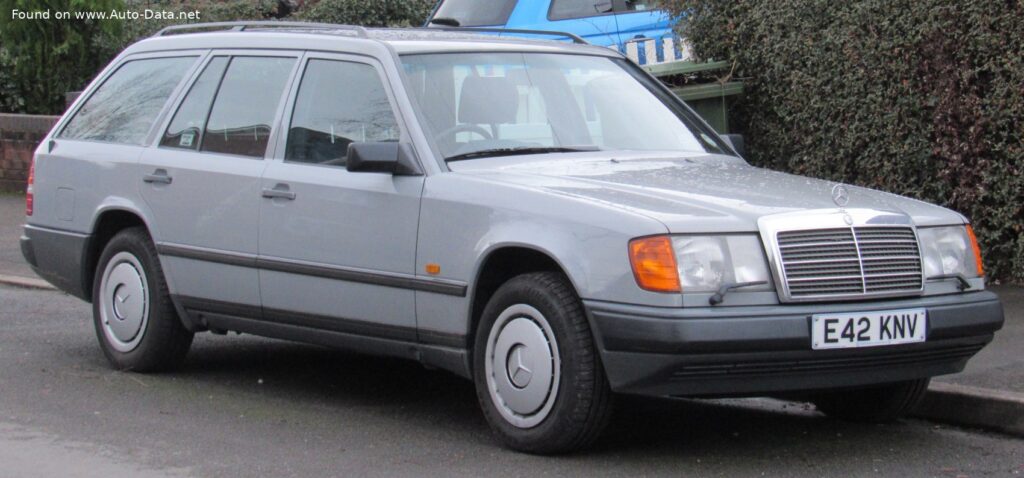
The Mercedes-Benz S124 200 TE (118 Hp) Automatic represents a significant chapter in the history of premium executive automobiles, specifically within the highly esteemed W124 generation. Produced between July 1988 and August 1989, this particular variant of the S124 series was a station wagon (known as an “estate” in European markets), embodying Mercedes-Benz’s commitment to combining luxury, durability, and practical utility. While not a common sight in the United States in this specific engine configuration, the W124 chassis, in general, achieved legendary status worldwide for its robust engineering, timeless design, and exceptional longevity. The 200 TE, with its 2.0-liter engine and automatic transmission, was primarily targeted at the European market, serving as a reliable and comfortable family hauler or a dependable vehicle for professionals requiring ample cargo space without sacrificing the prestige associated with the three-pointed star. It stood as a testament to Mercedes-Benz’s philosophy of “over-engineering,” a characteristic that would define an era for the German automaker.
Powertrain & Engine Architecture
Under the hood, the Mercedes-Benz S124 200 TE (118 Hp) Automatic was powered by the M 102 E 20 engine, specifically code 102.963. This was a 2.0-liter (1996 cm³ or 121.8 cu. in.) naturally aspirated inline-four gasoline engine. Engineered with a Single Overhead Camshaft (SOHC) valvetrain and two valves per cylinder, it featured a multi-port manifold injection system, a sophisticated setup for its time that ensured precise fuel delivery and efficiency. The engine produced a respectable 118 horsepower at 5200 rpm, with a power-per-liter figure of 59.1 HP/l, indicating a focus on smooth, reliable power delivery rather than outright high performance. Torque was rated at 126.86 lb.-ft. (172 Nm) at a relatively low 3500 rpm, providing ample pulling power for everyday driving and hauling.
Power was sent to the rear wheels via a 4-speed automatic transmission, a common and robust choice for Mercedes-Benz models of this era, known for its smooth shifts and durability. This transmission, typically the 4G-TRONIC unit, was designed for comfortable cruising and reliable operation. It featured a torque converter for smooth engagement and acceleration, and its gear ratios were optimized for fuel efficiency and relaxed highway driving. The transmission’s control unit managed shift points based on throttle position and vehicle speed, providing a seamless driving experience.
Driving Characteristics
The S124 200 TE with the 118 hp engine and automatic transmission offered a driving experience focused on comfort and refinement rather than outright performance. Acceleration from 0 to 60 mph took an estimated 12.4 seconds, with a 0-62 mph (0-100 km/h) time of 13.1 seconds. Its maximum speed was 108.74 mph (175 km/h). While these figures might seem modest by today’s standards, they were entirely adequate for a family-oriented station wagon of the late 1980s, prioritizing comfort, stability, and fuel economy over blistering acceleration. The vehicle’s weight-to-power ratio stood at 11.9 kg/Hp (approximately 26.2 lbs/Hp), reflecting its solid construction and the pragmatic nature of its powertrain.
Compared to the higher-performance variants like the 230E or 300E, the 200 TE Automatic felt noticeably less responsive. The automatic transmission, while smooth, did introduce some power loss compared to the available manual transmissions. However, the 200 TE’s relaxed power delivery made it an excellent choice for city driving and long highway journeys, where its emphasis on comfort and fuel efficiency shone. The gear ratios were spaced to provide adequate acceleration in most situations, but aggressive driving required anticipating gear changes and utilizing the throttle effectively. Compared to the later 1.8L engines, the 2.0L offered a slightly broader torque curve, making it feel more flexible at lower speeds.
Equipment & Trim Levels
The S124 200 TE typically came with a respectable level of standard equipment, reflecting Mercedes-Benz’s commitment to providing a premium experience even in its entry-level models. Standard features included power steering, central locking, electric windows, and a robust heating and ventilation system. The interior was typically upholstered in cloth, although leather upholstery was available as an optional extra. The dashboard layout was functional and ergonomically designed, with clear instrumentation and logically placed controls.
Optional extras for the 200 TE included a sunroof, air conditioning, upgraded audio systems, and alloy wheels. Higher trim levels, often denoted by specific option packages, could add features like cruise control, heated seats, and automatic climate control. The station wagon configuration itself was a key feature, offering a large cargo area with a versatile folding rear seat arrangement. The rear suspension leveling system was also an option, particularly useful when carrying heavy loads.
Chassis & Braking
The chassis and suspension system were hallmarks of the W124 generation’s advanced engineering. The front suspension utilized a wishbone setup, while the rear featured an independent multi-link suspension. This multi-link system was groundbreaking for its time, significantly enhancing ride comfort, handling precision, and stability—a feature that set the W124 apart from many competitors. The 200 TE, being a lighter variant, often benefited from a slightly more agile feel compared to the larger-engined models.
Braking was handled by disc brakes on all four wheels, augmented by an Anti-lock Braking System (ABS), a crucial safety feature for the era. Steering was a hydraulic power-assisted cone worm with recirculation balls system, providing precise and effortless control. The vehicle rode on 195/65 R15 tires mounted on 6.5J x 15 wheel rims, offering a good balance of grip and ride comfort. The rear brakes on some base models could be drums, but the vast majority of 200 TEs were equipped with all-around disc brakes.
Market Reception & Comparison
Critics generally praised the S124 200 TE for its build quality, comfort, and practicality. While the 118 hp engine wasn’t considered particularly powerful, it was seen as adequate for most drivers, and its fuel efficiency was a significant plus. The automatic transmission was appreciated for its smoothness, although some reviewers noted that it could feel somewhat sluggish in certain situations. Compared to the more powerful 230E and 300E models, the 200 TE offered a more affordable entry point into the W124 range, making it attractive to buyers who prioritized value and practicality over outright performance.
Fuel economy was a strong point for the 200 TE, rated at approximately 19.6 US mpg in urban conditions and an impressive 29.4 US mpg on the highway, thanks to its efficient engine and aerodynamic design. Reliability was also a key strength, with the M102 engine being known for its durability. Compared to the later 1.8L engines, the 2.0L was generally considered more robust and less prone to issues. The 200 TE’s relatively simple mechanical design also made it easier and less expensive to maintain compared to some of its more complex rivals.
Technical Specifications
| Category | Specification |
| General Information | |
| Brand | Mercedes-Benz |
| Model | W124 |
| Generation | S124 |
| Type (Engine) | 200 TE (118 Hp) Automatic |
| Start of Production | July, 1988 |
| End of Production | August, 1989 |
| Powertrain Architecture | Internal Combustion engine |
| Body type | Station wagon (estate) |
| Seats | 5 |
| Doors | 5 |
| Performance Specs | |
| Fuel consumption (economy) – urban | 19.6 US mpg (12 l/100 km) |
| Fuel consumption (economy) – extra urban | 29.4 US mpg (8 l/100 km) |
| Fuel Type | Petrol (Gasoline) |
| Acceleration 0 – 60 mph | 12.4 sec |
| Acceleration 0 – 62 mph (0-100 km/h) | 13.1 sec |
| Maximum speed | 108.74 mph (175 km/h) |
| Weight-to-power ratio | 11.9 kg/Hp, 83.7 Hp/tonne |
| Weight-to-torque ratio | 8.2 kg/Nm, 122 Nm/tonne |
| Engine Specs | |
| Power | 118 Hp @ 5200 rpm |
| Power per liter | 59.1 Hp/l |
| Torque | 126.86 lb.-ft. (172 Nm) @ 3500 rpm |
| Engine layout | Front, Longitudinal |
| Engine Model/Code | M 102 E 20 / 102.963 |
| Engine displacement | 2.0 liters (1996 cm³, 121.8 cu. in.) |
| Number of cylinders | 4 |
| Engine configuration | Inline |
| Cylinder Bore | 3.5 in. (89 mm) |
| Piston Stroke | 3.16 in. (80.2 mm) |
| Compression ratio | 9.1:1 |
| Number of valves per cylinder | 2 |
| Fuel injection system | Multi-port manifold injection |
| Engine aspiration | Naturally aspirated engine |
| Valvetrain | SOHC |
| Engine oil capacity | 5.28 US qt (5 l) |
| Coolant | 8.98 US qt (8.5 l) |
| Space, Volume and Weights | |
| Kerb Weight | 3108.52 lbs. (1410 kg) |
| Max. weight | 4475.38 lbs. (2030 kg) |
| Max load | 1366.87 lbs. (620 kg) |
| Fuel tank capacity | 19.02 US gal (72 l) |
| Dimensions | |
| Length | 187.6 in. (4765 mm) |
| Width | 68.5 in. (1740 mm) |
| Height | 58.66 in. (1490 mm) |
| Wheelbase | 110.24 in. (2800 mm) |
| Front track | 58.94 in. (1497 mm) |
| Rear (Back) track | 58.58 in. (1488 mm) |
| Drivetrain, Brakes and Suspension Specs | |
| Drivetrain Architecture | The Internal combustion engine (ICE) drives the rear wheels of the vehicle. |
| Drive wheel | Rear wheel drive |
| Number of gears and type of gearbox | 4 gears, automatic transmission |
| Front suspension | Wishbone |
| Rear suspension | Independent multi-link suspension |
| Front brakes | Disc |
| Rear brakes | Disc |
| Assisting systems | ABS (Anti-lock braking system) |
| Steering type | Cone worm with recirculation balls |
| Power steering | Hydraulic Steering |
| Tires size | Front: 195/65 R15, Rear: 195/65 R15 |
| Wheel rims size | Front: 6.5J x 15, Rear: 6.5J x 15 |
Legacy
The Mercedes-Benz S124, and the 200 TE variant in particular, has earned a well-deserved reputation for long-term reliability. The M102 engine is known for its durability, and the robust construction of the W124 chassis ensures that these cars can withstand decades of use with proper maintenance. Today, the S124 200 TE is a sought-after classic car, appreciated by enthusiasts for its timeless design, comfortable ride, and enduring quality.
In the used car market, the 200 TE represents an accessible entry point into the W124 world. While prices have been steadily increasing in recent years, they remain relatively affordable compared to the higher-performance models. Well-maintained examples are highly prized, and the 200 TE’s relatively simple mechanical design makes it a good choice for owners who enjoy hands-on maintenance. The availability of spare parts is generally good, although some specific trim pieces can be difficult to find. The S124 200 TE stands as a testament to Mercedes-Benz’s commitment to engineering excellence, and its enduring legacy continues to captivate automotive enthusiasts around the world.
