
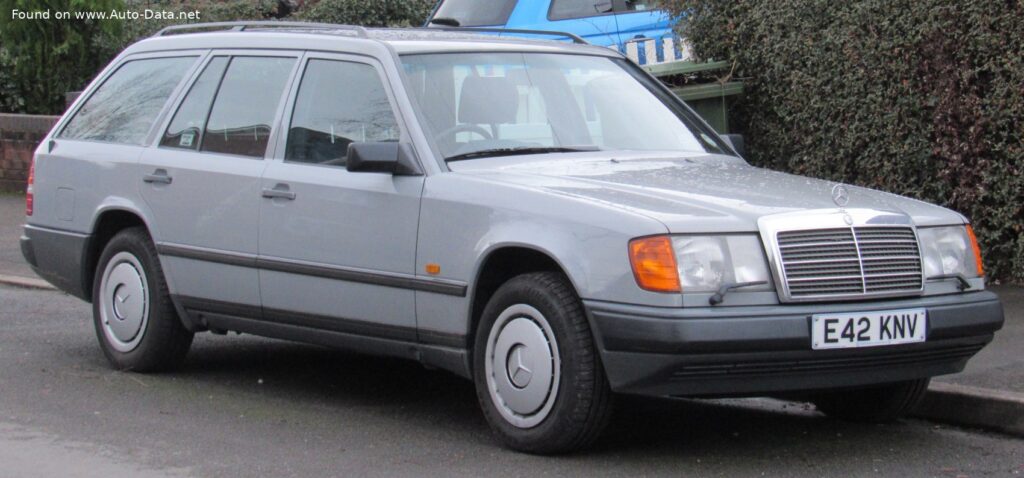
The Mercedes-Benz S124 200 TE, produced between 1988 and 1989, represents a significant chapter in the German automaker’s illustrious history, particularly within the highly acclaimed W124 generation. This specific model, a station wagon variant, was a cornerstone of the Mercedes-Benz lineup, embodying the brand’s commitment to durability, safety, and refined driving dynamics. While the W124 chassis itself was globally recognized for its “over-engineered” quality, the 200 TE variant, with its 122 horsepower, 2.0-liter engine, was primarily targeted at European markets where fuel efficiency and taxation favored smaller displacement powertrains. It served as an accessible entry point into the premium mid-size estate segment, offering the practicality of a wagon combined with the legendary Mercedes-Benz build quality and comfort. The S124, the station wagon designation for the W124 series, was lauded for its exceptional cargo capacity, robust construction, and innovative suspension systems, making it a favorite among families and professionals alike. The 200 TE, despite being one of the less powerful options, still delivered the quintessential Mercedes-Benz experience, characterized by a smooth ride, excellent road manners, and an interior designed for long-distance comfort. Its production period was relatively brief, spanning just two years, as Mercedes-Benz continuously refined its engine offerings within the W124 platform. Nevertheless, the 200 TE left an indelible mark as a testament to practical luxury and enduring German engineering.
Powertrain & Engine Architecture
At the heart of the 1988-1989 Mercedes-Benz S124 200 TE lies the M 102 E 20 engine, an inline four-cylinder, naturally aspirated gasoline powerplant. This unit, designated M 102.963, featured a single overhead camshaft (SOHC) valvetrain with two valves per cylinder, a configuration known for its reliability and straightforward maintenance. With a displacement of 1996 cubic centimeters (121.8 cubic inches), this engine produced a respectable 122 horsepower at 5100 rpm, delivering its power smoothly and predictably. Torque output stood at 178 Newton-meters (131.29 lb.-ft.) at a relatively low 3500 rpm, providing adequate pulling power for daily driving and light hauling, a crucial aspect for a station wagon.
The M 102 engine family was known for its robust construction, utilizing a cast iron block and aluminum cylinder head. Fuel delivery was managed by a Bosch K-Jetronic mechanical fuel injection system, a hallmark of Mercedes-Benz engineering during this period. While not as sophisticated as later electronic fuel injection systems, the K-Jetronic system was renowned for its reliability and consistent performance. The engine also featured a thermal vacuum regulator to optimize fuel mixture based on engine temperature. The four-speed automatic transmission, typically the 722.320 unit, was a common choice for buyers prioritizing convenience over driver engagement. This transmission featured a torque converter and hydraulic control, providing smooth and relatively seamless gear changes. It was designed to complement the engine’s torque characteristics, offering comfortable cruising and adequate acceleration.
Driving Characteristics
The S124 200 TE with the automatic transmission offered a distinctly different driving experience compared to its manual transmission counterparts or higher-output W124 models like the 230E or 300E. The automatic transmission, while providing ease of use, did slightly diminish the engine’s responsiveness. Acceleration from a standstill was adequate but not brisk, with the 0 to 60 mph sprint taking approximately 11.8 seconds. The transmission’s gear ratios were optimized for fuel efficiency and comfortable cruising, rather than outright performance.
In real-world driving, the 200 TE automatic felt most at home on the highway, where its relaxed cruising ability and smooth gear changes were most appreciated. The engine provided sufficient power for overtaking maneuvers, but required careful planning. Compared to the manual transmission version, the automatic offered a more refined and less engaging driving experience. However, it appealed to buyers who prioritized comfort and convenience over sporty handling. The automatic transmission also contributed to slightly lower fuel economy compared to the manual, although the difference was not substantial.
Equipment & Trim Levels
The S124 200 TE, even in its base configuration, offered a generous level of standard equipment for its time. Standard features typically included power steering, central locking, electric windows, and a high-quality audio system. The interior was typically upholstered in a durable cloth material, although leather upholstery was available as an optional extra. The dashboard layout was classic Mercedes-Benz, featuring clear and intuitive controls.
Optional extras for the 200 TE included a sunroof, air conditioning, cruise control, and upgraded audio systems. Metallic paint finishes were also available at an additional cost. The level of trim and optional equipment varied depending on the specific market. For example, European models often featured a more comprehensive standard equipment list compared to those sold in other regions. The S124 200 TE was positioned as a mid-range offering within the W124 lineup, offering a balance of features and affordability. It was a step up from the more basic models but lacked some of the luxury appointments found in the higher-end trims.
Chassis & Braking
The S124 200 TE benefited from the W124’s advanced chassis design, which prioritized ride comfort and handling stability. The front suspension featured independent wishbones with coil springs and shock absorbers, while the rear suspension utilized a sophisticated multi-link system. This multi-link design, a Mercedes-Benz innovation, provided excellent wheel control and a smooth ride, even over uneven surfaces.
Braking duties were handled by disc brakes on all four wheels, providing ample stopping power. Anti-lock Braking System (ABS) was either standard or a widely available option, significantly enhancing safety by preventing wheel lockup during emergency braking. The steering system was a recirculating ball system with hydraulic power assistance, offering precise and comfortable steering feel. The 200 TE typically featured smaller diameter tires and wheels compared to the higher-performance W124 models, contributing to a more comfortable ride but slightly less grip. Stabilizer bars were fitted to both the front and rear axles to reduce body roll during cornering.
Market Reception & Comparison
The Mercedes-Benz S124 200 TE received generally positive reviews from automotive critics, who praised its build quality, ride comfort, and practicality. However, some critics noted that the 2.0-liter engine felt underpowered, particularly when paired with the automatic transmission. Compared to its siblings, the 200 TE offered a more affordable entry point into the W124 range, but at the expense of performance. The 230E, with its larger 2.3-liter engine, provided significantly more power and a more engaging driving experience. The 300E, with its inline-six engine, offered even greater performance and refinement.
In terms of fuel economy, the 200 TE was the most efficient of the W124 models, achieving approximately 20.1 US mpg in urban driving and 32.2 US mpg on the highway. Reliability was also a strong point, with the M 102 engine and the 722.320 automatic transmission proving to be exceptionally durable. The 200 TE’s combination of practicality, reliability, and affordability made it a popular choice among families and professionals who valued a comfortable and dependable vehicle.
Technical Specifications
| Category | Specification |
| General Information | |
| Brand | Mercedes-Benz |
| Model | W124 |
| Generation | S124 |
| Type (Engine) | 200 TE (122 Hp) |
| Start of Production | 1988 year |
| End of Production | 1989 year |
| Powertrain Architecture | Internal Combustion engine |
| Body type | Station wagon (estate) |
| Seats | 5 |
| Doors | 5 |
| Performance Specs | |
| Fuel consumption (economy) – urban | 11.7 l/100 km (20.1 US mpg) |
| Fuel consumption (economy) – extra urban | 7.3 l/100 km (32.2 US mpg) |
| Fuel Type | Petrol (Gasoline) |
| Acceleration 0 – 60 mph | 11.8 sec |
| Acceleration 0 – 100 km/h | 12.4 sec |
| Maximum speed | 182 km/h (113.09 mph) |
| Weight-to-power ratio | 11.6 kg/Hp (86.5 Hp/tonne) |
| Weight-to-torque ratio | 7.9 kg/Nm (126.2 Nm/tonne) |
| Engine Specs | |
| Power | 122 Hp @ 5100 rpm |
| Power per liter | 61.1 Hp/l |
| Torque | 178 Nm @ 3500 rpm (131.29 lb.-ft. @ 3500 rpm) |
| Engine layout | Front, Longitudinal |
| Engine Model/Code | M 102 E 20 / 102.963 |
| Engine displacement | 1996 cm3 (121.8 cu. in.) |
| Number of cylinders | 4 |
| Engine configuration | Inline |
| Cylinder Bore | 89 mm (3.5 in.) |
| Piston Stroke | 80.2 mm (3.16 in.) |
| Compression ratio | 9.1:1 |
| Number of valves per cylinder | 2 |
| Fuel injection system | Multi-port manifold injection |
| Engine aspiration | Naturally aspirated engine |
| Valvetrain | SOHC |
| Engine oil capacity | 5 l (5.28 US qt) |
| Coolant capacity | 8.5 l (8.98 US qt) |
| Space, Volume and Weights | |
| Kerb Weight | 1410 kg (3108.52 lbs) |
| Max. weight | 2030 kg (4475.38 lbs) |
| Max load | 620 kg (1366.87 lbs) |
| Fuel tank capacity | 72 l (19.02 US gal) |
| Dimensions | |
| Length | 4765 mm (187.6 in.) |
| Width | 1740 mm (68.5 in.) |
| Height | 1490 mm (58.66 in.) |
| Wheelbase | 2800 mm (110.24 in.) |
| Front track | 1497 mm (58.94 in.) |
| Rear (Back) track | 1488 mm (58.58 in.) |
| Drivetrain, Brakes and Suspension Specs | |
| Drivetrain Architecture | Internal combustion engine drives the rear wheels |
| Drive wheel | Rear wheel drive |
| Number of gears and type of gearbox | 4 gears, manual transmission |
| Front suspension | Wishbone |
| Rear suspension | Independent multi-link suspension |
| Front brakes | Disc |
| Rear brakes | Disc |
| Assisting systems | ABS (Anti-lock braking system) |
| Steering type | Cone worm with recirculation balls |
| Power steering | Hydraulic Steering |
| Tires size | Front: 195/65 R15, Rear: 195/65 R15 |
| Wheel rims size | Front: 6.5J x 15, Rear: 6.5J x 15 |
Legacy
The Mercedes-Benz S124, including the 200 TE variant, holds a revered place in automotive history, particularly in Europe, where its combination of practicality, durability, and prestige made it an incredibly popular choice. The entire W124 generation is often cited as the last truly “over-engineered” Mercedes-Benz, built to an uncompromising standard of quality that prioritized longevity and robustness over cost-cutting measures. This philosophy ensured that W124 models, including the S124 200 TE, were renowned for their exceptional reliability and the ability to accumulate hundreds of thousands of miles with proper maintenance, a characteristic that has cemented its status as a modern classic.
Today, the Mercedes-Benz S124 series is highly sought after by enthusiasts and collectors who appreciate its robust engineering, elegant design, and classic Mercedes-Benz driving experience. The 200 TE, while not as powerful as its six-cylinder siblings, is valued for its simplicity, fuel efficiency, and the authentic W124 ownership experience it offers. Its legacy is one of a supremely capable and enduring workhorse, a testament to a golden era of German automotive engineering where quality and longevity were paramount. The S124 200 TE remains a symbol of practical luxury, a vehicle that continues to perform admirably decades after its production, embodying the enduring appeal of a truly well-built automobile.
