
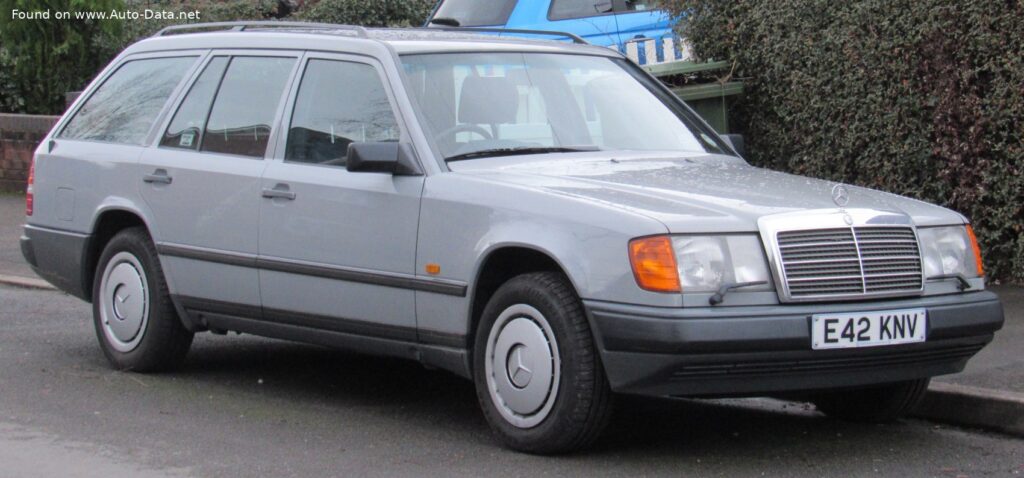
The Mercedes-Benz S124 200 TE (122 Hp) Automatic represents a notable iteration within the celebrated W124 series, produced from July 1988 to August 1989. This variant is a station wagon – known as a “Touring” or “Estate” in many European markets – and combines Mercedes-Benz’s renowned build quality with practical versatility. While not a primary model for the United States, the W124 series established global standards for mid-size luxury, and the 200 TE offered an accessible entry point for European buyers desiring a durable and functional family vehicle. It was positioned as the entry-level wagon in the W124 range, below the 230 TE, 260 TE, and 300 TE models.
The W124 Platform and S124 Variant
The W124 chassis, introduced in 1984, quickly gained a reputation for over-engineering, advanced safety features, and a timeless design. The “S124” designation specifically denotes the station wagon body style, which proved highly popular in Europe due to its blend of passenger comfort and cargo capacity. The 200 TE, with its 2.0-liter engine and automatic transmission, was designed as a reliable, economical, and comfortable option within the extensive W124 lineup, embodying the brand’s commitment to durability and refined driving dynamics. It aimed to provide the prestige of a Mercedes-Benz wagon at a more attainable price point.
Powertrain & Engine Architecture
The heart of the S124 200 TE is the M 102 E 20 engine, a 2.0-liter (1996 cc or 121.8 cubic inches) naturally aspirated inline-four gasoline engine, identified by the code 102.963. This engine was designed for longevity and smooth operation, producing 122 horsepower (91 kW) at 5100 rpm. Torque output is rated at 131.29 lb-ft (178 Nm) at 3500 rpm, providing adequate pulling power for everyday driving and light loads. The M102 engine family was known for its robust construction and ability to withstand high mileage.
The engine utilizes a single overhead camshaft (SOHC) valvetrain with two valves per cylinder, a common and reliable configuration for the era. Fuel delivery is managed by a Bosch K-Jetronic mechanical fuel injection system, a hallmark of Mercedes-Benz engineering at the time. This system, while not as sophisticated as later electronic fuel injection, was known for its reliability and consistent performance. The compression ratio is 9.1:1, balancing performance and fuel economy. Power is transmitted to the rear wheels via a four-speed automatic transmission (typically the 722.3 series), prioritizing smooth shifts and relaxed cruising. This transmission was a standard offering on many Mercedes-Benz models of the period.
Driving Characteristics
The S124 200 TE Automatic delivers a comfortable and predictable driving experience. While not designed for sporty performance, the combination of the 2.0-liter engine and four-speed automatic provides sufficient power for typical driving situations. Acceleration from 0 to 60 mph is approximately 11.9 seconds, and the top speed is around 109.98 mph (177 km/h). The automatic transmission’s gear ratios are optimized for fuel efficiency and smooth cruising, rather than rapid acceleration. Compared to the manual transmission versions of the 200 TE, the automatic offers greater convenience but slightly reduced responsiveness. Compared to the higher-output 230 TE or 260 TE models, the 200 TE provides a more economical driving experience, albeit with less overall performance.
Equipment & Trim Levels
The S124 200 TE Automatic typically came equipped with a respectable level of standard features for its time. These included power steering, central locking, electric windows, and a basic stereo system. Interior upholstery was typically cloth, although leather was available as an optional extra. The dashboard layout was functional and straightforward, reflecting the W124’s emphasis on practicality. Optional extras included a sunroof, air conditioning, upgraded audio systems, and alloy wheels. The level of trim was generally more modest than the higher-spec W124 models, focusing on durability and functionality rather than lavish luxury.
Chassis & Braking
The S124 200 TE utilizes a robust chassis designed for comfort and safety. The front suspension features independent wishbones with coil springs and shock absorbers. The rear suspension employs an independent multi-link setup, providing a comfortable ride and good handling characteristics, even when the vehicle is loaded. Braking is handled by disc brakes on all four wheels, supplemented by an Anti-lock Braking System (ABS), a significant safety feature for the late 1980s. The ABS system helps to maintain steering control during hard braking. The steering system is a hydraulic power-assisted recirculating ball system, offering precise control and comfortable maneuverability. Rear drum brakes were sometimes fitted depending on the market.
Market Reception & Comparison
Critics generally praised the S124 200 TE Automatic for its build quality, comfortable ride, and practicality. However, some reviewers noted that the 2.0-liter engine could feel underpowered, particularly when fully loaded or traveling uphill. Fuel economy was considered good for a vehicle of its size and class, averaging around 20.3 US mpg in urban driving and 30.5 US mpg on the highway. Compared to the 230 TE and 260 TE models, the 200 TE offered a more affordable entry point into the W124 wagon range, appealing to buyers who prioritized economy and reliability over outright performance. The 200 TE also offered a more economical alternative to the diesel-powered 200 D and 250 D models.
Technical Specifications
| Category | Specification |
| Brand | Mercedes-Benz |
| Model | W124 |
| Generation | S124 |
| Type (Engine) | 200 TE (122 Hp) Automatic |
| Start of Production | July, 1988 |
| End of Production | August, 1989 |
| Powertrain Architecture | Internal Combustion engine |
| Body Type | Station wagon (estate) |
| Seats | 5 |
| Doors | 5 |
| Fuel Consumption (Urban) | 20.3 US mpg (11.6 l/100 km) |
| Fuel Consumption (Extra Urban) | 30.5 US mpg (7.7 l/100 km) |
| Fuel Type | Petrol (Gasoline) |
| Acceleration 0 – 60 mph | 11.9 sec |
| Maximum Speed | 109.98 mph (177 km/h) |
| Power | 122 Hp @ 5100 rpm |
| Torque | 131.29 lb.-ft. (178 Nm) @ 3500 rpm |
| Engine Displacement | 121.8 cu. in. (1996 cm3) |
| Engine Code | M 102 E 20 / 102.963 |
| Compression Ratio | 9.1:1 |
| Kerb Weight | 3108.52 lbs. (1410 kg) |
| Fuel Tank Capacity | 19.02 US gal (72 l) |
| Length | 187.6 in. (4765 mm) |
| Width | 68.5 in. (1740 mm) |
| Height | 58.66 in. (1490 mm) |
Legacy
The Mercedes-Benz W124 series, including the S124 200 TE, is highly regarded for its exceptional durability and build quality. The M102 engine, in particular, is known for its longevity and ability to withstand high mileage with proper maintenance. Today, well-maintained examples of the S124 200 TE are sought after by classic car enthusiasts and collectors. The automatic transmission, while not as sporty as a manual, is generally reliable and provides a comfortable driving experience. The S124 200 TE remains a testament to Mercedes-Benz’s commitment to engineering excellence and long-term ownership satisfaction, and continues to be a respected vehicle in automotive history. Finding parts is generally straightforward due to the W124’s popularity and the continued availability of aftermarket support.
