
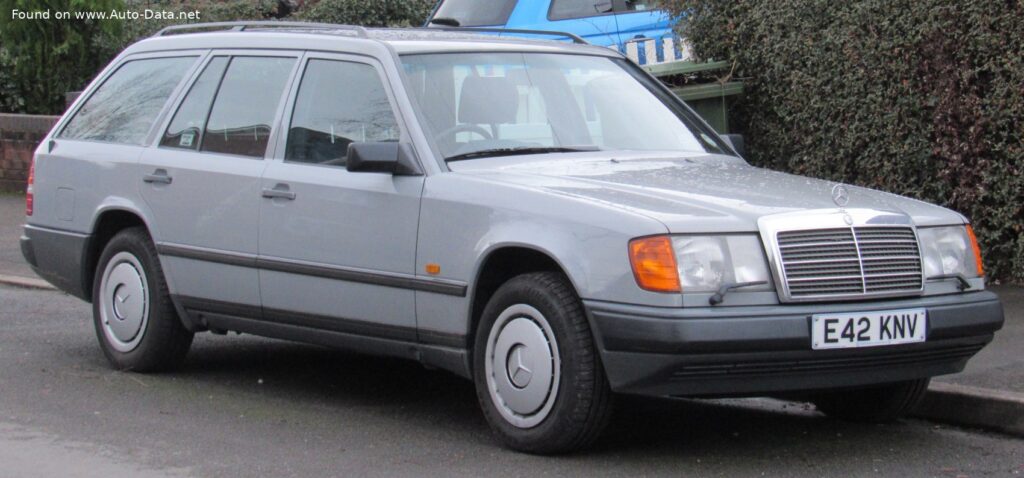
The Mercedes-Benz S124 300 TD (109 Hp) represents a significant chapter in the history of the German automaker’s revered W124 generation. Produced between March 1986 and February 1989, this vehicle was the station wagon (estate) variant of the iconic W124 platform, renowned globally for its exceptional build quality, engineering integrity, and timeless design. Positioned in the executive car segment, the S124 300 TD offered a compelling blend of passenger comfort, generous cargo capacity, and the legendary longevity of Mercedes-Benz’s inline-six diesel engines. While the W124 platform saw extensive sales in the United States, particularly its sedan and coupe derivatives, the diesel-powered station wagon, especially with this specific naturally aspirated configuration, was primarily a staple of the European market, where diesel engines held a more prominent and accepted position in the luxury segment due to fuel economy and robust performance characteristics for long-distance cruising.
The W124 series, which encompassed sedans (W124), coupes (C124), convertibles (A124), and wagons (S124), was engineered to be “over-engineered,” a philosophy that cemented Mercedes-Benz’s reputation for producing some of the most durable and reliable vehicles on the road. The S124 300 TD, with its practical five-door, five-seat configuration, was a workhorse designed for families and professionals who demanded both luxury and utility. Its robust construction and sophisticated chassis design set a benchmark for ride quality and handling in its class, ensuring it remained a competitive offering against rivals from BMW and Audi in its primary European markets.
Powertrain & Engine Architecture
At the heart of the Mercedes-Benz S124 300 TD lies the venerable OM 603 D 30 / 603.912 engine, a 3.0-liter (2996 cm³ or 182.83 cu. in.) naturally aspirated inline-six diesel powerplant. This engine, known for its smooth operation and incredible durability, produced 109 horsepower (Hp) at 4600 rpm and a respectable 185 Nm (136.45 lb.-ft.) of torque at a low 2800 rpm. The inline-six configuration, with its inherent balance, contributed significantly to the vehicle’s refined driving experience, a hallmark of Mercedes-Benz engineering.
The OM 603 featured a precombustion chamber injection system, a common design for Mercedes-Benz diesels of the era. This system involved injecting fuel into a precombustion chamber connected to the main cylinder, promoting more complete combustion and reducing engine noise. The engine utilized a SOHC (Single Overhead Camshaft) valvetrain with two valves per cylinder, a proven and reliable design. A high compression ratio of 22:1 was typical for a naturally aspirated diesel, ensuring efficient combustion. The engine was paired with a four-speed automatic transmission, a popular option for buyers prioritizing ease of use over ultimate performance. This transmission, while not known for its sportiness, was robust and reliable, designed to handle the engine’s torque output.
Driving Characteristics
The S124 300 TD with the automatic transmission offered a comfortable and relaxed driving experience. Acceleration was adequate for everyday driving, but not particularly brisk. The 0 to 60 mph time was approximately 13.9 seconds, and the top speed was around 111.85 mph (180 km/h). Compared to the five-speed manual version, the automatic slightly reduced acceleration due to power losses within the torque converter and the transmission itself. Compared to higher-output W124 variants like the 300E (gasoline), the 300 TD offered significantly less horsepower but a broader, more usable torque curve. This made it well-suited for towing and carrying heavy loads, common tasks for a station wagon.
The automatic transmission’s gear ratios were optimized for fuel efficiency and smooth cruising. The transmission shifted smoothly, but lacked the responsiveness of more modern automatic gearboxes. The focus was on providing a comfortable and effortless driving experience, rather than sporty performance. The engine’s low-end torque made it easy to maintain highway speeds, even when fully loaded. The overall driving experience was characterized by refinement and a sense of solidity, typical of Mercedes-Benz vehicles of this era.
Equipment & Trim Levels
The S124 300 TD, while positioned as a practical and durable vehicle, still offered a respectable level of standard equipment. Typically, it included power steering, power windows, central locking, and a sophisticated heating and ventilation system. Interior upholstery was generally cloth, although leather was available as an optional extra. The dashboard layout was ergonomically sound, with controls easily accessible and instrumentation clear and concise.
Optional extras included a sunroof, upgraded audio systems, cruise control, and automatic climate control. Higher trim levels could also include wood trim on the dashboard and door panels, adding a touch of luxury to the interior. The S124 300 TD was often equipped with a roof rack as standard, further enhancing its practicality. The specific equipment levels varied depending on the market and the individual customer’s preferences.
Chassis & Braking
The S124 300 TD utilized a robust chassis designed for both comfort and handling. The front suspension featured independent wishbones, while the rear suspension employed an independent multi-link system. This multi-link design, a technological marvel for its time, provided superior ride comfort and handling stability, especially when carrying heavy loads. The chassis was designed to minimize body roll and provide a stable platform for the vehicle.
Braking was handled by disc brakes on all four wheels, providing confident stopping power. Anti-lock brakes (ABS) were becoming increasingly common on premium vehicles of the late 1980s and were often included as standard or optional equipment on the S124 300 TD. The steering system was a cone worm with recirculation balls, providing precise and predictable steering feel. Stabilizer bars were fitted to both the front and rear axles to further reduce body roll and improve handling.
Market Reception & Comparison
Critics generally praised the S124 300 TD for its durability, comfort, and fuel efficiency. The diesel engine was lauded for its longevity and low running costs. However, some critics noted the relatively modest performance compared to gasoline-powered W124 models. The automatic transmission was also sometimes criticized for its lack of responsiveness.
Compared to other trims in the W124 lineup, the 300 TD offered a different appeal. The gasoline-powered 300E provided more horsepower and a sportier driving experience, but at the cost of fuel economy. The 300 TD was aimed at buyers who prioritized practicality, durability, and long-distance cruising comfort. Against competitors like the BMW 5-series Touring and Audi 100 Avant, the S124 300 TD offered a unique blend of luxury, practicality, and diesel reliability.
Technical Specifications
| General Information | |
| Brand | Mercedes-Benz |
| Model | W124 |
| Generation | S124 |
| Type (Engine) | 300 TD (109 Hp) |
| Production Start | March, 1986 |
| Production End | February, 1989 |
| Powertrain Architecture | Internal Combustion engine |
| Body type | Station wagon (estate) |
| Seats | 5 |
| Doors | 5 |
| Performance Specs | |
| Fuel Consumption (Urban) | 9.9 l/100 km (23.8 US mpg) |
| Fuel Consumption (Extra Urban) | 5.8 l/100 km (40.6 US mpg) |
| Fuel Type | Diesel |
| Acceleration 0 – 60 mph | 13.9 sec |
| Acceleration 0 – 100 km/h | 14.6 sec |
| Maximum Speed | 180 km/h (111.85 mph) |
| Weight-to-Power Ratio | 13.7 kg/Hp (73.2 Hp/tonne) |
| Weight-to-Torque Ratio | 8.1 kg/Nm (124.2 Nm/tonne) |
| Engine Specs | |
| Power | 109 Hp @ 4600 rpm |
| Power per Liter | 36.4 Hp/l |
| Torque | 185 Nm @ 2800 rpm (136.45 lb.-ft. @ 2800 rpm) |
| Engine Layout | Front, Longitudinal |
| Engine Model/Code | OM 603 D 30 / 603.912 |
| Engine Displacement | 2996 cm³ (3.0 liters, 182.83 cu. in.) |
| Number of Cylinders | 6 |
| Engine Configuration | Inline |
| Cylinder Bore | 87 mm (3.43 in.) |
| Piston Stroke | 84 mm (3.31 in.) |
| Compression Ratio | 22:1 |
| Valves per Cylinder | 2 |
| Fuel Injection System | Precombustion chamber injection |
| Engine Aspiration | Naturally aspirated engine |
| Valvetrain | SOHC |
| Engine Oil Capacity | 7.5 l (7.93 US qt) |
| Engine Oil Specification | Not specified |
| Coolant Capacity | 9.5 l (10.04 US qt) |
| Space, Volume and Weights | |
| Kerb Weight | 1490 kg (3284.89 lbs) |
| Max. Weight | 2110 kg (4651.75 lbs) |
| Max Load | 620 kg (1366.87 lbs) |
| Fuel Tank Capacity | 72 l (19.02 US gal) |
| Dimensions | |
| Length | 4765 mm (187.6 in.) |
| Width | 1740 mm (68.5 in.) |
| Height | 1490 mm (58.66 in.) |
| Wheelbase | 2800 mm (110.24 in.) |
| Front Track | 1497 mm (58.94 in.) |
| Rear Track | 1488 mm (58.58 in.) |
| Drivetrain, Brakes and Suspension | |
| Drivetrain Architecture | Internal combustion engine drives the rear wheels. |
| Drive Wheel | Rear wheel drive |
| Gearbox | 4 gears, automatic transmission |
| Front Suspension | Wishbone |
| Rear Suspension | Independent multi-link suspension |
| Front Brakes | Disc |
| Rear Brakes | Disc |
| Steering Type | Cone worm with recirculation balls |
| Power Steering | Hydraulic Steering |
| Tires Size | Front: 195/65 R15, Rear: 195/65 R15 |
| Wheel Rims Size | Front: 6.5J x 15, Rear: 6.5J x 15 |
Legacy
The Mercedes-Benz W124 series, and specifically the S124 station wagon, carved out an indelible legacy in the automotive world. It is widely considered one of the finest Mercedes-Benz models ever produced, embodying the company’s commitment to engineering excellence, durability, and a comfortable, secure driving experience. The 300 TD, with its robust diesel engine, further solidified this reputation, becoming a favored choice for taxi operators in Europe and families requiring a reliable, spacious vehicle capable of high mileage. Its “over-engineered” nature meant that many W124s, including diesel variants, easily surpassed several hundred thousand miles with proper maintenance, a testament to their inherent quality.
In today’s used car market, the S124 300 TD remains a desirable vehicle for enthusiasts and collectors. Well-maintained examples command a premium price, reflecting their rarity and enduring appeal. The OM 603 diesel engine is known for its longevity and relatively simple maintenance requirements, making it a practical choice for those seeking a classic Mercedes-Benz. While finding parts can sometimes be a challenge, a dedicated aftermarket and a strong community of W124 owners ensure that these vehicles can be kept on the road for years to come. The S124 300 TD stands as a testament to a bygone era of automotive engineering, a durable workhorse, and a true icon of German automotive design.
