
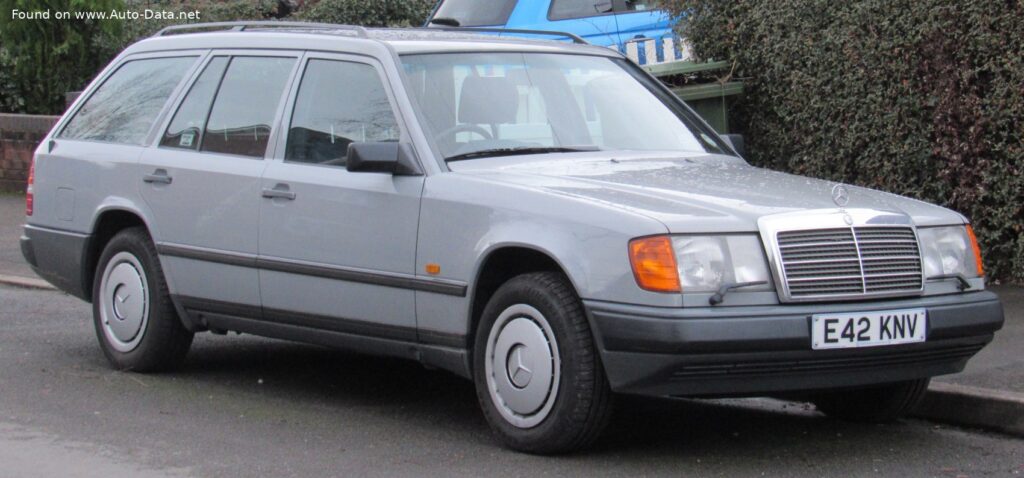
The Mercedes-Benz S124 300 TD (109 Hp) Automatic represents a significant chapter in the history of the German luxury automaker, embodying the brand’s commitment to quality, durability, and practicality during the late 1980s. Part of the iconic W124 generation, the S124 designation refers specifically to the station wagon (estate) body style, which was highly revered in European markets for its blend of passenger comfort, cargo versatility, and robust construction. Produced from March 1986 to February 1989 in this particular configuration, the 300 TD model, with its naturally aspirated diesel engine and automatic transmission, cemented its reputation as a reliable and economical workhorse, often referred to as “the last over-engineered Mercedes-Benz” by enthusiasts and experts alike. This vehicle was not officially sold in the United States in this diesel wagon configuration, but its reputation for longevity and build quality permeated globally, influencing Mercedes-Benz’s image as a manufacturer of premium, long-lasting automobiles.
Powertrain & Engine Architecture
At the heart of the Mercedes-Benz S124 300 TD (109 Hp) Automatic lies the venerable OM 603 D 30, also known by its code 603.912. This inline-six diesel engine was a testament to Mercedes-Benz’s engineering prowess in diesel technology. With an engine displacement of 2996 cubic centimeters (approximately 3.0 liters or 182.83 cubic inches), this naturally aspirated powerplant was designed for smooth operation, impressive longevity, and fuel efficiency rather than outright speed. It features a Single Overhead Camshaft (SOHC) valvetrain with two valves per cylinder and a precombustion chamber injection system, characteristic of diesel engines of its era, known for their robust nature and ability to run on various fuel qualities.
The precombustion chamber design, while less efficient than direct injection systems that would follow, offered excellent cold-starting characteristics and reduced engine noise – important considerations for the time. The engine utilized a Bosch mechanical fuel injection pump, carefully calibrated to deliver precise amounts of fuel to each cylinder. The OM603 was known for its robust construction, featuring a cast iron block and head, contributing to its exceptional durability. The automatic transmission paired with this engine was typically a 4-speed unit, specifically the 4G-TRONIC, known for its smooth shifts and reliability. This transmission was designed to prioritize comfort and ease of use, rather than sporty performance.
Transmission Details
The 4G-TRONIC automatic transmission used in the 300 TD was a hydraulic control unit transmission. It featured a torque converter for smooth launches and low-speed driving. Gear ratios were optimized for fuel efficiency and comfortable cruising, rather than rapid acceleration. The transmission’s design emphasized durability and minimal maintenance, aligning with the overall ethos of the W124 platform.
Driving Characteristics
The 300 TD Automatic offered a driving experience focused on comfort and refinement. While the 109 horsepower output might seem modest today, it provided ample power for relaxed highway cruising and everyday driving. The torque curve was relatively flat, delivering usable power across a wide range of engine speeds. Acceleration from a standstill to 60 mph took approximately 14.5 seconds, and the top speed was around 108.74 mph (175 km/h). Compared to the manual transmission versions of the 300 TD, the automatic offered a more relaxed driving experience, but at the expense of some performance and fuel economy. Higher-output versions, such as the 300E with a gasoline engine, offered significantly quicker acceleration and a more engaging driving experience, but lacked the fuel efficiency and long-term durability of the diesel.
The automatic transmission’s shift points were programmed to prioritize fuel economy and smooth operation. While it lacked the responsiveness of a modern transmission, it provided a comfortable and predictable driving experience. The rear-wheel drive configuration offered balanced handling, and the independent suspension provided a comfortable ride, even on rough roads.
Equipment & Trim Levels
The S124 300 TD Automatic was positioned as a mid-range offering within the W124 estate lineup. Standard features included power steering, disc brakes on all four wheels, central locking, and a well-appointed interior. Upholstery typically consisted of cloth or MB-Tex (Mercedes-Benz’s synthetic leather), with options for genuine leather available at an extra cost. The dashboard layout was functional and ergonomic, with clearly labeled controls and a comprehensive instrument cluster. Optional extras included air conditioning, a sunroof, power windows, and an upgraded audio system. The level of equipment varied depending on the specific market and year of production.
Chassis & Braking
The S124 chassis was renowned for its rigidity and safety. The suspension system featured independent wishbones at the front and a sophisticated multi-link independent suspension at the rear. This rear suspension design was a significant innovation for Mercedes-Benz, providing exceptional ride comfort and handling precision. The braking system consisted of disc brakes on all four wheels, providing ample stopping power. Stabilizer bars were fitted to both the front and rear axles to reduce body roll during cornering. The 300 TD typically featured a slightly softer suspension setup compared to higher-performance W124 models, prioritizing ride comfort over sporty handling. Rear drum brakes were sometimes fitted on earlier models or in certain markets, but the vast majority of 300 TD automatics were equipped with four-wheel disc brakes.
Market Reception & Comparison
The Mercedes-Benz S124 300 TD Automatic was generally well-received by critics and consumers alike. It was praised for its build quality, durability, fuel efficiency, and comfortable ride. However, some critics noted its relatively modest performance compared to gasoline-powered alternatives. Compared to the 300E (gasoline) and the 300D (a lower-powered diesel), the 300 TD offered a balance of performance and economy. The 300E provided more power and a more engaging driving experience, but at the expense of fuel economy and long-term durability. The 300D was more affordable but lacked the power and refinement of the 300 TD. Fuel economy was a strong point for the 300 TD, with urban consumption rated at 25 US mpg (9.4 l/100 km) and extra-urban consumption at an impressive 35.1 US mpg (6.7 l/100 km). Reliability was also a key strength, with the OM603 engine and 4G-TRONIC transmission proving to be exceptionally durable.
Technical Specifications
| Category | Specification |
| General Information | |
| Brand | Mercedes-Benz |
| Model | W124 |
| Generation | S124 |
| Type (Engine) | 300 TD (109 Hp) Automatic |
| Start of Production | March, 1986 |
| End of Production | February, 1989 |
| Powertrain Architecture | Internal Combustion engine |
| Body type | Station wagon (estate) |
| Seats | 5 |
| Doors | 5 |
| Performance Specs | |
| Fuel consumption (economy) – urban | 25 US mpg (9.4 l/100 km) |
| Fuel consumption (economy) – extra urban | 35.1 US mpg (6.7 l/100 km) |
| Fuel Type | Diesel |
| Acceleration 0 – 60 mph | 14.5 sec |
| Maximum speed | 108.74 mph (175 km/h) |
| Weight-to-power ratio | 13.7 kg/Hp, 73.2 Hp/tonne |
| Weight-to-torque ratio | 8.1 kg/Nm, 124.2 Nm/tonne |
| Engine Specs | |
| Power | 109 Hp @ 4600 rpm |
| Power per liter | 36.4 Hp/l |
| Torque | 136.45 lb.-ft. @ 2800 rpm (185 Nm) |
| Engine layout | Front, Longitudinal |
| Engine Model/Code | OM 603 D 30 / 603.912 |
| Engine displacement | 182.83 cu. in. (2996 cm3 / 3.0 l) |
| Number of cylinders | 6 |
| Engine configuration | Inline |
| Cylinder Bore | 3.43 in. (87 mm) |
| Piston Stroke | 3.31 in. (84 mm) |
| Compression ratio | 22:1 |
| Number of valves per cylinder | 2 |
| Fuel injection system | Precombustion chamber injection |
| Engine aspiration | Naturally aspirated engine |
| Valvetrain | SOHC |
| Engine oil capacity | 7.93 US qt (7.5 l) |
| Coolant capacity | 10.04 US qt (9.5 l) |
| Space, Volume and Weights | |
| Kerb Weight | 3284.89 lbs. (1490 kg) |
| Max. weight | 4651.75 lbs. (2110 kg) |
| Max load | 1366.87 lbs. (620 kg) |
| Fuel tank capacity | 19.02 US gal (72 l) |
| Dimensions | |
| Length | 187.6 in. (4765 mm) |
| Width | 68.5 in. (1740 mm) |
| Height | 58.66 in. (1490 mm) |
| Wheelbase | 110.24 in. (2800 mm) |
| Drivetrain, Brakes and Suspension Specs | |
| Drivetrain Architecture | The Internal combustion engine (ICE) drives the rear wheels of the vehicle. |
| Drive wheel | Rear wheel drive |
| Number of gears and type of gearbox | 4 gears, automatic transmission |
| Front suspension | Wishbone |
| Rear suspension | Independent multi-link suspension |
| Front brakes | Disc |
| Rear brakes | Disc |
Legacy
The Mercedes-Benz S124 300 TD Automatic enjoys a strong following among enthusiasts today. Its reputation for reliability and durability ensures that many examples remain on the road, often with remarkably high mileage. The OM603 engine is particularly well-regarded for its longevity and relatively simple maintenance requirements. In the used car market, these vehicles command a premium compared to other W124 variants, reflecting their desirability and rarity. The 300 TD Automatic represents a high point in Mercedes-Benz engineering, a testament to a time when cars were built to last. Its enduring appeal is a testament to its timeless design, robust construction, and the unwavering commitment to quality that defined the Mercedes-Benz brand.
