
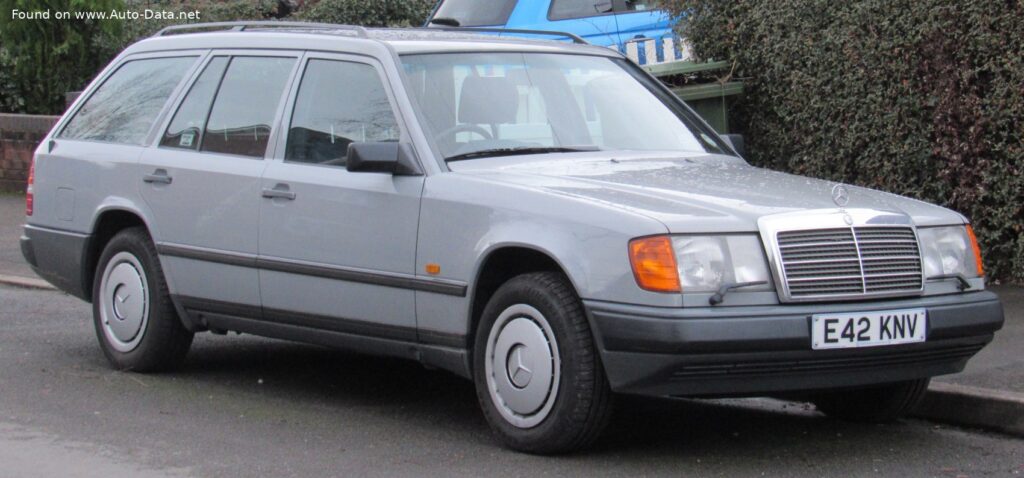
The Mercedes-Benz S124 300 TD (113 Hp) represents a significant chapter in the storied history of Mercedes-Benz’s executive mid-size vehicles. Part of the legendary W124 generation, the S124 designation specifically refers to the station wagon (estate) variant, revered for its exceptional build quality, robust engineering, and practical versatility. Produced for a brief period from February to August 1989, this particular model combined a naturally aspirated 3.0-liter inline-six diesel engine with the spacious and luxurious S124 chassis, catering primarily to the European market where diesel power and wagon practicality were highly valued. It stood as a testament to Mercedes-Benz’s commitment to durability and refined motoring, offering a blend of comfort, utility, and fuel efficiency that few competitors could match in its segment.
The Mercedes-Benz W124 Platform and the S124 300 TD
The Mercedes-Benz W124 series, introduced in 1984, quickly earned a reputation as one of the most meticulously engineered and durable vehicles ever produced by the German marque. Designed for longevity and daily usability, the W124 platform underpinned a range of body styles including sedans (W124), coupes (C124), convertibles (A124), and the highly practical station wagons (S124). The S124 wagons, in particular, were lauded for their ingenious design, offering substantial cargo capacity and, often, optional third-row seating, making them ideal family vehicles or executive transporters.
The S124 300 TD, specifically the 113 horsepower variant produced in 1989, embodied the core values of the W124 generation. While not the most powerful iteration, it focused on providing reliable, economical, and comfortable transportation. Its brief production window suggests it was either a specific market offering or a transitional model before subsequent engine refinements. These vehicles were built to withstand hundreds of thousands of miles, a characteristic that has cemented their status as highly desirable classics and reliable daily drivers even decades later.
Powertrain & Engine Architecture
At the heart of the Mercedes-Benz S124 300 TD (113 Hp) was the venerable OM 603 D 30 / 603.912 engine, a 3.0-liter (2996 cm³ or 182.83 cu. in.) naturally aspirated inline-six diesel powerplant. This engine, known for its smooth operation and legendary robustness, delivered 113 horsepower at 4600 rpm. Torque output was a respectable 191 Nm (140.87 lb.-ft.) available between 2800 and 3050 rpm, providing ample pulling power for daily driving and highway cruising.
The OM 603 engine featured an inline-six configuration, a cylinder bore of 87 mm (3.43 in.), and a piston stroke of 84 mm (3.31 in.), with a high compression ratio of 22:1, typical for a precombustion chamber injection diesel of its era. It utilized a Single Overhead Camshaft (SOHC) valvetrain with two valves per cylinder, a design known for its simplicity and reliability. The fuel injection system employed a mechanical Bosch inline pump, delivering fuel directly to the precombustion chambers. This system, while not as sophisticated as later electronic systems, was incredibly durable and relatively easy to maintain.
The 300 TD was typically equipped with a 5-speed manual transmission, although an optional 4-speed automatic transmission was available. The automatic, while offering convenience, was generally considered less efficient and slightly less responsive than the manual. The transmission was a conventional hydraulic automatic, known for its smooth shifts but lacking the efficiency of modern electronically controlled units.
Driving Characteristics
The S124 300 TD with the 113 hp engine and manual transmission offered a relaxed and refined driving experience. Acceleration from 0 to 60 mph took approximately 13.9 seconds, and top speed was around 111.85 mph (180 km/h). While these figures aren’t impressive by modern standards, the engine’s torque delivery made it feel more powerful than the horsepower figure suggests. The engine pulled strongly from low revs, making it well-suited for everyday driving and hauling loads. The 5-speed manual transmission allowed drivers to keep the engine in its optimal power band, maximizing efficiency and responsiveness.
Compared to the higher-output 300E gasoline models or the later 300 TD variants with more powerful engines, the 113 hp 300 TD prioritized fuel economy and durability over outright performance. The automatic transmission version further reduced performance, but offered greater convenience. The manual transmission provided a more engaging driving experience and better fuel economy.
Equipment & Trim Levels
The S124 300 TD (113 Hp) was positioned as a mid-range offering within the S124 lineup. Standard equipment included power windows, central locking, and a basic audio system. The interior typically featured cloth upholstery, although leather was available as an option. The dashboard layout was typical of Mercedes-Benz at the time, with a functional and understated design.
Optional extras included a sunroof, air conditioning, upgraded audio systems, and self-leveling rear suspension, which was particularly useful for those who frequently carried heavy loads. The self-leveling suspension maintained a consistent ride height regardless of the load, improving handling and stability. Higher trim levels offered more luxurious interior appointments, such as leather upholstery, wood trim, and upgraded sound insulation.
Chassis & Braking
The S124 300 TD featured a robust chassis designed for comfort and durability. The front suspension utilized independent wishbones with coil springs and shock absorbers. The rear suspension was a groundbreaking five-link independent suspension system, which provided exceptional ride comfort and handling precision. This multi-link design minimized body roll and improved stability, especially when cornering.
Braking was handled by disc brakes on all four wheels, complemented by an Anti-lock Braking System (ABS). The ABS system helped to prevent wheel lockup during hard braking, improving stopping distances and maintaining steering control. The steering was a robust cone worm system with hydraulic power assistance, providing a precise and reassuring feel on the road. The vehicle rode on 195/65 R15 tires mounted on 6.5J x 15 wheel rims, offering a comfortable ride and predictable handling.
Market Reception & Comparison
Critics generally praised the S124 300 TD for its build quality, durability, and fuel efficiency. However, some noted that its performance was modest compared to its gasoline-powered counterparts. The diesel engine’s characteristic noise and vibration were also mentioned, although these were considered acceptable trade-offs for the fuel economy and longevity it offered.
Compared to other trims in the S124 lineup, the 300 TD offered a compelling value proposition for those who prioritized practicality and fuel economy. The gasoline-powered 300E offered more performance, but at the expense of fuel efficiency. The later 300 TD variants with more powerful engines provided a better balance of performance and economy, but were also more expensive. The S124 300 TD appealed to buyers who needed a spacious, comfortable, and reliable wagon for long-distance travel or hauling loads.
Technical Specifications
| Brand | Mercedes-Benz |
| Model | W124 |
| Generation | S124 |
| Type (Engine) | 300 TD (113 Hp) |
| Production Start | February, 1989 |
| Production End | August, 1989 |
| Powertrain Architecture | Internal Combustion Engine |
| Body Type | Station wagon (estate) |
| Seats | 5 |
| Doors | 5 |
| Fuel Type | Diesel |
| Fuel Consumption (Urban) | 9.9 l/100 km (23.8 US mpg) |
| Fuel Consumption (Extra Urban) | 5.8 l/100 km (40.6 US mpg) |
| Acceleration 0-60 mph | 13.9 sec |
| Maximum Speed | 180 km/h (111.85 mph) |
| Power | 113 Hp @ 4600 rpm |
| Power per liter | 37.7 Hp/l |
| Torque | 191 Nm (140.87 lb.-ft.) @ 2800-3050 rpm |
| Engine Layout | Front, Longitudinal |
| Engine Model/Code | OM 603 D 30 / 603.912 |
| Engine Displacement | 2996 cm³ (3.0 l / 182.83 cu. in.) |
| Number of Cylinders | 6 |
| Engine Configuration | Inline |
| Cylinder Bore | 87 mm (3.43 in.) |
| Piston Stroke | 84 mm (3.31 in.) |
| Compression Ratio | 22:1 |
| Valves per Cylinder | 2 |
| Fuel Injection System | Precombustion chamber injection |
| Engine Aspiration | Naturally aspirated engine |
| Valvetrain | SOHC |
| Engine Oil Capacity | 7.5 l (7.93 US qt) |
| Kerb Weight | 1520 kg (3351.03 lbs.) |
| Max. Weight | 2140 kg (4717.89 lbs.) |
| Max Load | 620 kg (1366.87 lbs.) |
| Fuel Tank Capacity | 72 l (19.02 US gal) |
| Length | 4765 mm (187.6 in.) |
| Width | 1740 mm (68.5 in.) |
| Height | 1490 mm (58.66 in.) |
| Wheelbase | 2800 mm (110.24 in.) |
| Front Track | 1497 mm (58.94 in.) |
| Rear Track | 1488 mm (58.58 in.) |
| Drivetrain Architecture | Internal Combustion engine drives the rear wheels |
| Drive Wheel | Rear wheel drive |
| Gearbox | 5 gears, manual transmission |
| Front Suspension | Wishbone |
| Rear Suspension | Independent multi-link suspension |
| Front Brakes | Disc |
| Rear Brakes | Disc |
| Assisting Systems | ABS (Anti-lock braking system) |
| Steering Type | Cone worm with recirculation balls |
| Power Steering | Hydraulic Steering |
| Front Wheel Tires | 195/65 R15 |
| Rear Wheel Tires | 195/65 R15 |
| Front Wheel Rims | 6.5J x 15 |
| Rear Wheel Rims | 6.5J x 15 |
Legacy
The Mercedes-Benz W124 series, and particularly the S124 wagon, left an indelible mark on the automotive landscape, becoming synonymous with uncompromising quality and longevity. The Mercedes-Benz S124 300 TD (113 Hp), despite its relatively brief production run, contributed to this legacy, embodying the practical and durable characteristics that made these wagons so popular in their primary European markets.
In Europe, diesel engines were a cornerstone of the automotive industry, favored for their fuel economy and robust nature, especially for high-mileage drivers and taxi fleets. The S124 wagons, including the 300 TD, were workhorses that doubled as comfortable family transport, often equipped with features like self-leveling rear suspension to handle heavy loads without compromising ride quality. Its competitors in the European executive wagon segment included models like the BMW 5 Series Touring (E34), the Audi 100 Avant (C3/C4), and the Volvo 740/940 Estate, each offering their own blend of practicality and luxury. However, the W124’s reputation for ‘over-engineering’ often gave it an edge in perceived build quality and long-term reliability.
While the W124 sedan and coupe models saw significant success in the North American market, the diesel wagon variants like the 300 TD were less common in the U.S., where gasoline engines and larger SUVs were beginning to dominate consumer preferences. Nevertheless, those who owned them appreciated their unique blend of German engineering, diesel efficiency, and unparalleled practicality.
Today, the W124 series is widely regarded as a modern classic. Enthusiasts and collectors cherish these vehicles for their straightforward mechanics, exceptional ride comfort, and the tangible sense of quality that permeates every aspect of their design. The S124 300 TD, with its durable inline-six diesel engine and spacious wagon body, remains a highly sought-after model for those who appreciate classic Mercedes-Benz engineering and a vehicle built to last. Its lasting impact is a testament to an era when automotive manufacturers prioritized durability and engineering excellence above all else, making it a benchmark for quality in its class.
