
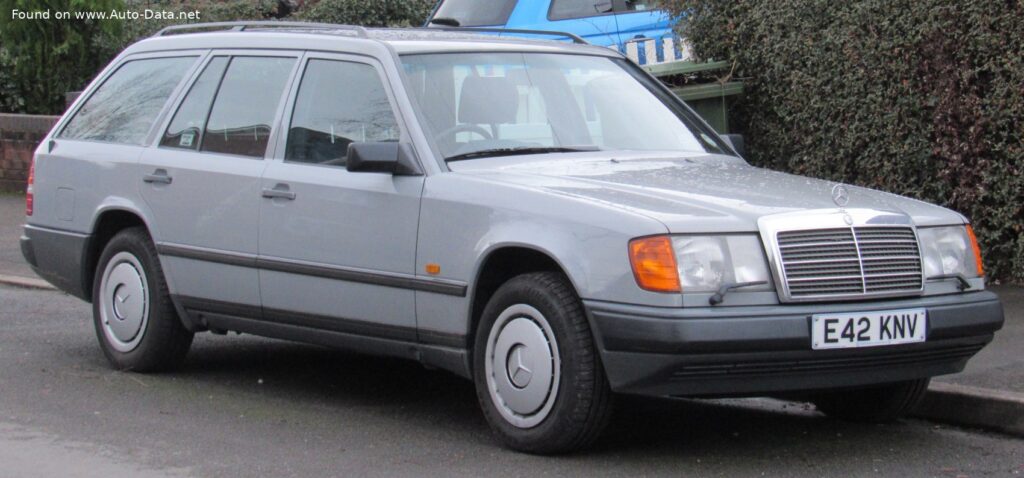
The Mercedes-Benz S124 300 TE (188 Hp) 4MATIC represents a significant chapter in the history of luxury executive vehicles, embodying Mercedes-Benz’s renowned commitment to engineering excellence, durability, and refined performance. Part of the iconic W124 generation, which debuted in 1984, the S124 designation specifically refers to the station wagon (or estate) variant. Produced between August 1986 and August 1989, this particular model was notable for its powerful inline-six engine and, critically, its advanced 4MATIC all-wheel-drive system, a technological marvel for its era. While not as commonly seen in the United States as its sedan counterpart, the S124 300 TE 4MATIC carved out a formidable reputation in its primary European markets as a versatile, comfortable, and exceptionally capable family hauler, blending the practicality of a wagon with the sophistication and performance expected of a Mercedes-Benz.
The W124 Platform and S124 Positioning
The W124 platform itself is widely regarded as one of the finest automobiles ever produced by Mercedes-Benz, often lauded for its “over-engineered” quality, robust construction, and timeless design. The S124 wagon capitalized on these virtues, offering an expansive and highly functional interior without compromising the elegant aesthetics or dynamic driving characteristics of the W124 sedan. Within the W124 lineup, the 300 TE 4MATIC occupied a mid-to-premium position. It sat above the 230 TE and 260 TE models, offering significantly more power and the added capability of all-wheel drive. It was positioned below the higher-performance 300 CE-24 coupe and sedan, and the flagship 400 E models. The target audience was affluent families and individuals who prioritized practicality, safety, and all-weather performance alongside the prestige of the Mercedes-Benz brand.
Powertrain & Engine Architecture
At the core of the Mercedes-Benz S124 300 TE (188 Hp) 4MATIC lies the formidable M 103 E 30 / 103.985 inline-six gasoline engine. This naturally aspirated 3.0-liter (2962 cm3 or 180.75 cu. in.) powerplant was a hallmark of Mercedes-Benz engineering during the late 1980s, known for its smooth operation, robust construction, and reliable performance. The engine features a Single Overhead Camshaft (SOHC) valvetrain with two valves per cylinder and utilizes a multi-port manifold injection system – specifically, Bosch K-Jetronic mechanical fuel injection – for precise fuel delivery, ensuring efficient combustion and responsive throttle input. The K-Jetronic system, while complex, was known for its durability and resistance to many of the issues that plagued early electronic fuel injection systems.
The M 103 engine in the 300 TE delivered a healthy 188 horsepower at 5700 rpm, which, for a luxury wagon of its time, provided ample motivation. Torque output stood at 191.77 lb.-ft. (260 Nm) at a relatively accessible 4400 rpm, contributing to strong mid-range acceleration and effortless cruising. This power enabled the S124 300 TE 4MATIC to accelerate from 0 to 60 mph in a respectable 8.9 seconds, with a top speed of 128.62 mph (207 km/h). These figures underscored its capability as a swift and composed long-distance tourer, despite its substantial kerb weight of 3527.4 lbs. (1600 kg). The engine was typically paired with a four-speed automatic transmission (722.3 series), known for its smooth shifts and reliability. This transmission was hydraulically controlled, lacking the electronic controls found in later automatic gearboxes.
Driving Characteristics
The 300 TE 4MATIC, with its 188 hp and automatic transmission, offered a distinctly different driving experience compared to its manual transmission counterparts or the higher-output models. While the manual versions provided a more engaging and sporty feel, the automatic prioritized comfort and ease of use. The four-speed automatic, while not offering the latest in gear ratios, was well-suited to the engine’s torque curve, providing smooth acceleration in most driving situations. The 4MATIC system significantly altered the handling characteristics, providing increased stability and traction, particularly on slippery surfaces. However, it also added weight, slightly diminishing the car’s agility compared to rear-wheel-drive W124 models. The power delivery was linear and predictable, making it easy to modulate the throttle and maintain control. Compared to the 260 TE automatic, the 300 TE offered a noticeable performance improvement, while remaining a comfortable and refined cruiser.
Equipment & Trim Levels
The S124 300 TE 4MATIC came standard with a comprehensive list of features befitting its luxury status. Interior upholstery typically consisted of high-quality cloth, with leather options available at extra cost. Wood trim adorned the dashboard and door panels, adding a touch of elegance. Standard equipment included power windows, central locking, power steering, and an anti-lock braking system (ABS). Optional extras included a sunroof, automatic climate control, heated seats, and a premium sound system. The rear suspension featured self-leveling technology to maintain ride height even when the vehicle was heavily loaded. The wagon-specific features included a large cargo area with a retractable load cover, tie-down points, and a split-folding rear seat for increased versatility.
Chassis & Braking
The S124 300 TE 4MATIC utilized a robust chassis designed for both comfort and handling. The front suspension employed independent wishbones with coil springs and shock absorbers, while the rear suspension featured a multi-link independent setup – a Mercedes-Benz innovation that provided exceptional ride quality and handling precision. The braking system consisted of ventilated discs at the front and solid discs at the rear, providing strong and consistent stopping power. The Anti-lock Braking System (ABS) was standard, enhancing safety by preventing wheel lock-up during hard braking. Stabilizer bars were fitted to both the front and rear axles to reduce body roll during cornering. The 4MATIC system added complexity to the drivetrain, requiring a more robust rear differential and a viscous coupling to distribute power to the front wheels when needed.
Market Reception & Comparison
Critics generally praised the S124 300 TE 4MATIC for its blend of luxury, practicality, and all-weather capability. The 4MATIC system was particularly well-received, offering a significant advantage in regions with inclement weather. Fuel economy, while not exceptional, was considered competitive for a vehicle of its size and class. Reliability was a strong point, with the M 103 engine and 722.3 automatic transmission proving to be exceptionally durable. Compared to the 260 TE, the 300 TE 4MATIC offered a noticeable performance upgrade, justifying the higher price tag for buyers who prioritized power and all-wheel drive. Compared to the BMW 5-Series Touring, the Mercedes-Benz was often lauded for its superior ride comfort and build quality, while the BMW was considered more sporty and engaging to drive. The Audi 100 Avant offered a similar blend of practicality and performance, but the Mercedes-Benz held a stronger brand image and a reputation for long-term reliability.
Technical Specifications
| Category | Specification |
| General Information | Brand: Mercedes-Benz |
| Model: W124 | |
| Generation: S124 | |
| Type (Engine): 300 TE (188 Hp) 4MATIC | |
| Start of production: August, 1986 year | |
| End of production: August, 1989 year | |
| Powertrain Architecture: Internal Combustion engine | |
| Body type: Station wagon (estate) | |
| Seats: 5 | |
| Doors: 5 | |
| Performance Specs | Fuel consumption (economy) – urban: 14.6 l/100 km (16.1 US mpg) |
| Fuel consumption (economy) – extra urban: 8.1 l/100 km (29 US mpg) | |
| Fuel Type: Petrol (Gasoline) | |
| Acceleration 0 – 60 mph: 8.9 sec | |
| Acceleration 0 – 100 km/h: 9.4 sec | |
| Maximum speed: 207 km/h (128.62 mph) | |
| Weight-to-power ratio: 8.5 kg/Hp (117.5 Hp/tonne) | |
| Weight-to-torque ratio: 6.2 kg/Nm (162.5 Nm/tonne) | |
| Engine Specs | Power: 188 Hp @ 5700 rpm |
| Power per liter: 63.5 Hp/l | |
| Torque: 260 Nm @ 4400 rpm (191.77 lb.-ft. @ 4400 rpm) | |
| Engine layout: Front, Longitudinal | |
| Engine Model/Code: M 103 E 30 / 103.985 | |
| Engine displacement: 2962 cm3 (180.75 cu. in.) | |
| Number of cylinders: 6 | |
| Engine configuration: Inline | |
| Cylinder Bore: 88.5 mm (3.48 in.) | |
| Piston Stroke: 80.25 mm (3.16 in.) | |
| Compression ratio: 9.2:1 | |
| Number of valves per cylinder: 2 | |
| Fuel injection system: Multi-port manifold injection | |
| Engine aspiration: Naturally aspirated engine | |
| Valvetrain: SOHC | |
| Engine oil capacity: 6.5 l (6.87 US qt) | |
| Coolant: 9 l (9.51 US qt) | |
| Space, Volume and Weights | Kerb Weight: 1600 kg (3527.4 lbs.) |
| Max. weight: 2180 kg (4806.08 lbs.) | |
| Max load: 580 kg (1278.68 lbs.) | |
| Fuel tank capacity: 72 l (19.02 US gal) | |
| Dimensions | Length: 4765 mm (187.6 in.) |
| Width: 1740 mm (68.5 in.) | |
| Height: 1498 mm (58.98 in.) | |
| Wheelbase: 2800 mm (110.24 in.) | |
| Front track: 1497 mm (58.94 in.) | |
| Rear (Back) track: 1485 mm (58.46 in.) | |
| Drivetrain, Brakes and Suspension Specs | Drivetrain Architecture: The Internal combustion engine (ICE) drives the rear wheels permanently, and the front wheels are driven through an electrically or mechanically operated clutch if necessary. |
| Drive wheel: All wheel drive (4×4) | |
| Front suspension: Wishbone | |
| Rear suspension: Independent multi-link suspension | |
| Front brakes: Ventilated discs | |
| Rear brakes: Disc | |
| Assisting systems: ABS (Anti-lock braking system) | |
| Steering type: Cone worm with recirculation balls | |
| Power steering: Hydraulic Steering | |
| Tires size: Front wheel tires: 195/65 R15; Rear wheel tires: 195/65 R15 | |
| Wheel rims size: Front wheel rims: 6.5J x 15; Rear wheel rims: 6.5J x 15 |
Legacy
The Mercedes-Benz S124 300 TE (188 Hp) 4MATIC holds a significant place in automotive history, particularly within the context of European luxury wagons. Its legacy is deeply intertwined with the W124 generation’s reputation for being one of the most robust, reliable, and meticulously engineered vehicles ever produced by Mercedes-Benz. Often referred to as “the last of the over-engineered Mercedes,” the W124, and especially its wagon variant, set incredibly high benchmarks for build quality and longevity that few subsequent models have matched. Today, well-maintained examples command a premium in the classic car market. The M 103 engine, while not the most powerful of its era, is known for its durability and relative simplicity, making it a favorite among enthusiasts. The 4MATIC system, while more complex, has also proven to be reliable when properly maintained. The S124 300 TE 4MATIC remains a testament to a bygone era of automotive engineering, where quality and longevity were prioritized above all else.
