
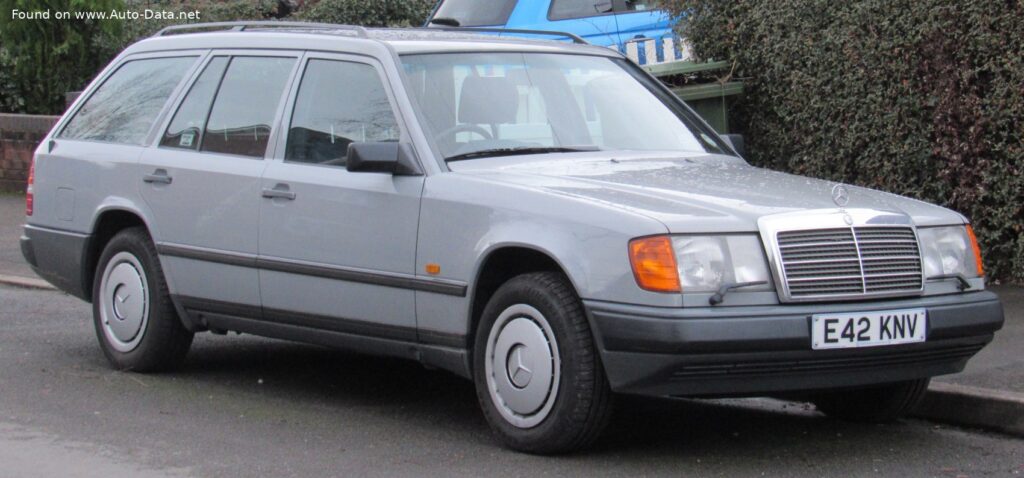
The Mercedes-Benz W124 series, produced from 1984 to 1995, is widely regarded as a high point in German automotive engineering, celebrated for its exceptional build quality, durability, and refined driving experience. Within this iconic lineup, the S124 variant represented the highly practical and elegant station wagon (estate) body style. The Mercedes-Benz S124 300 TE (188 Hp) Automatic, produced from May 1985 to August 1989, emerged as a particularly desirable model, blending the W124’s inherent strengths with the versatility of a family hauler. Positioned in the executive segment of the European market, the 300 TE was designed to cater to discerning buyers who demanded both luxury and substantial cargo capacity without compromising on performance or comfort.
This generation of Mercedes-Benz cars, often referred to as “over-engineered,” set new benchmarks for reliability and longevity. The S124 300 TE, with its robust inline-six engine and sophisticated automatic transmission, exemplified this philosophy. It was a vehicle crafted for long-distance cruising and daily utility, offering a compelling blend of power, smoothness, and the unmistakable solidity characteristic of Mercedes-Benz vehicles from that era. While not officially sold as a “TE” in the United States, where it was often simply referred to as the 300 TD (diesel) or 300 E (sedan) with the “wagon” designation, its core mechanicals and design language were consistent with the global W124 platform, making it a recognizable and respected presence even across the Atlantic.
Powertrain & Engine Architecture: The M103 Inline-Six
Under the hood of the Mercedes-Benz S124 300 TE (188 Hp) Automatic resided the venerable M 103 E 30 / 103.983 engine, a naturally aspirated 3.0-liter (2962 cm3 or 180.75 cu. in.) inline-six powerplant. This engine configuration, a hallmark of Mercedes-Benz engineering, was celebrated for its inherent balance, smoothness, and robust power delivery. Equipped with a Single Overhead Camshaft (SOHC) valvetrain and two valves per cylinder, the M103 featured a Bosch K-Jetronic fuel injection system that ensured precise fuel delivery and optimal combustion efficiency for its time. This mechanical fuel injection system, while complex, was known for its reliability and ability to deliver consistent performance even under demanding conditions.
The engine produced a healthy 188 horsepower at 5700 rpm, translating to a specific output of 63.5 horsepower per liter. Peak torque stood at 260 Nm (191.77 lb.-ft.) available at a relatively accessible 4400 rpm. This combination of power and torque provided the S124 300 TE with ample motivation. Power was sent to the rear wheels via a smooth and durable 4-speed automatic transmission, specifically the 4G-TRONIC unit. This gearbox was well-matched to the engine’s torque curve, providing seamless shifts and contributing to the car’s relaxed yet capable demeanor. The 4G-TRONIC was a hydraulic-controlled automatic, known for its durability and relatively simple maintenance compared to later electronically controlled transmissions.
Driving Characteristics: A Refined Grand Tourer
The S124 300 TE Automatic offered a distinctly different driving experience compared to its manual transmission counterparts or higher-output siblings like the 300E-24. The automatic transmission prioritized smooth, effortless cruising over outright performance. While the manual versions offered quicker acceleration and a more engaging driving experience, the automatic provided a more relaxed and comfortable ride, particularly well-suited for long-distance journeys. The 4-speed automatic’s gear ratios were optimized for fuel efficiency and comfortable highway speeds, rather than aggressive acceleration. The car accelerated from 0 to 60 mph in a respectable 8.4 seconds (0-100 km/h in 8.8 seconds), and the top speed was rated at 130.49 mph (210 km/h). Despite its substantial curb weight of 3836.04 lbs, the 300 TE achieved a weight-to-power ratio of 9.3 kg/Hp (108 Hp/tonne) and a weight-to-torque ratio of 6.7 kg/Nm (149.4 Nm/tonne), indicating a well-balanced power-to-weight characteristic for an executive station wagon of its era.
Compared to the 300 TD (diesel) variant, the 300 TE Automatic offered significantly more power and a smoother, quieter driving experience. The diesel, while fuel-efficient and durable, lacked the refinement and responsiveness of the gasoline inline-six. The 300 TE was aimed at buyers who prioritized performance and comfort over fuel economy, while the diesel appealed to those seeking practicality and low running costs.
Equipment & Trim Levels: Luxury and Practicality Combined
The S124 300 TE Automatic came standard with a generous array of features befitting its executive-class status. Standard interior appointments included comfortable cloth upholstery, wood trim on the dashboard and door panels, and power windows and locks. Air conditioning was also a standard feature, essential for comfortable operation in warmer climates. The dashboard layout was typical of Mercedes-Benz at the time, featuring a clear and concise instrument cluster and logically arranged controls.
Optional extras were plentiful, allowing buyers to customize their 300 TE to their specific preferences. Leather upholstery, a sunroof, and a premium sound system were popular options. Rear-facing third-row seats were available, increasing passenger capacity to seven, although these seats were best suited for occasional use. Automatic climate control, heated seats, and a trip computer were also offered as optional extras. The level of equipment often varied depending on the specific market, with European models generally offering a wider range of options than those sold in the United States.
Chassis & Braking: Engineered for Stability and Comfort
The S124 300 TE featured advanced suspension systems for its time. The front utilized a wishbone setup, while the rear boasted an independent multi-link suspension, a pioneering design that greatly contributed to the W124’s renowned ride comfort, precise handling, and excellent stability. This multi-link suspension minimized body roll and provided a smooth, controlled ride even over uneven surfaces. Braking duties were handled by ventilated discs at the front and solid discs at the rear, providing confident stopping power. The steering system was a hydraulic power-assisted cone worm with recirculation balls, offering a precise yet comfortable feel. The car rode on 195/65 R15 tires mounted on 6.5J x 15-inch wheel rims, a specification that balanced ride comfort with adequate grip.
The chassis was designed to provide a stable and predictable driving experience, even when fully loaded with passengers and cargo. The relatively long wheelbase and carefully tuned suspension contributed to excellent high-speed stability. The braking system was designed with safety in mind, offering consistent and reliable stopping power in a variety of conditions.
Market Reception & Comparison
Critics praised the Mercedes-Benz S124 300 TE Automatic for its refined driving experience, luxurious interior, and exceptional build quality. It was widely regarded as one of the best station wagons available at the time, offering a compelling combination of practicality and luxury. Fuel economy figures, while not exceptional by modern standards, were reasonable for a large luxury vehicle with a 3.0-liter engine: approximately 17.4 US mpg in urban driving and 26.1 US mpg on the highway. Its 19.02 US gallon fuel tank provided a substantial cruising range.
Compared to its competitors, the 300 TE Automatic stood out for its overall refinement and durability. While BMW offered a sportier driving experience, the Mercedes-Benz prioritized comfort and reliability. Audi’s quattro all-wheel drive system provided superior traction in inclement weather, but the 300 TE’s rear-wheel drive configuration was generally sufficient for most driving conditions. The 300 TE’s reputation for longevity and low maintenance costs also made it an attractive option for buyers seeking a long-term investment.
Technical Specifications
| Category | Specification |
| Brand | Mercedes-Benz |
| Model | W124 |
| Generation | S124 |
| Type (Engine) | 300 TE (188 Hp) Automatic |
| Start of Production | May, 1985 |
| End of Production | August, 1989 |
| Powertrain Architecture | Internal Combustion engine |
| Body type | Station wagon (estate) |
| Seats | 5 |
| Doors | 5 |
| Performance Specs | |
| Fuel consumption (urban) | 13.5 l/100 km (17.4 US mpg) |
| Fuel consumption (extra urban) | 9 l/100 km (26.1 US mpg) |
| Fuel Type | Petrol (Gasoline) |
| Acceleration 0 – 60 mph | 8.4 sec |
| Acceleration 0 – 100 km/h | 8.8 sec |
| Maximum speed | 210 km/h (130.49 mph) |
| Weight-to-power ratio | 9.3 kg/Hp (108 Hp/tonne) |
| Weight-to-torque ratio | 6.7 kg/Nm (149.4 Nm/tonne) |
| Engine Specs | |
| Power | 188 Hp @ 5700 rpm |
| Power per liter | 63.5 Hp/l |
| Torque | 260 Nm @ 4400 rpm (191.77 lb.-ft. @ 4400 rpm) |
| Engine layout | Front, Longitudinal |
| Engine Model/Code | M 103 E 30 / 103.983 |
| Engine displacement | 2962 cm3 (3.0 l / 180.75 cu. in.) |
| Number of cylinders | 6 |
| Engine configuration | Inline |
| Cylinder Bore | 88.5 mm (3.48 in.) |
| Piston Stroke | 80.25 mm (3.16 in.) |
| Compression ratio | 9.2:1 |
| Number of valves per cylinder | 2 |
| Fuel injection system | Multi-port manifold injection |
| Engine aspiration | Naturally aspirated engine |
| Valvetrain | SOHC |
| Engine oil capacity | 6.5 l (6.87 US qt) |
| Engine oil specification | Not specified |
| Coolant capacity | 9 l (9.51 US qt) |
| Space, Volume and Weights | |
| Kerb Weight | 1740 kg (3836.04 lbs.) |
| Max. weight | 2090 kg (4607.66 lbs.) |
| Max load | 350 kg (771.62 lbs.) |
| Fuel tank capacity | 72 l (19.02 US gal) |
| Dimensions | |
| Length | 4765 mm (187.6 in.) |
| Width | 1740 mm (68.5 in.) |
| Height | 1490 mm (58.66 in.) |
| Wheelbase | 2800 mm (110.24 in.) |
| Front track | 1497 mm (58.94 in.) |
| Rear (Back) track | 1488 mm (58.58 in.) |
| Drivetrain, Brakes and Suspension Specs | |
| Drivetrain Architecture | Internal combustion engine (ICE) drives the rear wheels |
| Drive wheel | Rear wheel drive |
| Number of gears and type of gearbox | 4 gears, automatic transmission |
| Front suspension | Wishbone |
| Rear suspension | Independent multi-link suspension |
| Front brakes | Ventilated discs |
| Rear brakes | Disc |
| Steering type | Cone worm with recirculation balls |
| Power steering | Hydraulic Steering |
| Tires size (Front/Rear) | 195/65 R15 |
| Wheel rims size (Front/Rear) | 6.5J x 15 |
Legacy
The Mercedes-Benz W124 series, and particularly the S124 300 TE Automatic, has earned a well-deserved reputation for exceptional durability and longevity. The M103 engine, when properly maintained, is capable of exceeding 200,000 miles with relative ease. The 4G-TRONIC automatic transmission is also known for its robustness. Today, well-maintained examples of the 300 TE are highly sought after by collectors and enthusiasts, commanding premium prices.
In the used car market, the S124 300 TE Automatic remains a compelling option for buyers seeking a classic luxury station wagon. While maintenance costs can be higher than those of more modern vehicles, the car’s inherent reliability and timeless design make it a worthwhile investment for those who appreciate quality and craftsmanship. The availability of spare parts is generally good, although some components may be becoming increasingly difficult to find. The S124 300 TE Automatic stands as a testament to a bygone era of automotive engineering, where durability, refinement, and driver satisfaction were paramount.
