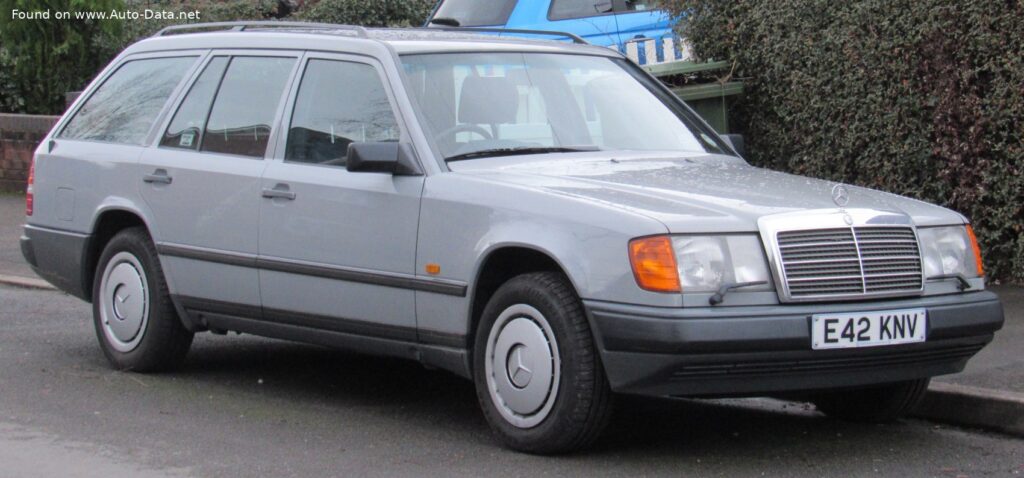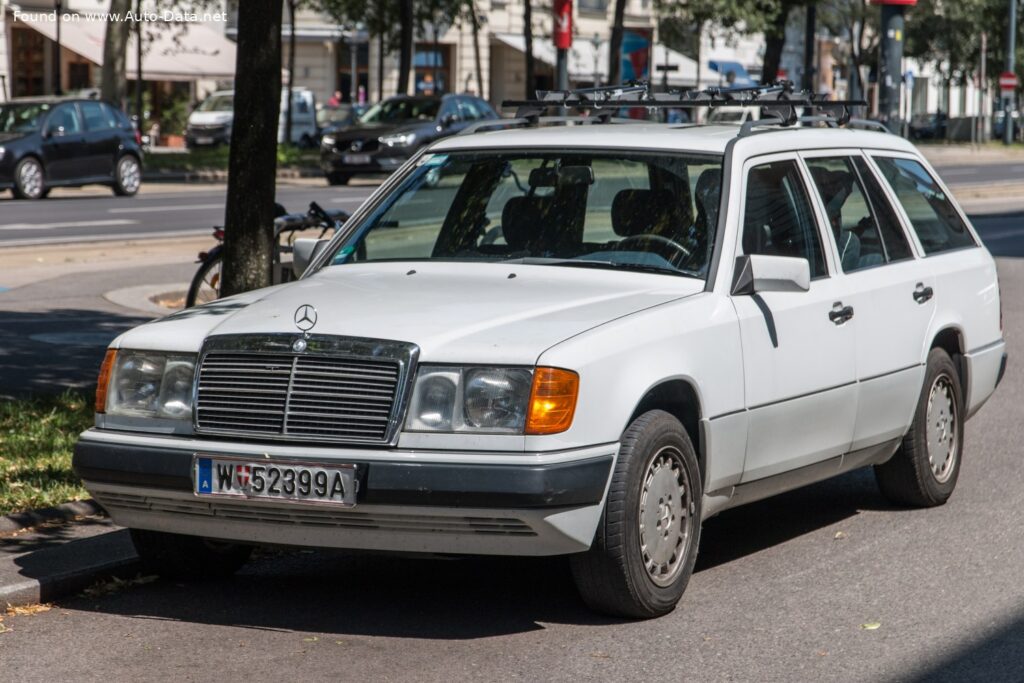
The Mercedes-Benz S124 (facelift 1989) 200 T, produced from September 1989 to May 1990, represents a specific iteration of the renowned W124 series station wagon (estate). The W124, manufactured between 1984 and 1996, is celebrated for its exceptional build quality, durability, and classic design. The S124 designation denotes the wagon body style, offering a practical alternative to the sedan. This 2.0-liter gasoline model was primarily aimed at the European market, embodying the core W124 values of reliability, comfort, and functional elegance. It served as an entry-level option, providing accessible Mercedes-Benz ownership to customers prioritizing practicality and long-term dependability over outright performance.
Powertrain & Engine Architecture
The Mercedes-Benz S124 (facelift 1989) 200 T was powered by the M102 V 20 / 102.922 engine, a 2.0-liter (1996 cm³ or 121.8 cu. in.) naturally aspirated inline-four cylinder unit. This engine is known for its simple design and exceptional longevity. It produced 105 horsepower at 5500 rpm and 116.53 lb-ft of torque at 3500 rpm. While not designed for rapid acceleration, the powertrain was engineered for smooth, consistent power delivery and remarkable durability, contributing to the W124’s enduring reputation.
The M102 engine featured a Single Overhead Camshaft (SOHC) valvetrain with two valves per cylinder, a common and reliable configuration for its time. Fuel delivery was managed by a carburetor system, a technology being superseded by electronic fuel injection but still prevalent in entry-level models. This choice contributed to the engine’s simplicity and ease of maintenance. The engine utilized a cast iron block and aluminum cylinder head, a common construction for durability.
The 200 T was typically paired with a 4-speed automatic transmission, although a 5-speed manual transmission was also available. The automatic transmission, a robust unit for its era, was designed for smooth shifting and reliable operation. Power was directed to the rear wheels, a classic Mercedes-Benz drivetrain configuration providing balanced handling and a solid feel. The automatic transmission’s gear ratios were optimized for fuel efficiency and comfortable cruising, rather than aggressive acceleration.
Transmission Details
The automatic transmission used in the 200 T was a four-speed unit, offering a torque converter for smooth launches and gear changes. While not as sophisticated as modern automatic transmissions, it was known for its durability and relatively simple maintenance requirements. The gear ratios were designed to provide a balance between acceleration and fuel economy, prioritizing comfortable cruising over sporty performance. The transmission’s control system was primarily mechanical, relying on hydraulic pressure and vacuum signals to manage gear selection.
Driving Characteristics
The 105 hp / Automatic setup of the S124 200 T delivered a driving experience focused on comfort and refinement rather than outright performance. Acceleration from 0 to 60 mph took approximately 13.3 seconds, and the top speed was around 107.5 mph. Compared to the manual transmission version or higher-output W124 models like the 230E or 300E, the 200 T Automatic felt noticeably slower, particularly during overtaking maneuvers. However, the automatic transmission provided a smooth and effortless driving experience, especially in city traffic or on long highway journeys.
The gear ratios of the automatic transmission were spaced to prioritize fuel efficiency and relaxed cruising. The torque converter provided smooth launches, but it also resulted in some power loss compared to a manual transmission. The engine’s torque curve was relatively flat, providing adequate power for everyday driving, but it lacked the punch of larger-displacement engines. The overall driving experience was characterized by a quiet cabin, comfortable ride, and predictable handling.
Equipment & Trim Levels
The S124 200 T, as an entry-level model, came standard with a respectable level of equipment. Standard features included power steering, disc brakes on all four wheels, and a basic audio system. The interior typically featured cloth upholstery, although leather was available as an option. The dashboard layout was functional and ergonomic, with clearly labeled controls and a straightforward instrument cluster.
Optional extras included power windows, central locking, a sunroof, and upgraded audio systems. Air conditioning was a popular option, particularly in warmer climates. Leather upholstery and wood trim added a touch of luxury to the interior. The S124 200 T was available in a range of exterior colors, with metallic paints typically costing extra. The trim level was generally consistent, with variations primarily stemming from the addition of optional equipment.
Chassis & Braking
The S124 chassis was renowned for its robust construction and excellent ride quality. The front suspension utilized independent wishbones, while the rear suspension featured an independent multi-link setup, a hallmark of the W124 platform. This suspension design provided a comfortable ride and stable handling, even when the vehicle was fully loaded. The steering system was a hydraulic cone worm system with recirculation balls, offering precise control and effortless maneuverability.
The braking system consisted of disc brakes on all four wheels, providing confident stopping power. An Anti-lock Braking System (ABS) was a significant safety feature for its time, enhancing control during emergency braking. The brake calipers were typically single-piston designs, and the brake rotors were vented to improve heat dissipation. The rear suspension included a stabilizer bar to reduce body roll during cornering.
Market Reception & Comparison
Critics generally praised the Mercedes-Benz S124 200 T for its build quality, reliability, and comfortable ride. However, the 105 hp engine and automatic transmission were often criticized for being underpowered, particularly when compared to higher-output W124 models. Fuel economy was considered reasonable for a vehicle of its size and era, with urban consumption around 19.3 US mpg and highway fuel economy around 30.5 US mpg.
Compared to its rivals, such as the BMW 5 Series Touring and Audi 100 Avant, the S124 200 T offered a more comfortable ride and a reputation for exceptional durability. However, it lacked the sporty handling of the BMW and the advanced technology of the Audi. The Volvo 740/940 series offered similar levels of practicality and safety, but the Mercedes-Benz S124 was generally perceived as being more refined and prestigious.
Technical Specifications
| Category | Specification |
| General Information | |
| Brand | Mercedes-Benz |
| Model | W124 |
| Generation | S124 (facelift 1989) |
| Type (Engine) | 200 T (105 Hp) |
| Production Start | September, 1989 |
| Production End | May, 1990 |
| Powertrain Architecture | Internal Combustion engine |
| Body type | Station wagon (estate) |
| Seats | 5 |
| Doors | 5 |
| Performance Specs | |
| Fuel consumption (urban) | 12.2 l/100 km (19.3 US mpg) |
| Fuel consumption (extra urban) | 7.7 l/100 km (30.5 US mpg) |
| Fuel Type | Petrol (Gasoline) |
| Acceleration 0 – 60 mph | 13.3 sec |
| Maximum speed | 173 km/h (107.5 mph) |
| Weight-to-power ratio | 13.8 kg/Hp (30.4 lbs/Hp) |
| Engine Specs | |
| Power | 105 Hp @ 5500 rpm |
| Power per liter | 52.6 Hp/l |
| Torque | 158 Nm (116.53 lb.-ft.) @ 3500 rpm |
| Engine layout | Front, Longitudinal |
| Engine Model/Code | M 102 V 20 / 102.922 |
| Engine displacement | 1996 cm³ (2.0 l / 121.8 cu. in.) |
| Number of cylinders | 4 |
| Engine configuration | Inline |
| Cylinder Bore | 89 mm (3.5 in.) |
| Piston Stroke | 80.19 mm (3.16 in.) |
| Compression ratio | 9.1:1 |
| Number of valves per cylinder | 2 |
| Fuel injection system | Carburettor |
| Engine aspiration | Naturally aspirated engine |
| Valvetrain | SOHC |
| Engine oil capacity | 5 l (5.28 US qt) |
| Coolant capacity | 8.5 l (8.98 US qt) |
| Space, Volume and Weights | |
| Kerb Weight | 1450 kg (3196.7 lbs.) |
| Max. weight | 2070 kg (4563.57 lbs.) |
| Max load | 620 kg (1366.87 lbs.) |
| Fuel tank capacity | 72 l (19.02 US gal) |
| Dimensions | |
| Length | 4765 mm (187.6 in.) |
| Width | 1740 mm (68.5 in.) |
| Height | 1489 mm (58.62 in.) |
| Wheelbase | 2800 mm (110.24 in.) |
| Front track | 1497 mm (58.94 in.) |
| Rear (Back) track | 1497 mm (58.94 in.) |
| Drivetrain, Brakes and Suspension Specs | |
| Drivetrain Architecture | Rear wheel drive |
| Number of gears and type of gearbox | 4 gears, automatic transmission |
| Front suspension | Wishbone |
| Rear suspension | Independent multi-link suspension |
| Front brakes | Disc |
| Rear brakes | Disc |
| Assisting systems | ABS (Anti-lock braking system) |
| Steering type | Cone worm with recirculation balls |
| Power steering | Hydraulic Steering |
| Tires size | Front: 195/65 R15, Rear: 195/65 R15 |
| Wheel rims size | Front: 6.5J x 15, Rear: 6.5J x 15 |
Legacy
The Mercedes-Benz W124 series, including the S124 200 T, has achieved legendary status for its exceptional durability and build quality. The 200 T, while not the most powerful or technologically advanced variant, embodies the W124’s core values of reliability and longevity. Well-maintained examples are highly sought after by enthusiasts and collectors today.
The M102 engine, in particular, is renowned for its robustness and relatively simple maintenance requirements. The automatic transmission, while not as sophisticated as modern units, is also known for its durability. In the used car market, the S124 200 T represents a relatively affordable entry point into Mercedes-Benz ownership, offering a classic driving experience and a reputation for long-term dependability. Its enduring appeal lies in its ability to provide comfortable, reliable transportation for decades, a testament to the engineering prowess of Mercedes-Benz.