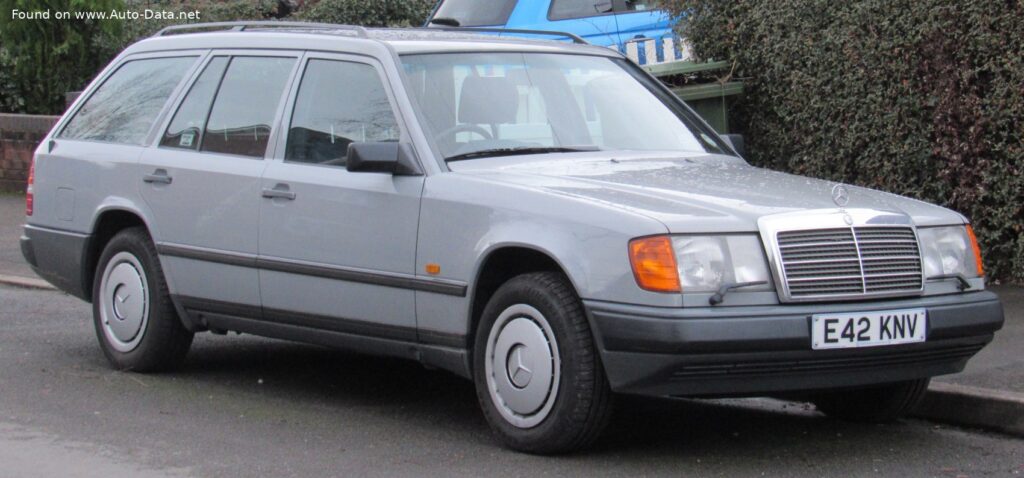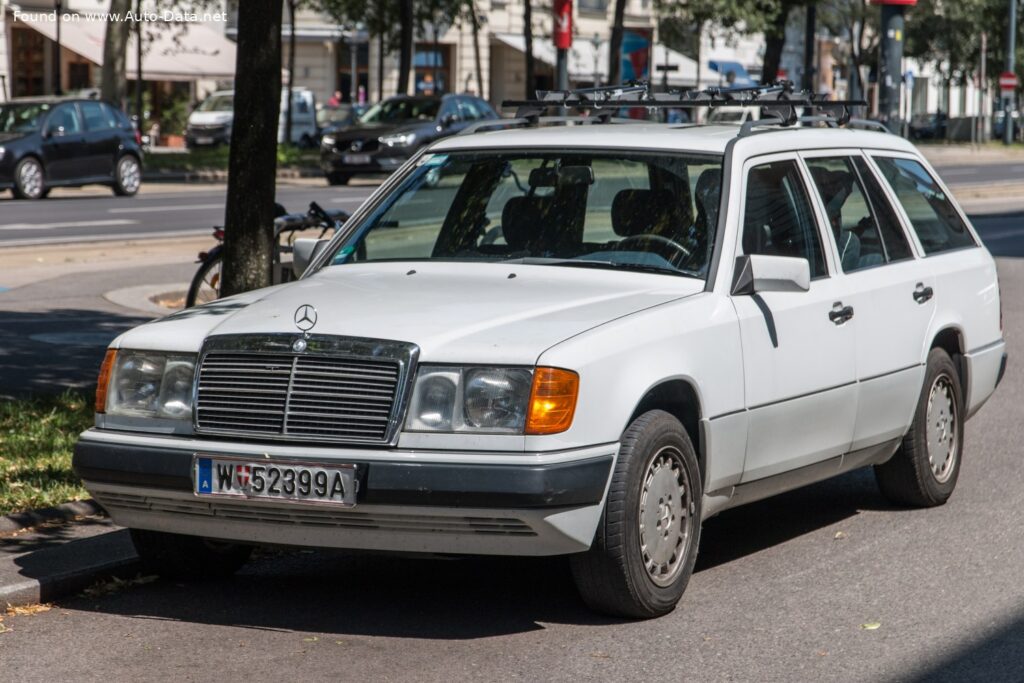
The Mercedes-Benz S124 (facelift 1989) 200 T (105 Hp) Automatic represents a compelling blend of practicality and engineering excellence within the renowned W124 series. Introduced in 1984, the W124 quickly became synonymous with mid-size luxury, durability, and sophisticated design. The S124, the station wagon variant, amplified the W124’s inherent qualities with increased versatility. This specific model, produced from September 1989 to May 1990, benefited from the ‘MOPF 1’ (Modellpflege 1 – model refinement 1) facelift, a crucial update in the W124’s lifecycle. It was designed to appeal to a broad European audience seeking a reliable, spacious, and conservatively priced vehicle.
The 1989 Facelift and Variant Positioning
The 1989 facelift brought subtle but significant enhancements to the W124 range, refining its aesthetics and updating its technology. These changes included revised front and rear styling, improved interior trim, and enhancements to the chassis and braking systems. The 200 T, with its 105 horsepower engine and automatic transmission, occupied the entry-level position within the S124 lineup. It was positioned below the more powerful 230 T, 260 E T, and 300 TE models. This variant was specifically targeted towards families and business users who prioritized space, reliability, and reasonable running costs over outright performance. It was a vehicle designed for everyday usability, rather than spirited driving.
Powertrain & Engine Architecture
The heart of the Mercedes-Benz S124 (facelift 1989) 200 T (105 Hp) Automatic was the M 102 V 20 (code 102.922) inline four-cylinder engine. This naturally aspirated engine featured a Single Overhead Camshaft (SOHC) valvetrain with two valves per cylinder, a design choice prioritizing reliability and ease of maintenance. Displacement was 1996 cubic centimeters (121.8 cubic inches), producing 105 horsepower at 5500 rpm and 116.53 lb.-ft. of torque at 3500 rpm. The engine utilized a Solex 32 PDSI-2 carburetor for fuel delivery, a common system for the era. The M102 engine family was known for its robust construction and ability to withstand high mileage. Power was transmitted to the rear wheels via a four-speed automatic transmission (model 722.3), a popular choice for Mercedes-Benz drivers seeking convenience and comfort. This transmission was known for its smooth shifting characteristics, although it lacked the efficiency of more modern automatic gearboxes.
Engine Specifications
The M102.922 engine featured a cast iron block and an aluminum cylinder head. It employed a conventional wet sump lubrication system and a mechanical fuel pump. The compression ratio was 9.1:1. The engine’s relatively low specific output (52.6 horsepower per liter) reflected its focus on durability and smooth operation rather than peak performance. The carburetor, while reliable, was less efficient and produced higher emissions compared to fuel injection systems.
Driving Characteristics
The driving experience in the 200 T Automatic was characterized by smooth, relaxed progress. Acceleration from 0 to 60 mph took approximately 13.8 seconds, with a top speed of 104.39 mph. Compared to the manual transmission versions of the 200 T, the automatic offered a more effortless driving experience, particularly in urban traffic. However, the automatic transmission did result in a slight performance penalty, as some power was lost through the torque converter. Compared to the higher-output models like the 230 T or 260 E T, the 200 T felt noticeably less responsive. The four-speed automatic transmission’s gear ratios were optimized for comfortable cruising rather than rapid acceleration. The suspension, tuned for comfort, provided a smooth ride, absorbing bumps and imperfections in the road surface effectively. The steering, while not particularly sporty, was precise and predictable.
Equipment & Trim Levels
The Mercedes-Benz S124 (facelift 1989) 200 T Automatic came standard with a respectable level of equipment. Standard features included power steering, central locking, electric windows, and a basic stereo system. The interior was typically upholstered in cloth, with options for leather available at an extra cost. The dashboard featured a traditional Mercedes-Benz layout, with clear and easy-to-read gauges. Optional extras included a sunroof, air conditioning, cruise control, and upgraded audio systems. The S124’s interior was renowned for its build quality and attention to detail, with durable materials and a comfortable layout. The rear seats could be folded down to increase cargo capacity, further enhancing the vehicle’s practicality.
Chassis & Braking
The S124 chassis featured independent suspension all around. The front suspension utilized a wishbone design with coil springs and shock absorbers. The rear suspension employed a sophisticated multi-link system, providing excellent ride comfort and handling stability. This multi-link setup was a hallmark of the W124 series and contributed significantly to its refined driving characteristics. Braking was provided by disc brakes on all four wheels, supplemented by an Anti-lock Braking System (ABS). The ABS system enhanced safety by preventing wheel lockup during hard braking. The hydraulic power steering, using a cone worm with recirculation balls, offered precise and comfortable control. The 200 T’s curb weight of 3196.7 lbs. was relatively moderate for a station wagon of its size, contributing to its manageable handling characteristics.
Market Reception & Comparison
Critics generally praised the Mercedes-Benz S124 (facelift 1989) 200 T Automatic for its build quality, reliability, and practicality. However, some reviewers noted its relatively modest performance compared to other models in the W124 range. Fuel economy was respectable, achieving approximately 19.6 US mpg in urban driving and 29 US mpg on the extra-urban cycle. Compared to the 230 T, the 200 T offered a lower purchase price but sacrificed some performance. The 200 T’s carburetor-equipped engine was less fuel-efficient and produced higher emissions than the fuel-injected engines found in the higher-trim models. In terms of reliability, the 200 T proved to be exceptionally durable, with many examples remaining on the road today. Its simple engine design and robust construction contributed to its longevity.
Technical Specifications
| Category | Specification |
| Brand | Mercedes-Benz |
| Model | W124 |
| Generation | S124 (facelift 1989) |
| Type (Engine) | 200 T (105 Hp) Automatic |
| Production Start | September, 1989 |
| Production End | May, 1990 |
| Powertrain Architecture | Internal Combustion Engine |
| Body Type | Station wagon (estate) |
| Seats | 5 |
| Doors | 5 |
| Fuel Consumption (Urban) | 19.6 US mpg (12 l/100 km) |
| Fuel Consumption (Extra Urban) | 29 US mpg (8.1 l/100 km) |
| Fuel Type | Petrol (Gasoline) |
| Acceleration 0-60 mph | 13.8 sec |
| Acceleration 0-62 mph (0-100 km/h) | 14.5 sec |
| Maximum Speed | 104.39 mph (168 km/h) |
| Weight-to-Power Ratio | 13.8 kg/Hp, 72.4 Hp/tonne |
| Weight-to-Torque Ratio | 9.2 kg/Nm, 109 Nm/tonne |
| Power | 105 Hp @ 5500 rpm |
| Power per Liter | 52.6 Hp/l |
| Torque | 116.53 lb.-ft. @ 3500 rpm (158 Nm) |
| Engine Layout | Front, Longitudinal |
| Engine Model/Code | M 102 V 20 / 102.922 |
| Engine Displacement | 2.0 liters (1996 cm3 / 121.8 cu. in.) |
| Number of Cylinders | 4 Inline |
| Cylinder Bore | 3.5 in. (89 mm) |
| Piston Stroke | 3.16 in. (80.19 mm) |
| Compression Ratio | 9.1:1 |
| Valves per Cylinder | 2 |
| Fuel Injection System | Carburettor |
| Engine Aspiration | Naturally Aspirated |
| Valvetrain | SOHC |
| Engine Oil Capacity | 5.28 US qt (5 l) |
| Coolant Capacity | 8.98 US qt (8.5 l) |
| Kerb Weight | 3196.7 lbs. (1450 kg) |
| Max. Weight | 4563.57 lbs. (2070 kg) |
| Max Load | 1366.87 lbs. (620 kg) |
| Fuel Tank Capacity | 19.02 US gal (72 l) |
| Length | 187.6 in. (4765 mm) |
| Width | 68.5 in. (1740 mm) |
| Height | 58.62 in. (1489 mm) |
| Wheelbase | 110.24 in. (2800 mm) |
| Front Track | 58.94 in. (1497 mm) |
| Rear Track | 58.94 in. (1497 mm) |
| Drivetrain Architecture | Rear Wheel Drive (ICE drives rear wheels) |
| Drive Wheel | Rear wheel drive |
| Number of Gears & Type | 4 gears, automatic transmission |
| Front Suspension | Wishbone |
| Rear Suspension | Independent multi-link suspension |
| Front Brakes | Disc |
| Rear Brakes | Disc |
| Assisting Systems | ABS (Anti-lock braking system) |
| Steering Type | Cone worm with recirculation balls |
| Power Steering | Hydraulic Steering |
| Tires Size (Front/Rear) | 195/65 R15 |
| Wheel Rims Size (Front/Rear) | 6.5J x 15 |
Legacy
The Mercedes-Benz S124 (facelift 1989) 200 T Automatic, while not the most powerful or technologically advanced variant of the W124, has earned a lasting reputation for reliability and durability. The M102 engine, despite its carbureted fuel delivery, is known for its longevity and relatively straightforward maintenance. In the used car market today, well-maintained examples of the 200 T are highly sought after by enthusiasts and collectors. Its simple design and robust construction make it a relatively easy vehicle to maintain, and its comfortable ride and spacious interior continue to appeal to drivers seeking a classic Mercedes-Benz experience. The 200 T represents a significant chapter in the W124’s story, embodying the brand’s commitment to quality and engineering excellence.