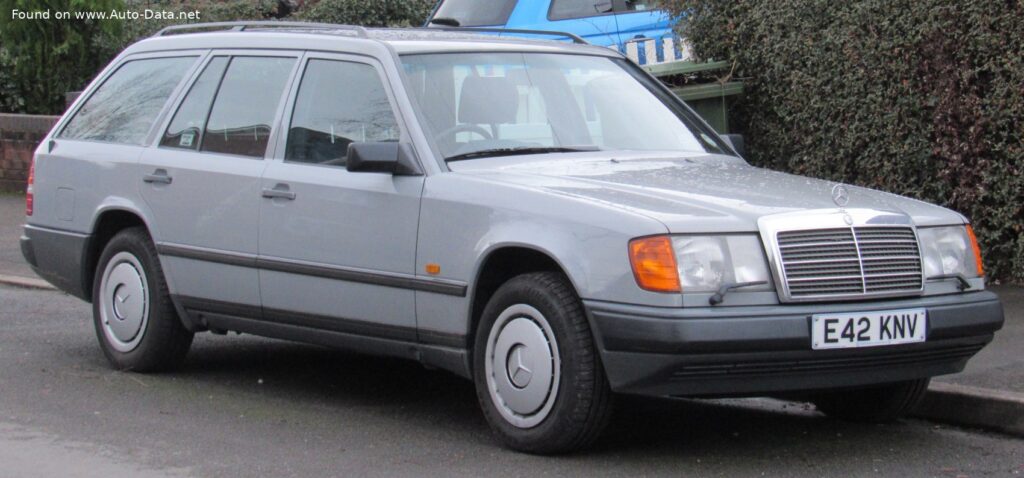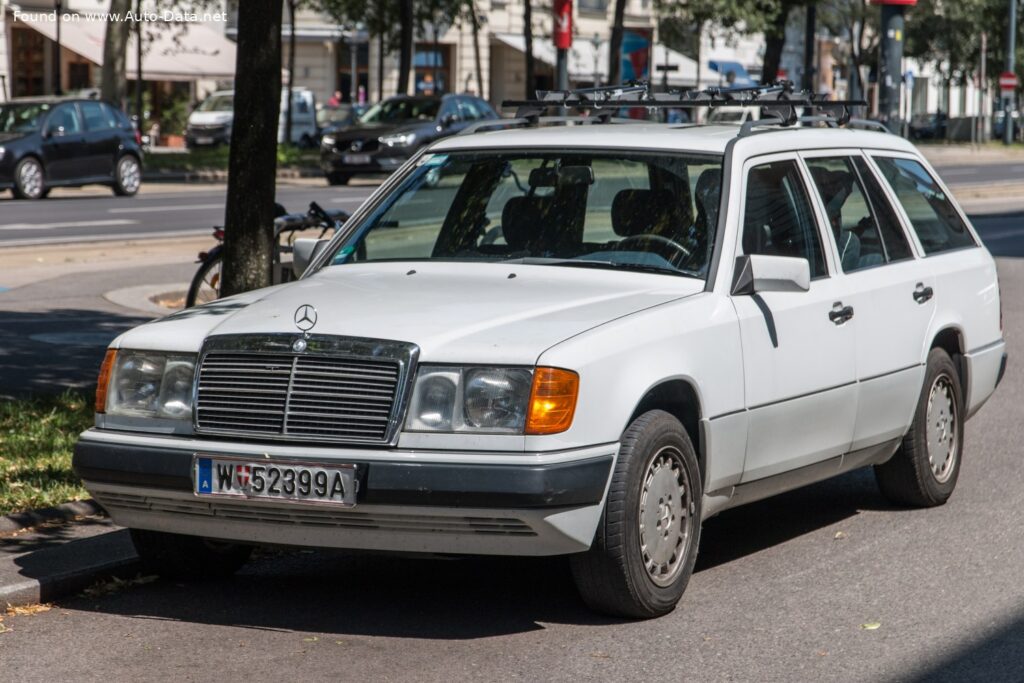
The Mercedes-Benz S124 (facelift 1989) 200 TD (75 Hp) represents a significant iteration within the highly regarded W124 series, produced from 1984 to 1996. The S124 designation specifically denotes the station wagon (estate) body style, celebrated for its blend of practicality, robust construction, and enduring design. This particular model, manufactured between September 1989 and June 1991, incorporated the minor updates introduced with the 1989 facelift. Positioned as an entry-level diesel offering, the 200 TD was primarily aimed at the European market, where diesel engines were favored for their fuel efficiency and longevity, particularly for long-distance travel and commercial applications.
The 200 TD: Entry Point to W124 Versatility
Within the W124 lineup, the 200 TD occupied the lower end of the spectrum, serving as the most accessible variant. It sat below the more powerful 250 TD and 300 TD diesel models, as well as the gasoline-powered 200, 230, 260, 280, and 320 variants. The 200 TD was designed for buyers who prioritized economy and reliability over outright performance. Compared to its siblings, it offered a more affordable entry point into the W124 range, sacrificing some power and refinement in exchange for lower purchase price and improved fuel consumption. The target audience was typically families, small business owners, or individuals who frequently undertook long journeys and valued a practical, dependable vehicle.
Powertrain & Engine Architecture
The heart of the Mercedes-Benz S124 (facelift 1989) 200 TD was the OM 601 D 20 / 601.912 engine, a 2.0-liter (121.86 cubic inches) naturally aspirated inline-four diesel. This engine was a cornerstone of Mercedes-Benz’s diesel technology, renowned for its exceptional durability and longevity. It produced 75 horsepower at 4600 rpm and 92.93 lb-ft (126 Nm) of torque between 2700 and 3550 rpm. The engine was mounted longitudinally in the front of the vehicle, driving the rear wheels – a classic Mercedes-Benz configuration promoting balanced handling.
The OM 601 featured a single overhead camshaft (SOHC) valvetrain with two valves per cylinder and employed a precombustion chamber injection system. This system, common for diesel engines of the era, involved injecting fuel into a precombustion chamber connected to the main cylinder, promoting efficient and complete combustion. A high compression ratio of 22:1 further enhanced fuel efficiency. The engine was typically paired with a 5-speed manual transmission, although an optional 4-speed automatic transmission was available. Engine oil capacity was 6.5 liters, and coolant capacity was 8.5 liters, reflecting the robust cooling and lubrication systems designed for extended service life.
Driving Characteristics
The driving experience in the S124 200 TD was characterized by smoothness and refinement, rather than outright speed. Acceleration from 0 to 60 mph took approximately 20.6 seconds, with a top speed of 93.21 mph (150 km/h). Compared to the more powerful diesel variants or the gasoline-powered models, the 200 TD felt noticeably slower, particularly during overtaking maneuvers. However, the engine’s torque delivery was relatively flat, providing adequate pulling power for everyday driving. The 5-speed manual transmission allowed drivers to keep the engine in its optimal power band, while the optional automatic transmission offered a more relaxed driving experience, albeit with some reduction in responsiveness.
The automatic transmission, typically a four-speed unit, featured relatively widely spaced gear ratios, prioritizing fuel economy over rapid acceleration. The gear changes were smooth but not particularly quick. The 200 TD excelled in cruising situations, offering a comfortable and quiet ride, especially on the highway. Its fuel economy was a major selling point, achieving approximately 27 US mpg in urban driving and 43.6 US mpg on the highway.
Equipment & Trim Levels
The S124 200 TD, as the entry-level model, came equipped with a respectable level of standard features. Interior upholstery was typically cloth, although leather was available as an option. The dashboard featured a straightforward layout with clear instrumentation. Standard equipment included power steering, central locking, and electric windows. Air conditioning was a popular optional extra, as were features like a sunroof, upgraded audio systems, and alloy wheels.
Trim levels were relatively limited on the 200 TD. Most variations centered around optional equipment packages. Buyers could specify different cloth or leather upholstery colors, as well as add features like cruise control, heated seats, and a more sophisticated audio system. The overall interior ambiance was one of understated elegance and functional practicality, reflecting Mercedes-Benz’s commitment to quality and comfort.
Chassis & Braking
The W124 chassis was renowned for its advanced suspension design, and the S124 200 TD benefited from this engineering prowess. It featured a double wishbone front suspension and a groundbreaking independent multi-link rear suspension. This multi-link setup, pioneered by Mercedes-Benz, provided exceptional ride comfort, precise handling, and superior road holding. Braking was handled by disc brakes on all four wheels, augmented by an Anti-lock Braking System (ABS), a significant safety feature for the late 1980s.
Steering was managed by a hydraulic power-assisted cone worm with recirculation balls system, offering precise control and a comfortable steering feel. The vehicle rode on 195/65 R15 tires mounted on 6.5J x 15 wheel rims, providing a good balance of grip, comfort, and durability. The rear suspension typically featured drum brakes on lower trim levels, while higher-spec models received rear disc brakes. Stabilizer bars were fitted to both the front and rear axles to reduce body roll during cornering.
Market Reception & Comparison
Critics generally praised the S124 200 TD for its build quality, reliability, and fuel economy. While its performance was not considered exciting, it was deemed adequate for its intended purpose. The 200 TD was often compared to the BMW 525i and Audi 80, but it distinguished itself through its superior durability and lower running costs. The diesel engine, while less refined than its gasoline counterparts, offered significantly better fuel economy, making it a popular choice for high-mileage drivers.
In terms of reliability, the 200 TD consistently outperformed many of its competitors. The OM 601 diesel engine was known for its ability to withstand years of abuse with minimal maintenance. However, the automatic transmission, while reliable, could be prone to wear and tear over time, particularly if not serviced regularly. The 200 TD’s resale value remained strong for many years, reflecting its reputation for longevity and dependability.
Technical Specifications
| Category | Specification |
| General Information | |
| Brand | Mercedes-Benz |
| Model | W124 |
| Generation | S124 (facelift 1989) |
| Type (Engine) | 200 TD (75 Hp) |
| Start of Production | September, 1989 |
| End of Production | June, 1991 |
| Powertrain Architecture | Internal Combustion engine |
| Body Type | Station wagon (estate) |
| Seats | 5 |
| Doors | 5 |
| Performance Specs | |
| Fuel Consumption (Urban) | 27 US mpg (8.7 l/100 km) |
| Fuel Consumption (Extra Urban) | 43.6 US mpg (5.4 l/100 km) |
| Fuel Type | Diesel |
| Acceleration 0 – 60 mph | 20.6 sec |
| Maximum Speed | 93.21 mph (150 km/h) |
| Weight-to-Power Ratio | 19.5 kg/Hp (51.4 Hp/tonne) |
| Engine Specs | |
| Power | 75 Hp @ 4600 rpm |
| Torque | 92.93 lb.-ft. @ 2700-3550 rpm (126 Nm) |
| Engine Layout | Front, Longitudinal |
| Engine Model/Code | OM 601 D 20 / 601.912 |
| Engine Displacement | 2.0 liters (1997 cm3 / 121.86 cu. in.) |
| Number of Cylinders | 4 |
| Compression Ratio | 22:1 |
Legacy
The Mercedes-Benz S124 200 TD has earned a lasting reputation as a benchmark for durability and engineering excellence. The OM 601 diesel engine continues to be highly regarded for its longevity and reliability, and well-maintained examples are still on the road today. On the used car market, the S124 200 TD remains a popular choice for enthusiasts and those seeking a dependable, classic vehicle. Its simple mechanics and readily available parts make it relatively easy to maintain, and its timeless design continues to appeal to a wide range of buyers. The 200 TD represents a high point in Mercedes-Benz engineering, embodying the brand’s commitment to quality, durability, and understated elegance.