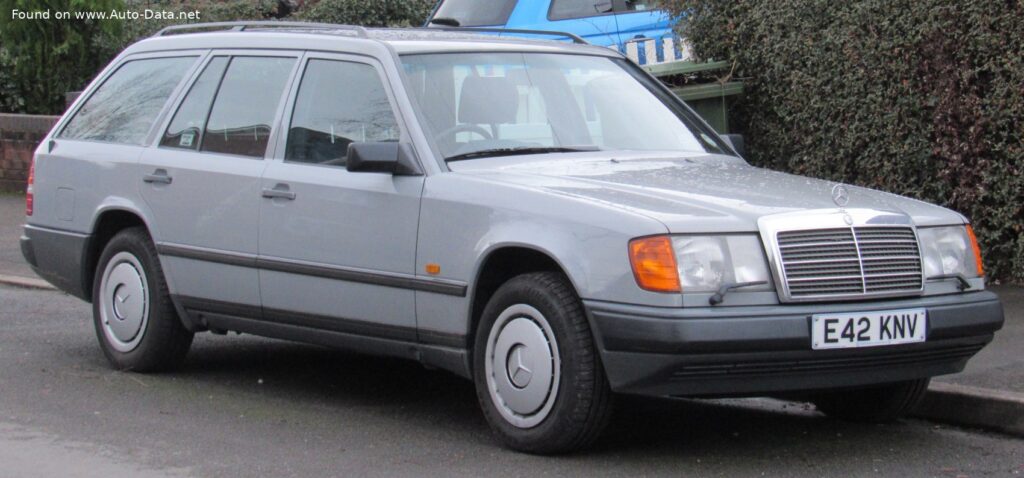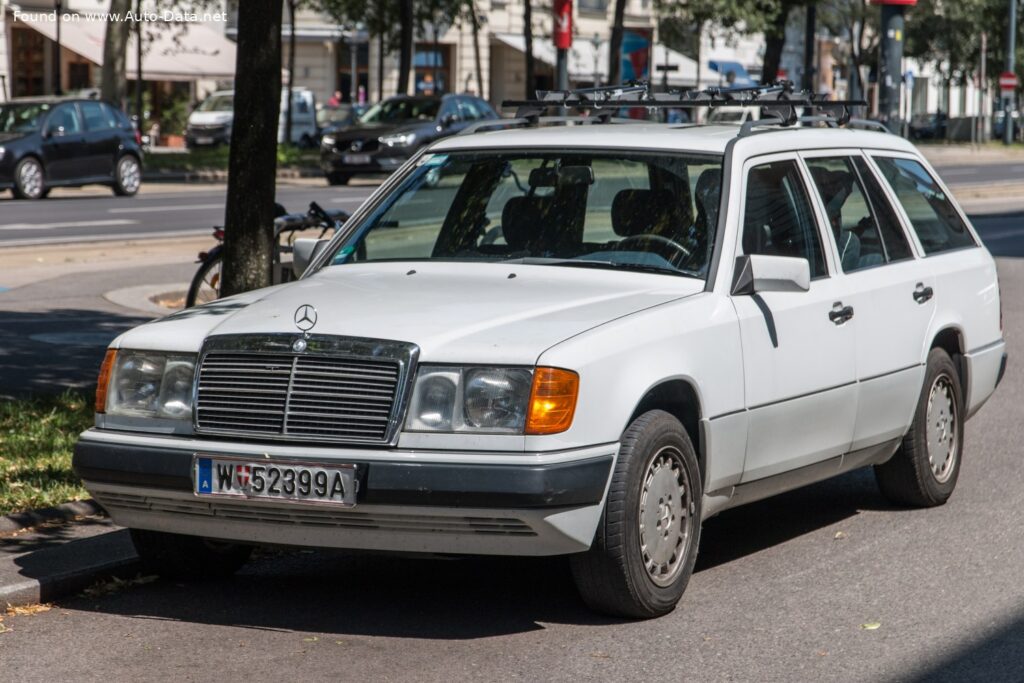
The Mercedes-Benz S124 (facelift 1989) 220 TE represents a refined iteration of the W124 series station wagon, produced from June 1992 to July 1993. The W124, manufactured between 1984 and 1996, is celebrated for its exceptional build quality, engineering integrity, and understated elegance, setting a high standard in the executive car segment. The S124 designation specifically identifies the station wagon (estate) variant, offering a practical and versatile alternative to the sedan. This 220 TE model, equipped with a 2.2-liter inline-four engine and an automatic transmission, was particularly popular in Europe, embodying Mercedes-Benz’s commitment to durability, comfort, and safety.
The 220 TE: Positioning and Market Role
While the W124 sedan and coupe were available in the United States, the S124 station wagon, especially with its four-cylinder gasoline engine, was a mainstay in the European market. It catered to families and individuals seeking a luxurious yet practical vehicle. The 220 TE occupied a mid-range position within the S124 lineup, offering a balance between affordability and refinement. It sat below the more powerful six-cylinder (260 TE, 300 TE, 320 TE) and diesel (300 TD Turbo) variants, making it an attractive option for buyers prioritizing fuel efficiency and lower running costs. It competed directly with station wagons from BMW (5 Series Touring) and Audi (100 Avant), often being perceived as the most robust and long-lasting of the three.
Powertrain & Engine Architecture
The heart of the Mercedes-Benz S124 (facelift 1989) 220 TE is the M 111 E 22 engine, specifically the M 111.960 variant. This 2.2-liter (2199 cc / 134.19 cubic inches) inline-four cylinder gasoline engine was a relatively advanced design for its time. It featured a Double Overhead Camshaft (DOHC) valvetrain with four valves per cylinder, enhancing breathing and overall efficiency. The engine utilized multi-port fuel injection, delivering precise fuel metering for optimal combustion. The M 111 engine family was known for its durability and relatively simple design, contributing to its long-term reliability.
Power is transmitted to the rear wheels through a robust and well-proven four-speed automatic transmission. This transmission, a common choice for Mercedes-Benz vehicles of the era, was designed for smooth operation and durability. It featured a torque converter for smooth launches and a conventional hydraulic control system. The gear ratios were optimized for a balance of acceleration and fuel economy, prioritizing comfortable cruising rather than outright performance. The combination of the M 111 engine and the four-speed automatic provided a refined and effortless driving experience, typical of Mercedes-Benz vehicles.
Driving Characteristics
The 220 TE, with its 150 horsepower and automatic transmission, offered a comfortable and relaxed driving experience. While not a performance-oriented vehicle, it provided adequate acceleration for everyday driving situations. The engine delivered a respectable 154.89 lb-ft of torque at 4000 rpm, providing sufficient power for overtaking and climbing hills. The automatic transmission shifted smoothly and predictably, contributing to a refined driving experience. Compared to the manual transmission versions of the 220 TE, the automatic offered greater convenience, particularly in urban traffic. However, the manual transmission provided slightly better fuel economy and a more engaging driving experience.
Compared to the six-cylinder variants (260 TE, 300 TE, 320 TE), the 220 TE offered less outright power and acceleration. However, it compensated with improved fuel economy and a lighter front-end weight, resulting in slightly more nimble handling. The 220 TE’s power delivery was linear and predictable, making it easy to control in various driving conditions. The automatic transmission’s gear ratios were geared towards comfortable cruising, with a focus on minimizing engine noise and maximizing fuel efficiency.
Equipment & Trim Levels
The S124 220 TE came standard with a comprehensive list of features, reflecting Mercedes-Benz’s commitment to luxury and comfort. Standard equipment included power windows, central locking, power steering, and an anti-lock braking system (ABS). The interior featured comfortable cloth upholstery, wood trim accents, and a well-designed dashboard layout. The seats were supportive and adjustable, providing a comfortable driving position for both the driver and passengers. Optional extras included leather upholstery, a sunroof, automatic climate control, and a premium sound system. The 1989 facelift brought subtle interior refinements, including updated switchgear and improved materials.
Trim levels were relatively limited for the 220 TE, with most variations stemming from optional equipment packages. Buyers could choose to add various comfort and convenience features to personalize their vehicle. The S124 was known for its high level of standard equipment, even in its base configuration.
Chassis & Braking
The S124 chassis was renowned for its robust construction and sophisticated suspension design. The front suspension featured independent wishbones with coil springs and shock absorbers, providing a comfortable ride and precise handling. The rear suspension utilized an independent multi-link system, a pioneering feature for its time, offering exceptional ride quality and stability, especially when the vehicle was loaded. This multi-link design minimized body roll and provided excellent wheel control. The braking system consisted of ventilated discs at the front and solid discs at the rear, providing ample stopping power. The ABS system, standard on the 220 TE, enhanced braking performance and stability, particularly on slippery surfaces.
The 220 TE’s suspension was tuned for comfort and stability, prioritizing a smooth ride over sporty handling. Stabilizer bars were fitted to both the front and rear axles to reduce body roll during cornering. The steering system was a recirculating ball type with hydraulic power assistance, providing a precise and comfortable steering feel.
Market Reception & Comparison
Critics generally praised the Mercedes-Benz S124 220 TE for its build quality, comfort, and reliability. While some reviewers noted that the four-cylinder engine lacked the power of the six-cylinder variants, they acknowledged its efficiency and suitability for everyday driving. The automatic transmission was well-received for its smooth operation and convenience. Fuel economy was considered competitive for a luxury station wagon of its size and weight. Compared to its rivals, the 220 TE was often lauded for its superior build quality and long-term durability. However, some critics found the styling to be somewhat conservative compared to the more modern designs of its competitors.
In terms of reliability, the M 111 engine proved to be exceptionally durable, with many examples exceeding 200,000 miles with minimal maintenance. The automatic transmission was also known for its reliability, provided it was serviced regularly. The S124’s robust construction and high-quality materials contributed to its long-term durability, making it a popular choice among buyers seeking a reliable and long-lasting vehicle.
Technical Specifications
| Category | Specification |
| Brand | Mercedes-Benz |
| Model | W124 |
| Generation | S124 (facelift 1989) |
| Type (Engine) | 220 TE (150 Hp) Automatic |
| Production Start | June, 1992 |
| Production End | July, 1993 |
| Body type | Station wagon (estate) |
| Seats | 5 |
| Doors | 5 |
| Fuel Type | Petrol (Gasoline) |
| Fuel Economy – Urban | 11.6 l/100 km |
| Fuel Economy – Extra Urban | 7.6 l/100 km |
| Acceleration 0-60 mph | 10.5 sec |
| Maximum Speed | 193 km/h |
| Power | 150 Hp @ 5500 rpm |
| Torque | 210 Nm @ 4000 rpm |
| Engine Layout | Front, Longitudinal |
| Engine Model/Code | M 111 E 22 / 111.960 |
| Engine Displacement | 2199 cm3 |
| Number of Cylinders | 4 |
| Engine Configuration | Inline |
| Valvetrain | DOHC |
| Number of Valves per Cylinder | 4 |
| Compression Ratio | 10:1 |
| Fuel Injection System | Multi-port manifold injection |
| Engine Aspiration | Naturally aspirated engine |
| Kerb Weight | 1480 kg |
| Max. Weight | 2130 kg |
| Max Load | 650 kg |
| Fuel Tank Capacity | 72 l |
| Length | 4765 mm |
| Width | 1740 mm |
| Height | 1489 mm |
| Wheelbase | 2800 mm |
| Front Track | 1497 mm |
| Rear Track | 1497 mm |
| Drive Wheel | Rear wheel drive |
| Transmission | 4 gears, automatic transmission |
| Front Suspension | Wishbone |
| Rear Suspension | Independent multi-link suspension |
| Front Brakes | Ventilated discs |
| Rear Brakes | Disc |
| Assisting Systems | ABS (Anti-lock braking system) |
| Steering Type | Cone worm with recirculation balls |
| Power Steering | Hydraulic Steering |
| Front Wheel Tires | 195/65 R15 |
| Rear Wheel Tires | 195/65 R15 |
Legacy
The Mercedes-Benz S124 220 TE has earned a well-deserved reputation for long-term reliability and durability. The M 111 engine is known for its ability to withstand high mileage with proper maintenance. Today, well-maintained examples are highly sought after by enthusiasts and collectors. The 220 TE represents a sweet spot in the W124 lineup, offering a balance of affordability, practicality, and the quintessential Mercedes-Benz driving experience. Its enduring appeal lies in its robust construction, comfortable ride, and timeless design, making it a classic that continues to be appreciated by automotive enthusiasts worldwide.