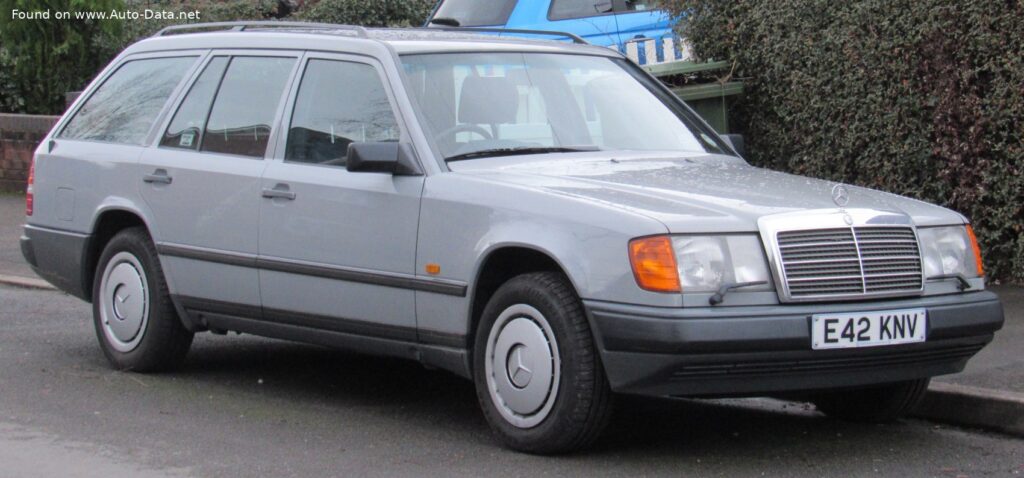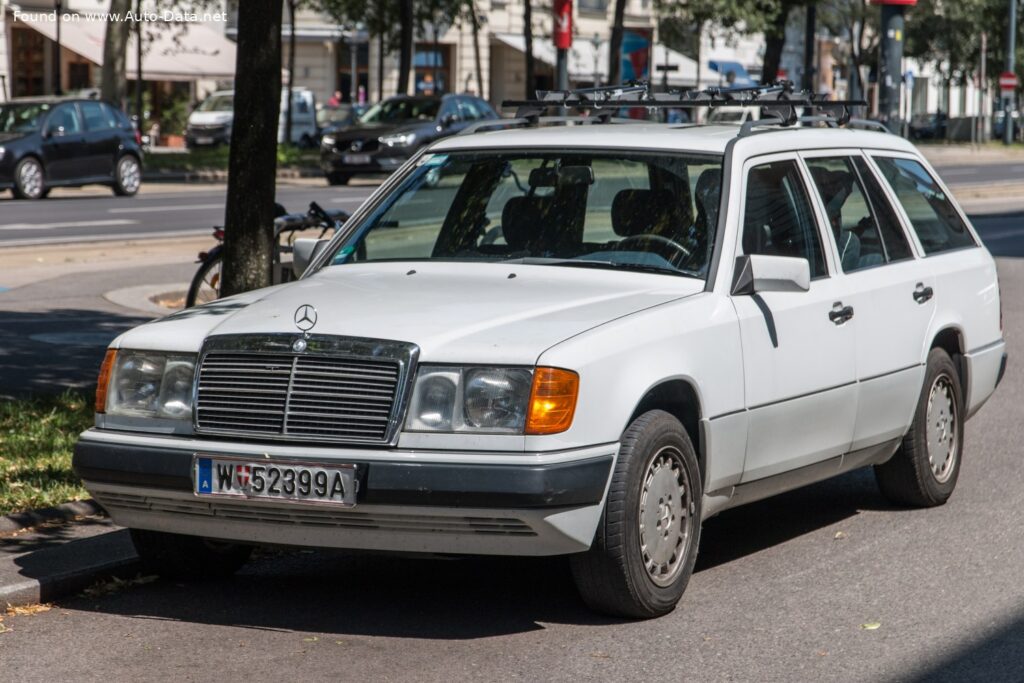
The Mercedes-Benz W124 series, manufactured between 1984 and 1995, represents a high point in German automotive engineering, renowned for its durability and build quality. Within this series, the S124 station wagon – known as the “estate” in Europe – offered a compelling blend of practicality and luxury. The Mercedes-Benz S124 (facelift 1989) 230 TE (132 hp) is a significant variant, benefiting from a mid-cycle refresh that enhanced its aesthetics and technology while maintaining the core W124 values. Introduced in September 1989, this model proved popular in European markets, appealing to families and professionals seeking a spacious, comfortable, and reliable vehicle. While not officially offered for sale in the United States with this specific engine and transmission combination, the S124’s design and engineering principles had a lasting impact on the automotive industry and reinforced Mercedes-Benz’s global reputation.
The 1989 Mercedes-Benz S124 230 TE: A Detailed Overview
The 230 TE occupied a middle ground within the S124 estate lineup. It wasn’t the entry-level model – that distinction belonged to the 200 TE – nor was it the performance-oriented variant like the 300 TE. Instead, the 230 TE aimed for a balance of affordability, fuel efficiency, and respectable performance, making it a sensible choice for buyers prioritizing practicality and long-term ownership costs. It was positioned as a step up from the base models, offering more power and a slightly more refined driving experience without the premium price tag of the larger-engined versions.
Powertrain & Engine Architecture
The heart of the 1989 Mercedes-Benz S124 230 TE is the M102 E 23 engine, a 2.3-liter (2298 cc or 140.23 cubic inches) inline-four cylinder powerplant. This engine is celebrated for its robust construction and smooth operation. It features a Single Overhead Camshaft (SOHC) valvetrain with two valves per cylinder, a configuration favored for its simplicity and reliability. The M102 engine family is known for its over-engineering, with components designed to withstand significant stress and prolonged use.
Fuel delivery is managed by a Bosch K-Jetronic mechanical fuel injection system, a hallmark of Mercedes-Benz engineering during this period. This system, while not as sophisticated as later electronic fuel injection systems, is known for its durability and consistent performance. The engine’s intake manifold is designed for optimal airflow, contributing to its smooth power delivery. The engine is longitudinally mounted at the front of the vehicle, driving the rear wheels through a four-speed automatic transmission.
The automatic transmission, typically a 4G-TRONIC unit, is designed for smooth and comfortable shifting. It features a torque converter for smooth engagement and acceleration. Gear ratios are optimized for both fuel efficiency and drivability, providing adequate acceleration in most driving situations. While not a sport-oriented transmission, it offers a refined and predictable driving experience.
Driving Characteristics
The 230 TE with the automatic transmission delivers a comfortable and refined driving experience. The 132 horsepower and 146 lb-ft of torque provide sufficient power for everyday driving and highway cruising. Acceleration from 0 to 60 mph takes approximately 11.5 to 12.5 seconds, depending on load and road conditions. Top speed is around 116 mph (187 km/h). The automatic transmission contributes to a relaxed driving style, with smooth gear changes and minimal driver effort.
Compared to the manual transmission version of the 230 TE, the automatic offers less driver engagement but greater convenience. It also slightly reduces fuel economy and acceleration performance. Compared to the more powerful 300 TE, the 230 TE feels less responsive, particularly during overtaking maneuvers. However, the 230 TE’s lighter weight and smaller engine contribute to better fuel economy and lower maintenance costs.
Equipment & Trim Levels
The 1989 S124 230 TE came standard with a comprehensive list of features, reflecting Mercedes-Benz’s commitment to luxury and comfort. Standard equipment typically included power windows, central locking, power steering, and an adjustable steering column. The interior featured comfortable cloth upholstery, although leather was available as an option. The dashboard layout is functional and ergonomically designed, with clear instrumentation and easy-to-reach controls.
Optional extras included a sunroof, air conditioning, heated seats, and a premium sound system. Many 230 TEs were also equipped with automatic climate control and cruise control. The rear seats could be folded down to increase cargo capacity, further enhancing the vehicle’s practicality. The level of trim and options varied depending on the specific market and customer preferences.
Chassis & Braking
The S124 chassis is a robust and well-engineered platform, providing a comfortable ride and stable handling. The suspension features independent suspension at all four wheels, with MacPherson struts at the front and multi-link suspension at the rear. This setup provides a good balance between ride comfort and handling precision.
Braking is handled by disc brakes at the front and drum brakes at the rear. Anti-lock Braking System (ABS) was available as an option, enhancing safety and control during emergency braking. The steering is power-assisted, providing light and precise steering feel. Stabilizer bars are fitted to both the front and rear axles, reducing body roll during cornering.
Market Reception & Comparison
The S124 230 TE was generally well-received by automotive critics. It was praised for its practicality, comfort, and reliability. Critics noted that the 132 hp engine provided adequate performance for most driving situations, but some found it lacking in outright power compared to the larger-engined models. Fuel economy was considered to be competitive for its class.
Compared to other station wagons of the era, such as the Volvo 240 and Audi 80 Avant, the S124 230 TE offered a more luxurious and refined experience. However, it was also more expensive to purchase and maintain. In terms of reliability, the S124 230 TE is known to be a durable and long-lasting vehicle, provided it is properly maintained.
Technical Specifications
| Engine Type | M102 E 23 Inline-Four |
| Displacement | 2.3 liters (2298 cc) |
| Horsepower | 132 hp @ 5100 rpm |
| Torque | 146 lb-ft (198 Nm) @ 3500 rpm |
| Fuel Injection | Bosch K-Jetronic Mechanical Fuel Injection |
| Transmission | 4-speed Automatic |
| Drivetrain | Rear-Wheel Drive |
| 0-60 mph | 11.5 – 12.5 seconds (approx.) |
| Top Speed | 116 mph (187 km/h) |
| Fuel Economy (Urban) | 19.3 US mpg (approx.) |
| Fuel Economy (Extra-Urban) | 30.5 US mpg (approx.) |
| Weight | 3,285 lbs (1,490 kg) (approx.) |
| Length | 187.6 inches (4765 mm) |
| Width | 68.5 inches (1740 mm) |
| Height | 58.62 inches (1490 mm) |
Legacy
The Mercedes-Benz S124 230 TE remains a highly regarded vehicle among enthusiasts and collectors. Its robust construction, reliable engine, and practical design have ensured its longevity. While finding well-maintained examples can be challenging, the 230 TE offers a compelling combination of classic Mercedes-Benz luxury and practicality. The M102 engine is known for its durability and relatively simple maintenance requirements, making it a popular choice for those seeking a classic Mercedes-Benz that is relatively easy to keep on the road. In the used car market, prices for well-preserved 230 TEs have been steadily increasing, reflecting their growing desirability and rarity. The S124 series, and the 230 TE in particular, continues to be a testament to Mercedes-Benz’s engineering excellence and enduring design principles.