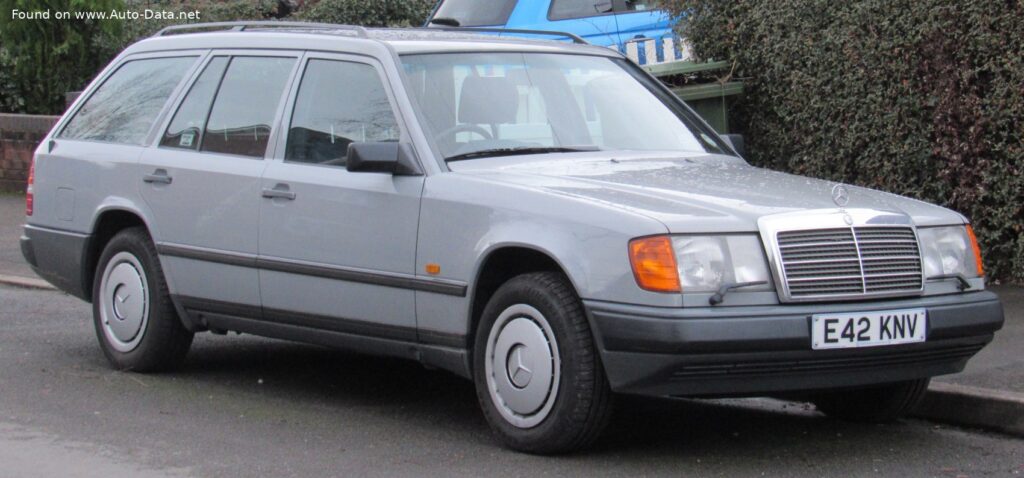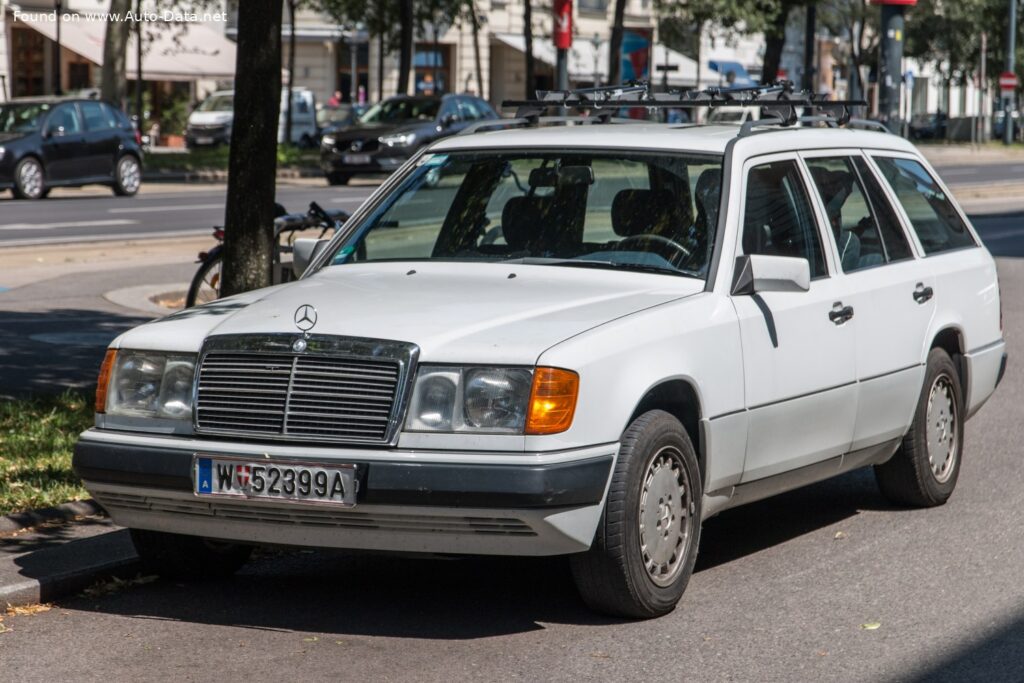
The Mercedes-Benz W124 series, produced from 1984 to 1996, is widely regarded as a pinnacle of automotive engineering, celebrated for its exceptional build quality, sophisticated design, and remarkable durability. Within this series, the S124 station wagon (known as the “estate” in Europe) established a distinct niche, offering a compelling combination of practicality and the luxury expected from a Mercedes-Benz. This article focuses on the Mercedes-Benz S124 (facelift 1989) 230 TE Automatic, a variant that represented a mid-cycle refresh and solidified the W124’s reputation as a benchmark in the executive car segment. Production of this specific model ran from September 1989 to October 1992.
The 230 TE Automatic: Positioning and Role
The 230 TE Automatic occupied a crucial position within the W124 lineup, particularly in European markets. It served as a more accessible entry point into the S124 estate range, offering a balance between performance, fuel efficiency, and practicality. While the 260E and 300TE provided more power, the 230 TE Automatic appealed to buyers prioritizing a comfortable driving experience and lower running costs. It was often chosen by families and professionals seeking a versatile vehicle capable of handling both daily commutes and long-distance journeys. In the United States, where the S124 wagon was less common, it represented a unique and desirable alternative to the more prevalent sedan models.
Powertrain & Engine Architecture
The heart of the Mercedes-Benz S124 (facelift 1989) 230 TE Automatic was the M102 E 23 engine (code 102.982). This naturally aspirated, inline-four gasoline engine displaced 2298 cubic centimeters (approximately 2.3 liters or 140.23 cubic inches). The M102 engine family is renowned for its robust construction and inherent reliability. It featured a single overhead camshaft (SOHC) valvetrain with two valves per cylinder and a multi-port fuel injection system, delivering 132 horsepower at 5100 rpm and 146.04 lb-ft of torque at 3500 rpm. The engine’s 9:1 compression ratio contributed to its smooth and predictable power delivery.
Power was transmitted to the rear wheels via a well-regarded four-speed automatic transmission. This transmission was a common feature in Mercedes-Benz vehicles of the era and was known for its smooth shifting and durability. The engine was mounted longitudinally in the front of the vehicle, contributing to a balanced weight distribution. The M102 engine’s design prioritized longevity and ease of maintenance, making it a favorite among enthusiasts and mechanics alike.
Driving Characteristics
The 230 TE Automatic offered a comfortable and refined driving experience, prioritizing smoothness and ease of use over outright performance. While not as quick as its higher-powered siblings like the 260TE or 300TE, the 230 TE Automatic provided sufficient power for everyday driving and highway cruising. Acceleration from 0 to 60 mph took approximately 10.5 seconds, and the top speed was around 119.92 mph. The automatic transmission’s gear ratios were optimized for fuel efficiency and relaxed cruising, rather than aggressive acceleration.
Compared to the manual transmission versions of the 230E, the automatic offered a more effortless driving experience, particularly in urban traffic. However, the manual transmission generally provided slightly better fuel economy and a more engaging driving feel. The 230 TE Automatic’s weight of 3262.84 lbs. did impact its overall performance, but the well-tuned suspension and responsive steering helped to mitigate this effect, providing a stable and predictable handling experience.
Equipment & Trim Levels
The Mercedes-Benz S124 (facelift 1989) 230 TE Automatic came standard with a comprehensive array of features for its time. These included power windows, central locking, an anti-lock braking system (ABS), and a high-quality audio system. The interior typically featured cloth upholstery, although leather was available as an optional extra. The dashboard layout was functional and ergonomically designed, with clear instrumentation and intuitive controls.
Optional extras included a sunroof, automatic climate control, heated seats, and upgraded audio systems. The S124 also offered a range of exterior options, such as different wheel designs and paint colors. The facelifted models (post-1989) featured body-colored side cladding, known as “Sacco panels,” which gave the car a more modern and integrated appearance. The level of equipment often varied depending on the specific market and customer preferences.
Chassis & Braking
The S124 chassis was a significant engineering achievement, providing a comfortable ride and precise handling. The front suspension utilized wishbones, while the rear suspension featured an independent multi-link setup. This multi-link design, a pioneering feature for its time, offered exceptional wheel control and ride quality, particularly when carrying a load. The steering system was a cone worm with recirculation balls, providing precise and responsive steering feel.
Braking was handled by ventilated discs at the front and solid discs at the rear, providing ample stopping power. The ABS system further enhanced braking performance and stability, particularly on slippery surfaces. The 230 TE Automatic typically rode on 195/65 R15 tires mounted on 6.5J x 15-inch wheel rims. The suspension and braking systems were designed to handle the increased weight and load-carrying capacity of the station wagon body style.
Market Reception & Comparison
The Mercedes-Benz S124 (facelift 1989) 230 TE Automatic received generally positive reviews from automotive critics. It was praised for its comfortable ride, refined interior, and robust build quality. While some critics noted that the 2.3-liter engine lacked the outright performance of the larger-displacement engines, it was generally considered adequate for most driving situations. Fuel economy was also a positive point, with the 230 TE Automatic achieving an estimated 20.3 US mpg in urban driving and 30.9 US mpg on the highway.
Compared to its siblings, the 230 TE Automatic offered a more affordable entry point into the S124 estate range. It was more fuel-efficient than the 260TE and 300TE, and its simpler engine design made it potentially less expensive to maintain. However, the higher-powered models offered more exhilarating performance. In terms of reliability, the M102 engine proved to be exceptionally durable, and the 230 TE Automatic generally enjoyed a good reputation for long-term dependability.
Technical Specifications
| Category | Specification |
| Brand | Mercedes-Benz |
| Model | W124 |
| Generation | S124 (facelift 1989) |
| Type (Engine) | 230 TE (132 Hp) Automatic |
| Production Start | September, 1989 |
| Production End | October, 1992 |
| Body type | Station wagon (estate) |
| Seats | 5 |
| Doors | 5 |
| Fuel Consumption (Urban) | 20.3 US mpg (11.6 l/100 km) |
| Fuel Consumption (Extra Urban) | 30.9 US mpg (7.6 l/100 km) |
| Fuel Type | Petrol (Gasoline) |
| Acceleration 0 – 60 mph | 10.5 sec |
| Maximum Speed | 119.92 mph (193 km/h) |
| Weight-to-power ratio | 11.2 kg/Hp |
| Weight-to-torque ratio | 7.5 kg/Nm |
| Power | 132 Hp @ 5100 rpm |
| Torque | 146.04 lb.-ft. @ 3500 rpm (198 Nm) |
| Engine Layout | Front, Longitudinal |
| Engine Model/Code | M 102 E 23 / 102.982 |
| Engine Displacement | 2.3 liters (2298 cm³, 140.23 cu. in.) |
| Number of Cylinders | 4, Inline |
| Cylinder Bore | 3.76 in. (95.5 mm) |
| Piston Stroke | 3.16 in. (80.2 mm) |
| Compression Ratio | 9:1 |
| Valves per Cylinder | 2 |
| Fuel Injection System | Multi-port manifold injection |
| Engine Aspiration | Naturally aspirated |
| Valvetrain | SOHC |
| Kerb Weight | 3262.84 lbs. (1480 kg) |
| Max. Weight | 4629.71 lbs. (2100 kg) |
Legacy
The Mercedes-Benz S124 (facelift 1989) 230 TE Automatic has earned a well-deserved reputation for longevity and reliability. Many examples are still on the road today, having accumulated hundreds of thousands of miles. The M102 engine is particularly well-regarded for its durability and relatively simple maintenance requirements. In the used car market, these vehicles are increasingly sought after by enthusiasts and collectors, commanding premium prices for well-maintained examples.
The 230 TE Automatic represents a high point in Mercedes-Benz engineering, embodying the brand’s commitment to quality, durability, and understated elegance. Its enduring appeal is a testament to its timeless design and robust mechanicals. It remains a practical and enjoyable classic car, offering a comfortable and refined driving experience that is increasingly rare in modern vehicles. The legacy of the S124, and particularly the 230 TE Automatic, continues to inspire automotive enthusiasts and serve as a benchmark for automotive excellence.